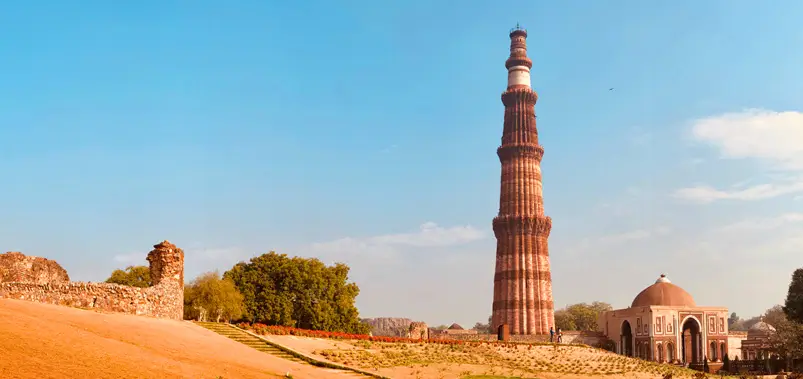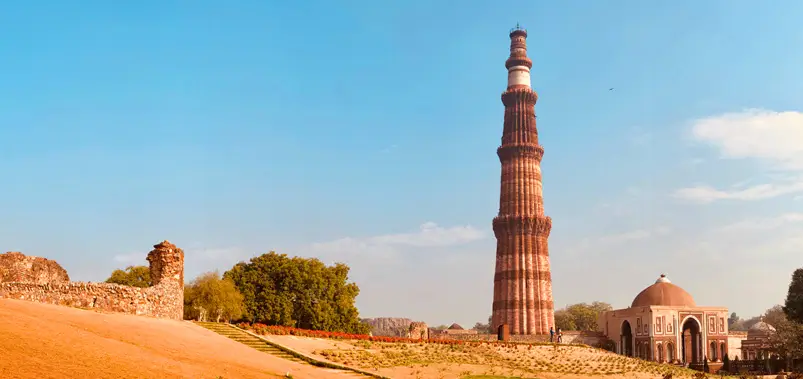
Few monuments define Delhi's skyline as dramatically as Qutub Minar. Rising high above the surrounding landscape, the tower has fascinated travelers, historians, architects, and photographers for centuries. For many international visitors, it becomes one of the very first historical landmarks explored after arriving in India's capital. Yet despite its popularity, most travelers only experience a small portion of what the complex actually represents.
At first glance, Qutub Minar appears to be a single monument—a towering structure built hundreds of years ago that now serves as a symbol of Delhi's rich heritage. However, the reality is far more interesting. The tower is only one part of a much larger historical complex filled with architectural masterpieces, hidden stories, archaeological treasures, religious significance, political symbolism, and engineering achievements that span multiple dynasties.
Many visitors arrive, photograph the tower from a few angles, spend an hour exploring the grounds, and then leave without fully understanding why the site is considered one of the most important monuments in India. The surrounding complex contains ancient inscriptions, intricate stone carvings, remarkable examples of early Indo-Islamic architecture, mysterious structures, and evidence of the dramatic historical changes that shaped medieval Delhi.
The site also tells a much larger story about power, conquest, religion, architecture, and cultural exchange. Successive rulers contributed to its development, leaving behind layers of history that can still be observed today.
For history lovers, architecture enthusiasts, photographers, and travelers interested in understanding Delhi beyond its surface attractions, the Qutub Minar Complex offers one of the most rewarding historical experiences in the country.
Understanding its history before visiting dramatically enhances the experience.
Instead of seeing a tower, visitors begin to see a timeline of civilizations.
Instead of observing ruins, they discover stories.
And instead of simply taking photographs, they gain a deeper appreciation for one of India's most extraordinary UNESCO World Heritage Sites.
One of the most common questions visitors ask is simple:
Why was Qutub Minar built?
The answer, however, is more complex than many people expect.
Construction of the tower began during the late twelfth century under Qutb-ud-din Aibak, the founder of the Delhi Sultanate. At that time, northern India was undergoing significant political and cultural transformation. The establishment of the Delhi Sultanate marked the beginning of a new chapter in the region's history, and monumental architecture became an important tool for expressing authority and legitimacy.
Historians generally agree that Qutub Minar was intended as a victory tower and a symbol of political power. Its extraordinary height ensured visibility from considerable distances, reinforcing the presence of the new ruling authority.
At the same time, the tower was closely connected to the nearby mosque complex. Some scholars suggest it also functioned as a minaret from which calls to prayer could be announced.
What makes the monument particularly fascinating is that it was not completed by the ruler who initiated it.
Qutb-ud-din Aibak managed to finish only the first section before his death. His successor, Iltutmish, continued construction and significantly expanded the structure.
Later rulers made additional modifications and repairs, especially after earthquakes caused damage to portions of the tower.
As a result, the Qutub Minar visible today reflects contributions from multiple generations rather than a single architectural vision.
This layered history helps explain certain variations in design that become apparent when the tower is examined carefully.
The monument evolved over time, adapting to changing circumstances while retaining its symbolic importance.
More than eight hundred years later, it remains one of the most recognizable structures in India.
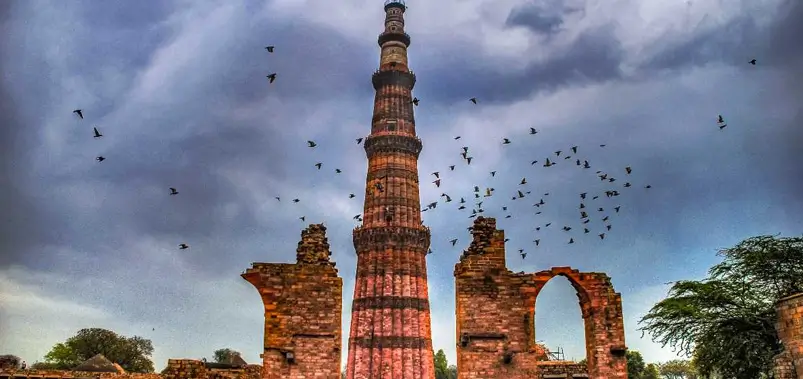
The sheer size of Qutub Minar is impressive, but its architectural sophistication is equally remarkable.
Standing at approximately 73 meters (240 feet), the tower was one of the tallest structures of its kind in the medieval world. Achieving such height during the twelfth and thirteenth centuries required extraordinary engineering skill.
The tower consists of multiple levels, each marked by projecting balconies supported by intricate stone brackets. As the structure rises, its diameter gradually narrows, creating an elegant tapering effect that enhances both stability and visual impact.
One of the most striking features is the use of red sandstone combined with decorative inscriptions and geometric patterns. Arabic calligraphy, floral motifs, and ornamental carvings cover large portions of the surface.
Visitors often focus on the tower's overall appearance while overlooking the extraordinary craftsmanship involved in creating these details.
The carvings remain remarkably precise despite centuries of exposure to weather, earthquakes, and environmental conditions.
Architectural historians frequently point to Qutub Minar as an important example of early Indo-Islamic architecture.
The monument reflects influences from multiple traditions. Local craftsmanship, imported design concepts, and evolving construction techniques combined to create something unique.
This blending of influences became a defining characteristic of much later Indian architecture.
For travelers interested in architectural history, Qutub Minar represents far more than a tall tower.
It serves as evidence of innovation, cultural interaction, and artistic achievement during a pivotal period in Indian history.
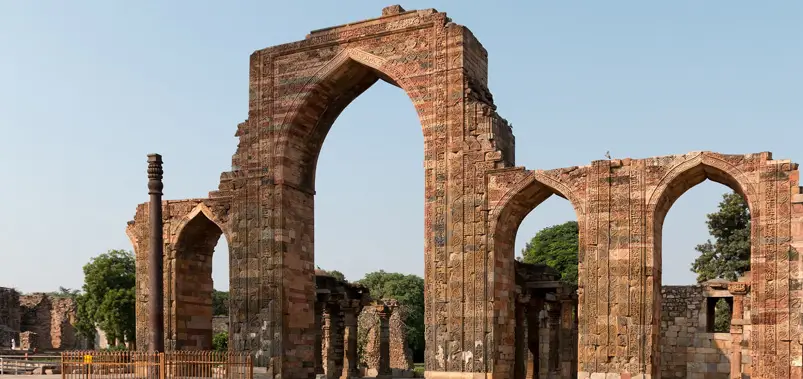
One of the biggest mistakes visitors make is treating the tower as the only attraction within the complex.
In reality, the surrounding monuments are equally fascinating.
The Qutub Complex functions almost like an open air museum containing centuries of architectural and historical development.
As travelers move through the site, they encounter mosques, tombs, gateways, courtyards, pillars, and ruins representing different historical periods.
Many visitors spend so much time photographing the tower that they fail to explore these structures properly.
Yet understanding the complex as a whole provides a far richer experience.
The site demonstrates how different rulers expanded, modified, and reused architectural spaces over generations.
Each monument contributes another chapter to the larger story.
The result is a historical landscape rather than a single attraction.
Exploring slowly allows visitors to appreciate the relationships between different structures and understand how the complex evolved over time.
The tower may be the most famous element, but it is far from the only reason to visit.
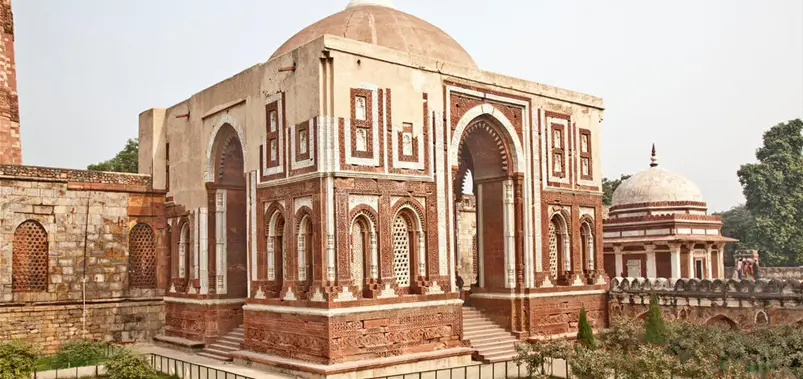
Among the most significant structures within the complex is the Quwwat-ul-Islam Mosque.
Constructed shortly after the establishment of the Delhi Sultanate, it is widely regarded as one of the earliest surviving mosques in northern India.
The mosque holds enormous historical importance because it represents the beginning of a new architectural tradition in the region.
Visitors immediately notice something unusual about the structure.
Many of its columns display intricate carvings that differ noticeably from later Islamic decorative styles. Historians believe materials from earlier temples were incorporated into portions of the mosque's construction.
This has made the site an important subject of academic discussion for generations.
The result is a fascinating blend of artistic influences visible throughout the building.
Walking through the mosque provides insight into the complex historical processes that shaped medieval Delhi.
The structure also helps visitors understand the broader context in which Qutub Minar was built.
The tower was not an isolated monument.
It formed part of a larger religious and political complex that played a central role in the development of the Delhi Sultanate.
For anyone interested in history, skipping the mosque would mean missing one of the site's most important stories.
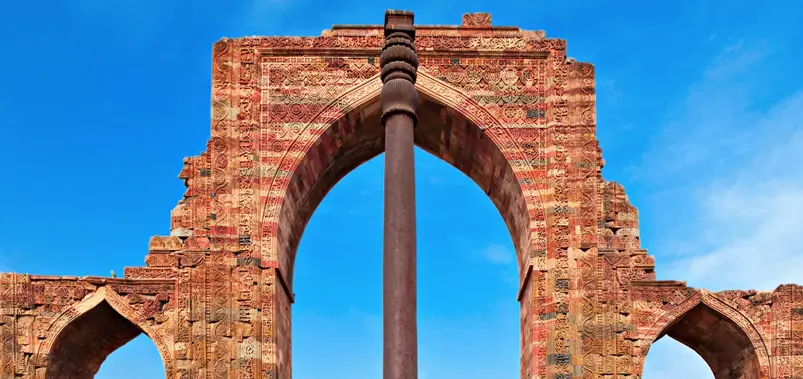
Among all the monuments within the Qutub Minar Complex, the structure that often surprises visitors the most is not the tower itself but the famous Iron Pillar.
At first glance, the pillar appears relatively simple. It stands quietly within the courtyard, attracting curious visitors who have heard about its remarkable reputation. However, its significance becomes clear when travelers learn that the pillar is believed to be more than 1,500 years old.
What makes this extraordinary is the material from which it was made.
Iron normally corrodes over time when exposed to environmental conditions. Yet the Iron Pillar has survived for centuries with remarkably little rusting. Historians, archaeologists, and metallurgists have studied it extensively in an attempt to understand the techniques used by ancient Indian craftsmen.
Research suggests that the pillar's resistance to corrosion results from a combination of metallurgical composition and environmental factors. The sophisticated iron-working knowledge required to create such an object demonstrates the advanced technological capabilities that existed in India long before modern industrial methods emerged.
The pillar predates much of the surrounding complex. Scholars generally believe it originally stood elsewhere before being relocated to its current position.
Its inscriptions provide valuable historical information and connect the object to a period that existed centuries before the Delhi Sultanate.
Many visitors rush past the Iron Pillar while focusing exclusively on Qutub Minar. This is unfortunate because the pillar represents one of the most fascinating scientific and historical artifacts in the country.
For travelers interested in engineering, archaeology, or ancient technology, it is every bit as impressive as the tower itself.
The fact that it continues to stand after so many centuries remains one of the most remarkable achievements of early metallurgy.
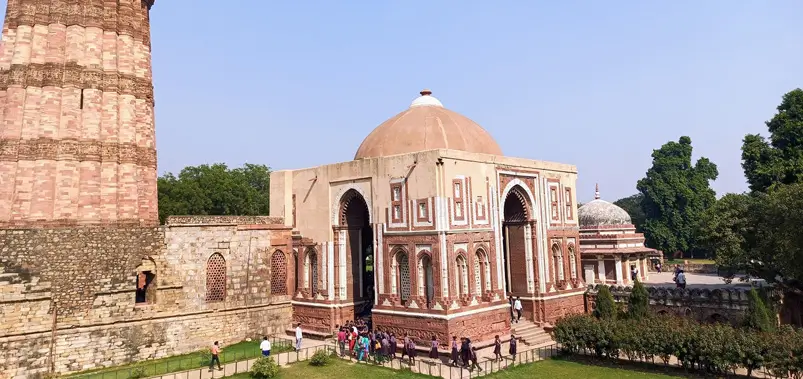
While Qutub Minar dominates the skyline, architecture enthusiasts often consider Alai Darwaza one of the finest structures within the entire complex.
Constructed during the reign of Alauddin Khilji, the gateway represents an important milestone in the development of Indo-Islamic architecture.
Visitors approaching the structure quickly notice its elegant proportions, decorative stonework, and refined use of geometric patterns. Unlike some earlier buildings within the complex, Alai Darwaza demonstrates a more mature architectural style that reflects increasing sophistication in design and construction techniques.
The building combines red sandstone and white marble in a manner that would later influence numerous monuments across India.
Its decorative elements reveal an extraordinary attention to detail. Intricate carvings, carefully balanced proportions, and harmonious architectural composition make it one of the most visually appealing structures in the complex.
Historians frequently highlight Alai Darwaza as an example of how architectural traditions evolved during the Delhi Sultanate.
The building reflects growing confidence and technical mastery among architects and craftsmen working during the period.
For visitors interested in architecture, spending time examining the gateway closely can be extremely rewarding.
The structure may not possess the dramatic scale of Qutub Minar, but it demonstrates a level of refinement that many experts consider equally impressive.
Its beauty lies not in height but in precision.
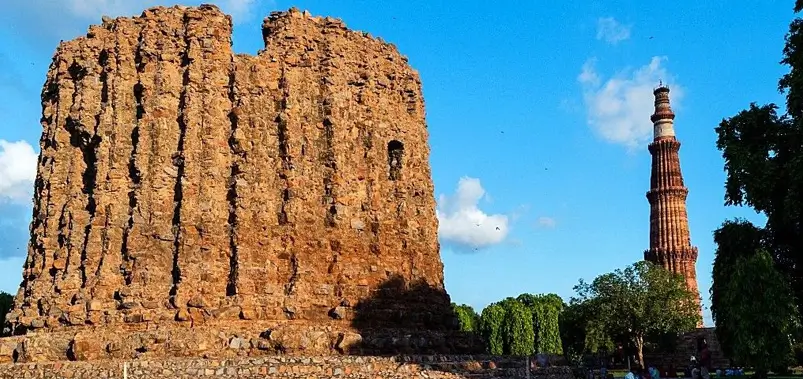
One of the most intriguing stories within the complex involves a monument that was never completed.
After witnessing the success and symbolic importance of Qutub Minar, Alauddin Khilji envisioned something even more ambitious.
His plan was to construct Alai Minar, a tower intended to be significantly larger than Qutub Minar itself.
The project reflected the ruler's desire to surpass the achievements of his predecessors and create an architectural statement of unprecedented scale.
Construction began, and the massive foundation remains visible today.
However, Alauddin Khilji died before the project could be completed. His successors chose not to continue the work, leaving only the enormous unfinished base that visitors see today.
The remains provide a fascinating glimpse into what might have been.
Had the tower been completed according to the original vision, it would likely have become one of the most impressive structures in the medieval world.
Instead, it stands as a reminder that even the most ambitious projects depend upon historical circumstances beyond the control of their creators.
Many tourists overlook Alai Minar entirely because it lacks the visual drama of the completed tower nearby.
Yet for history lovers, the unfinished monument tells a compelling story about power, ambition, and the unpredictability of history.
Sometimes what was never built can be just as interesting as what survives.
One reason the Qutub Minar Complex rewards repeat visits is the sheer number of details hidden throughout the site.
Many travelers spend less than two hours exploring the complex. While this is enough time to see the major attractions, it often results in countless details being overlooked.
For example, inscriptions appear throughout the complex.
These inscriptions provide valuable information about rulers, construction phases, repairs, and religious themes. Although many visitors cannot read the original languages, observing the craftsmanship involved in their creation remains worthwhile.
Decorative carvings also deserve closer attention.
Columns, walls, arches, and gateways frequently display patterns that reveal artistic influences from different historical traditions. Looking closely often reveals details invisible from a distance.
Photography enthusiasts may notice how architectural perspectives change throughout the day as sunlight moves across the site. Shadows create entirely different visual effects depending on the time of visit.
Certain viewpoints also offer unique compositions that most tourists never discover because they remain focused on photographing the tower from standard angles.
Even the arrangement of structures within the complex tells a story.
Understanding how buildings relate to one another provides insight into the site's historical development.
The more time visitors spend observing details, the more rewarding the experience becomes.
Qutub Minar is a place where curiosity is consistently rewarded.
Practical information is an important part of planning any visit.
The Qutub Minar Complex is generally open daily from morning until evening, allowing visitors considerable flexibility when organizing itineraries.
Because schedules can occasionally change, travelers should always verify current opening hours before visiting.
Ticket prices differ for domestic and international visitors, with separate categories typically available.
Electronic ticketing options are often available and can save time during busy periods.
Many travelers combine Qutub Minar with nearby attractions such as Mehrauli Archaeological Park, creating a full day of historical exploration.
Arriving early often provides a better experience.
Morning visits generally offer cooler temperatures, softer light, and smaller crowds.
Late afternoon can also be attractive because of changing light conditions and photography opportunities.
Regardless of timing, allowing at least two to three hours provides a more relaxed experience than rushing through the complex.
The site deserves time and attention.
Visitors who slow down generally leave with a much deeper appreciation of its significance.
Timing can significantly influence the quality of a visit.
Many experienced travelers consider early morning the ideal time to explore the complex.
The lighting is beautiful, temperatures are usually more comfortable, and crowds tend to be smaller than later in the day.
Photographers particularly appreciate morning conditions because soft sunlight enhances architectural details without creating harsh shadows.
Late afternoon represents another excellent option.
As the sun begins to descend, the red sandstone develops warm tones that create striking visual effects.
Midday visits remain perfectly enjoyable but can be warmer and busier depending on the season.
Visitors planning extensive photography sessions often choose morning or late afternoon specifically to take advantage of lighting conditions.
The monument appears dramatically different throughout the day.
Understanding this helps travelers maximize both comfort and photographic opportunities.
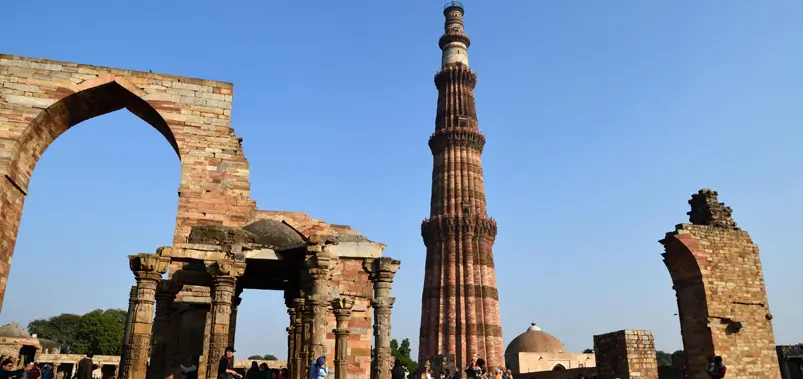
Few monuments in Delhi are more photogenic than Qutub Minar.
However, many visitors end up taking nearly identical photographs because they focus exclusively on the most obvious viewpoints.
One effective strategy is exploring the entire complex before beginning serious photography.
Different angles reveal different aspects of the tower's design.
Including surrounding structures can also create more interesting compositions by providing historical context and scale.
Wide-angle photography works particularly well because it captures both the tower and portions of the surrounding complex.
Architectural details deserve attention as well.
Carvings, inscriptions, arches, and decorative elements often produce more distinctive images than standard tower photographs.
Morning and late afternoon lighting generally produce the most attractive results.
Photographers willing to spend time exploring often discover perspectives that many visitors miss entirely.
Patience usually leads to stronger images.
The international significance of the complex was formally recognized when it received designation as a UNESCO World Heritage Site.
This recognition reflects several factors.
The site represents an important stage in the development of architecture in the Indian subcontinent.
It preserves exceptional examples of early Indo-Islamic design.
Its monuments illustrate significant historical transitions that shaped the region.
The complex also demonstrates extraordinary craftsmanship and engineering achievement.
UNESCO recognition helps ensure that future generations can continue studying and appreciating these monuments.
The designation highlights not only the tower itself but also the broader historical value of the entire complex.
For visitors, understanding this status provides additional context regarding the monument's global importance.
Qutub Minar is not simply an important Delhi attraction.
It is a site recognized as significant to world heritage.
The tower stands approximately 73 meters tall, making it one of the tallest brick minarets in the world.
Construction began in the twelfth century and continued through multiple rulers.
Earthquakes damaged the monument several times, resulting in repairs and modifications across different periods.
The tower contains multiple levels, each marked by projecting balconies.
The interior staircase once allowed visitors to climb the structure, though access is no longer permitted for safety reasons.
The complex includes monuments spanning several centuries rather than representing a single construction project.
Its architectural influence extended far beyond Delhi and contributed to later developments in Indian architecture.
These facts help explain why the monument continues attracting visitors from around the world.
Its significance extends far beyond its impressive height.
We promise you a holiday where everything is taken care of from the moment you land. Trusted drivers waiting for you, handpicked hotels that fit your style, personalized itineraries designed just for your family, and a dedicated team on call 24/7. All you need to do is relax, explore, and create unforgettable memories, while we take care of every detail behind the scenes.
Early morning and late afternoon generally provide the most pleasant weather and best photography conditions.
Alai Minar is an unfinished tower project initiated by Alauddin Khilji that was never completed.
No. Public access to the interior staircase is no longer permitted.
Yes, it is recognized as a UNESCO World Heritage Site due to its historical and architectural significance.
Most visitors benefit from spending at least two to three hours exploring the site thoroughly.
The Iron Pillar is an ancient metal column known for its extraordinary resistance to corrosion despite being more than 1,500 years old.
It symbolizes the establishment of the Delhi Sultanate and represents a major achievement in medieval architecture.
Construction began under Qutb-ud-din Aibak and was later expanded by Iltutmish and other rulers.
The tower stands approximately 73 meters (240 feet) tall.
Qutub Minar is famous for being one of the tallest brick minarets in the world and a masterpiece of early Indo-Islamic architecture.