When foreign visitors plan their first trip to Delhi, they usually focus on famous attractions such as the Red Fort, Qutub Minar, India Gate, and Humayun's Tomb. While these landmarks are undoubtedly important, one attraction consistently surprises international travelers because it combines architecture, spirituality, culture, technology, and storytelling in a way few places in India can match. That attraction is Akshardham Temple.
Located on the eastern side of Delhi near the Yamuna River, Akshardham is one of the most visited cultural and spiritual complexes in India. Unlike ancient monuments that tell stories through ruins and surviving structures, Akshardham presents Indian traditions through living architecture, exhibitions, gardens, performances, and immersive experiences designed for modern visitors.
Many foreign tourists arrive expecting a traditional temple and leave realizing they have experienced much more than that. The complex covers a vast area filled with intricately carved stone structures, peaceful gardens, educational exhibitions, cultural displays, and one of Delhi's most impressive evening water shows. It appeals not only to religious visitors but also to travelers interested in architecture, history, photography, culture, and Indian civilization.
What makes Akshardham particularly attractive for international travelers is its organization. The complex is exceptionally clean, well-managed, and visitor friendly. Security procedures are thorough, signage is clear, and facilities are maintained to a very high standard. Visitors who may feel overwhelmed by Delhi's traffic and busy markets often appreciate the calm and orderly atmosphere they find here.
A visit to Akshardham also provides valuable cultural context. Travelers gain insight into Indian philosophy, spirituality, art, architecture, and values in a way that is accessible regardless of religious background. Whether you spend a few hours exploring the temple grounds or dedicate an entire afternoon to the exhibitions and evening show, Akshardham frequently becomes one of the most memorable experiences in Delhi.
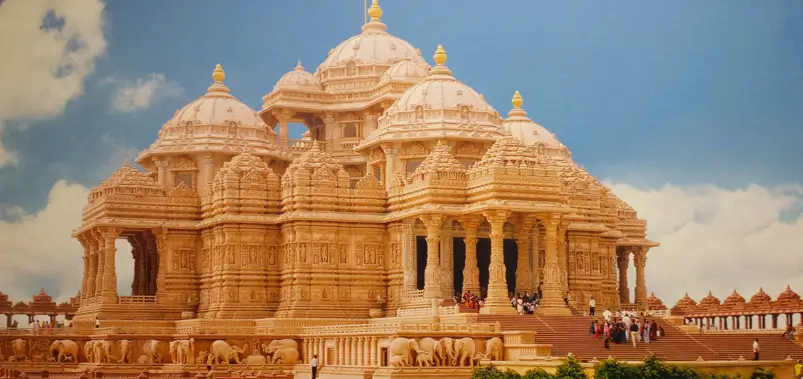
Understanding Akshardham becomes much more rewarding when visitors know the story behind its creation. The temple complex was inaugurated in 2005 and was built under the inspiration of Pramukh Swami Maharaj, one of the most respected spiritual leaders associated with the BAPS Swaminarayan organization.
Although the complex is relatively modern compared with Delhi's medieval monuments, its design draws heavily from traditional Indian architectural principles. The goal was not to create a modern building but to celebrate thousands of years of Indian craftsmanship, spirituality, and cultural heritage.
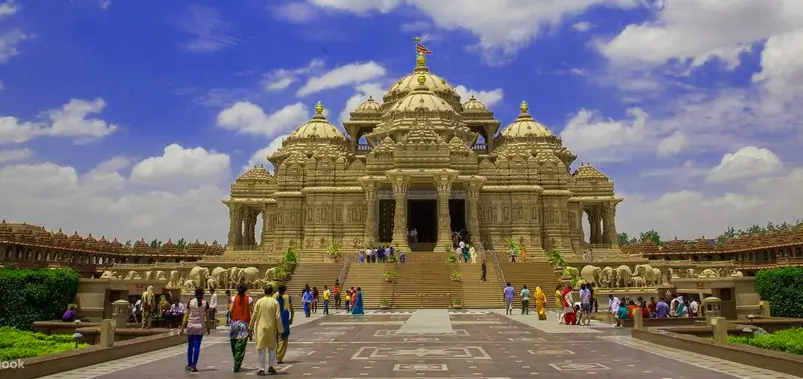
The main monument was constructed using pink sandstone and white marble. What makes the structure remarkable is that traditional building methods were used extensively throughout the project. Thousands of artisans worked on carvings depicting spiritual figures, animals, floral designs, dancers, musicians, and scenes inspired by Indian culture.
Visitors are often amazed by the sheer amount of detail visible on every surface. Columns, walls, ceilings, and domes contain carvings so intricate that it becomes impossible to absorb everything during a single visit. The craftsmanship demonstrates a level of dedication rarely seen in contemporary construction projects.
The temple was designed not only as a place of worship but also as a cultural destination where visitors could learn about Indian traditions and values. This educational focus explains why the complex includes exhibitions, films, gardens, and cultural performances alongside religious spaces.
For international visitors, the result is an attraction that feels both historical and contemporary at the same time. While the temple itself is modern, the artistic and philosophical traditions it celebrates stretch back thousands of years.
Most foreign travelers entering Akshardham experience the same reaction: surprise at the scale of the complex.
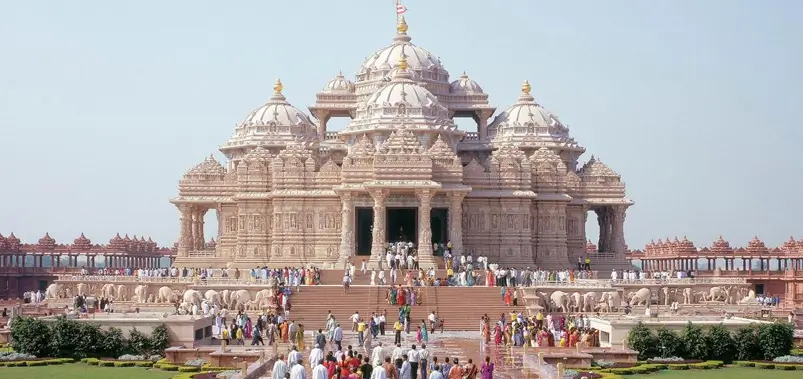
The approach to the temple creates a sense of anticipation. Visitors move through carefully maintained grounds before catching their first unobstructed view of the main monument. The size, symmetry, and craftsmanship immediately attract attention.
Unlike many attractions where visitors rush from one highlight to another, Akshardham encourages a slower pace. Wide pathways, open spaces, and landscaped gardens create an atmosphere that feels peaceful despite the large number of people who visit each day.
The main temple rises above the surrounding grounds and becomes more impressive as visitors approach. From a distance, the structure appears grand. Up close, the level of detail becomes extraordinary. Carvings cover nearly every visible surface, and many travelers spend significant time simply examining the stonework.
Another feature international visitors often notice is cleanliness. The entire complex is maintained to exceptionally high standards. Gardens are carefully landscaped, pathways are spotless, and public facilities are organized efficiently.
The atmosphere is also noticeably different from many of Delhi's historical attractions. While sites such as Old Delhi and Chandni Chowk feel energetic and chaotic, Akshardham feels calm and reflective. This contrast is one reason many travelers enjoy including both types of experiences during their stay in Delhi.
For photographers, architecture enthusiasts, and cultural travelers, the first impression often sets the tone for the rest of the visit. It quickly becomes clear that Akshardham is much more than a conventional temple.
Practical planning is important because Akshardham operates under specific schedules and security procedures.
The complex is generally open:
Tuesday to Sunday
It remains closed every Monday.
Temple grounds typically open around:
9:30 AM
Visitors should arrive early whenever possible, particularly during weekends and holiday periods. Morning visits often provide a more relaxed experience because crowds are generally smaller.
Many travelers prefer arriving between 9:30 AM and 11:00 AM. During these hours, temperatures are usually more comfortable, queues are shorter, and photography conditions are favorable.
Visitors planning to experience exhibitions and the evening water show should allow a full afternoon. Akshardham is one of those attractions where rushing often leads to disappointment because there is so much to see.
Winter months between October and March generally provide the most pleasant weather for exploring the outdoor areas. Summer visits remain possible, but midday temperatures can become quite high.
The evening period is particularly attractive because the lighting changes dramatically. Visitors who stay for the water show often enjoy seeing the temple illuminated after sunset.
Because schedules occasionally change for special events and festivals, checking current timings before visiting is always recommended.
One of the most common questions international travelers ask concerns ticket prices.
Entry to the temple grounds themselves is generally free. Visitors can walk through the gardens, admire the architecture, and explore many parts of the complex without purchasing admission tickets.
However, several major attractions inside the complex require separate tickets.
These typically include:
Combined exhibition packages generally cost several hundred rupees per person, although exact prices can change periodically.
Most visitors consider the exhibitions worthwhile because they provide context and storytelling that enhance understanding of Indian culture and philosophy. The boat ride, in particular, is frequently mentioned as a favorite experience among international travelers because it presents thousands of years of Indian achievements through creative displays.
The evening musical fountain and water show also require separate tickets. Many travelers specifically schedule their visit around this performance because it combines lights, music, projections, and storytelling in a memorable outdoor setting.
Budget conscious travelers can still enjoy Akshardham without spending anything beyond transportation costs. However, those who want the full experience generally choose to purchase exhibition tickets because they add significant value to the visit.
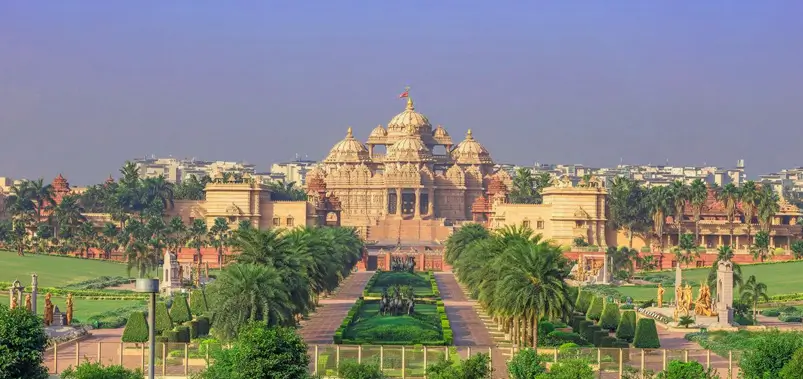
The highlight of Akshardham is undoubtedly the main temple itself. Even travelers who have visited numerous religious sites around the world often find themselves impressed by its scale and craftsmanship.
The central monument stands approximately 43 meters (141 feet) high, stretches around 96 meters (316 feet) wide, and extends roughly 110 meters (356 feet) long. These dimensions alone are impressive, but numbers fail to capture the visual impact of the structure.
What makes the temple remarkable is the extraordinary amount of hand carved detail. More than 20,000 sculpted figures, saints, musicians, dancers, spiritual teachers, animals, and decorative motifs are integrated into the design. Every section of the building appears to tell a story.
Visitors walking around the temple often spend far longer than expected because new details continuously reveal themselves. A column that initially appears decorative suddenly contains dozens of intricate carvings. A doorway reveals scenes inspired by Indian traditions. A ceiling displays geometric patterns and artistic designs requiring extraordinary craftsmanship.
The temple was built primarily using pink sandstone from Rajasthan and white marble, materials chosen for both durability and symbolism. The pink stone represents devotion and purity, while the marble contributes elegance and brightness.
Unlike many modern structures that rely heavily on steel frameworks, traditional construction methods played an important role in the project. This commitment to classical techniques contributes to the building's authenticity and timeless appearance.
Many architecture enthusiasts consider Akshardham one of the finest examples of contemporary traditional architecture anywhere in the world. It demonstrates that ancient artistic traditions remain alive and capable of producing monumental works in the modern era.
For travelers interested in design, culture, or craftsmanship, simply walking around the exterior of the temple can easily occupy an hour or more.
Because Akshardham functions as both a cultural attraction and an active place of worship, visitors are expected to dress respectfully.
The dress code is relatively straightforward and generally aligns with expectations at major religious sites around the world.
Clothing should cover:
Visitors wearing very short shorts, revealing tops, or clothing considered inappropriate for a religious setting may be asked to use covering garments before entering certain areas.
Fortunately, most tourists already meet these requirements without difficulty.
Comfortable footwear is highly recommended because visitors walk considerable distances throughout the complex. While shoes must be removed in specific sacred areas, most of the grounds can be explored comfortably with normal walking shoes.
Respectful behavior is equally important. Loud conversations, disruptive conduct, and inappropriate photography should be avoided.
One reason many visitors enjoy Akshardham is the calm atmosphere. Respecting local customs helps preserve that experience for everyone.
International travelers rarely encounter problems as long as they approach the site with the same courtesy they would show at churches, mosques, synagogues, or temples elsewhere in the world.
Akshardham is known for having some of the most comprehensive security procedures of any attraction in Delhi.
First time visitors are often surprised by the restrictions, but understanding them in advance helps avoid inconvenience.
Items generally not permitted include:
Policies can evolve, so visitors should verify current regulations before arrival.
Secure deposit facilities are available where visitors can leave restricted items before entering.
The security screening process may take additional time, particularly during busy periods. Arriving early therefore provides a more comfortable experience.
Although these procedures may initially seem strict, they contribute to the organized and peaceful environment that many visitors appreciate.
Experienced travelers simply plan accordingly and treat the process as part of the visit.
.webp)
Among all ticketed attractions within the complex, the cultural boat ride consistently ranks as a favorite among international visitors.
Many travelers arrive expecting a simple ride and leave genuinely surprised by the experience.
The journey takes visitors through scenes representing various achievements from Indian civilization across thousands of years. Through carefully designed displays, lighting effects, sculptures, and storytelling, the attraction highlights contributions in areas such as:
The presentation is designed to be accessible even for visitors with limited prior knowledge of Indian history.
Families particularly enjoy the experience because it combines education with entertainment. Children remain engaged, while adults gain a broader appreciation for India's historical contributions.
The attraction is also useful because it provides context. Many travelers encounter references to Indian scholars, traditions, and innovations elsewhere during their trip. The boat ride helps connect these ideas into a coherent narrative.
Because the experience is unique and relatively compact, it appeals to visitors who want cultural understanding without spending hours in a conventional museum.
For many tourists, the boat ride becomes one of the most memorable parts of the entire Akshardham visit.
.webp)
If time permits, staying for the Sahaj Anand Water Show is highly recommended.
The performance takes place after sunset and combines:
The result is far more sophisticated than many visitors expect.
Rather than functioning purely as entertainment, the show presents philosophical themes through visual storytelling. Audiences experience a narrative inspired by traditional wisdom while enjoying impressive technical effects.
The atmosphere becomes particularly magical after dark. As the temple complex illuminates and the show begins, the environment feels completely different from the daytime experience.
Approximate Ticket Price
Generally:
₹100–₹150 per person
Prices may change periodically.
Duration
Approximately:
20–30 minutes
Travelers who leave before sunset often miss one of the most distinctive elements of Akshardham.
For photographers and families especially, the evening period frequently becomes the highlight of the visit.
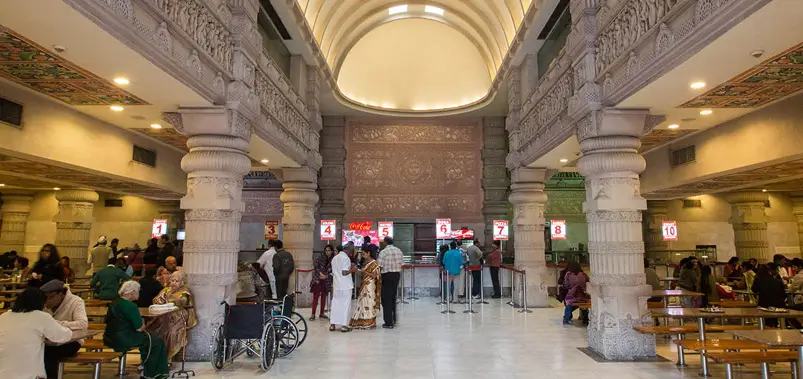
Exploring Akshardham for several hours naturally creates an appetite.
Fortunately, the complex includes organized dining facilities where visitors can enjoy refreshments and meals in a clean and comfortable environment.
The food court offers a range of vegetarian options reflecting different regional traditions.
Common offerings include:
Prices are generally reasonable compared with many tourist attractions around the world.
One advantage of dining within the complex is convenience. Visitors can take a break, relax, and continue exploring without needing to leave the site.
International travelers often appreciate the cleanliness and organization of the facilities.
The food court is particularly useful for families and visitors planning to stay long enough to attend the evening water show.
Akshardham is well connected to the rest of Delhi and relatively easy to reach.
By Metro
The simplest option for most tourists is the Delhi Metro.
The nearest station is:
Akshardham Metro Station on the Blue Line.
From the station, the temple complex is only a short walk away.
For many international visitors, the Metro provides the easiest and most economical transportation method.
By Taxi or Private Car
Ride hailing services and private drivers can drop visitors near the entrance.
Travel times vary depending on traffic conditions.
Approximate travel times:
Travelers using private drivers should confirm pickup arrangements because security procedures may affect access points.

We promise you a holiday where everything is taken care of from the moment you land. Trusted drivers waiting for you, handpicked hotels that fit your style, personalized itineraries designed just for your family, and a dedicated team on call 24/7. All you need to do is relax, explore, and create unforgettable memories, while we take care of every detail behind the scenes.
Because it combines spectacular architecture, cultural education, peaceful surroundings, modern facilities, and memorable experiences such as the boat ride and evening water show. Few attractions in Delhi offer such a complete introduction to Indian culture in a single location.
Akshardham Metro Station on the Blue Line provides the most convenient access.
Tickets are usually around ₹100–₹150 per person, although prices can change.
Most international visitors consider it one of the best attractions within the complex because it presents Indian history and culture in an engaging way.
Yes. Visitors should wear modest clothing that covers shoulders and knees.
Photography rules are strict, and cameras are generally not allowed inside many parts of the complex. Visitors should verify current regulations before arrival.
Yes. Entry to the main complex is generally free, although exhibitions and special attractions require separate tickets.
Most visitors benefit from at least four to six hours. Those attending exhibitions and the water show may spend an entire afternoon and evening.
The complex is generally closed every Monday.
Absolutely. Many visitors come primarily for architecture, culture, exhibitions, and the water show rather than religious reasons.