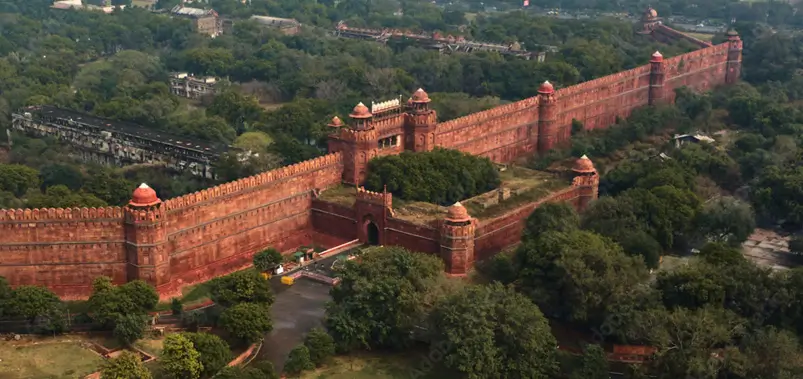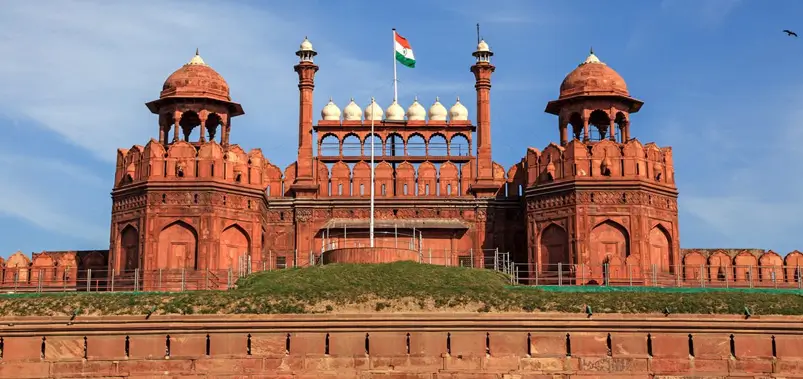
If there is one monument that symbolizes the power, grandeur, and history of Delhi, it is the Red Fort Delhi. Standing behind enormous red sandstone walls that stretch for more than two kilometers, this UNESCO World Heritage Site is one of the most visited monuments in India and one of the most important attractions included in almost every Golden Triangle Tour itinerary.
For many international visitors, the first sight of the Red Fort is unforgettable. The massive walls rise dramatically above the busy streets of Old Delhi, creating an immediate contrast between the chaos of modern city life and the elegance of Mughal architecture. Yet many travelers make the mistake of treating the fort as a quick photo stop. In reality, the Red Fort is a large historical complex that deserves several hours of exploration.
The fort is not simply a military structure. It once served as the residence of Mughal emperors, the center of political power, and the heart of imperial Delhi. Behind its walls existed a city within a city, complete with royal palaces, audience halls, gardens, water channels, mosques, markets, and ceremonial spaces.
A visit to the Red Fort allows travelers to understand how the Mughal Empire functioned at its peak. Every section of the complex tells a different story. From the ceremonial halls where emperors met ambassadors to the private chambers where royal families lived, the fort provides a remarkable glimpse into one of the most influential periods in Indian history.
For first time visitors, however, practical questions are often more important than historical facts. How much does the ticket cost? What is the best time to visit? How long should you spend there? Is a guide necessary? What are the nearby attractions? How much does transportation cost?
This guide answers those questions while providing practical information that can help visitors make the most of their time at one of Delhi's most famous landmarks.
One of the first things travelers want to know is the cost of visiting the Red Fort. Ticket prices vary depending on nationality, museum access, and whether visitors plan to attend the evening sound and light show. Current ticket structures indicate that foreign visitors generally pay around ₹550–₹600 for standard entry, while Indian citizens pay approximately ₹35. Children below a certain age are generally admitted free of charge. Some ticket options also include museum access for an additional fee.
For most international travelers, the entry fee represents excellent value because the fort contains a large number of historical structures and museums. Compared with similar heritage sites around the world, admission costs remain relatively affordable.
Visitors planning a complete day in Old Delhi should also consider additional expenses beyond the entrance ticket. A licensed guide typically charges anywhere between ₹800 and ₹2,500 depending on language requirements, experience, and tour duration. Private guides specializing in history may charge more, but many travelers find that the additional information significantly improves the overall experience.
Transportation costs should also be included in budgeting. A Delhi Metro journey to the Red Fort area generally costs between ₹20 and ₹60 depending on distance. Taxi services such as Uber or private cabs vary according to pickup location.
Approximate taxi fares:
Food expenses depend entirely on travel style. Visitors combining the fort with Chandni Chowk often spend anywhere between ₹200 and ₹2,000 per person on meals depending on restaurant choices.
Travelers interested in photography should also check current camera regulations. While standard photography is usually permitted, special equipment may involve additional charges or permissions. Some visitor guides mention small fees for video equipment in certain situations.
Understanding these costs in advance helps visitors plan realistic budgets and avoid surprises during their trip.
The Red Fort generally welcomes visitors from around 9:30 AM until approximately 4:30 PM and remains closed on Mondays. Most experienced travelers recommend arriving early in the morning rather than later in the day.
Morning visits offer several advantages. Temperatures are cooler, lighting conditions are better for photography, and visitor numbers are generally lower. During peak tourism season, large tour groups often arrive later in the morning, making early entry particularly attractive.
Many first time visitors incorrectly assume that the fort can be explored within an hour. In reality, a meaningful visit usually requires at least two to three hours, and history enthusiasts may easily spend four hours or more exploring the complex.
Travelers with limited time should focus on:
Visitors with half a day available can explore the entire fort at a relaxed pace and still have time for nearby attractions.
Seasonal timing also matters. The period between October and March generally provides the most comfortable weather conditions. Delhi summers can be extremely hot, making long periods of outdoor sightseeing physically demanding. Winter mornings are often ideal for photography, while late afternoon visits provide softer lighting and cooler temperatures.
Travelers interested in combining the fort with Chandni Chowk and Jama Masjid should plan a full day itinerary. This approach allows visitors to experience both the architectural heritage and cultural atmosphere of Old Delhi without feeling rushed.
One common mistake is arriving after 3:30 PM. Although entry may still be permitted, visitors often find themselves rushing through important sections of the complex because closing time approaches quickly. Arriving earlier allows a much more enjoyable and educational experience.
The Red Fort is located in Old Delhi and is one of the easiest historical attractions in the city to reach using public transportation. Many travelers choose the Delhi Metro because it is inexpensive, reliable, and avoids the traffic congestion that often affects central Delhi.
The nearest stations include:
For first time visitors, Red Fort Metro Station usually provides the most convenient access, while Chandni Chowk Station works well for travelers planning to explore the market after their visit.
Visitors arriving from the airport have several options. The Airport Express Metro combined with regular metro connections often provides the fastest solution. Private taxis and airport transfers are more convenient for travelers carrying luggage or those beginning a private Delhi sightseeing tour.
Many luxury travelers choose private drivers because they intend to combine multiple attractions during the same day. A typical Old Delhi sightseeing route might include:
Hiring a private car with driver for a half-day city tour generally costs between ₹2,500 and ₹6,000 depending on vehicle category and duration.
Walking around the Red Fort area is possible, but visitors should prepare for crowds, traffic, and busy market conditions. Comfortable footwear is highly recommended because the fort itself involves a substantial amount of walking.
For foreign visitors unfamiliar with Delhi, the metro remains one of the safest and most efficient transportation methods available.
After entering through the famous Lahori Gate, many visitors are surprised by how much there is to explore inside the Red Fort. The fort covers a large area and contains numerous structures that once formed the center of Mughal imperial life. Rather than thinking of the Red Fort as a single building, it is more accurate to view it as a royal city protected by enormous defensive walls.
The first area most visitors encounter is Chatta Chowk, a covered market that historically served members of the royal household. Merchants once sold luxury goods including silk, jewelry, perfumes, decorative objects, and textiles. Today, visitors can browse souvenir shops while imagining how this market functioned centuries ago when nobles and royal family members passed through its corridors.
Beyond the market lies a series of ceremonial and residential structures that reveal different aspects of Mughal court life. The planning of the fort reflects the sophistication of imperial architecture. Water channels, gardens, audience halls, and private living quarters were carefully arranged to create an environment that combined beauty, comfort, and political symbolism.
One of the most fascinating aspects of the Red Fort is the way architecture was used to communicate power. Visitors moving through the complex gradually progress from public spaces into increasingly exclusive areas, mirroring the hierarchy of the Mughal court. Every courtyard and pavilion served a specific purpose, and understanding these functions helps bring the monument to life.
Several museums within the complex provide additional context about the fort's history and the broader history of India. Travelers interested in military history, cultural heritage, and the independence movement often find these exhibits particularly informative. Spending time in the museums can significantly improve appreciation for the structures outside.
Many visitors make the mistake of walking quickly from one building to another. The Red Fort rewards slow exploration. Looking closely at architectural details, decorative carvings, arches, columns, and water systems reveals a level of craftsmanship that photographs alone cannot fully capture.
The Lahori Gate serves as the main entrance and is one of the most recognizable features of the Red Fort. Named because it faces in the direction of Lahore, the gate was designed to create an immediate impression on anyone entering the imperial complex. Its massive scale and imposing appearance communicated strength and authority long before visitors reached the interior spaces.
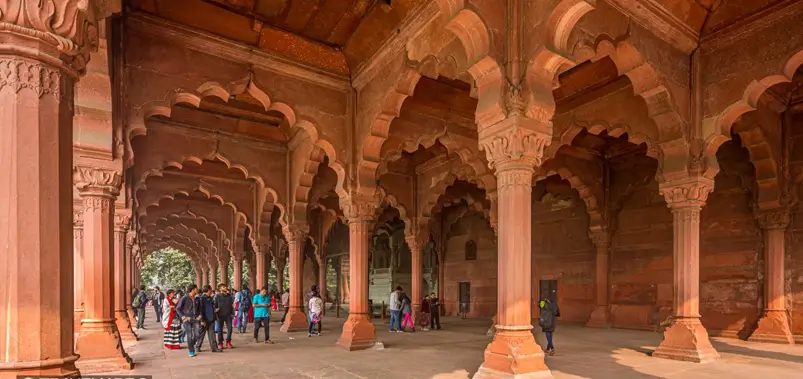
After passing through the gate and the market area, travelers arrive at the Diwan-i-Aam, or Hall of Public Audience. This was the place where the emperor interacted with subjects, listened to petitions, and conducted public affairs. Standing in this hall provides insight into how governance functioned during the Mughal era.
The architecture of the Diwan-i-Aam was designed to reinforce the status of the emperor. The elevated throne area, the arrangement of columns, and the overall scale of the hall all contributed to an atmosphere of authority. Visitors often find it easy to imagine the formal ceremonies and gatherings that once took place here.
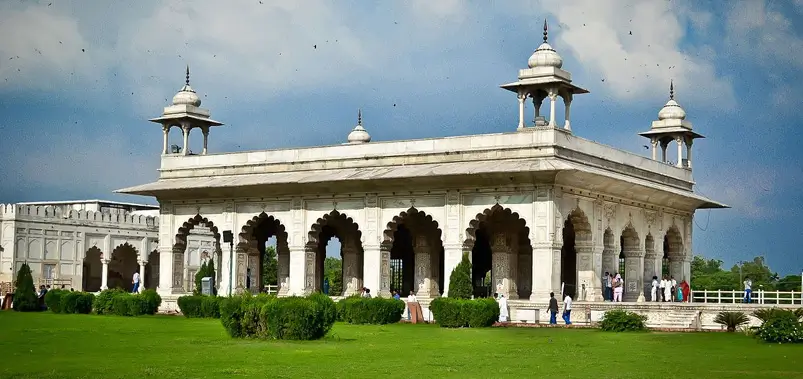
Further inside the fort lies the Diwan-i-Khas, or Hall of Private Audience. This was one of the most prestigious locations within the complex and served as the venue for meetings with important officials, ambassadors, and distinguished guests. The hall was once home to some of the most valuable treasures of the Mughal Empire.
The famous phrase often associated with the hall reflects the extraordinary luxury that existed here. Although many original decorations have disappeared over time, the elegance of the structure remains apparent. Delicate architectural details and refined proportions distinguish it from the more public spaces elsewhere in the fort.
These structures are important not only because of their architectural beauty but also because they help visitors understand how imperial power was organized. The progression from public audiences to private meetings reflects the complex hierarchy that governed life at the Mughal court.
For travelers interested in history, these halls represent the heart of the Red Fort experience. They provide a direct connection to the people and events that shaped the course of Indian history for generations.
Photography enthusiasts often consider the Red Fort one of the most rewarding locations in Delhi. The combination of monumental architecture, historical atmosphere, and varied perspectives creates countless opportunities for memorable images.
The exterior walls themselves are among the most popular photography subjects. Early morning light often produces particularly attractive results because the red sandstone appears warmer and more vibrant. Wide angle compositions work especially well here because they capture the scale of the fortifications.
The Lahori Gate is another favorite location. The symmetry of the entrance and the movement of visitors entering the complex can create dynamic photographs that convey both history and activity.
Inside the fort, the Diwan-i-Aam offers opportunities to photograph rows of elegant columns and the architectural geometry of the hall. Careful framing can emphasize the scale and symmetry that characterize Mughal design.
The Diwan-i-Khas provides a different type of photographic experience. Here, visitors can focus on decorative details, carved surfaces, and architectural refinement rather than sheer scale. Photographers interested in textures and craftsmanship often spend considerable time in this area.
Gardens and water channels throughout the complex also provide attractive compositions. During certain times of the year, these spaces add greenery that contrasts beautifully with the red sandstone structures.
Visitors hoping to capture crowd free images should arrive as early as possible. Peak tourism hours can make it difficult to photograph major attractions without large numbers of people in the frame.
One common mistake is focusing only on famous landmarks while ignoring smaller architectural details. Arches, windows, carvings, and decorative patterns often produce some of the most interesting photographs within the complex.
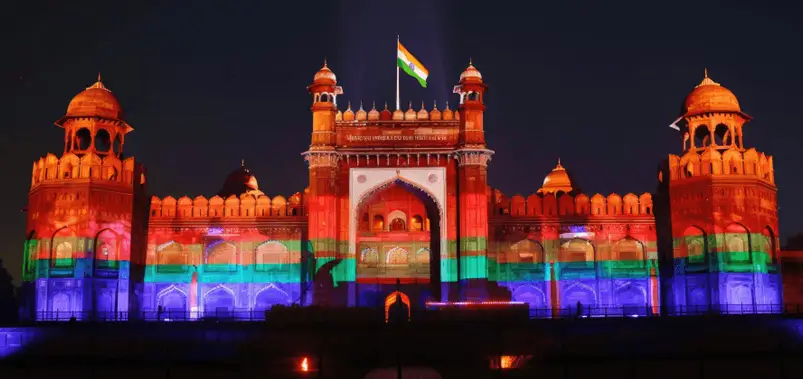
Many visitors are unaware that the Red Fort offers an evening sound and light show that presents the history of Delhi and the fort through narration, music, lighting effects, and visual storytelling.
The program is designed to bring history to life by explaining the rise of the Mughal Empire, the development of Delhi, and important historical events associated with the fort. For travelers who enjoy historical context, the show can add another dimension to the daytime visit.
Ticket prices for the show vary depending on seating category and visitor type. In general, tickets remain reasonably affordable compared with similar heritage presentations in other countries. Advance booking is often advisable during busy tourism periods.
The atmosphere of the fort after sunset differs dramatically from the daytime experience. Illuminated walls and carefully directed lighting create a more theatrical environment that many visitors find memorable.
The show is particularly popular among travelers interested in history because it provides a narrative framework that connects many of the structures seen earlier in the day. Rather than viewing the fort simply as a collection of buildings, attendees gain a deeper understanding of the people and events associated with the site.
For visitors spending several days in Delhi, attending the sound and light show can be a worthwhile addition to the itinerary. Those with very limited time may prefer to focus on daytime exploration, but history enthusiasts generally appreciate the extra perspective provided by the evening program.
One of the most common mistakes visitors make is arriving without enough time. The Red Fort is considerably larger than many people expect, and rushing through the complex reduces the quality of the experience.
Another frequent mistake is visiting during the hottest hours of the day, especially during summer. Temperatures can become extremely uncomfortable, making exploration physically demanding. Morning visits are usually far more pleasant.
Some travelers skip hiring a guide because they assume the monument is self explanatory. While independent exploration is certainly possible, knowledgeable guides often provide stories and historical context that dramatically improve understanding.
Many visitors also underestimate the amount of walking involved. Comfortable footwear is essential. The complex covers a substantial area, and visitors frequently spend several hours on their feet.
Photography enthusiasts sometimes focus exclusively on the major attractions and miss smaller details that reveal the true sophistication of Mughal craftsmanship. Slowing down and paying attention to decorative elements often leads to a richer experience.
Finally, some tourists visit only the Red Fort and immediately leave the area. Combining the fort with nearby attractions such as Jama Masjid and Chandni Chowk creates a much more comprehensive introduction to Old Delhi.
Visitors with a full day available can create one of the most rewarding sightseeing experiences in Delhi by combining the Red Fort with Jama Masjid and Chandni Chowk.
Start the morning at the Red Fort shortly after opening. The cooler temperatures and lower visitor numbers create ideal conditions for exploration and photography. Spend approximately three hours discovering the major sections of the complex.
After leaving the fort, walk or take a short ride to Jama Masjid. Allocate at least one hour to explore the mosque, appreciate its architecture, and enjoy panoramic views from the minaret if available.
Lunch can be enjoyed in the area surrounding Jama Masjid, where several historic restaurants serve traditional Mughlai cuisine. This is an excellent opportunity to experience one of the culinary traditions for which Old Delhi is famous.
The afternoon can then be devoted to Chandni Chowk. Explore the market streets, visit Khari Baoli, observe traditional commerce, shop for souvenirs, and experience the atmosphere that has defined this district for centuries.
Food lovers may wish to end the day with a guided food walk that introduces some of the area's most famous snacks, sweets, and traditional dishes.
This combination of history, architecture, culture, food, and shopping provides one of the most complete introductions to Delhi available in a single day.

We promise you a holiday where everything is taken care of from the moment you land. Trusted drivers waiting for you, handpicked hotels that fit your style, personalized itineraries designed just for your family, and a dedicated team on call 24/7. All you need to do is relax, explore, and create unforgettable memories, while we take care of every detail behind the scenes.
The Red Fort served as the center of Mughal power for generations and witnessed many significant events in Indian history. Its architecture, historical role, cultural symbolism, and continued national importance make it one of the country's most influential heritage sites and an essential stop for anyone seeking to understand Delhi's past.
Two hours is enough to see the major highlights, but visitors interested in history, museums, photography, or architecture will benefit from spending three to four hours. The larger the interest in history, the more time should be allocated.
Visitors should expect a moderate amount of walking. The complex is large, and exploring it thoroughly requires moving between multiple buildings, courtyards, gardens, and museums. Comfortable shoes are highly recommended.
Yes. The monument is one of Delhi's most popular tourist attractions and receives visitors from around the world. Solo travelers generally find it easy to explore independently, especially during daytime hours when the site is active and well attended.
Basic refreshments may be available, but many visitors prefer to eat before or after their visit. The nearby areas of Chandni Chowk and Jama Masjid provide a much wider range of dining options, from traditional snacks to full restaurant meals.
The period between October and March generally offers the most favorable conditions. Cooler temperatures, comfortable weather, and softer light make sightseeing and photography much more enjoyable. Early mornings are particularly rewarding for photographers seeking clear views and fewer crowds.
Absolutely. Children often enjoy the scale of the fort, the large open spaces, and stories about emperors, palaces, and royal life. Families should bring water, wear comfortable footwear, and avoid visiting during the hottest hours of the day.
While not essential, a guide can greatly improve the experience. The Red Fort contains many structures whose significance is not immediately obvious. Historical stories, architectural details, and explanations of court life often make the monument much more engaging. Visitors with a strong interest in history usually consider guides worthwhile.
A typical visitor should budget for the entry ticket, local transportation, refreshments, and possibly a guide. Depending on travel style, total costs often range from approximately ₹1,000 to ₹5,000 per person. Luxury travelers using private transportation and professional guides may spend more, while budget travelers using public transport can spend considerably less.
Yes. The Red Fort differs significantly from the hill forts of Rajasthan because it functioned as an imperial capital rather than a defensive stronghold. The emphasis here is on royal administration, court life, ceremonial spaces, and Mughal architecture. Visitors interested in understanding India's history will find that the Red Fort provides context that complements rather than duplicates experiences elsewhere.