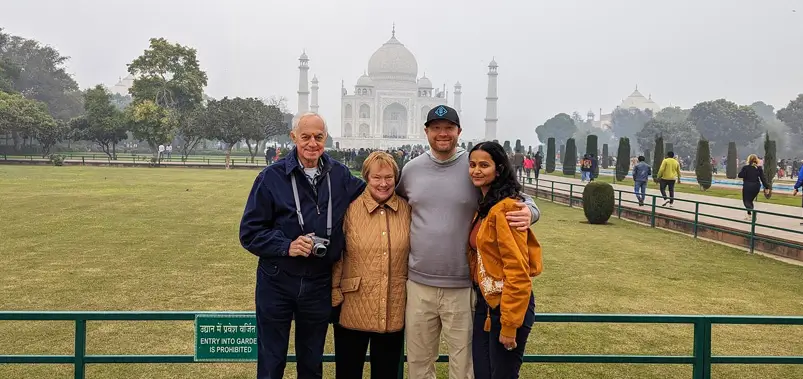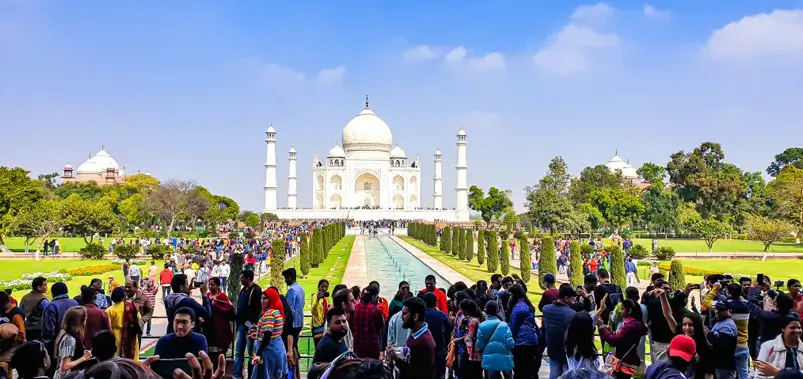
Standing in front of the Taj Mahal is one of those travel experiences that remains unforgettable long after the journey ends. Every year, millions of visitors from the United States, the United Kingdom, Australia, Canada, and many other countries arrive in Agra hoping to witness the world's most famous monument to love. Yet many leave with mixed memories because they spend more time standing in queues, waiting at security checkpoints, and navigating through large crowds than actually enjoying the beauty of the marble masterpiece.
The good news is that avoiding heavy crowds does not require special permission or expensive VIP access. A well-planned visit, the right entry gate, correct timing, and a little understanding of how the monument operates can completely change the experience. Instead of sharing every viewpoint with hundreds of visitors, you can enjoy quieter gardens, shorter security lines, better photographs, and a much more relaxed walk around one of India's greatest UNESCO World Heritage Sites.
International visitors often underestimate how busy the Taj Mahal becomes after breakfast hours. Most group tours from Delhi, Jaipur, and nearby cities reach Agra between 8:30 AM and 10:30 AM, which is exactly when queues become significantly longer. If your itinerary follows the same schedule, you will likely spend valuable sightseeing time waiting rather than enjoying the monument.
The difference between arriving at 6:00 AM and 9:30 AM can easily mean an additional 45 to 90 minutes of waiting at the entrance during the busy tourist season. For photographers, honeymoon couples, families, and luxury travelers, those early hours provide a much calmer atmosphere and far better opportunities to admire the monument without constant interruptions.
Understanding the three official entrance gates is equally important. Each gate serves visitors coming from different parts of Agra, and each experiences different crowd levels throughout the day. Choosing the correct entrance based on your hotel location and arrival time saves both time and unnecessary walking.
This guide explains everything international travelers should know before visiting the Taj Mahal, including the best visiting hours, ticket prices, entry gates, security rules, transportation options, and practical advice that helps create a smooth and memorable visit.
.webp)
Many travel articles simply recommend arriving "early in the morning." While that advice is correct, knowing exactly how early makes a significant difference. The Taj Mahal opens every day at sunrise and remains open until sunset. Since sunrise changes throughout the year, the opening time usually falls between 5:30 AM and 6:30 AM, while closing time generally ranges from 6:30 PM to 7:00 PM depending on the season.
One important point many first time visitors overlook is that the monument is closed every Friday for regular sightseeing. Only worshippers attending prayers at the mosque inside the complex are permitted to enter on Fridays. If your Golden Triangle Tour includes Agra, always make sure your itinerary does not place the Taj Mahal visit on a Friday.
The most peaceful experience begins 30 to 45 minutes before the gates officially open. Reaching the entrance early allows you to join one of the first security lines instead of arriving with the larger tour groups later in the morning. Security screening starts shortly before visitors are allowed inside, and being among the first guests means you can walk through the famous central gardens before they become crowded.
Below is a general guide that works well throughout most of the year.
|
Visiting Time |
Crowd Level |
Experience |
|---|---|---|
|
Sunrise to 7:30 AM |
Very Low |
Best lighting, shortest queues, quiet atmosphere |
|
7:30 AM – 9:00 AM |
Moderate |
Comfortable for sightseeing |
|
9:00 AM – 1:00 PM |
Very High |
Long security lines and busy gardens |
|
1:00 PM – 3:30 PM |
High |
Warm weather with continuous crowds |
|
Last 90 Minutes Before Sunset |
Moderate |
Pleasant light but more visitors than sunrise |
For photographers, the first hour after sunrise is considered the finest period of the day. Soft golden sunlight reflects beautifully across the white Makrana marble, creating photographs with warm tones that gradually change as the sun rises higher. Reflection pools also remain calmer before large crowds begin walking around them, making it easier to capture symmetrical images.
Visitors staying overnight in Agra enjoy a considerable advantage because they can leave their hotel before dawn without worrying about the three to four hour drive from Delhi. Luxury properties such as those near Taj East Gate Road allow guests to reach the entrance within 5 to 15 minutes, making sunrise visits extremely convenient.
Another benefit of arriving early is the temperature. During warmer months, Agra can become extremely hot after 10:00 AM, particularly between April and June. Completing most of your sightseeing before mid-morning not only avoids heavy crowds but also makes walking through the gardens far more comfortable.
If sunrise is not possible, the second best option is entering during the last 90 minutes before sunset. Many day tour visitors have already departed for Delhi or Jaipur by this time, so the number of people inside the complex gradually decreases. Although the monument remains busy, the atmosphere is usually calmer than the late morning rush.
Timing also affects your overall itinerary. Most visitors spend around 2.5 to 3.5 hours inside the complex, including photography, walking through the gardens, visiting the marble mausoleum, and browsing nearby souvenir shops after exiting. Travelers interested in hiring a professional photographer or licensed guide may wish to allow up to 4 hours for a more relaxed experience.
Choosing the right day is equally important. Saturdays, Sundays, Indian public holidays, and school vacation periods attract a significantly higher number of domestic tourists. Whenever possible, schedule your visit on a weekday. A Tuesday or Wednesday sunrise generally provides one of the calmest experiences available throughout the week.
Many international travelers ask whether visiting during the summer guarantees fewer crowds. While overseas visitor numbers are lower during hotter months, domestic tourism remains strong. The most reliable way to avoid crowds is therefore not choosing a particular season, but choosing the right time of day combined with a weekday visit.
Finally, remember that transportation around the monument is regulated to reduce pollution. Petrol and diesel vehicles cannot drive directly to the entrance gates. Visitors usually complete the final approach by walking or using authorised electric shuttle vehicles. Allowing an additional 15 to 20 minutes for this final transfer ensures you reach the security checkpoint without unnecessary stress, especially if you are aiming to enter immediately after sunrise.
Choosing the correct entrance gate is just as important as choosing the right time of day. Many visitors simply follow their driver or the largest crowd without knowing that the Taj Mahal has three official entry gates—East Gate, West Gate, and South Gate. Each entrance serves a different purpose, experiences different crowd levels, and may be more convenient depending on where you are staying in Agra.
There is no difference in the monument itself regardless of which gate you enter. Every visitor eventually walks into the same garden complex and reaches the same marble mausoleum. The real difference lies in waiting times, accessibility, nearby parking, hotel locations, and how quickly you can complete security checks.
Understanding these differences before your visit can save nearly an hour during busy travel periods.
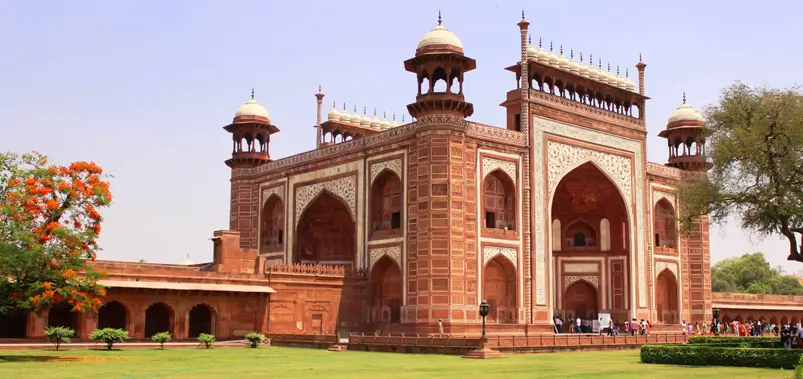
For many foreign tourists, the East Gate is often the most convenient and comfortable entrance. Most luxury hotels, premium resorts, and high-end boutique properties are located on the eastern side of the Taj Mahal, making this gate the shortest and easiest option for guests staying nearby.
Hotels such as The Oberoi Amarvilas, Taj Hotel & Convention Centre Agra, ITC Mughal, Courtyard by Marriott Agra, and several other premium properties are only a short drive from the East Gate. Visitors staying in these hotels usually reach the entrance within 5–15 minutes, depending on traffic and security restrictions around the monument.
One of the biggest advantages of the East Gate is that it generally receives fewer large domestic tour buses during the early morning hours. Between sunrise and approximately 7:30 AM, queues are often shorter compared to the West Gate. During weekdays, visitors arriving early frequently complete security screening within 15–25 minutes. On weekends, national holidays, and during the peak tourist season, waiting times may increase to 30–45 minutes, but they are still often more manageable than later in the day.
Photography enthusiasts also appreciate this entrance because it allows quick access to the central gardens before the busiest period begins. If your objective is capturing the famous reflection pool with minimal crowds, entering through the East Gate at sunrise offers one of the best opportunities.
Another practical advantage is the availability of licensed guides and authorised battery operated shuttle services near this entrance. Since fuel powered vehicles are not permitted close to the monument, visitors usually complete the final section either by walking or by using an electric shuttle.
Typical shuttle fare:
Travelers who enjoy walking generally cover this distance in 5–8 minutes.
The East Gate is particularly recommended for:
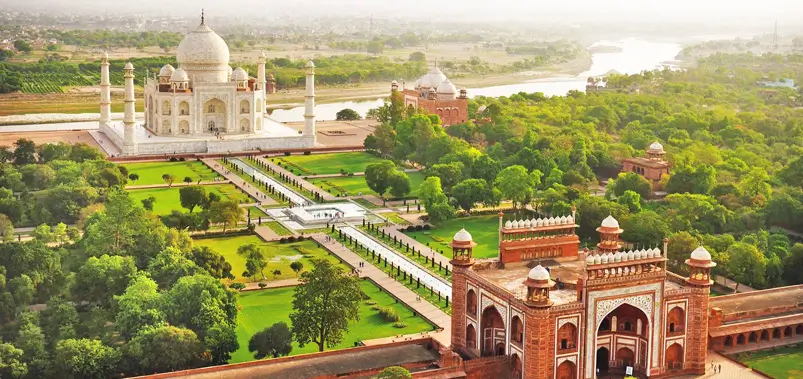
The West Gate is traditionally the busiest entrance because many domestic tourists and organised coach tours arrive from this direction. It is also commonly used by visitors travelling from Agra Cantt Railway Station and several central parts of the city.
If you arrive between 8:30 AM and 11:00 AM, this gate often experiences the longest queues of the day. Large tour buses from Delhi, Jaipur, and nearby cities typically reach Agra during this period, creating extended waiting lines outside the security area.
Average waiting times during busy periods may be:
|
Arrival Time |
Estimated Waiting Time |
|---|---|
|
Sunrise |
20–30 minutes |
|
8:30 AM – 11:00 AM |
45–90 minutes |
|
Afternoon |
20–40 minutes |
Despite being busier, the West Gate remains an excellent choice for visitors staying in central Agra or arriving directly by train. The surrounding area offers numerous parking facilities, authorised guides, restaurants, and souvenir shops.
Distance from Agra Cantt Railway Station:
Visitors using private cars should remember that all vehicles stop at designated parking zones, after which passengers either walk or take authorised electric vehicles toward the entrance.
One advantage of the West Gate is that many licensed government approved guides wait here. Hiring an experienced guide can significantly improve your understanding of the monument's architecture, marble inlay work, Persian garden layout, and the fascinating history behind Shah Jahan's masterpiece.
Guide charges generally range between:
Private luxury guides arranged through reputable tour companies may charge more but usually provide a far more personalised experience.
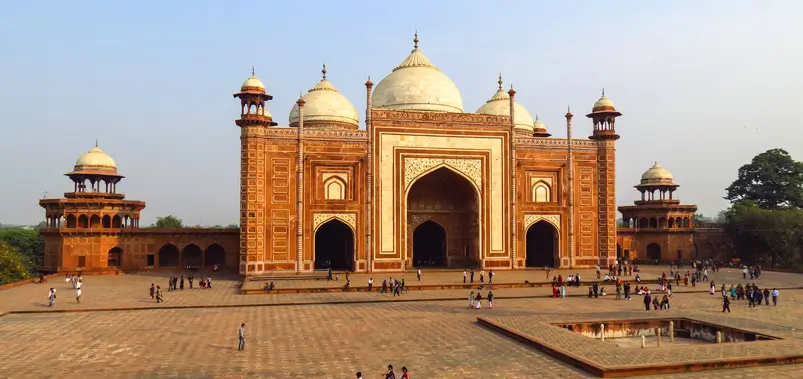
The South Gate is the least recommended entrance for first time visitors. Although it serves local access routes, it is not normally the preferred option for international tourists, especially those arriving early in the morning.
One important point to remember is that the South Gate generally opens later than the East and West Gates. Because sunrise visitors aim to enter as soon as the monument opens, this entrance does not provide the same advantage for early morning sightseeing.
The surrounding area is also busier with local markets and smaller commercial establishments, making it less convenient for visitors staying in premium hotels.
Unless you are already staying very close to the southern side of the monument or your local guide specifically recommends it based on your itinerary, choosing either the East Gate or West Gate usually results in a smoother experience.
For most international visitors, the recommendation is simple:
Understanding the ticket structure before arriving helps avoid unnecessary delays at the entrance. The Taj Mahal offers different ticket categories based on nationality, and an additional ticket is required for visitors wishing to enter the main marble mausoleum.
The current ticket structure is approximately:
|
Visitor Category |
Entry Ticket |
|---|---|
|
Indian Citizens |
₹50 |
|
Foreign Tourists |
₹1,100 |
|
SAARC & BIMSTEC Citizens |
₹540 |
|
Main Mausoleum Entry |
Additional ₹200 |
The additional ₹200 ticket allows access inside the central marble mausoleum where the beautifully crafted cenotaphs of Shah Jahan and Mumtaz Mahal are located. Visitors who do not purchase this ticket may still enjoy the gardens, mosque, guest house, and exterior architecture but cannot enter the inner marble chamber.
Children below the specified government age limit are generally eligible for free entry according to current Archaeological Survey of India regulations.
Purchasing tickets online is strongly recommended for foreign visitors because it reduces waiting time at the ticket counters and allows faster entry through the verification checkpoints. Online tickets are issued with a QR code that can be scanned directly at the entrance.
Visitors should keep the following items readily available during ticket verification:
Credit cards, international debit cards, UPI, and cash payment options are generally available at authorised ticket counters, although carrying a card remains the most convenient option for overseas travellers.
Buying tickets from unofficial agents outside the monument should always be avoided. Official counters and authorised online booking platforms provide transparent pricing, ensuring that visitors pay only the government approved entry fee without unnecessary commissions or inflated charges.
.webp)
The Taj Mahal is one of the most protected heritage monuments in India, and every visitor must pass through a detailed security screening before entering the complex. Many first time international travelers underestimate the time required for this process, especially during busy mornings when thousands of visitors arrive within a short period.
Unlike airports, the security procedure is straightforward, but it becomes much slower when visitors carry large bags, prohibited items, or electronic accessories that require additional inspection. One of the easiest ways to reduce your waiting time is to travel light. Carry only the essentials you actually need during your visit and leave unnecessary luggage at your hotel.
Every visitor passes through metal detectors, and all bags are scanned before entry. Separate queues are generally maintained for men and women, helping the screening process move more efficiently.
Visitors are generally allowed to carry a limited number of personal belongings that make the visit comfortable without affecting monument security.
Commonly permitted items include:
|
Item |
Allowed |
|---|---|
|
Passport |
✔ Yes |
|
Mobile Phone |
✔ Yes |
|
Camera |
✔ Yes |
|
Wallet |
✔ Yes |
|
Small Handbag |
✔ Yes |
|
Small Water Bottle |
✔ Yes |
|
Medicines (if required) |
✔ Yes |
|
Sunglasses |
✔ Yes |
|
Hat or Cap |
✔ Yes |
Keeping these items easily accessible speeds up the security check and reduces unnecessary delays.
Security officers regularly confiscate prohibited items before visitors enter the monument. Some articles may be deposited outside the entrance if storage facilities are available, while others simply require returning to your vehicle or hotel.
The following items should generally be avoided:
|
Item |
Status |
|---|---|
|
Large Backpacks |
✘ Not Recommended |
|
Tripods |
✘ Not Allowed |
|
Drones |
✘ Strictly Prohibited |
|
Food Packets |
✘ Not Allowed |
|
Cigarettes & Tobacco Products |
✘ Not Allowed |
|
Alcohol |
✘ Prohibited |
|
Sharp Objects |
✘ Not Allowed |
|
Large Speakers |
✘ Not Allowed |
|
Professional Lighting Equipment |
✘ Restricted |
Professional photographers using commercial equipment should obtain the necessary permissions before attempting a commercial shoot inside the monument.
Another common mistake involves carrying shopping bags from Agra markets before visiting the Taj Mahal. Many travelers purchase souvenirs first and then head directly to the monument, only to face unnecessary inconvenience during security checks. It is always better to complete shopping after your visit.
Visitors with medical conditions should carry essential medicines in their original packaging whenever possible. Security personnel generally allow necessary prescription medicines after inspection.
Luxury travelers often request their hotel concierge to prepare a small sightseeing bag containing only passports, bottled water, sunglasses, sunscreen, and cameras. This simple arrangement makes the security process considerably smoother.
.webp)
Almost every visitor dreams of capturing the perfect Taj Mahal photograph, but many leave disappointed because their images are filled with hundreds of tourists standing in the background. The monument itself is breathtaking, yet timing and positioning make a tremendous difference.
The biggest advantage of entering shortly after sunrise is that photographers reach the central reflection pool before it becomes crowded. During the first thirty to forty five minutes, visitors can often take wide angle photographs with relatively few people appearing in the frame.
The famous central water channel remains the most photographed location inside the complex. Standing directly along the middle pathway creates the classic symmetrical image that appears in travel magazines around the world. However, by 9:00 AM, visitors usually queue to stand at this viewpoint, making uninterrupted photography far more difficult.
The soft morning light between sunrise and approximately 7:30 AM produces gentle shadows across the marble surface, creating far better portraits than the harsh overhead sunlight later in the day.
For couples visiting during a honeymoon or anniversary trip, professional photographers are available near the monument. Packages generally start around ₹1,500 and may exceed ₹6,000 depending on the number of edited photographs, duration, and equipment used.
Visitors using smartphones can also achieve excellent results by walking slightly away from the central pathway. Many beautiful angles exist along the garden walkways where fewer tourists stop for photographs. These quieter corners often provide natural framing through trees and fountains while maintaining a clear view of the marble monument.
One important rule to remember is that the interior of the main mausoleum has lower lighting levels, making photography more challenging. Flash photography should be avoided where restricted, and visitors are encouraged to respect both monument regulations and fellow travelers while taking pictures.
Another excellent location lies near the mosque on the western side of the complex. This area often attracts fewer visitors than the central pathway and offers unique perspectives of the white marble monument against the surrounding red sandstone architecture.
During winter mornings, light fog occasionally creates dramatic photographs. While some visitors worry that fog will hide the monument, many photographers intentionally visit during these conditions because the gradually emerging silhouette of the Taj Mahal produces extraordinary images that cannot be captured during clear weather.
Many travelers believe crowds are unavoidable, but in reality, several common mistakes contribute directly to a stressful visit.
The first mistake is arriving after breakfast. Most hotel breakfasts finish around 8:00 AM, and many visitors leave immediately afterward. This places them directly into the busiest arrival period of the day.
Another mistake is visiting the Taj Mahal immediately after driving from Delhi. Since the journey takes approximately 3.5 to 4 hours via the Yamuna Expressway, many same day tours reach Agra during the late morning when both temperatures and crowd levels are at their highest.
Spending the previous night in Agra provides a completely different experience. Instead of sitting in traffic before sunrise, travelers can leave their hotel within minutes and reach the monument while the gardens remain peaceful.
Choosing weekends without checking local holidays is another common error. Even during warmer months, Indian public holidays attract thousands of domestic visitors. Scheduling the visit on a Tuesday or Wednesday often produces a noticeably quieter experience.
Many tourists also spend too much time at the entrance because they purchase tickets after arriving. Buying tickets online before reaching Agra reduces unnecessary waiting and allows visitors to proceed directly toward security verification.
Another avoidable mistake is hiring unofficial guides outside the entrance. Government approved guides carry valid identification and provide transparent pricing. Unauthorised individuals frequently approach tourists offering unusually low prices, only to request additional payments later during the tour.
Finally, rushing through the monument because of a tight itinerary reduces the overall experience. The Taj Mahal deserves time. Sitting quietly beside the gardens, observing changing light on the marble, and appreciating the remarkable craftsmanship often become the most memorable moments of the visit.
Visitors following a private Golden Triangle Tour generally enjoy greater flexibility than those travelling with large coach groups. A customised itinerary allows earlier departures, longer photography sessions, relaxed sightseeing, and the freedom to experience the monument without constantly watching the clock.
The difference between a rushed two hour visit during peak crowds and a carefully timed sunrise experience is remarkable. With the right entry gate, advance ticket booking, light luggage, and an early arrival, the Taj Mahal reveals a far more peaceful side that many visitors never have the opportunity to experience.
A memorable visit to the Taj Mahal is not only about choosing the right gate or arriving early. Small practical decisions before leaving your hotel often determine whether your morning feels relaxed or stressful. International visitors usually have limited time in Agra, especially those travelling on a Golden Triangle Tour, so avoiding unnecessary delays becomes extremely important.
One of the first decisions should be your choice of transportation. If you are staying in a luxury hotel, arranging a private vehicle through your hotel or tour operator is usually the most comfortable option. Your driver will know the latest traffic restrictions around the monument and the correct parking location. Private transfers also eliminate the uncertainty of negotiating with local taxis early in the morning.
Approximate travel times from popular locations in Agra are:
|
Starting Point |
Distance |
Driving Time |
|---|---|---|
|
Agra Cantt Railway Station |
6 km |
15–20 minutes |
|
Agra Airport |
10 km |
25–30 minutes |
|
Taj East Gate Road Hotels |
1–3 km |
5–10 minutes |
|
Fatehabad Road Hotels |
3–5 km |
10–15 minutes |
Although these driving times appear short, visitors should always leave slightly earlier because vehicles are not allowed directly beside the monument. After reaching the designated parking area, visitors either walk or take an authorised electric shuttle before reaching the security checkpoint.
Comfortable walking shoes make a significant difference. The Taj Mahal complex covers a large area, and most visitors walk 3–5 kilometres while exploring the gardens, mosque, guest house, and marble platform. Shoes are removed before entering the main mausoleum, where disposable shoe covers are usually provided or visitors walk barefoot on the marble floor.
Hydration is equally important, particularly between March and June when daytime temperatures frequently exceed 35°C (95°F). Carrying a small bottle of water is usually sufficient, and drinking water before entering the monument helps avoid dehydration during the visit.
Another useful recommendation is to carry smaller currency notes if you intend to purchase refreshments or souvenirs after leaving the complex. While many businesses accept international credit cards and digital payments, smaller vendors may prefer cash.
Visitors should also be aware that monkeys occasionally appear around the monument and nearby gardens. They are generally accustomed to people but should never be fed or approached. Keeping food inside your bag and avoiding direct interaction is the safest approach.
For travelers with mobility concerns, the pathways inside the gardens are relatively level, making movement easier than many historic monuments. Wheelchair assistance may be available near the entrance, although availability depends on visitor demand. Senior travelers are advised to arrive early when temperatures are cooler and walking conditions are more comfortable.
Hiring a licensed guide remains one of the best investments during a first visit. Beyond explaining the history of Shah Jahan and Mumtaz Mahal, experienced guides point out details that many independent visitors overlook, including the optical illusion created by the main gateway, the precision of the marble inlay work, Quranic calligraphy that appears perfectly proportioned from ground level, and the remarkable symmetry that defines the monument.
If you wish to avoid carrying cameras, wallets, and phones while posing for photographs, many couples choose to alternate photography duties or hire a professional photographer. This allows everyone to appear naturally in the photographs rather than relying on hurried selfies taken among large groups of visitors.
Finally, resist the temptation to leave immediately after visiting the central mausoleum. Many tourists spend only a few minutes inside before rushing toward the exit. Walking slowly through the gardens, sitting quietly beneath the shaded trees, and appreciating different views of the monument often becomes the highlight of the morning.
We promise you a holiday where everything is taken care of from the moment you land. Trusted drivers waiting for you, handpicked hotels that fit your style, personalized itineraries designed just for your family, and a dedicated team on call 24/7. All you need to do is relax, explore, and create unforgettable memories, while we take care of every detail behind the scenes.
Yes. An overnight stay allows you to reach the Taj Mahal before sunrise, avoid the largest crowds, enjoy cooler temperatures, and experience the monument at its most peaceful, making it the preferred option for many international travelers.
No. Food items are generally not permitted inside the monument. Carrying only a small bottle of water is recommended.
Comfortable clothing, walking shoes, sunglasses, and a hat are recommended. During summer, light breathable fabrics make sightseeing much more comfortable.
Yes. Cameras are generally permitted, but tripods, drones, and large commercial photography equipment are not allowed without special permission.
Yes. Online booking is highly recommended because it reduces waiting time at ticket counters and speeds up the entry process.
Most visitors spend 2.5 to 3.5 hours exploring the monument comfortably, while photography enthusiasts may stay for up to four hours.
No. The Taj Mahal remains closed every Friday for general sightseeing.
The standard ticket for foreign tourists is approximately ₹1,100, with an additional ₹200 if you wish to enter the main marble mausoleum.
The East Gate is usually the preferred choice for international visitors, particularly those staying in luxury hotels near Taj East Gate Road.
Yes. Sunrise generally offers the lowest crowd levels, cooler temperatures, softer lighting for photography, and shorter security queues.