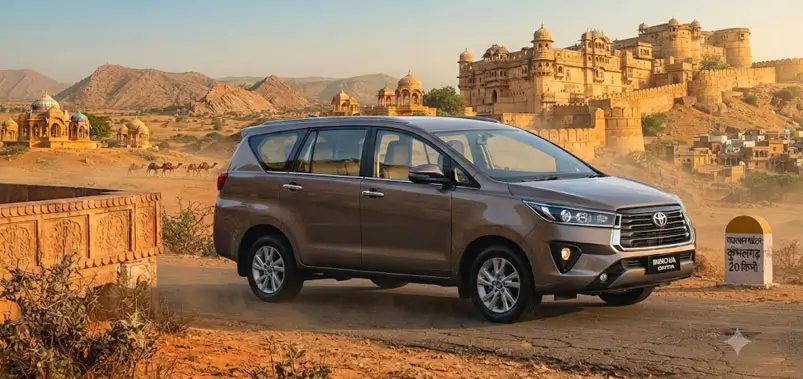
Hiring one private driver for your entire India trip can completely change the way a multi city journey feels. Instead of arranging a new taxi every morning, explaining hotel addresses repeatedly, moving luggage between different vehicles and dealing with a different driving style in every destination, the same chauffeur can remain with you across an entire road circuit. For travelers visiting Delhi, Agra, Jaipur and Rajasthan, this can be particularly valuable because many of the major destinations connect naturally by road. However, keeping the same driver throughout the journey is not automatically the right choice for every itinerary. If the trip includes several domestic flights, very long geographical jumps or regions thousands of kilometres apart, separate drivers in each destination can be more practical and financially sensible.
The decision therefore should not be reduced to a simple question of which option is cheaper. Travelers need to consider the route, total road distance, luggage, number of passengers, vehicle category, driver experience, empty return mileage, airport sectors and how much flexibility they expect during the trip. A couple completing Delhi–Agra–Jaipur–Jodhpur–Udaipur has completely different transportation requirements from a traveler visiting Delhi, Varanasi, Mumbai and Kochi by air. In the first itinerary, one car and driver for an India tour can provide excellent continuity. In the second, keeping one vehicle would be commercially inefficient and geographically impractical.
Price is also more complicated than it first appears. A separate local vehicle may look inexpensive when quoted for a four hour city transfer, while a full time private chauffeur quotation appears much larger because it covers multiple days. Yet the full time vehicle can include airport pickup, hotel transfers, intercity transportation, sightseeing movements, restaurant transfers and waiting time. When those individual journeys are added together, the price gap may become much smaller.
For premium travelers, the decision also affects service quality. A chauffeur who remains with a couple for ten or fourteen days gradually becomes familiar with their preferred departure times, luggage arrangement, comfort stop habits and daily routine. A new driver in every city begins that relationship from zero. On the other hand, city based drivers can have stronger street level familiarity with their own destination and remove the need to pay for a vehicle on days when travelers are flying elsewhere.
Golden Triangle Tours can arrange both transportation structures according to the actual itinerary. For road based Golden Triangle and Rajasthan journeys, Mr. Nand Singh Rathore and his team can arrange a private chauffeur driven India tour with an appropriate sedan, Innova Crysta, Tempo Traveller or larger vehicle. When the route is better served by flights, separate airport and city vehicles can be incorporated rather than unnecessarily keeping one car attached to the booking.
The better option is therefore determined by the route. For the right itinerary, keeping one driver is one of the most practical upgrades an international traveler can purchase in India.
A private car with driver in India is different from hiring a taxi for each transfer. On a continuous road itinerary, the vehicle is reserved for the travelers across multiple days and cities. The driver collects the guests from the airport or hotel, handles the road sectors between destinations, waits while they complete sightseeing and remains available for the agreed daily itinerary. When the travelers move from Delhi to Agra and then from Agra to Jaipur, they do not leave one vehicle at the city boundary and enter another. Their luggage stays in the same vehicle, they know the driver waiting outside, and there is continuity from one destination to the next.
Consider a couple taking a twelv day route covering Delhi, Agra, Jaipur, Pushkar, Jodhpur and Udaipur. With a continuous chauffeur arrangement, the driver may collect them from Delhi International Airport and transfer them to the hotel. During Delhi sightseeing, the vehicle handles movement between the hotel and attractions. When the couple checks out for Agra, their luggage is loaded into the same vehicle and the driver continues with them. After Agra sightseeing, the same arrangement continues to Jaipur and farther into Rajasthan. The driver may remain with the travelers until their final airport or hotel drop in Udaipur, depending on the confirmed route.
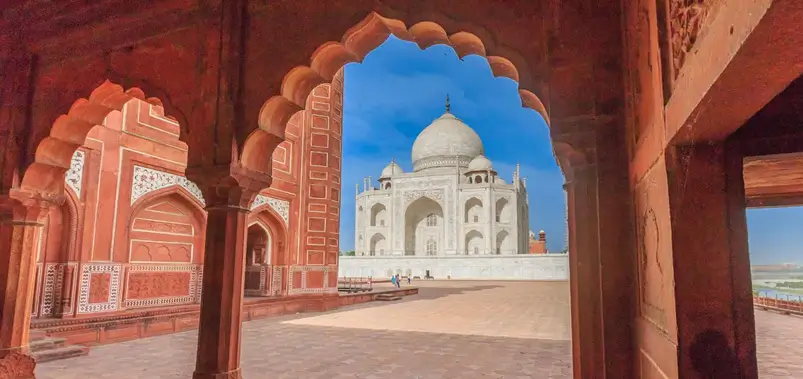
This does not mean the driver follows the travelers inside monuments or acts as their professional historical guide. During a visit to the Taj Mahal, Amber Fort or Mehrangarh Fort, the driver normally drops the travelers at the appropriate access point and waits while a local professional guide handles the sightseeing if guiding has been arranged. The driver’s role is transportation, road management and practical logistical continuity.
A full tour chauffeur also does not necessarily remain available twenty four hours a day. Drivers require proper rest, particularly before long highway sectors. A professional itinerary should use sensible driving hours and should not expect a driver who completed a long intercity journey late at night to begin another extended road sector after only a few hours of sleep.
The vehicle is nevertheless substantially more flexible than a collection of pre-booked transfers. If the travelers want to leave the hotel at 9:30 a.m. instead of 9:00 a.m., the driver can usually accommodate that within the day's schedule. If they need a comfort stop during a highway journey, they can stop. If lunch takes longer than expected, there is no separate taxi booking waiting to expire.
For travelers unfamiliar with India, that continuity can remove a surprising amount of daily administration.
The strongest case for hiring one driver for an India trip occurs when most destinations are connected logically by road. The Golden Triangle is a classic example. Delhi, Agra and Jaipur form a natural private car circuit, and travelers frequently continue from Jaipur into Pushkar, Jodhpur or Udaipur. In this situation, repeatedly changing cars provides little practical benefit because a vehicle is needed for both intercity transfers and local transportation.
A Delhi–Agra–Jaipur–Jodhpur–Udaipur itinerary is even more suitable for continuity. The travelers have several major road sectors, and the private vehicle becomes a core part of the journey rather than an occasional transfer service. International luggage is another reason the same car arrangement works well. Instead of repeatedly determining whether a new taxi has enough boot space for two or three large suitcases, the correct vehicle is selected at the beginning of the trip. Once the luggage configuration works, it remains largely unchanged.
Families can benefit even more. Parents may keep water, jackets, travel pillows, child related items and smaller bags inside the same vehicle during road days. Senior travelers can become familiar with the vehicle's entry height, seat position and air-conditioning. Groups know where their bags fit and do not need to reorganize them whenever a new vehicle arrives.
Continuity can also improve communication. During the first two days, the driver learns that the travelers prefer a short coffee stop after two hours of driving, want the air-conditioning at a particular level or would rather leave fifteen minutes earlier to avoid feeling rushed. By the fifth day, these preferences no longer require repeated explanation.
This is not about turning the driver into a personal servant. A professional driver remains a transport professional with defined working responsibilities. The benefit comes from familiarity and operational consistency.
For travelers on a private Rajasthan road trip, this can be particularly valuable because the distances between cities are substantial enough for the vehicle to matter. Jaipur to Jodhpur, Jodhpur to Udaipur and routes involving Jaisalmer can place travelers in the car for several hours. A driver whose road behavior and professionalism they already trust can make those journeys more comfortable.
Changing drivers simply because a new city has been reached can introduce unnecessary variables. The replacement vehicle may be older, luggage may fit differently, the new driver may communicate differently and pickup procedures need to be established again. None of these problems is inevitable, but keeping a good chauffeur removes them.
There are equally clear situations where keeping one chauffeur makes little sense. The most obvious is an itinerary dominated by domestic flights. A traveler visiting Delhi, Varanasi, Mumbai, Kochi and another distant region should not attempt to send the same road vehicle across India simply to preserve driver continuity. Separate private airport transfers and city cars in India are much more practical.
Suppose a couple spends three nights in Delhi, flies to Varanasi for two nights, flies to Mumbai and later continues to Kerala. A Delhi vehicle cannot reasonably follow the travelers through this route without enormous empty road mileage. Even if it were technically possible, the traveler would ultimately be paying for fuel, driver time and repositioning while receiving no benefit from the car during the flight sectors.
Separate city vehicles solve this problem. A driver handles Delhi sightseeing and the airport departure. Another driver meets the travelers at Varanasi Airport and handles local transportation there. Mumbai and Kerala receive their own local arrangements. Each vehicle operates where it is actually required.
A flight heavy itinerary also means the traveler may not need a full day car every day. In a destination where much of the sightseeing is concentrated in a compact area, paying for a dedicated vehicle for an entire multi week journey may create unnecessary cost.
Different drivers can also make sense when the trip is divided into distinct geographical regions. A North India circuit and a South India circuit can use different chauffeur arrangements. For example, a traveler could retain one driver for Delhi–Agra–Jaipur–Jodhpur–Udaipur, fly south and begin a second private car arrangement there. This preserves continuity where continuity is useful without paying for a vehicle to cross an enormous distance empty.
The same principle can apply to Himalayan destinations or routes where road conditions and vehicle requirements change. A particular region may require a locally appropriate vehicle or driver with specialized route familiarity.
The strongest transport structure can therefore be hybrid rather than absolute. Travelers do not need to choose between one driver for every day of the holiday and a completely different taxi for every movement. One chauffeur can cover an eight day road circuit, followed by a domestic flight and another local transport arrangement.
That can provide the best balance between continuity and cost.
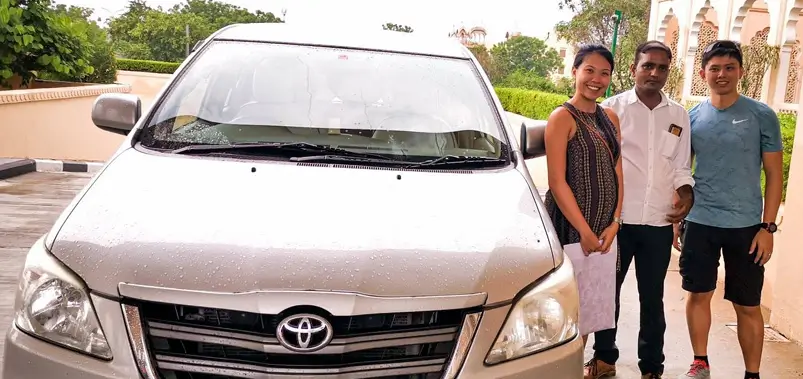
Travelers sometimes assume a private chauffeur is paid only a fixed daily wage. In reality, the price of a multi day car and driver in India normally reflects the complete vehicle operation. The company needs to account for the vehicle, fuel, total kilometres, driver services, driver allowance, tolls, parking, road taxes where applicable and the final position of the vehicle after the travelers have been dropped.
Vehicle category has a major effect on the quotation. A sedan for one or two travelers costs less than an Innova Crysta, while a Tempo Traveller for a private group sits at a higher level. Premium luxury vehicles move into a substantially higher price category.
For a professionally arranged road circuit, travelers should budget on the higher side rather than expecting city taxi rates. A sedan based private arrangement can reasonably move around ₹5,000 to ₹7,000 per day once the trip structure and normal operating costs are considered. An Innova or Innova Crysta can broadly move around ₹7,500 to ₹11,000 per day, while a Tempo Traveller for a private group can move around ₹11,000 to ₹16,000 or more per day depending on seating configuration, total mileage and route. Premium vehicles can cost considerably more.
These figures are budgeting ranges rather than fixed tariffs because a ten day Jaipur–Jodhpur–Udaipur journey does not use the same kilometres as a ten day circuit extending to Jaisalmer and ending in Delhi.
For ten days, a traveler can therefore reasonably see a sedan quotation moving toward approximately ₹50,000 to ₹70,000, an Innova class arrangement toward ₹75,000 to ₹110,000, and larger group vehicles substantially above that amount. A fourteen day private road circuit can move toward ₹70,000 to ₹100,000 or more for a sedan and approximately ₹105,000 to ₹150,000 or more for an Innova class vehicle, particularly when the route contains substantial western Rajasthan mileage or a distant final drop.
The correct question is not simply, “How much does the driver cost per day?” Travelers should request the complete India private driver tour price for the exact route. That allows the operator to account for the real road distance and final vehicle position.
A local city vehicle quotation often looks dramatically cheaper because it covers only one portion of the journey. A traveler might see a low airport transfer rate or an attractive eight hour city car price and assume that booking each day independently will cost much less than retaining one chauffeur.
The comparison becomes inaccurate when the intercity journeys are forgotten.
Consider Delhi, Agra and Jaipur. Separate local vehicles would require a Delhi airport transfer, Delhi sightseeing vehicle, Delhi to Agra transfer, Agra local sightseeing vehicle, Agra to Jaipur transfer, Jaipur sightseeing vehicle and final Jaipur airport or onward transfer. Depending on the itinerary, several of these may be booked with different suppliers.
The traveler must add every one of those transactions before comparing the result with a continuous Golden Triangle car and driver package.
The same applies in Rajasthan. A cheap Jaipur city car does not include Jaipur to Jodhpur. A low Jodhpur sightseeing rate does not include Jodhpur to Udaipur. A Udaipur airport transfer does not solve any of the previous road sectors.
Separate drivers can still be cheaper, particularly when the traveler uses trains or flights between cities. The mistake is comparing a city only taxi price with a complete multi day transport package as though they are equivalent products.
Another issue is waiting time. A local vehicle may be sold for a defined number of hours or kilometres. Additional time can be charged separately. A multi day tourist vehicle is generally structured around the confirmed itinerary and may provide more flexibility within normal operating limits.
Travelers should therefore calculate the total India transport cost, including every airport transfer, sightseeing day and intercity movement, before deciding which model offers better value.
For international couples and small families taking a substantial road journey, an Innova Crysta with private driver in India is often worth serious consideration even when a sedan would technically be sufficient. The reason is not prestige. It is the number of hours travelers may spend inside the vehicle.
A ten or fourteen day Golden Triangle and Rajasthan circuit can contain several long road sectors. Seat comfort, interior space and luggage flexibility are experienced repeatedly. The cost difference between a sedan and an Innova therefore needs to be divided across the complete trip rather than judged as one large upgrade.
Suppose a sedan costs ₹65,000 for the route and an Innova class vehicle costs ₹95,000. The upgrade is ₹30,000. Across ten days, that is ₹3,000 per day for the vehicle, not per traveler. For a couple, the difference is ₹1,500 per person per day. For four travelers, it falls to ₹750 per person per day.
For travelers already spending thousands of dollars on hotels and international flights, that additional amount can be a sensible investment in road comfort.
Luggage needs to be considered honestly. A vehicle advertised with six or seven passenger seats does not necessarily have room for six international travelers and six large suitcases. Seat count and usable touring capacity are different things.
A professional operator should therefore ask about both passengers and luggage before confirming the vehicle.
This is a reasonable concern. A driver who spends most of his working life on North India tourist circuits can know the road network between major destinations extremely well, but that does not mean he should replace professional city guides or specialized local experts.
The chauffeur needs to know how to reach the hotel, where the vehicle can wait, which access point works for a monument and how to manage the road journey efficiently. He does not need to provide a scholarly explanation of Mughal architecture at the Taj Mahal.
This is why the combination of one private driver plus local city guides can work so effectively.
The chauffeur provides continuity across the complete road journey. Local guides join where their expertise matters.
In Delhi, a local guide handles the city's history and sightseeing.
In Agra, another professional can focus on the Taj Mahal and Agra Fort.
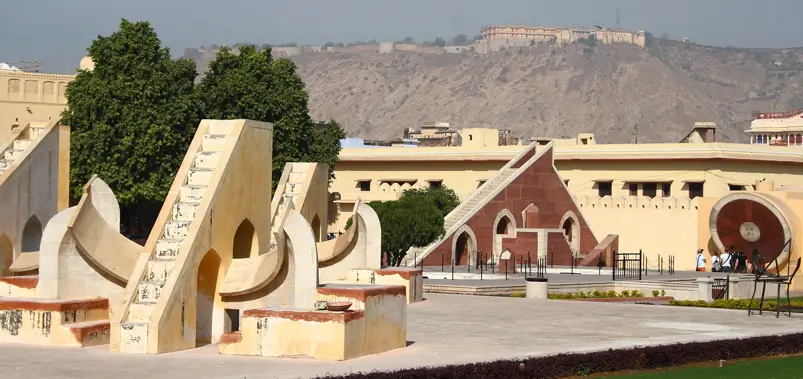
In Jaipur, a Jaipur specialist can accompany the travelers through Amber Fort, City Palace and Jantar Mantar.
In Jodhpur or Udaipur, local professionals can provide destination specific interpretation.
The traveler receives the logistical consistency of one vehicle without sacrificing local expertise.
A driver may naturally provide practical suggestions about restaurants, departure times and highway stops, but travelers should not evaluate the chauffeur according to whether he can perform every other tourism role.
One of the least measurable benefits of keeping the same chauffeur is the reduction in repeated communication. On the first day, the driver and traveler are strangers. By the fourth or fifth day, a professional working relationship has developed.
The driver knows how much time the guests normally need in the morning. The travelers know where the driver waits after sightseeing. Everyone understands the luggage arrangement. The chauffeur knows whether the guests prefer air-conditioning strong or moderate, whether they like highway breaks and whether they tend to have dinner early or late.
This familiarity can make a private India road trip feel considerably smoother.
With a different driver every city, none of these details is difficult to explain, but they must be explained repeatedly. The traveler receives a new phone number, identifies a new vehicle, checks the luggage again and adjusts to another person's driving style.
For a two day city break, this barely matters.
Across fourteen days, it can.
The benefit is particularly noticeable for senior travelers, families and first time visitors who prefer consistency.
Travelers sometimes worry that they must book a guest room for the chauffeur at every hotel. In a properly structured private tour quotation, the operator should make the driver’s overnight arrangement clear and should normally handle it without requiring the traveler to reserve a luxury room.
Tourist drivers traveling between cities require meals, rest and overnight accommodation. Some hotels provide basic driver facilities. In other destinations, the transport company or driver arranges suitable accommodation nearby. A driver allowance may be incorporated into the vehicle quotation to cover these operating requirements.
Travelers should not assume the chauffeur sleeps in the vehicle. A driver who is expected to handle long highway journeys needs proper rest, and responsible operations should treat that as a safety requirement rather than an optional comfort.
When comparing private driver India tour costs, travelers should ask whether driver allowance and overnight expenses are already included. A cheap quotation that later adds daily allowance and night charges should not be compared directly with a more complete all inclusive vehicle price.
The traveler also does not need to invite the driver to every meal. Professional boundaries are perfectly normal. The driver can make his own meal arrangements while the guests eat at their hotel or restaurant.
The objective is a respectful professional arrangement where the traveler receives reliable service and the driver receives adequate rest.
One of the biggest commercial differences between continuous and city based transportation is empty return mileage.
Suppose a vehicle and driver are based in Delhi. They collect travelers in Delhi and spend ten days driving through Agra, Jaipur, Jodhpur and Udaipur. The travelers then fly home from Udaipur.
The vehicle is still in Udaipur.
It may need to return to Delhi even though the passengers are no longer inside.
Someone has to pay for that fuel, road time and vehicle usage. Depending on the operator's pricing structure, the return cost may already be built into the original quotation or may be calculated through total chargeable kilometres.
This is why one driver quotations can occasionally appear high when the tour ends far from where the vehicle began.
A traveler should ask whether the final private car price includes return kilometres.
A good written quotation should make this clear from the beginning.
Different city vehicles avoid some of this repositioning because each supplier operates locally. However, the traveler then loses continuity and may need several independent transfer arrangements.
The correct option depends on whether the savings from local vehicles exceed the value of having one chauffeur.
Delhi, Agra and Jaipur are almost perfectly suited to a continuous private car arrangement because the cities form a logical road circuit.
A driver can collect travelers at Delhi Airport, remain available during Delhi sightseeing, transfer them to Agra, continue to Jaipur and handle the final departure according to the itinerary.
The luggage remains in one vehicle.
There are no railway station transfers unless the traveler specifically wants a train.
Departure times can be adjusted within the agreed itinerary.
Roadside comfort breaks are straightforward.
A Golden Triangle tour with private driver can therefore provide significantly more control than arranging individual taxis.
For two travelers, a sedan may be sufficient. An Innova Crysta is often preferable when comfort and luggage space are priorities. Families and groups can use larger vehicles.
Professional guides can still join in each city, giving travelers both transport continuity and specialist sightseeing.
Rajasthan contains major destinations connected by long road sectors, making the vehicle a central part of the trip.
A Jaipur–Pushkar–Jodhpur–Udaipur circuit works naturally with one chauffeur.
Adding Jaisalmer makes the road element even more significant.
Changing drivers after every city would require several separate transport contracts and repeated luggage transfers without necessarily producing any major operational advantage.
A Rajasthan tour with private car and driver allows the route to operate as one continuous journey.
The chauffeur also becomes familiar with the complete schedule. He knows which days are long transfers and which are local sightseeing days. He can coordinate departure times around road conditions and hotel check in schedules.
For travelers spending ten or fourteen days in Rajasthan, this continuity can be worth paying for.
A private chauffeur should not be treated as an unlimited hours service.
Road safety matters.
If travelers attend a late dinner and return to the hotel after midnight, expecting the same driver to begin an eight hour highway journey at 5:00 a.m. is not reasonable.
A well structured chauffeur driven India itinerary should provide appropriate rest.
Very late night local movements may sometimes require a separate vehicle if the main driver needs to rest before the following day's road sector.
Similarly, major unscheduled detours can affect the cost.
Private travel provides flexibility, but a confirmed Jaipur to Jodhpur transfer cannot automatically become a Jaipur to distant destination to Jodhpur route with hundreds of extra kilometres at no additional charge.
A professional company should explain how significant route changes are priced.
This protects both the traveler and the driver.
For a couple completing a road based Golden Triangle or Rajasthan itinerary, one chauffeur is generally the stronger choice.
Two travelers do not need multiple vehicles, and the cost of one private car is shared between them.
The same driver provides airport transfers, road journeys and daily transportation.
An Innova Crysta can provide additional comfort when budget permits, while a sedan can keep the total transport price lower.
Couples celebrating a honeymoon or anniversary may particularly appreciate not having to think about transportation every morning.
The vehicle is simply there according to the confirmed schedule.
If the couple's itinerary instead contains Delhi, Varanasi, Mumbai and Kerala with flights between destinations, separate regional drivers become more sensible.
The route, rather than the number of travelers, remains the deciding factor.
Families receive even greater practical value from transport continuity because luggage volume increases rapidly.
A family of four may have four large suitcases plus cabin bags. Moving those items between multiple vehicles becomes inconvenient.
Keeping one suitable vehicle allows the family to establish a working luggage arrangement at the beginning of the trip.
For five or six travelers, an Innova may no longer provide adequate touring capacity once luggage is included. A Tempo Traveller with driver in Rajasthan can provide a more comfortable group solution.
The cost is higher than an SUV, but it is divided among more passengers.
A group should never select the vehicle only from the advertised number of seats. Comfortable touring capacity must include luggage.
For a flight heavy group itinerary, local coaches or Tempo Travellers in each destination can still make more commercial sense.
For a continuous Delhi–Agra–Jaipur–Rajasthan road journey, one private chauffeur for the full India circuit will often provide better overall value even when the initial quotation looks higher than individual local taxi rates. The traveler receives the vehicle for intercity sectors, sightseeing movements, airport transfers and routine daily transportation while also gaining continuity and convenience.
For a flight heavy itinerary, separate local drivers usually provide better value because the traveler avoids paying for empty vehicle movement between distant regions.
A hybrid arrangement is often strongest for larger India itineraries. One chauffeur can handle the complete North India road circuit. The traveler then flies to another region and begins a new transport arrangement there.
Golden Triangle Tours can structure transportation according to this logic rather than forcing one model onto every journey. Mr. Nand Singh Rathore and his team can arrange a continuous private driver where road travel makes sense and separate local vehicles where flights or geographical distance make them more efficient.
For travelers comparing quotations, the decision should ultimately be based on total transportation cost, vehicle quality, luggage capacity, route continuity, driver reliability and the number of hours the vehicle will actually be used. A slightly higher transport budget can be worthwhile when the same professional driver and comfortable vehicle will be part of the journey for ten or fourteen days.
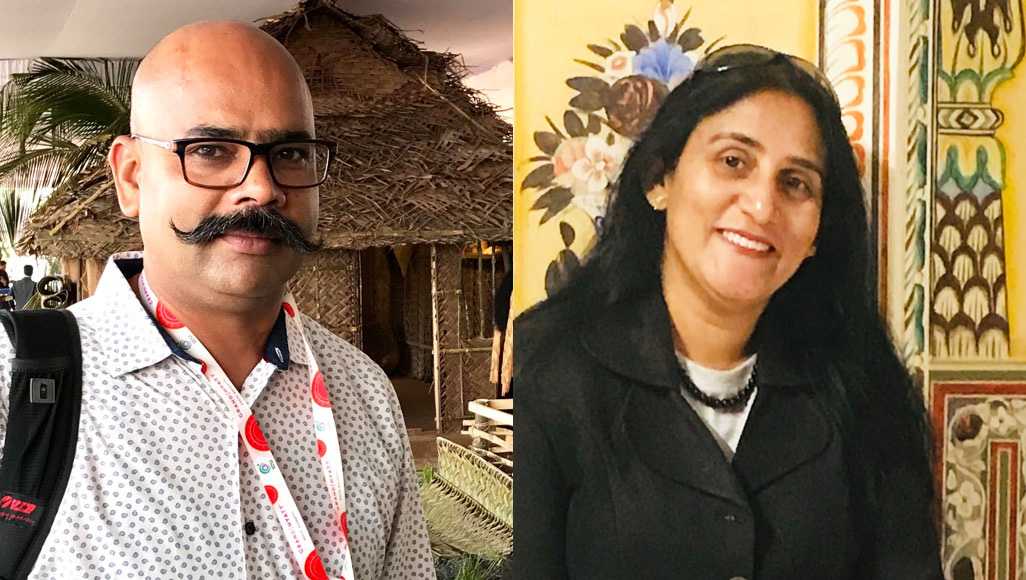
We promise you a holiday where everything is taken care of from the moment you land. Trusted drivers waiting for you, handpicked hotels that fit your style, personalized itineraries designed just for your family, and a dedicated team on call 24/7. All you need to do is relax, explore, and create unforgettable memories, while we take care of every detail behind the scenes.
Confirm the vehicle category, passenger and luggage capacity, complete route, total price, fuel, tolls, parking, driver allowance, interstate charges, extra-kilometre policy, working-hour expectations and return mileage. A complete written transport quotation makes it much easier to judge whether one chauffeur or separate city vehicles offer better value.
The vehicle may need to return to its original operating city. This can create empty return mileage, which may already be included in the package or calculated as part of the chargeable distance. The quotation should clarify this before confirmation.
They can be when travelers fly or take trains between destinations and need a vehicle only for local sightseeing. On a continuous road route, travelers must add the cost of every city car, airport transfer and intercity transfer before comparing it with one full-tour vehicle.
For long road circuits, it often is. An Innova Crysta private driver package provides more passenger and luggage space than a standard sedan, which can be particularly useful for couples with large international bags, families and travelers spending many hours on the road.
Usually the operator handles the driver's overnight arrangements through driver facilities, local accommodation or an allowance structure. Travelers should confirm whether driver allowance and overnight expenses are included in the vehicle quotation before booking.
Not necessarily. The chauffeur manages transportation and practical road logistics. A professional local guide provides detailed historical and cultural interpretation at monuments and city attractions. Using the same driver with separate local guides can provide an effective combination.
On a continuous Rajasthan private driver tour, the same chauffeur can normally remain with the travelers across the road circuit. Professional local guides can join separately for historical sightseeing in individual cities.
A fourteen-day sedan-based road circuit can reasonably move toward ₹70,000 to ₹100,000 or more, while an Innova or Innova Crysta can move toward approximately ₹105,000 to ₹150,000 or more depending on mileage, inclusions and the final drop city.
The complete cost depends on vehicle and route. For higher-side practical budgeting, a sedan arrangement can move around ₹50,000 to ₹70,000, while an Innova-class vehicle can broadly reach ₹75,000 to ₹110,000 or more. Longer routes and distant final drops can increase the price.
For a road-based itinerary covering Delhi, Agra, Jaipur and Rajasthan, keeping one private driver for the entire trip is often more convenient because the same vehicle handles intercity transfers, sightseeing movements and luggage. Separate drivers are generally more practical when the journey relies heavily on domestic flights.