A luxury India tour cost can range from a few hundred dollars per person per day to several thousand dollars per day, and the difference is not simply caused by adding better hotels. Genuine luxury travel in India combines accommodation, private transportation, professional guides, airport handling, carefully timed internal connections, premium dining, high quality support and enough flexibility to change the pace when the traveler wants something different.
For two international travelers, a well arranged private journey using strong five star hotels can realistically begin around US$300 to US$500 per person per day once accommodation, private ground transportation, local guides and normal sightseeing services are combined. A higher end itinerary using palace hotels, premium rooms and more expensive private experiences can move toward approximately US$500 to US$900 per person per day. At the ultra luxury end, where travelers request iconic palace suites, premium safari camps, charter arrangements, luxury trains or highly personalized services, spending can exceed US$1,000 per person per day without difficulty.
These ranges should not be treated as fixed package rates. India contains an unusually wide luxury market. A five star room in Delhi may cost US$250 on one date while an iconic palace suite in Rajasthan can cost several times that amount per night. A comfortable Innova Crysta with chauffeur is priced very differently from a Mercedes class vehicle. A standard private guide is not priced like a specialist historian or full time multilingual escort. A domestic economy flight is completely different from arranging premium cabin travel or private aviation.
This is why asking only, “How much does a luxury India holiday cost?” rarely produces a useful answer.
A stronger question is, “Where will the money go, and which upgrades will actually improve my trip?”
Golden Triangle Tours can arrange premium and private India journeys around the traveler’s preferred hotel level, vehicle, route and service requirements. Mr. Nand Singh Rathore and his team can coordinate private ground travel across the Golden Triangle, Rajasthan and wider India without requiring every city to use the same accommodation or service category.
The strongest private luxury India tour is usually not the itinerary where every available component has been upgraded. It is the one where the budget has been allocated intelligently. A palace hotel may deserve a major premium in Udaipur, while a centrally located five star property can be perfectly appropriate in Delhi. A larger private vehicle may produce more daily comfort than an expensive room upgrade. An additional night can improve the journey more than a premium dinner if the original route is too rushed.
Luxury travel should begin with consistency. A traveler paying premium rates should not move from an excellent hotel into a cramped vehicle, wait for an unconfirmed guide or repeatedly pay small road expenses that were never explained before arrival.
A strong luxury India tour package should normally include carefully selected accommodation, a private air-conditioned vehicle with a professional chauffeur, airport and railway transfers where required, professional local guides, clear sightseeing arrangements and responsive local coordination. Depending on the quotation, monument admissions, domestic flights, meals and premium experiences may also be included.
The quality of these components matters more than the number of items appearing in the inclusion list.
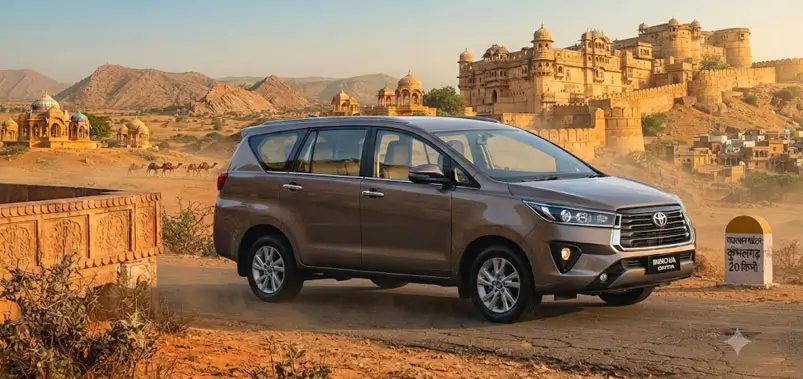
A private chauffeur arrangement should use a vehicle appropriate for passengers and luggage. Two international travelers carrying large suitcases may receive more practical comfort from an Innova Crysta than from a sedan, even if both are technically private cars. Travelers seeking another level of road luxury may request premium vehicles, but this can significantly increase the transport budget.
Hotels should be named before confirmation wherever possible. “Luxury accommodation” is too vague for a high value trip. Travelers should know whether they are receiving an established five star hotel, a boutique heritage property, a palace hotel or an ultra luxury resort.
Professional guides should also be defined. A guide in Delhi, another in Agra and another in Jaipur is normal because local specialists generally work within their own destinations. A full time escort accompanying the traveler throughout the complete route is a different and more expensive service.
Airport handling should feel organized rather than improvised. International arrivals can be met with a pre-arranged transfer, while domestic flight connections should include sufficient time and clear pickup arrangements.
Luxury should also include time.
A trip that moves through eight cities in ten days is not automatically luxurious because the hotels are expensive. If travelers repeatedly check out early, spend six hours on the road and arrive late at another hotel, they may be purchasing premium rooms without receiving a premium journey.
The real value of luxury private travel is control over pace.
Accommodation is usually the biggest component of a luxury India trip budget.
Strong five star hotels in major Indian cities can broadly cost around US$200 to US$500 per room per night, depending on the property, location, room category and travel dates. Premium hotels can move beyond this level, while iconic palace properties and highly desirable suites can exceed US$700 to US$1,500 per night and rise much higher.
A ten night journey demonstrates how quickly this affects the package.
If a couple stays in hotels averaging US$300 per night, accommodation alone contributes approximately US$3,000 to the trip.
Raise the average to US$500 and the hotel component becomes US$5,000.
Use several palace properties averaging US$800 per night and ten nights create an accommodation cost of approximately US$8,000 before private transportation, guides, flights, meals or entrance fees are added.
This is why two companies can quote dramatically different prices for an apparently similar luxury India private tour.
One operator may use strong international five star hotels. Another may use iconic palace properties. Both quotations can legitimately be described as luxury, yet their costs are fundamentally different.
Room category makes the difference even larger.
A hotel's standard luxury room may cost US$350 while a premium view room costs US$600 and a suite costs US$1,000 or more. In Agra, desirable views can carry a premium. In Udaipur, lake facing or premium palace rooms can substantially increase the nightly rate. In Jaipur and Jodhpur, historical suites and palace categories can move the price into another range entirely.
Travelers should therefore ask for the exact hotel and room category instead of evaluating the package through star ratings alone.
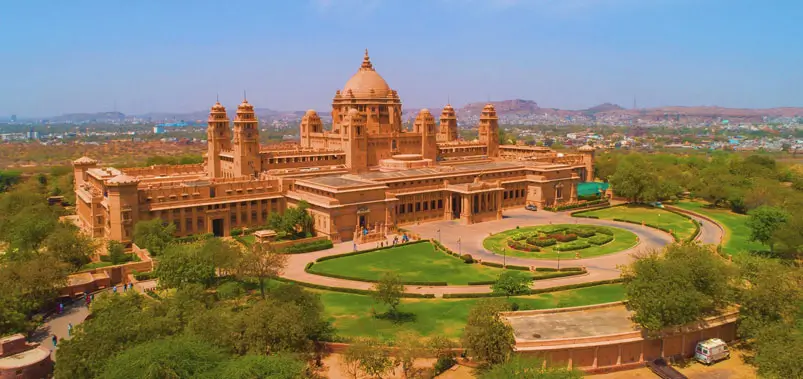
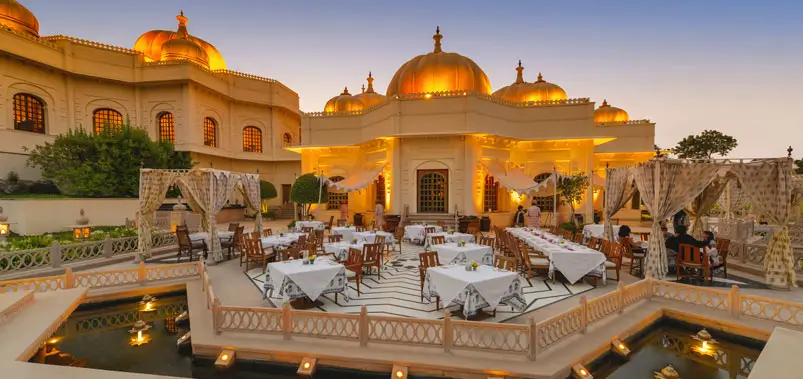
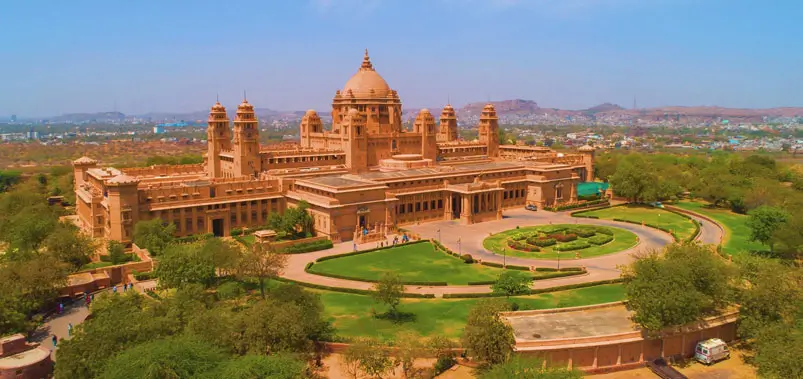
Palace stays are one of the experiences most closely associated with luxury Rajasthan tours, but they need to be used intelligently.
A premium palace hotel can easily cost ₹50,000 to ₹100,000 or more per room per night, while suites at iconic properties can move significantly beyond those levels. One expensive hotel night can therefore cost more than several days of private transportation and professional guides combined.
That does not mean the hotel is overpriced. It means the traveler needs to decide whether the property is genuinely important to the trip.
A couple celebrating an anniversary may place substantial value on an exceptional Udaipur or Jodhpur palace stay. Travelers spending two relaxed nights in a distinctive property can use the grounds, dining, facilities and atmosphere enough to justify the premium.
The same room provides much weaker value when the guests arrive at 9:00 p.m., sleep and check out at 7:00 a.m.
A sensible luxury Rajasthan itinerary can therefore combine several hotel levels. A traveler might use a strong five star property in Delhi, a premium hotel in Agra, a palace hotel in Jaipur, a distinctive heritage stay in Jodhpur and a major luxury splurge in Udaipur.
This creates more variation and often provides better value than mechanically using the most expensive property in every destination.
Transport is usually less expensive than luxury accommodation, yet it can affect the traveler for more hours every day.
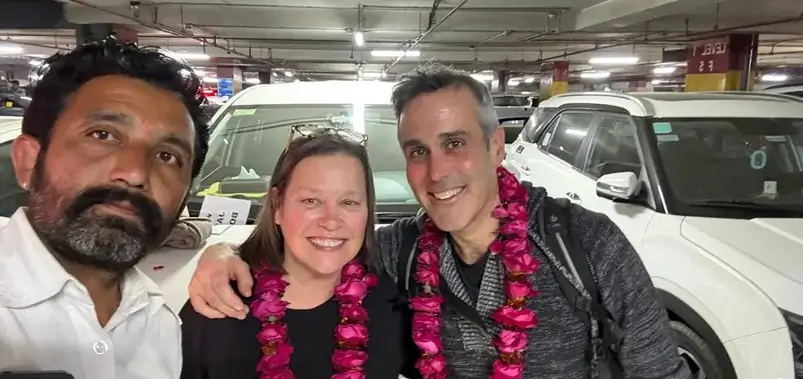
A premium India tour with private chauffeur allows travelers to move directly between hotels, monuments and airports without depending on local taxis or shared vehicles. On Rajasthan and Golden Triangle routes, the same chauffeur can remain with travelers across multiple road sectors, creating continuity and convenience.
An Innova Crysta or similar private SUV can broadly cost around ₹6,000 to ₹10,000 per day on extended tourist itineraries, depending on distance, route and inclusions. Premium luxury vehicles can cost considerably more. Mercedes class or comparable high end chauffeur services can move into a very different price bracket, especially when the vehicle is required for long intercity sectors rather than only local transfers.
The important question is whether paying for the more expensive vehicle creates enough value.
For most couples, an Innova Crysta provides excellent practical comfort. There is space for luggage, the rear seating is suitable for long road journeys and the vehicle works well on routes such as Delhi–Agra–Jaipur or Jaipur–Jodhpur–Udaipur.
A traveler who wants the road journey itself to feel highly premium may prefer a luxury sedan or SUV. In that situation, transport can become a significant part of the package price.
Fuel, tolls, parking, interstate taxes and driver allowance should be clearly addressed in the quotation. A traveler paying for a premium India private car service should know whether the price represents the full operating cost or whether road related charges remain payable separately.
Luxury is weakened by constant small financial surprises.
Professional guides are one of the most cost effective premium services available in India.
A strong private English speaking guide may cost roughly ₹3,000 to ₹6,000 for a full sightseeing day, depending on city, group size and professional experience. Specialist foreign language guides can cost more. A highly experienced historian, specialist guide or full time escort can move into a higher price category.
Even so, guide fees usually remain small compared with hotel spending.
Imagine a couple spending US$500 per night on accommodation. A professional guide costing ₹5,000 represents only a fraction of that daily expense, yet the guide may substantially improve the experience at the Taj Mahal, Agra Fort, Amber Fort, Jantar Mantar, Mehrangarh Fort or another major historical site.
Cutting guide quality to save a small amount rarely makes sense on a premium trip.
The distinction between a city guide and a luxury India tour escort should also be clear. Local guides usually join travelers for sightseeing in their own destination. A full time escort can remain with the guests between cities, assist with hotels and provide continuity throughout the journey.
A full time escort costs more because professional daily fees, accommodation, meals and transport need to be covered for the duration of the trip.
Larger groups and travelers requiring continuous foreign language assistance may receive significant value from this service. A couple comfortable with English may need only local specialists.
India's distances make internal flights useful on longer private itineraries.
A traveler covering Delhi, Rajasthan and Varanasi may save substantial road or rail time by flying selected sectors. Someone combining North India with Kerala or another southern region will almost certainly need domestic aviation unless the journey is unusually long.
Domestic airfare varies according to route, demand, baggage allowance and how close to departure the ticket is purchased.
For practical premium trip budgeting, travelers can allow approximately US$80 to US$250 per person per domestic flight sector for conventional scheduled travel, although some routes and last minute bookings can cost more.
Premium cabin availability on domestic routes varies, and not every flight offers the same service.
Baggage is another important issue. International travelers often arrive with luggage allowances that exceed the standard domestic allowance. Excess baggage can therefore become an additional cost if it is not considered before tickets are purchased.
A well arranged luxury India itinerary with domestic flights should coordinate the flight timing with hotel check out and airport transfers. A low cost early morning flight may save money but require the travelers to leave a premium hotel at 4:00 a.m. Sometimes paying more for a better departure time creates greater value than selecting the cheapest airfare.
This is another example of where luxury travel differs from simple price shopping.
Breakfast is commonly included at premium hotels, but lunch and dinner may remain flexible unless the package specifically includes meals.
For travelers dining in good independent restaurants, ₹2,500 to ₹5,000 per person per day for lunch and dinner can provide considerable flexibility. Travelers using high end hotel restaurants, tasting menus and premium dining can easily spend ₹5,000 to ₹12,000 or more per person per day, particularly when alcoholic beverages are involved.
For a couple traveling ten days, even an average independent food budget of ₹8,000 per day creates ₹80,000 of additional spending.
High end dining can push the total well beyond ₹150,000 over the same period.
This is why a luxury India all inclusive tour may appear significantly more expensive than a hotel and breakfast arrangement.
Travelers should decide how much meal structure they actually want. Many premium travelers prefer breakfast included and lunch or dinner left flexible. This prevents the itinerary from being tied to predetermined restaurants every day.
One or two special meals can then be incorporated where they genuinely matter.
A private dinner in an exceptional setting can become memorable. Including an expensive dinner every night simply because the package is described as luxury may add cost without improving the trip proportionally.
Entrance fees matter, but they are rarely the reason a luxury India package becomes expensive.
Foreign visitor admissions at major monuments can add several thousand rupees over a multi city itinerary. Premium palace sections, safari permits and special attractions can add more.
For a ten day Golden Triangle and Rajasthan journey, an international traveler can reasonably keep approximately ₹8,000 to ₹15,000 per person available for major monument and museum admissions, depending on the sightseeing program.
Compared with a palace hotel costing ₹60,000 for one night, the full entrance ticket budget is relatively small.
This is why removing monument tickets from a premium package rarely transforms the overall price dramatically.
Travelers should still check whether admissions are included because the benefit is convenience and budget clarity.
Airport transportation appears simple until an international itinerary contains several arrivals and departures.
A luxury trip may include Delhi International Airport pickup, a domestic airport transfer in Jaipur or Udaipur, another arrival transfer in Varanasi and a final international departure.
Each transfer requires a suitable vehicle, driver coordination and enough space for luggage.
A professional luxury India airport transfer should be arranged around the flight rather than forcing the traveler into a fixed meeting time. International passengers may take an hour or more to complete immigration, baggage collection and customs.
Domestic transfers require different timing.
For premium journeys, travelers may also request airport representatives, porter assistance where available or other arrival services. These additions increase the cost but can be valuable for larger groups, senior travelers or first time visitors.
India's premium tourist trains should not be compared directly with a conventional private car and hotel itinerary.
Luxury trains can combine accommodation, meals, guided sightseeing and transport into one high end travel product. Published Palace on Wheels tariffs for 2026–27 illustrate the level of spending involved: double occupancy deluxe cabin rates are roughly US$864 to US$976 per person per night depending on the operating period, while premium cabin categories can run into several thousand dollars per night.
A multi night rail journey can therefore consume a substantial portion of the overall India travel budget.
For travelers who specifically value the luxury train experience, this may be worthwhile because the train itself is part of the holiday. For someone whose priority is private control over the daily schedule, a chauffeur driven journey may provide better value.
This distinction matters when comparing a luxury India train tour with a private road itinerary. The products are fundamentally different.
Luxury wildlife travel operates under another cost structure.
A Rajasthan journey including Ranthambore may involve safari permits, vehicle allocation, naturalist services and premium wildlife accommodation.
High end safari camps and luxury lodges can cost significantly more than conventional city hotels. Private or premium wildlife arrangements can add several hundred dollars per person to individual days.
Travelers should therefore expect the daily average of a luxury India wildlife tour to be higher than a city based Golden Triangle itinerary using similar hotel standards.
Wildlife also requires advance availability. A traveler cannot simply arrive and assume the preferred safari zone or vehicle will be available.
When wildlife is important, the safari should be treated as a core booking component rather than a last minute optional activity.
A ten day trip provides a useful example because it is long enough to combine several destinations while remaining common for international travelers.
For two travelers using strong five star hotels averaging around US$300 per night, accommodation contributes roughly US$3,000.
Private chauffeur transport and airport transfers might add approximately US$1,000 to US$1,500, depending on route and vehicle.
Professional guides may contribute another US$300 to US$600 across several sightseeing days.
Domestic flights could add US$300 to US$800 for the couple if one or two sectors are required.
Entrance fees could contribute approximately US$200 to US$350.
Meals beyond breakfast may add approximately US$600 to US$1,200 or more for the couple, depending on restaurant style.
The resulting ten day trip can therefore reach approximately US$5,400 to US$7,500 for two travelers before major luxury upgrades.
Now replace several US$300 hotel nights with palace stays costing US$700 or US$900. Add premium dining, an upgraded vehicle and private experiences. The same ten day itinerary can move into the US$8,000 to US$12,000 plus range for two people with little difficulty.
Use ultra premium suites and specialist services and the total can climb much further.
This is why a credible 10 day luxury India tour cost cannot be reduced to a single advertised number.
Fourteen days gives travelers more flexibility but also magnifies accommodation and dining choices.
At a strong five star level, two travelers might spend approximately US$7,000 to US$11,000 on a well-arranged private journey, depending on destinations, domestic flights and inclusions.
A higher end trip with several palace hotels can move toward US$12,000 to US$20,000 for a couple.
An ultra luxury itinerary involving iconic suites, premium safaris, luxury trains, private aviation or highly specialized experiences can move well beyond US$20,000 and has no useful fixed upper limit.
The interesting point is that luxury spending does not rise evenly.
One US$1,500 per night hotel can change the total more than several private guide days. A premium safari camp can change the average daily cost. A luxury train can add thousands of dollars over a short period.
Travelers should therefore examine the expensive components individually.
Tour operators need to earn a commercial margin. Hotels, transport, guides and local suppliers are not the only costs involved in organizing a private journey.
A professional operator handles itinerary design, hotel reservations, supplier communication, payment administration, vehicle coordination, guide assignments, airport timing and on tour assistance. The company also carries staff, office, marketing and operating costs.
The important issue is transparency.
A traveler should evaluate the final package against the services being provided rather than expecting every component to be sold at the operator's raw supplier cost.
At the same time, two luxury India tour companies can have very different commercial structures.
A traveler booking through an international agency may indirectly pay margins at both the overseas agency and Indian ground operator level. Booking directly with a local operator can remove one distribution layer, although the direct company still needs a reasonable margin to operate.
This is why direct quotations can sometimes provide stronger hotel or vehicle value for the same overall budget.
Price and quality are connected, but they are not identical.
A US$15,000 package can be poorly structured if the traveler spends half the journey in traffic, uses inconvenient hotels and receives weak guiding.
A US$10,000 journey can feel significantly more premium when the route is paced correctly, hotels are selected intelligently, transport is comfortable and the traveler receives responsive support.
Luxury is partly about removing friction.
A good tailor made luxury India tour should avoid unnecessary early departures, badly timed flights, unsuitable vehicles and hotel choices that force excessive daily transfers.
It should also protect free time.
Travelers paying premium rates should be able to spend an afternoon at a palace hotel if they want to. They should not feel that missing one sightseeing stop means they have broken the itinerary.
Private travel has value precisely because the schedule can adapt.
Some upgrades improve the journey consistently.
A larger private vehicle can improve every road transfer.
A better located hotel can save hours of travel.
Professional guides improve major historical visits.
A premium room can be worth paying for when the view or setting genuinely changes the stay.
An additional night can remove an exhausting travel day.
A carefully selected domestic flight can save an entire day of driving.
These are usually stronger forms of luxury than adding decorative extras that the traveler barely uses.
For example, paying another US$100 per day for a more comfortable private vehicle may be more useful over a ten day Rajasthan circuit than spending an additional US$1,000 on one hotel suite where the traveler stays only overnight.
One of the most common mistakes is using palace hotels every night simply because the holiday has been labeled luxury.
Another is paying for premium rooms without confirming the exact category.
Travelers may also overspend on included meals. A full board package can look impressive but remove flexibility to eat elsewhere.
Expensive vehicles can be unnecessary when there is very little road travel.
A full time escort may provide limited additional value for an English speaking couple who only requires guides at major monuments.
Likewise, packing too many premium activities into every day can make the journey feel scheduled rather than luxurious.
The strongest luxury India holiday budget is selective.
For two travelers taking Delhi, Agra, Jaipur, Jodhpur and Udaipur over approximately ten to twelve days, a strong premium budget might allocate US$3,500 to US$5,000 for hotels, US$1,200 to US$1,800 for private transport, US$400 to US$700 for guides, US$250 to US$450 for admissions, and approximately US$800 to US$1,500 for independent meals.
That creates a working range around US$6,150 to US$9,450 for the couple before domestic flights and major luxury experiences.
Adding several iconic palace hotels can increase accommodation spending by another US$2,000 to US$5,000 or more.
Luxury train sectors, premium safari lodges and other high value services can push the trip into an entirely different budget category.
This component based calculation is much more useful than asking for a single generic India luxury package price.
Two quotations should be compared line by line.
Look first at the exact hotels and room categories. This can explain most of the difference immediately.
Then compare the private vehicle. An Innova Crysta, premium SUV and Mercedes class vehicle are not equivalent services.
Check whether professional guides are included in every major sightseeing city.
Check domestic flights and baggage allowances.
Check monument tickets.
Check whether breakfast only, half board or full board is included.
Check airport transfers.
Check taxes, tolls, parking and driver expenses.
Check cancellation conditions.
Check whether the itinerary provides actual free time.
Finally, check who handles the traveler after arrival.
Golden Triangle Tours can structure these services directly around the guest's requirements. Mr. Nand Singh Rathore and his team can adjust hotel standards from city to city, select the private vehicle according to passenger comfort and create a private journey that does not require spending heavily on every component merely to justify the word luxury.
A premium India holiday should ultimately make the traveler feel that the money improved the experience. The strongest luxury is not measured by how many expensive names appear on the itinerary. It is measured by better sleep, comfortable travel, meaningful sightseeing, reliable support, enough time and the freedom to enjoy India without repeatedly dealing with logistical problems.
We promise you a holiday where everything is taken care of from the moment you land. Trusted drivers waiting for you, handpicked hotels that fit your style, personalized itineraries designed just for your family, and a dedicated team on call 24/7. All you need to do is relax, explore, and create unforgettable memories, while we take care of every detail behind the scenes.
Use strong five-star hotels in sightseeing-heavy cities, select one or two exceptional palace stays, retain a comfortable private vehicle and professional guides, keep some meals flexible and avoid unnecessary premium services. Intelligent allocation usually creates better luxury India tour value than upgrading every component automatically.
No. Many premium travelers use an Innova Crysta because it provides excellent space and practical comfort for long road journeys. Luxury vehicles can be arranged when the traveler specifically values the higher-end chauffeur experience.
It can be when the property itself is important to the journey and enough time has been allowed to experience it. Paying a large palace premium for a late arrival and early departure usually provides much weaker value.
Breakfast is commonly included with hotel stays. Lunch and dinner may remain flexible or be incorporated into an all-inclusive arrangement. Travelers should check the quotation because premium dining can add a substantial amount over a longer trip.
Compared with luxury accommodation, professional guides are relatively affordable. A strong English-speaking private guide may broadly cost around ₹3,000 to ₹6,000 for a full sightseeing day, with specialist and foreign-language professionals potentially costing more.
An Innova Crysta or similar private SUV can broadly cost around ₹6,000 to ₹10,000 per day on multi-day tourist routes depending on distance and inclusions. Premium luxury vehicles can cost substantially more.
Strong five-star properties can broadly cost around US$200 to US$500 per room per night. Highly desirable luxury and palace properties can cost US$700 to US$1,500 per night or significantly more for suites and premium categories.
Hotels are commonly the largest expense. Premium five-star and palace properties can cost several hundred or even more than US$1,000 per room per night, depending on the hotel and room category.
A strong five-star ten-day private journey can broadly cost around US$5,500 to US$8,000 for two travelers, depending on destinations and inclusions. Palace hotels, premium vehicles and expensive private experiences can move the total toward US$10,000 to US$15,000 or more.
A strong luxury India private tour can broadly begin around US$300 to US$500 per person per day for two travelers using good five-star hotels and private services. Higher-end palace travel can move toward US$500 to US$900 per person per day, while ultra-luxury journeys can exceed US$1,000 per person per day.