Choosing between a small local India tour company and a large national or international tour operator is one of the most important commercial decisions a traveler makes before booking a private India journey. Both models can deliver excellent trips, and both can also deliver disappointing ones. The real difference lies in how they sell, operate, communicate, price and manage the journey after the traveler arrives.
A large operator usually benefits from scale. It may have multiple sales offices, a recognizable brand, larger marketing budgets, established booking systems, formal customer service departments and contracts across many destinations. For some travelers, that creates immediate confidence. The company feels structured, visible and easier to verify before payment.
A smaller local India tour operator usually competes differently. It may have fewer employees and a smaller marketing footprint, but the same people who sell the trip may also be close to the actual ground operations. The traveler can sometimes speak directly with the person arranging the vehicle, driver, hotels and guides rather than moving through several departments. This can create faster customization and stronger route specific knowledge.
The difference becomes especially relevant for private trips through Delhi, Agra, Jaipur, Rajasthan and other multi city routes. A traveler booking a fixed coach holiday needs standardization. A traveler booking a custom two week journey with selected hotels, a private chauffeur, specialist guides and flexible sightseeing often benefits more from direct operational communication.
Price also works differently between the two models. A large operator may negotiate excellent hotel contracts because of volume, but it also carries higher overheads and a more complex sales structure. A small operator may not have the same purchasing power everywhere, yet it can sometimes offer better value because fewer commercial layers sit between the traveler and the actual service provider.
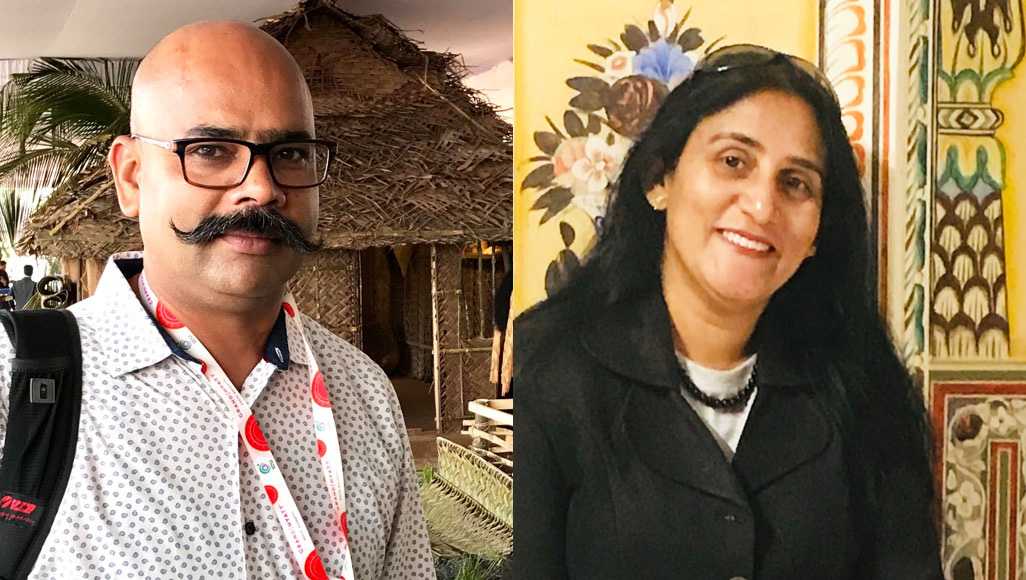
Golden Triangle Tours represents the local private tour model. Mr. Nand Singh Rathore and his team can coordinate private India journeys directly around traveler requirements, including hotels, private vehicles, drivers, local guides and route changes.
The strongest value does not come from company size alone. It comes from how efficiently the company turns the traveler's money into better hotels, stronger transport, knowledgeable guides, reliable support and a well paced itinerary.

A large tour operator is usually designed to process many travelers efficiently. It may have separate sales, contracting, operations, finance and customer service teams. This structure can be excellent for high volume travel because responsibilities are divided clearly and the company is less dependent on one individual.
The tradeoff is that the traveler may deal with several people.
A sales consultant can prepare the original quotation, another team may confirm hotels, a regional office may assign drivers, and an operations coordinator may become the contact after arrival. For a standardized package, this is not necessarily a problem because the process is designed around consistency.
A small local India travel company may operate with a shorter chain. The owner or senior travel specialist may prepare the itinerary, negotiate the quotation and remain involved after the booking is confirmed. This can be particularly useful when the traveler requests several changes because there are fewer internal handovers.
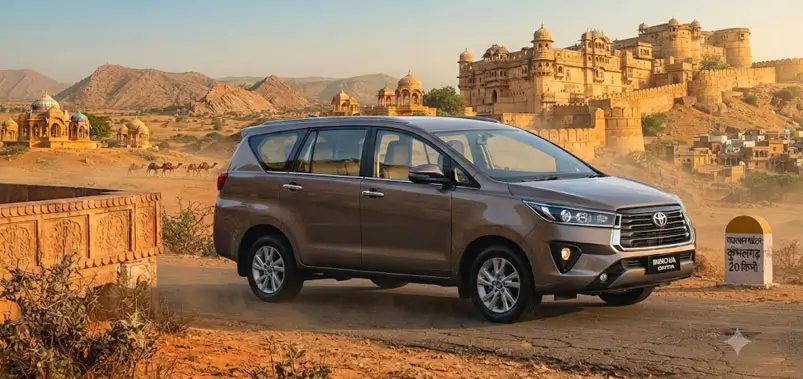
Suppose a couple wants to replace a Jaipur city hotel with a heritage property, add an extra night in Udaipur, remove a sightseeing stop in Delhi and upgrade from a sedan to an Innova Crysta. A smaller operator may be able to recalculate the complete itinerary directly. In a larger organization, those changes may need to pass through several internal systems.
That does not mean large companies are automatically inflexible. Many have highly developed tailor made departments. The difference is that the small operator's entire business may already be built around customized private travel.
For travelers who know exactly what they want, this can create a smoother pre-booking process.
The answer is not as simple as “small companies are cheaper.”
Large tour operators can negotiate very strong hotel rates because they purchase thousands of room nights. A property may offer a better contracted rate to a company that sends significant annual business than to a small operator booking only a few rooms.
Scale can therefore create real purchasing advantages.
At the same time, a large company may have more expenses. Marketing, international offices, call centers, technology, sales commissions and multi layer administration all need to be funded through the selling price.
A smaller direct India tour operator may have less purchasing power with certain hotels, but it can sometimes operate with lower overhead and fewer commercial layers.
Consider a private itinerary with an underlying ground service cost of US$6,000 for two travelers. A small local company might add its operating margin and sell the package directly.
A larger international company may purchase the same or similar ground services from an Indian partner and then add another commercial margin. The final retail price can therefore become significantly higher even though the actual driver, guide and hotel may come from the same local supply network.
The important comparison is not company size. It is service for service pricing.
The traveler should compare hotel names, room categories, vehicle type, guide services, meals, entrance tickets and airport transfers. A small operator quoting US$7,500 and a large operator quoting US$9,500 may not be offering the same product. If the large company includes better hotels and stronger cancellation terms, the price difference may be justified.
If both quotations are nearly identical in actual service, the traveler can then judge which company provides stronger value.

Large operators can be extremely competitive on hotel pricing.
A company sending hundreds of travelers to Delhi, Jaipur or Udaipur may negotiate fixed annual rates, free room upgrades, better cancellation terms or additional inclusions. These benefits can sometimes make a larger company surprisingly competitive even after its own margin is added.
This is particularly relevant with large five star chains.
A high volume operator may have access to rates that a smaller company cannot obtain for the same room category.
However, hotel contracts can also create rigidity.
A large operator may prefer to use a specific list of contracted hotels because those properties provide the best commercial terms. The traveler may be offered three or four approved choices rather than complete freedom.
A small custom India tour company can sometimes be more willing to work outside a fixed hotel portfolio. If the traveler requests a particular boutique hotel, heritage haveli or unusual palace property, the company may simply check availability and quote it.
The rate may not always be lower, but the choice can be broader.
For travelers who care more about exact accommodation than package uniformity, that flexibility can be valuable.
Private travel becomes valuable when the itinerary can be adjusted around the traveler.
A large operator may advertise tailor made holidays, and many do customize very well. However, large systems are often designed around repeatable products because repeatability makes operations efficient.
A smaller tailor made India tour company can build the route from the beginning around one client's needs.
A family may need a slower itinerary because grandparents are traveling.
A couple may want one palace hotel but avoid expensive properties elsewhere.
A group may want a Spanish speaking guide in Jaipur and English guides in the other cities.
A traveler may want to spend only one night in Delhi but three nights in Udaipur.
A photographer may want sunrise departures and longer stays at selected monuments.
These requests can be easier to implement when the operator is not trying to fit the traveler into a pre-built package structure.
Customization also affects cost.
A smaller company may remove services the traveler does not want rather than bundling them into the package.
If lunch and dinner are unnecessary, they can be excluded.
If the traveler wants guides only in Delhi, Agra and Jaipur, there is no reason to charge for guide services every day.
This can create stronger private India tour value without reducing quality.
Small operators can have an advantage in direct communication, but they can also be more vulnerable if the business depends too heavily on one person.
A traveler may appreciate messaging directly with a senior decision maker who can answer questions about hotels, routes and vehicles immediately.
If the same person becomes unavailable, however, a very small operation may have less backup capacity.
Large companies usually have stronger internal coverage. If one consultant is unavailable, another team member may be able to access the booking and respond.
The tradeoff is that responses can sometimes feel less personal.
A local India tour company may remember that the traveler is celebrating an anniversary, prefers quiet hotels and dislikes very early starts because the same person has handled the booking from the beginning.
A large operator may store those preferences in the booking system, but the traveler can still interact with multiple employees.
Neither model is automatically better.
The traveler should judge whether communication is clear, consistent and knowledgeable before payment.
A company that answers difficult questions accurately is more valuable than one that simply replies quickly.
This is one of the areas where strong local operators can perform exceptionally well.
A company based in India and regularly operating private road journeys can know practical details that do not always appear in destination brochures.
It may know which Jaipur hotel looks excellent online but creates inconvenient coach access.
It may know which Agra properties work better for an early Taj Mahal departure.
It may know how much road time to allow between Jodhpur and Udaipur.
It may know whether a particular stop makes sense on a transfer day or will make the schedule unnecessarily long.
A large India tour operator can possess the same expertise when it employs experienced destination specialists or works with strong local ground partners.
The important distinction is whether the person designing the trip has operational knowledge or only sales knowledge.
Travelers should test this.
Ask how long a transfer really takes.
Ask which hotel location is better for the planned sightseeing.
Ask whether the Taj Mahal schedule works around Friday closure.
Ask whether Jaipur to Delhi Airport should be attempted before a morning flight.
The quality of the answers reveals far more than the size of the company.
Travelers often spend hours comparing tour companies but pay little attention to the driver assigned after arrival.
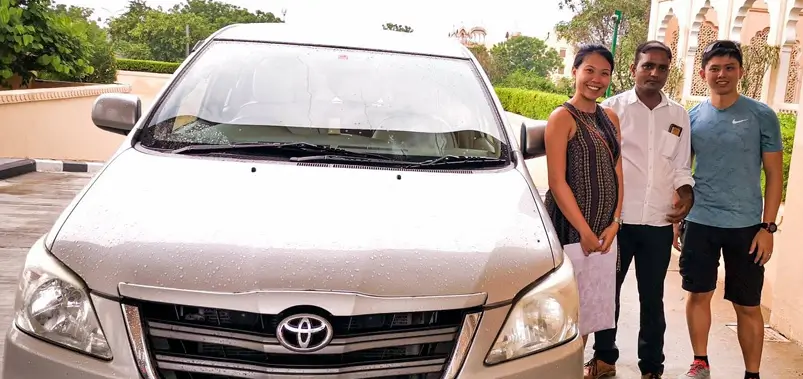
On a Golden Triangle or Rajasthan journey, the traveler may spend more time with the driver than with anyone else involved in the trip.
A professional private driver in India should be punctual, safe, experienced with tourist routes and comfortable handling long road sectors. The vehicle should be clean, air conditioned and suitable for luggage.
A small operator that works repeatedly with a limited network of trusted drivers can sometimes maintain very close quality control.
A large operator may have access to a much larger transport network and better capacity during busy periods.
The traveler should therefore ask how vehicles are assigned.
Is the company using its own fleet?
Does it use long term transport partners?
Will the vehicle remain with the traveler throughout the route?
What happens if the car develops a problem?
Large companies can have an advantage in replacement capacity because they work with more vehicles.
Small operators can have an advantage in personal familiarity with the specific driver.
Both strengths are useful.
A large company does not automatically have better guides, and a small company does not automatically provide more personal guides.
Professional guides generally operate locally.
A Delhi guide may work with several different tour operators. The same can be true in Agra, Jaipur, Jodhpur and Udaipur.
This means two very different companies may sometimes hire the same professional.
The real issue is whether the company selects guides carefully and matches them to the traveler.
A private India tour with professional guides should use people who communicate clearly and understand the traveler's interests.
A family with teenagers needs a different guiding style from a group of architecture specialists.
A Spanish speaking group needs a qualified language professional.
A luxury couple may want a highly experienced senior guide rather than the cheapest available person.
Smaller operators can sometimes communicate these preferences more directly to the guide.
Large operators can sometimes provide better backup when a specific guide becomes unavailable.
Again, the traveler should judge the actual service design rather than company size alone.
One of the biggest strengths of a large tour company is organizational depth.
Payment systems may be more sophisticated.
Invoices can be standardized.
Customer service channels may operate across multiple time zones.
Emergency support can be formally structured.
Large companies may also have clearer internal processes for cancellation, refunds and supplier disputes.
For travelers who value institutional security, these systems can matter.
A large India tour operator can also handle high passenger volumes more easily. Groups of forty or fifty travelers require room blocks, coaches, multiple guides and extensive logistics. Large organizations may have stronger systems for managing this scale.
Small operators can still manage large groups, but the traveler should verify their experience before placing a high value group booking.
Company size therefore becomes more relevant as the operational complexity grows.
When a small company is well managed, there can be less distance between the traveler and the person authorized to solve a problem.
Suppose a hotel room is not as expected.
The traveler contacts the operator.
The person receiving the message may be the same person who negotiated the booking and can immediately contact the hotel.
A large company may require the issue to pass from customer service to operations and then to the supplier.
Large systems can still resolve the problem effectively, but the process can involve more communication steps.
This is where a good owner managed India tour company can feel particularly responsive.
The key word is good.
A weak small operator can have the opposite problem because there may be no additional staff to handle an issue when the owner is unavailable.
Travelers should therefore look for signs that a small company has a real team and operational structure rather than functioning as one person with a website.
Large companies can create greater payment confidence simply because travelers recognize the brand.
A well-known company may offer familiar card payment systems, published terms and formal customer service.
Small local operators need to establish confidence differently.
They should provide a written itinerary, invoice, payment schedule, cancellation terms and clear company details.
A trusted local India tour operator should never expect a traveler to send a substantial payment based only on informal messages.
The quotation should state the total cost, currency, deposit and final balance.
Hotels and major services should be identifiable.
Cancellation terms should be written.
Payment details should correspond with the legitimate business arrangement.
When this documentation is professional, direct local booking can be commercially straightforward.
The traveler should also remember that a famous company name does not eliminate the need to read the terms.
Large operators can have strict cancellation rules just like small operators.
There is no universal rule that large companies have better cancellation terms.
A large operator may negotiate favorable hotel contracts because of volume.
It may also operate under strict standardized package conditions.
A small operator may provide more flexibility before supplier deadlines because the booking is individually managed.
It may also have stricter terms when a boutique hotel, safari permit or palace property requires a non-refundable deposit.
The traveler should evaluate the actual India tour cancellation policy.
Important questions include how much of the deposit is refundable, when cancellation charges increase, what happens to domestic airfare and how non-refundable hotel payments are treated.
Cancellation policy quality has nothing to do with the size of the logo.
It depends on the commercial terms behind the trip.
If India is only one part of a broader international journey, a large travel company may provide stronger convenience.
A traveler visiting India, Nepal, Bhutan and another destination may prefer one company coordinating the complete trip.
A large international operator can sometimes package multiple countries, flights and insurance within one commercial relationship.
A small India focused company may deliver a stronger Indian ground experience but not handle the surrounding countries.
This is one situation where the additional commercial layer may be worthwhile.
The traveler is paying for broader trip management rather than only the India ground services.
For a journey entirely inside India, direct local booking becomes more competitive because the traveler may not need that wider infrastructure.
Rajasthan is exactly the kind of destination where local operational knowledge can create strong value.
A Rajasthan private tour company familiar with Jaipur, Jodhpur, Udaipur, Jaisalmer, Pushkar and surrounding routes can adjust the trip around real road times and hotel locations.
Travelers may want boutique heritage accommodation instead of chain hotels.
They may want to skip a commercial shopping stop.
They may want to add a village visit.
They may want an extra night in Udaipur and remove Bikaner.
These are easier changes to make when the operator works directly with the ground network.
The same principle applies to Golden Triangle tours, especially when travelers want extensions into Rajasthan or Varanasi.
Luxury travelers should evaluate how much of the package price reaches the actual travel experience.
If two companies are offering identical palace hotels, the same private vehicle and the same guide structure, a major difference in price deserves investigation.
The higher priced operator may provide international concierge support, insurance assistance, stronger cancellation terms or additional services. If so, the premium may be justified.
If the difference simply reflects another sales layer, direct booking with a strong local operator can provide better luxury India tour value.
That additional budget can be redirected into a better room, another night, stronger private transport or premium experiences.
A $2,000 difference between two tour company margins can have a substantial effect on the actual itinerary.
This does not mean the traveler should choose the cheapest local operator.
The objective is to spend more of the budget on services that improve the trip.
Families benefit heavily from customization.
A private India family tour may require connecting rooms, child friendly hotels, larger vehicles, slower sightseeing and flexible meal times.
Small operators can often make these changes quickly because the booking is managed individually.
Large operators may provide stronger support structures and more standardized family policies.
The deciding factor should be how well the company responds to specific family requests before payment.
If a traveler asks for two connecting rooms and the company simply replies “subject to availability” without checking, that is weak service regardless of company size.
A stronger operator will explain what can be confirmed and what remains a request.
Senior travelers often need more realistic itinerary pacing.
A company should not schedule six hours of sightseeing after a long road transfer simply because that is what the standard package says.
A private India tour for senior travelers should include comfortable vehicles, suitable hotels, fewer attractions per day and additional breaks.
Smaller operators can be especially strong when they are willing to modify the daily route.
Large luxury operators can also deliver excellent senior travel when their premium products already use slower pacing.
The traveler should judge the actual itinerary rather than the marketing category.
For groups of twenty, thirty or forty travelers, scale becomes more valuable.
Room blocks must be secured.
Coaches need to be arranged.
Restaurant tables may need advance reservation.
Multiple guides or tour escorts can be required.
Large companies often have stronger administrative systems for this type of operation.
However, experienced local Indian companies can also handle significant private groups efficiently because the vehicles, hotels and guides are all sourced locally.
A large group India tour operator should be evaluated by proven group handling experience rather than company headcount alone.
Reviews are useful when travelers look beyond the overall star score.
For a small company, detailed reviews can reveal whether the owner remains involved and whether travelers receive consistent personal support.
For a large company, reviews can reveal whether service remains strong despite the volume of customers.
Travelers should look for repeated references to communication, drivers, hotel handling and problem solving.
A company with excellent sales communication but repeated operational complaints should be treated cautiously.
Similarly, a small company with fewer total reviews can still be strong if the feedback is detailed, recent and consistent.
Review volume should therefore be interpreted in context.
A traveler does not need to ask whether a company is “small” or “large” in order to judge it.
Ask for exact hotel names and room categories.
Ask which private vehicle will be provided.
Ask whether fuel, tolls and driver allowance are included.
Ask where guides are included.
Ask whether monument tickets are included.
Ask who handles the traveler after arrival.
Ask how itinerary changes are managed.
Ask what happens if a hotel becomes unavailable.
Ask how vehicle replacement works.
Ask whether a local emergency contact is provided.
Ask about the deposit.
Ask about the cancellation policy.
Ask whether the package is genuinely private.
Ask whether shopping stops are optional.
Ask which services remain payable after arrival.
The quality of the answers will tell the traveler more than the number of employees.
A well managed small local operator commonly performs best on customization, direct communication, route flexibility and lower commercial layers.
Travelers can often speak closer to the actual decision maker.
Changes can be implemented more quickly.
The company may be more willing to work with unusual boutique properties.
The itinerary can feel less standardized.
This is particularly attractive for couples, families and repeat visitors.
Large companies commonly perform best on scale, systems, brand confidence, backup capacity and standardized support.
They may have stronger hotel contracting power.
They can handle large passenger numbers efficiently.
They may offer broader international services.
They can provide several customer service channels.
For travelers who value institutional structure more than customization, these advantages can justify a higher price.
Start with the route.
If the trip is a standardized coach holiday and the traveler wants a predictable group product, a large operator can be an excellent choice.
If the trip is a private Golden Triangle or Rajasthan journey with custom hotels and flexible sightseeing, a strong local operator may provide better value.
Then compare quotations line by line.
Do not compare only the totals.
Compare hotels.
Compare room categories.
Compare transport.
Compare guides.
Compare entrance fees.
Compare meal inclusions.
Compare airport transfers.
Compare cancellation terms.
Compare support.
Compare itinerary pace.
Finally, compare how much confidence the company creates before payment.
Golden Triangle Tours operates through the smaller direct tour model, with Mr. Nand Singh Rathore and his team coordinating private India ground services around the traveler’s requirements. For travelers choosing between a small local operator and a large travel company, the strongest value comes from the company that converts the largest share of the travel budget into better on ground service rather than simply the company with the biggest brand name.
We promise you a holiday where everything is taken care of from the moment you land. Trusted drivers waiting for you, handpicked hotels that fit your style, personalized itineraries designed just for your family, and a dedicated team on call 24/7. All you need to do is relax, explore, and create unforgettable memories, while we take care of every detail behind the scenes.
The best value comes from the company that provides the strongest combination of hotel quality, private transport, professional guides, itinerary pacing, transparent pricing and responsive support for the final amount paid. Company size alone does not determine quality.
Higher costs can come from larger overheads, international offices, additional sales layers and wider customer-support infrastructure. The premium can be worthwhile when those services matter to the traveler.
Read detailed recent reviews, request a written itinerary and invoice, confirm hotel and vehicle details, check payment and cancellation terms and make sure the company provides clear operational contact information.
Large operators often have stronger systems for coach movements, room blocks and high passenger volumes. Experienced local companies can also handle large groups effectively, so proven operational experience should be checked.
A strong local Rajasthan tour operator can provide excellent value because route knowledge, private drivers and hotel flexibility are particularly important on multi-city road journeys. Experience with the actual circuit matters more than company size.
Either can work. A strong local operator may direct more of the budget toward hotels and private services, while a large luxury operator may justify a higher price through international concierge support and broader infrastructure. Compare the exact services.
Often they can because high booking volume gives them stronger contracting power. The traveler should still compare the exact room category and final package cost because the retail price includes the operator’s own commercial structure.
They can be particularly strong for customization because decision-making is often closer to the traveler. Hotel changes, vehicle upgrades and route adjustments may be easier to implement than in highly standardized systems.
A large company may provide stronger brand recognition, formal systems and multiple customer-service channels. A professional small operator can also be reliable when it provides proper documentation, clear payment terms, strong reviews and responsive local support.
It can be because there may be fewer commercial layers between the traveler and local suppliers. Large operators can also negotiate strong hotel rates through volume, so travelers should compare actual inclusions rather than assuming one model is always cheaper.