Senior Friendly India Tours are private or carefully structured holidays where pace and practical comfort are considered from the beginning. They are not ordinary sightseeing packages with a few rest stops added after the route has already been fixed.
Age alone does not determine how someone should travel. One traveller in their seventies may comfortably walk for several hours, while another may prefer shorter monument visits and additional hotel time. Some guests are comfortable with stairs but dislike long road journeys. Others may want an active programme but need hotels with lifts and rooms close to reception.
A proper India tour for senior citizens should therefore begin with the traveller's actual requirements.
Delhi, Agra and Jaipur provide a practical first route because they contain many of North India's best-known historical landmarks without requiring a domestic flight every second day. The route can then continue to Udaipur, Jodhpur, Ranthambore, Varanasi or another destination when sufficient time is available.
Private transport is particularly valuable. Travellers can stop during road journeys, return to the hotel when necessary and avoid waiting for a large tour group. Local guides can also adjust walking and explanations according to the guests rather than following a rigid group schedule.
Our senior citizen tour packages India can consequently be built around comfort, accessibility and personal interests without removing the cultural substance of the journey.
How Many Days Are Best for a Senior India Tour?
Senior travellers generally benefit from using additional days to reduce daily intensity rather than adding more destinations.
A five-day Golden Triangle itinerary is possible, but six to eight days is usually more comfortable. Rajasthan and other extensions require additional time.
|
Duration
|
Suggested Route
|
Best Suited For
|
Pace
|
|
5 Day Senior Golden Triangle Tour
|
Delhi – Agra – Jaipur
|
Active seniors with limited time
|
Moderately fast
|
|
6 Day Senior Friendly Golden Triangle Tour
|
Delhi – Agra – Jaipur
|
First-time visitors
|
Balanced
|
|
7 Day Golden Triangle Tour for Seniors
|
Delhi – Agra – Jaipur
|
Older couples and private travellers
|
Comfortable
|
|
8–10 Day Senior India Tour
|
Golden Triangle + Ranthambore/Udaipur
|
Travellers wanting an extension
|
Relaxed
|
|
12 Day Senior Rajasthan Tour
|
Golden Triangle + selected Rajasthan cities
|
Longer cultural holidays
|
Comfortable
|
|
14–15 Day Senior India Tour
|
Golden Triangle + Rajasthan/Varanasi
|
Long-haul senior travellers
|
Leisurely
|
A 5 Day Golden Triangle Tour for seniors works best for physically active travellers. The route needs to be kept focused, and unnecessary stops should be removed.
Six or seven days provides greater flexibility. Delhi can be divided sensibly, Agra can receive enough time for the Taj Mahal and Agra Fort, and Jaipur does not need to be covered immediately after a long road transfer.
For eight to ten days, an additional destination can be incorporated without making the programme excessively busy. Udaipur is particularly useful for a slower Rajasthan extension, while Ranthambore works for travellers interested in wildlife.
Two weeks provides enough time for a substantial senior friendly India holiday, but the itinerary should still avoid the temptation to add a new city every night.
Golden Triangle Tours for Senior Travellers
A Golden Triangle Tour for senior citizens is one of the most practical introductions to India.
Delhi normally serves as the international arrival point. The first day should take the flight schedule into account. A guest arriving after a long overnight journey may benefit from hotel check-in and rest rather than being sent directly into a full sightseeing programme.
Delhi sightseeing can then be divided according to interests and walking ability. Important monuments are spread across a large city, making private transportation particularly useful.
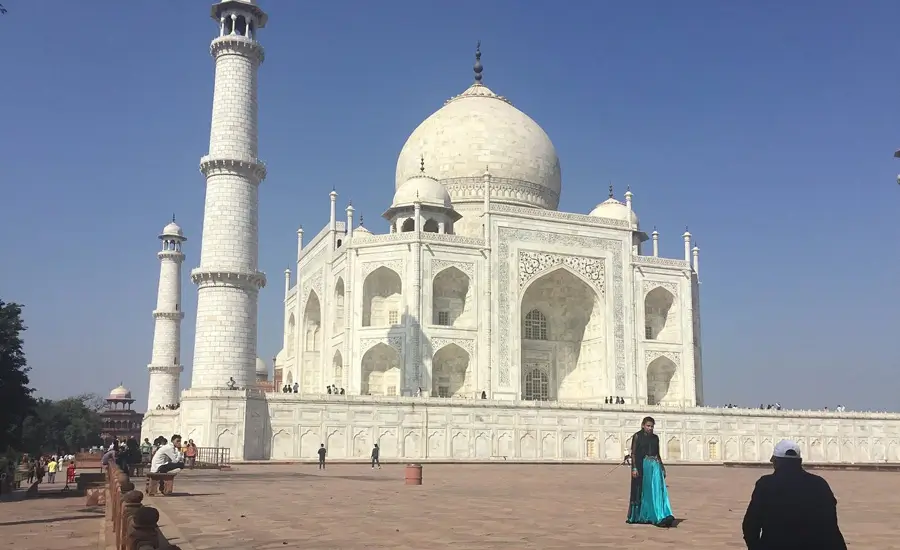
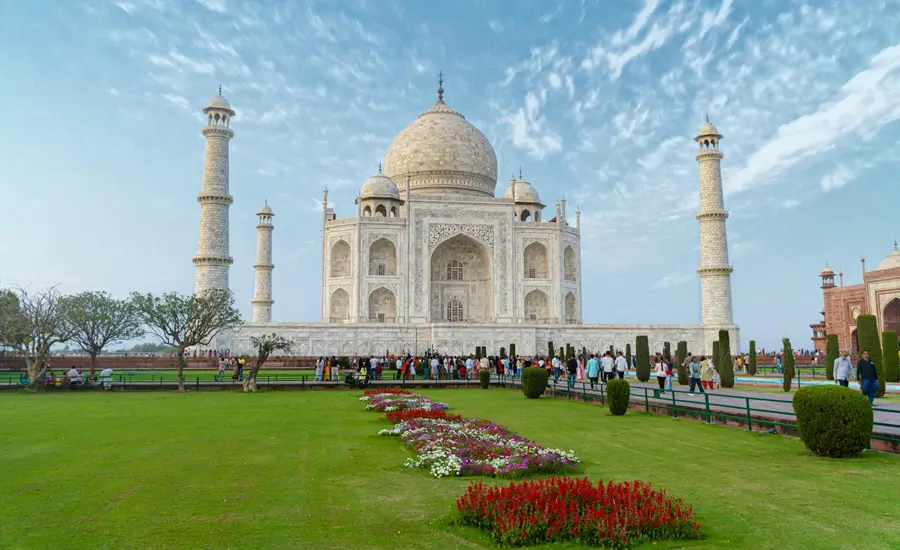
Agra can be reached by road using major highway connections. The Taj Mahal naturally receives priority, but the visit needs to consider the walking involved from the permitted vehicle point through the monument complex.
Agra Fort can also be included, although travellers with limited mobility should discuss the amount of walking before the visit.
Jaipur brings Amber Fort, City Palace and Jantar Mantar into the programme. These sites have different physical requirements, so a senior friendly Golden Triangle Tour should not assume every guest needs to complete exactly the same route through each monument.
Private touring allows the programme to be adjusted without affecting unrelated travellers.
How We Plan a Slower-Paced India Tour
A slow paced India tour for seniors does not need to contain fewer meaningful places. It needs to remove unnecessary pressure from the schedule.
The first improvement is reducing consecutive early departures. Sunrise visits and early safari drives may be worthwhile on selected days, but they should not automatically be followed by another early start the next morning.
The second is limiting one-night stays. Checking into a hotel, unpacking, repacking and checking out the following morning creates fatigue even when the actual sightseeing is light.
Two-night stays are therefore preferable in major destinations where the total itinerary permits.
The third is using realistic road times. A journey that takes several hours should not automatically be followed by four hours of sightseeing simply because the attractions appear on the itinerary.
Finally, free time should remain genuinely free. A hotel afternoon, spa appointment or quiet evening can be an intentional part of an India tour for elderly travellers, not a sign that the programme is incomplete.
Walking and Mobility at Major Golden Triangle Monuments
Mobility requirements should be discussed before finalising a senior travel package India because historic monuments were not built according to modern accessibility standards.
Taj Mahal for Senior Travellers
The Taj Mahal complex involves walking from the permitted vehicle area, security procedures and movement through a large monument complex. The marble platform and interior areas can also become crowded.
Travellers should wear supportive footwear and avoid rushing simply to maintain a fixed guide schedule.
Where authorised mobility assistance or local transport arrangements are available, current procedures should be checked for the actual travel date rather than assumed.
A Taj Mahal tour for senior citizens should reserve enough time so guests do not feel pressured to walk faster than is comfortable.
Amber Fort for Senior Travellers
Amber Fort is located on elevated terrain outside central Jaipur. The complex contains courtyards, passages, steps and uneven historic surfaces.
Senior travellers should discuss mobility before arrival so the guide can structure the visit appropriately.
There is no benefit in insisting that every section of a fort must be covered. A shorter, well-explained visit can be more rewarding than an exhausting attempt to walk through the entire complex.
Agra Fort and Other Historic Sites
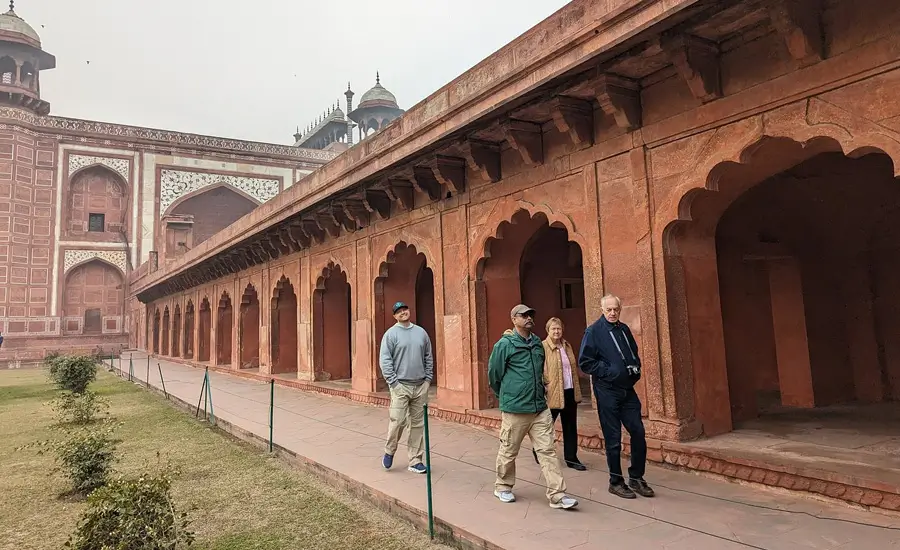
Agra Fort contains substantial open spaces and walking. Delhi monuments can likewise involve uneven ground, steps or distances between entrances and principal structures.
The physical requirements of each day should therefore be considered together. Scheduling several walking-intensive monuments consecutively can make the programme unnecessarily difficult.
Private Car and Driver for Senior Travellers
A private India tour for seniors with car and driver provides considerably more flexibility than shared coach transport.
The vehicle can collect guests directly from their hotel and remain available during sightseeing according to the planned programme. Rest stops can be taken during longer drives, and travellers do not need to wait for a large group at every departure.
Vehicle selection should consider ease of entry and exit, not simply passenger capacity. A very high step into a vehicle can become inconvenient when it needs to be repeated many times throughout the day.
Legroom and luggage capacity are also important. Couples travelling with full-size international luggage may prefer a larger vehicle even when a smaller car technically has enough seats.
Air conditioning becomes essential during warmer periods.
A professional driver handles road transportation, while knowledgeable local guides can be arranged separately for sightseeing. This division is useful because the traveller receives specialist historical interpretation without expecting the driver to perform two unrelated roles.
Hotels for Senior Travellers in India
Hotel selection is one of the most important components of senior friendly tours India.
A five-star rating does not automatically mean a property is the right choice for an older guest. Location, lifts, room position, bathroom design and the distance between reception, restaurants and guest rooms can be equally important.
Heritage hotels require particular attention. Rajasthan contains beautiful historic properties, but some were built long before lifts and modern accessibility standards. Rooms may be reached through stairs, courtyards or long corridors.
Senior travellers who love heritage accommodation do not necessarily need to avoid it. The appropriate room simply needs to be selected with practical requirements in mind.
Modern luxury hotels can provide a more predictable layout, while smaller boutique hotels may offer personal service but fewer accessibility features.
Our senior friendly hotels in India can therefore be selected according to the traveller's mobility and comfort requirements rather than using one standard hotel list for every booking.
Senior Friendly Rajasthan Tours
A Senior Friendly Rajasthan Tour can continue from Jaipur towards Udaipur, Jodhpur or selected other destinations when the holiday has enough days.
Rajasthan requires sensible planning because distances between cities can be substantial.
Udaipur is particularly suitable for slower itineraries. City Palace and the historic centre provide sightseeing, while Lake Pichola and good-quality hotels make it easier to include leisure time.
Jodhpur can also be incorporated, although Mehrangarh Fort requires consideration of walking and historic surfaces.
Jaisalmer is possible on longer trips but should not be inserted into a short itinerary merely to increase the destination count. The additional road travel can outweigh the benefit for travellers who prefer a slower programme.
A Rajasthan tour for senior citizens works best with selected cities and multiple-night stays rather than a rapid circuit through the entire state.
Senior Friendly Ranthambore Wildlife Tours
Wildlife can be included in a senior friendly India tour when travellers understand the physical nature of safari drives.
Ranthambore is the most practical wildlife extension to the Golden Triangle. It can be incorporated between sections of a Rajasthan-oriented route and does not require the same additional travel as central Indian national parks.
Safari vehicles travel on natural tracks, which can be rough and uneven. Getting into and out of an open safari vehicle can also require more mobility than ordinary car travel.
Senior travellers with back, joint or mobility concerns should consider these conditions before adding several drives.
Winter safaris can be cold in the early morning, while hotter months can become demanding during afternoon drives.
A Golden Triangle Tour with Ranthambore for seniors can still work very well when appropriate accommodation, sufficient rest and realistic safari expectations are built into the programme.
Senior Friendly Varanasi Tours
Varanasi is culturally significant but requires particularly careful planning for older travellers.
The historic lanes around the ghats can be narrow, uneven and crowded. Steps are an important feature of many riverfront areas, making mobility a key consideration.
A Varanasi tour for senior citizens should therefore be designed according to what the traveller can comfortably manage rather than following a generic city itinerary.
Boat trips may also involve boarding arrangements that vary according to water levels and local conditions. These details should be assessed at the time of travel.
For travellers comfortable with the physical requirements, Varanasi can add considerable religious and cultural depth to a Golden Triangle holiday.
Suitable flights can connect the city with Delhi or other parts of the itinerary, reducing unnecessary long-distance road travel.
Senior Pilgrimage Tours in India
Some older travellers visit India primarily for religious reasons. A senior citizen pilgrimage tour India can incorporate Ayodhya, Varanasi, Prayagraj, Mathura, Vrindavan or other sacred destinations according to personal beliefs and available days.
Pilgrimage routes require different planning from standard monument tours. Temple queues, footwear removal, crowd conditions, steps and vehicle restrictions near sacred areas can all influence accessibility.
Ayodhya can be included for Ram Mandir and other important religious sites. Varanasi provides the Ganges and major Hindu pilgrimage traditions, while Mathura and Vrindavan are associated with Lord Krishna.
A private pilgrimage itinerary can reserve more time for worship and reduce sightseeing that is not relevant to the traveller.
A senior spiritual tour India should also avoid scheduling several demanding temple visits on the same day simply because they are geographically close.
Senior Tours for Couples
A senior couple tour India provides the greatest flexibility when the itinerary is completely private.
Couples can choose their preferred hotels, determine the pace and adjust sightseeing according to how they feel on the day.
One partner may have different mobility requirements from the other. Private arrangements make it possible for one traveller to complete a longer monument visit while the other takes a shorter route or returns to the vehicle where practical.
Hotel rooms can be selected around comfort, and restaurant planning can account for dietary preferences.
For couples celebrating an anniversary or returning to India after many years, the programme can also place greater emphasis on particular destinations rather than trying to cover every standard tourist attraction.
Senior Tours for Families and Multi-Generational Groups
A multi generational India tour may include grandparents, adult children and younger family members travelling together.
These groups need a programme that does not assume everyone has identical energy levels.
Younger travellers may want additional activities, while senior family members may prefer to return to the hotel. Private transport and guiding allow some flexibility within the same overall itinerary.
Room configuration becomes important. Families may need interconnecting rooms, suites or rooms located close to one another.
Vehicle size should also account for the complete family's luggage rather than simply the number of passengers.
A family India tour with senior citizens works particularly well when important activities are shared but some optional sightseeing remains available for more active members.
Food and Dietary Requirements for Senior Travellers
Food preferences should be communicated before the journey, particularly when a traveller follows a medically advised or personally important diet.
India provides substantial vegetarian choice, and many hotels can accommodate common dietary requests when they are communicated clearly.
Travellers who prefer less spicy food should say so rather than assuming every Indian dish will be extremely hot. Spice levels and preparation vary widely.
Breakfast and meal timings should also fit the itinerary. An early departure should not routinely require guests to miss breakfast.
During road journeys, suitable meal stops can be planned rather than relying on whatever happens to be available when the group becomes hungry.
A senior friendly India holiday should make meals comfortable and predictable without preventing travellers from trying regional cuisine.
Best Time for Senior Travellers to Visit India
October through March is generally the most comfortable period for a senior Golden Triangle Tour India because North Indian temperatures are more suitable for outdoor sightseeing.
|
Month
|
General Conditions
|
Senior Travel Consideration
|
|
October
|
Warm to pleasant
|
Good beginning to main travel season
|
|
November
|
Pleasant
|
Very suitable for sightseeing
|
|
December
|
Cool mornings and evenings
|
Warm layers may be needed
|
|
January
|
Cool with possible fog
|
Flexible transfer planning useful
|
|
February
|
Pleasant
|
Strong period for Golden Triangle travel
|
|
March
|
Warm
|
Earlier monument visits can be comfortable
|
|
April
|
Hot
|
Midday hotel breaks recommended
|
|
May
|
Very hot
|
Can be demanding for extensive sightseeing
|
|
June
|
Very hot
|
Careful scheduling required
|
|
July
|
Hot with monsoon conditions
|
Greater weather flexibility needed
|
|
August
|
Humid with rainfall
|
Suitable only with appropriate expectations
|
|
September
|
Warm
|
Conditions begin improving towards autumn
|
Winter should not be interpreted as universally warm simply because India is considered a hot country. Delhi, Agra and Jaipur can have cold mornings in December and January.
Fog can also affect transport in parts of North India during winter. International departure connections should therefore be planned with suitable margins.
Travellers who are sensitive to high temperatures may find April through June considerably more demanding.
Accessibility and Wheelchair Considerations
A wheelchair accessible India tour requires individual assessment because accessibility varies substantially between modern hotels, roads, historic monuments and religious sites.
Some locations provide ramps, mobility assistance or accessible sections, while others contain historic steps, narrow passages and uneven ground that cannot be fully adapted.
The correct approach is to identify the specific places the traveller wants to visit and assess them individually.
The type of wheelchair also matters. A traveller using a wheelchair continuously has different requirements from someone who walks short distances but uses a chair for longer sightseeing.
Vehicle access, room doorway dimensions, bathroom arrangements and lift availability should all be considered where relevant.
It would be misleading to describe an entire itinerary as completely accessible without checking each component. A mobility friendly India tour should instead state clearly what can be arranged and where limitations may remain.
Medication and Health Planning for Senior Travellers
Travellers who take regular medication should carry an adequate supply for the trip and keep essential medication accessible during flights and transfers rather than placing everything in checked luggage.
Prescription documentation may be useful depending on the medication and travel requirements.
Travel insurance appropriate to age, itinerary and personal circumstances should be arranged before departure.
The daily programme should also consider hydration, sun exposure and rest, particularly during warmer months.
Tour staff and guides do not replace medical professionals. Travellers with specific health concerns should obtain appropriate advice from their doctor before an international journey.
The purpose of a senior travel tour India is to organise practical tourism arrangements responsibly, while medical decisions remain between the traveller and qualified healthcare professionals.
Private Tour vs Group Tour for Senior Travellers
For many older travellers, private touring provides greater flexibility than a large escorted group.
|
Travel Factor
|
Private Senior Tour
|
Large Group Tour
|
|
Daily Pace
|
Adjustable
|
Generally fixed
|
|
Rest Stops
|
Flexible
|
Scheduled for group
|
|
Hotel Departure
|
Based on private itinerary
|
Fixed departure
|
|
Guide Attention
|
Private
|
Shared
|
|
Walking Adjustments
|
Easier to manage
|
More difficult
|
|
Vehicle Choice
|
Selected for travellers
|
Shared group vehicle
|
|
Sightseeing Changes
|
More flexible
|
Limited
|
A private senior tour India is particularly valuable when mobility, dietary requirements or preferred pacing need to be considered.
Group travel can still suit active seniors who enjoy the social side of an escorted programme. The correct choice depends on personal travel style rather than age alone.
How to Plan the Right Senior Friendly India Itinerary
Begin with the traveller, not the destination list.
Mobility, walking tolerance, preferred morning start time and comfort with long road journeys should be understood before the route is created.
Next, identify the essential places. A first-time traveller may consider the Taj Mahal non-negotiable but have little interest in visiting every fort in Rajasthan. Another traveller may prioritise Varanasi or Ayodhya for religious reasons.
The itinerary should then remove unnecessary hotel changes. Staying two or three nights in a well-chosen hotel can provide more value than collecting additional destinations.
Transport should be selected according to comfort and geography. Private cars work well for Delhi, Agra, Jaipur and Rajasthan, while flights can prevent unnecessarily long road journeys on wider routes.
Hotel requirements need to be specific. Lift access, walk-in showers, room location or other important features should be requested rather than assumed.
Our custom senior friendly India tours can therefore be planned around age, mobility, travel dates, preferred hotels, cultural interests, religious requirements, wildlife interests, dietary preferences and the number of hours travellers are comfortable sightseeing each day.
A successful senior itinerary is not defined by travelling slowly everywhere. It is defined by spending time where it matters and removing the unnecessary physical pressure that can turn a holiday into a checklist.