
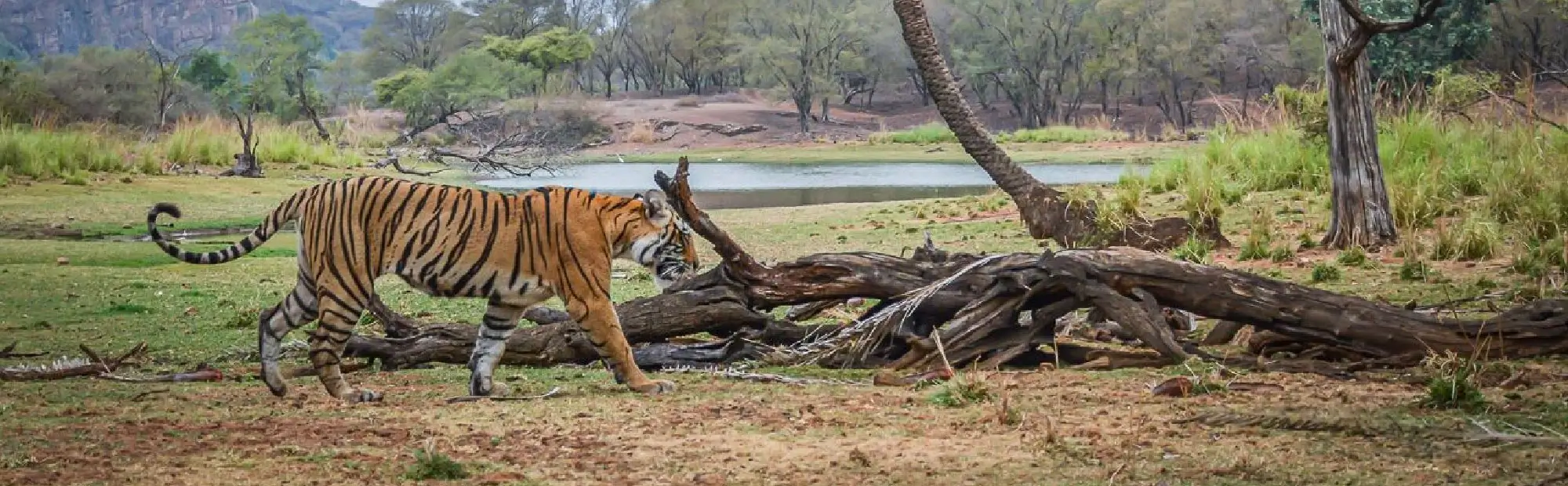
Ranthambore is one of India’s most famous wildlife destinations and among the best places in the country to see the Bengal tiger in its natural habitat. Located in southeastern Rajasthan near the town of Sawai Madhopur, Ranthambore National Park combines dramatic landscape, historic ruins, and dense forest zones into a powerful safari experience.
For international travellers exploring India beyond its monuments and palaces, Ranthambore offers a completely different perspective. Instead of architecture and city life, visitors encounter open grasslands, ancient banyan trees, rocky cliffs, and freshwater lakes surrounded by wildlife.
What makes Ranthambore unique is the blend of nature and history. Within the park lies the imposing Ranthambore Fort, a UNESCO-listed heritage site that overlooks the forest. The contrast between wild tigers and centuries-old stone ruins creates a rare visual setting found in few wildlife reserves worldwide.
Ranthambore is often added after Jaipur within the Golden Triangle route, making it a convenient and highly rewarding extension for travellers seeking adventure and nature.

Ranthambore National Park, Tiger Safari, Ranthambore Fort, Padam Talao Lake, Wildlife Photography

October – June
Peak tiger sightings from March to May.

2 Days
Four safari drives increase chances of wildlife sightings.

English, Hindi
English-speaking naturalist guides accompany safaris.
The primary reason travellers visit Ranthambore is for tiger safaris. The park is divided into multiple safari zones, each offering varied terrain — open grasslands, lakes, rocky plateaus, and dense forest.
Safaris operate twice daily: early morning and late afternoon. Visitors travel in open 4x4 vehicles (jeeps) or larger canters accompanied by trained naturalist guides. These guides track animal movement and interpret wildlife behavior.
While tiger sightings can never be guaranteed, Ranthambore is considered one of the best parks in India for viewing them in daylight conditions. Tigers here are known for moving openly around water bodies and along park tracks.
Beyond tigers, the park hosts leopards, sloth bears, marsh crocodiles, striped hyenas, sambar deer, chital, and a wide variety of bird species.
Ranthambore’s landscape sets it apart from other wildlife reserves. The presence of ancient ruins, broken temple structures, and the towering Ranthambore Fort gives the park a cinematic feel.
Padam Talao, one of the park’s largest lakes, often becomes a focal point for wildlife sightings. During warmer months, animals gather near water sources, increasing visibility.
The dry deciduous forest changes color across seasons — green after monsoon and golden during summer — providing varied photographic opportunities.
Situated within the park boundaries, Ranthambore Fort dates back to the 10th century. It was once a strategic stronghold for Rajput rulers and later contested by Mughal emperors.
Visitors can access the fort outside safari hours. The climb offers panoramic views over forested valleys and lakes below. The fort adds cultural context to the natural setting, connecting Rajasthan’s royal history with its wild landscape.
Ranthambore is particularly popular among wildlife photographers. Open jeep vehicles allow clear viewing angles and natural lighting. However, park authorities enforce strict rules regarding distance and noise levels to protect animals.
Visitors are encouraged to maintain silence, avoid littering, and respect wildlife space. Responsible tourism ensures that the ecosystem remains protected.
Sawai Madhopur town, located near the park entrance, offers a range of accommodations — from mid-range jungle lodges to luxury wildlife resorts. Many properties provide landscaped gardens, naturalist talks, and curated dining experiences.
Luxury safari lodges focus on personalized service, comfortable tented suites, and guided nature walks. Even mid-range properties maintain high standards suitable for international travellers.
Advance booking is essential during peak season, especially for safari permits. Passport details are required for safari reservations.
The safari season typically runs from October to June. The winter months (November to February) offer cooler temperatures but slightly lower wildlife visibility due to dense vegetation.
Summer months (March to May) are hotter but increase chances of tiger sightings as animals gather near water bodies.
The park remains closed during monsoon season (July to September).

Nearest airport: Jaipur (approx. 3–4 hours by road)

Road connections from Jaipur

Sawai Madhopur Railway Station (direct trains from Delhi and Jaipur)

We promise you a holiday where everything is taken care of from the moment you land. Trusted drivers waiting for you, handpicked hotels that fit your style, personalized itineraries designed just for your family, and a dedicated team on call 24/7. All you need to do is relax, explore, and create unforgettable memories, while we take care of every detail behind the scenes.
Yes, it is considered one of the best tiger reserves in India.
At least 3–4 safari drives increase sighting chances.
March to May for higher tiger visibility.
Yes, safaris operate under strict safety regulations.
Yes, but age restrictions may apply.
Yes, several premium safari lodges are available.
Approximately 3–4 hours by road.
No, wildlife sightings depend on natural conditions.
Neutral-colored clothing and comfortable shoes.
Yes, photography is encouraged without flash.
Yes, usually July to September.
Yes, it is a popular extension after Jaipur.


