For many first time visitors to India, transportation can feel intimidating before arrival. Travelers often imagine crowded roads, heavy traffic, unfamiliar navigation systems, and communication challenges. While Delhi certainly experiences traffic congestion, there is one transportation system that consistently surprises foreign visitors because of its efficiency, affordability, and convenience: the Delhi Metro.
Today, the Delhi Metro is one of the largest and most modern metro systems in the world. It connects major tourist attractions, business districts, residential neighborhoods, shopping areas, railway stations, and the international airport through an extensive network that allows travelers to move around the city quickly and affordably.
Many experienced travelers who initially planned to rely entirely on taxis end up using the metro regularly after discovering how simple it is. The system is clean, relatively easy to understand, air-conditioned, and significantly faster than road transport during busy hours. For tourists exploring Delhi, it often becomes one of the most valuable travel tools available.
One of the biggest advantages for foreign visitors is predictability. A metro journey that takes thirty minutes today will usually take approximately the same amount of time tomorrow. By contrast, road traffic conditions in Delhi can vary dramatically depending on time of day, weather conditions, and local events.
The metro is also extremely budget friendly. Visitors who might spend hundreds or even thousands of rupees on taxis can often reach the same destinations for a fraction of the cost. This makes it particularly attractive for independent travelers, families, and anyone interested in maximizing travel value.
Beyond convenience, the metro also provides a fascinating glimpse into daily life in Delhi. Students, office workers, tourists, families, and local residents all use the network. Riding the metro allows visitors to observe the city from a perspective that differs significantly from private vehicles or organized tours.
For travelers planning to visit attractions such as Red Fort, Jama Masjid, Chandni Chowk, India Gate, Qutub Minar, Akshardham Temple, Connaught Place, and numerous other landmarks, understanding how the Delhi Metro works can make sightseeing significantly easier.
The system may appear complex on maps at first glance, but most visitors find that it becomes intuitive surprisingly quickly. With a little preparation, foreign tourists can use the metro confidently from their very first day in Delhi.
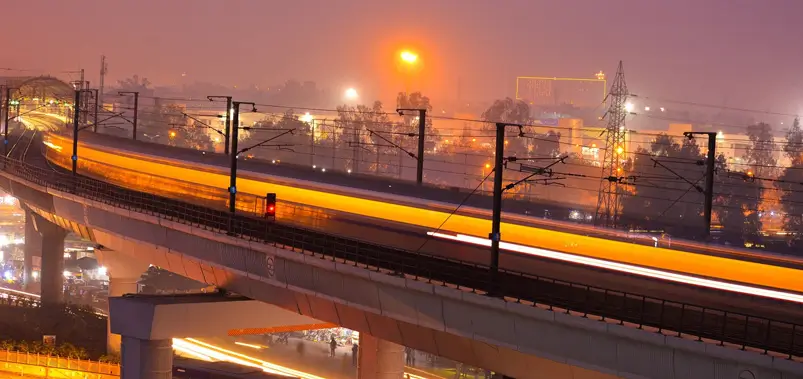
One of the first transportation decisions visitors face after arriving in Delhi is whether to rely primarily on taxis or public transportation. While taxis and ride hailing services certainly have their place, many experienced travelers eventually discover that the metro offers several important advantages.
The most obvious benefit is speed. Delhi's road network can become extremely congested, particularly during morning and evening rush hours. A journey that might take fifteen minutes during quiet periods can easily require forty five minutes or more when traffic is heavy. The metro largely avoids this problem because trains operate independently of road conditions.
Cost savings represent another major advantage. Metro fares are generally very affordable. Depending on distance, most journeys cost between ₹10 and ₹60. By comparison, the same route using a taxi may cost several hundred rupees or more. Visitors planning multiple sightseeing days often save substantial amounts by using the metro whenever practical.
Reliability is equally important. Trains operate on predictable schedules throughout the day, allowing travelers to plan itineraries with greater confidence. This is especially useful when visiting multiple attractions or coordinating transportation to railway stations and airports.
Safety also contributes to the metro's popularity. Stations are equipped with security screening, surveillance systems, and dedicated staff. Many tourists, including solo travelers, appreciate the structured environment compared with navigating unfamiliar road networks.
Comfort is another factor frequently mentioned by international visitors. Air conditioned trains provide relief from Delhi's heat, particularly during summer months. Modern stations, digital displays, route maps, and multilingual signage make navigation easier than many travelers expect.
The metro is also environmentally friendly compared with private vehicles. Travelers interested in sustainable tourism often appreciate the opportunity to reduce their environmental impact while exploring the city.
Of course, taxis remain useful for certain situations. Lat night travel, hotel transfers with heavy luggage, and destinations located far from metro stations may still justify using private transportation. However, for many sightseeing activities, the metro offers a combination of speed, affordability, reliability, and convenience that is difficult to match.
Understanding these advantages helps explain why so many experienced visitors recommend the Delhi Metro as the primary transportation option for exploring the city.
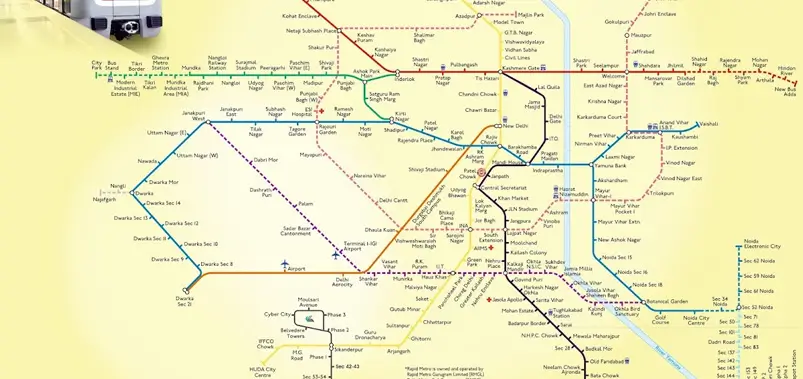
When first viewing a Delhi Metro map, many visitors feel intimidated by the number of colored lines crossing the city. Fortunately, tourists only need to understand a small portion of the network to navigate most major attractions successfully.
Each metro line is identified by a color. The colors help passengers recognize routes quickly and make transfers between lines easier. Digital displays, station announcements, and directional signs consistently use these colors, reducing the likelihood of confusion.
For tourists, several lines are particularly important. The Yellow Line connects key areas including New Delhi Railway Station, Chandni Chowk, and Qutub Minar. Many visitors use this route repeatedly because it provides access to some of the city's most famous attractions.
The Violet Line serves locations including Jama Masjid and Red Fort, making it especially valuable for travelers exploring Old Delhi. The Blue Line passes through major commercial districts and shopping areas, while the Airport Express Line connects central Delhi with the international airport.
One of the most useful concepts for visitors to understand is the interchange station. These stations allow passengers to transfer from one line to another without leaving the metro system. Although transfer stations may initially appear complex, clear signage usually makes navigation straightforward.
Most stations display route maps showing current locations, upcoming stops, and interchange opportunities. Electronic displays inside trains provide additional information, helping passengers confirm they are traveling in the correct direction.
A common mistake among tourists is focusing too heavily on memorizing routes. In reality, using a digital map application alongside station signage is usually sufficient. After a few journeys, most travelers become comfortable navigating independently.
Another helpful strategy is learning the metro stations closest to major attractions. Once visitors know that Chandni Chowk, Red Fort, Jama Masjid, Rajiv Chowk, and Qutub Minar each have nearby metro access, planning daily itineraries becomes much easier.
The key is not trying to understand the entire network immediately. Start with the routes relevant to your itinerary, and familiarity will develop naturally as you travel around the city.
One of the strongest reasons tourists appreciate the Delhi Metro is its affordability. Compared with transportation costs in many major international cities, metro fares in Delhi remain remarkably reasonable.
Most journeys cost between ₹10 and ₹60 depending on distance traveled. Even longer routes generally remain inexpensive compared with taxis. This allows visitors to explore multiple attractions during the same day without worrying about transportation expenses accumulating quickly.
For travelers spending several days in Delhi, transportation savings can become substantial. A tourist who visits multiple attractions daily may spend only a few hundred rupees on metro fares over an entire trip, whereas exclusive reliance on taxis could cost several thousand rupees.
Tickets can be purchased in several ways. Single journey tokens remain popular among occasional users. These tokens are easy to buy at station counters or vending machines and work well for travelers who plan only a few metro journeys.
More frequent users often prefer rechargeable smart cards. These cards reduce waiting times because passengers can enter stations directly without purchasing tickets for every journey. They also simplify travel during busy periods when ticket counters may have queues.
Tourist cards are another option sometimes used by visitors planning extensive metro travel. Depending on availability and current policies, these cards may provide unlimited travel for specific durations. Travelers expecting to make numerous journeys within a short period should investigate whether such options are available during their visit.
Budget conscious travelers frequently discover that metro transportation allows them to allocate more money toward experiences, dining, shopping, and accommodation rather than commuting expenses.
Another financial advantage involves airport access. The Airport Express Line often provides a faster and more economical alternative to taxis, particularly during periods of heavy traffic.
For most visitors, metro transportation represents one of the best travel values available in Delhi. Understanding fare structures and ticket options helps maximize those savings while keeping transportation simple and efficient.
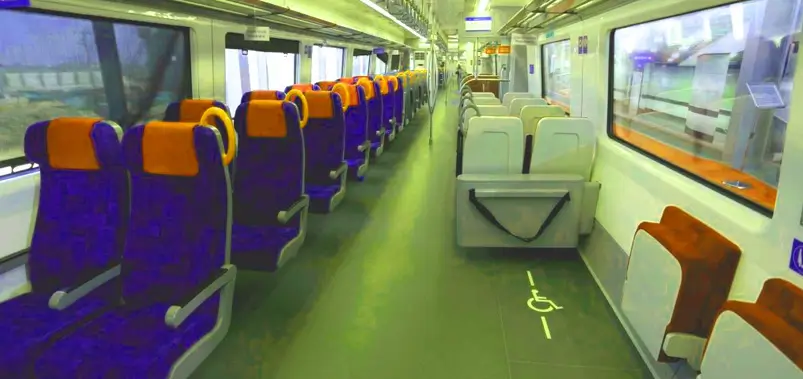
For many international visitors, the first interaction with Delhi's transportation system begins immediately after landing at Indira Gandhi International Airport. After a long international flight, travelers often face a choice between taxis, hotel transfers, private drivers, and public transportation. One of the most efficient options available is the Airport Express Line.
The Airport Express Line was designed specifically to connect the airport with central Delhi quickly and comfortably. Unlike ordinary metro routes that stop at many stations, the Airport Express focuses on speed and convenience. Air conditioned trains, dedicated luggage space, modern stations, and shorter travel times make it especially attractive for travelers carrying baggage.
The journey from the airport to central Delhi generally takes around twenty minutes, which is often significantly faster than traveling by road during busy traffic periods. Visitors staying near Connaught Place, New Delhi Railway Station, Aerocity, or central business districts frequently find the Airport Express extremely convenient.
Another advantage is predictability. Taxi journeys from the airport can vary dramatically depending on traffic conditions. During peak periods, road travel may take well over an hour. The Airport Express avoids this uncertainty by operating on a fixed rail network.
The stations themselves are modern and relatively easy to navigate. Signage is clear, security procedures are straightforward, and staff members are accustomed to assisting international travelers. Many visitors who initially hesitate to use public transportation discover that the Airport Express feels surprisingly familiar and user friendly.
Budget considerations also favor the Airport Express. While more expensive than regular metro journeys, it remains considerably cheaper than many airport taxi rides. Travelers seeking a balance between cost and convenience often consider it one of the best transportation options available.
For visitors arriving in Delhi for the first time, the Airport Express provides a smooth introduction to the city's metro system. Once travelers become comfortable using it, they often find the rest of the network much less intimidating.
While Delhi has hundreds of metro stations, tourists typically use a relatively small group of strategically important locations. Understanding these stations can make sightseeing much easier.
Rajiv Chowk Metro Station is one of the most important stations for visitors. Located beneath Connaught Place, it serves as a major interchange and provides access to shopping, restaurants, hotels, and central Delhi attractions. Many travelers use Rajiv Chowk as a base for exploring the city.
Chandni Chowk Metro Station is essential for visitors interested in Old Delhi. From here, travelers can access Chandni Chowk Market, Jama Masjid, Red Fort, Khari Baoli, and numerous historic sites.
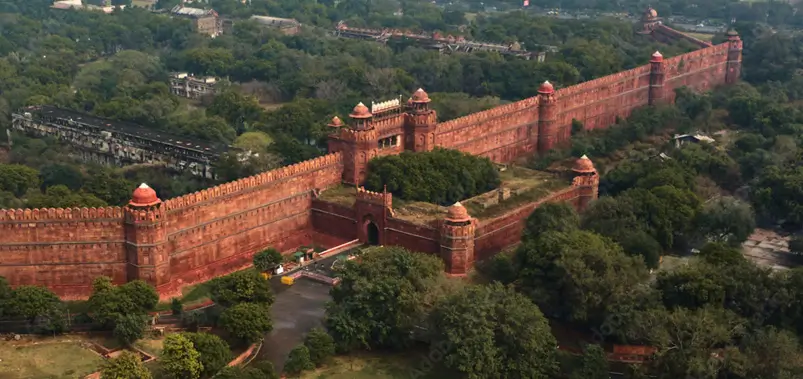
Red Fort Metro Station provides convenient access to one of Delhi's most famous monuments. Visitors interested primarily in the Red Fort often find this station easier than navigating through crowded market streets.
Jama Masjid Metro Station offers direct access to the famous mosque and surrounding neighborhoods. It is particularly useful for travelers combining religious landmarks, food experiences, and heritage walks.
Qutub Minar Metro Station is the preferred option for visitors exploring the Qutub Minar complex. The station allows relatively easy access to one of India's most important historical sites.
Akshardham Metro Station serves visitors heading to the Akshardham Temple complex. The station is located conveniently near the attraction, reducing the need for additional transportation.
New Delhi Metro Station is important not only because of its connection to the railway station but also because it links several metro lines and the Airport Express. Many travelers pass through this station during their stay.
Learning these stations often proves more valuable than memorizing entire metro routes. Once visitors understand where major attractions connect to the network, planning daily itineraries becomes much simpler.
One of the greatest strengths of the Delhi Metro is how effectively it connects major tourist destinations. Many of the city's most famous attractions can be reached with minimal effort.
Visitors planning a day in Old Delhi often begin by taking the metro to either Jama Masjid or Chandni Chowk. From there, several attractions can be explored on foot. Jama Masjid, Chandni Chowk Market, Khari Baoli, and the Red Fort are all located relatively close together.
The Red Fort is one of the easiest monuments to access using public transportation. Metro access eliminates concerns about parking, traffic congestion, and navigation through busy streets.
Travelers interested in history frequently combine the Red Fort with Jama Masjid during the same day. The metro makes this itinerary straightforward and affordable.
The Qutub Minar complex is another attraction that benefits from metro connectivity. Rather than spending extended periods in traffic, visitors can reach the area efficiently and begin sightseeing sooner.
The Akshardham Temple also becomes much more accessible thanks to the metro. The station's proximity to the temple reduces transportation complexity, particularly for visitors unfamiliar with Delhi.
Connaught Place, India Gate, Lodhi Garden, and several major museums can likewise be incorporated into metro based itineraries. Many experienced travelers intentionally structure sightseeing days around metro accessibility because it simplifies logistics and reduces transportation costs.
One useful strategy is grouping attractions by location. Rather than crossing the city repeatedly, visitors can focus on specific areas during each day. This approach minimizes travel time and maximizes sightseeing opportunities.
The metro's extensive coverage means that most major attractions are either directly accessible or require only short additional transportation connections.
Safety is one of the reasons many travelers develop confidence in the Delhi Metro quickly. The system includes security screening, station staff, surveillance cameras, and a structured operating environment that differs significantly from many forms of surface transportation.
Nevertheless, a few practical precautions help ensure smooth journeys.
Visitors should keep personal belongings secure, particularly during busy periods. Although serious incidents are uncommon, crowded trains and stations always require basic awareness. Cross body bags, zipped pockets, and secure storage of valuables are sensible precautions.
Peak commuting hours can be extremely busy. Travelers seeking a more relaxed experience may prefer avoiding morning and evening rush periods when trains are heavily used by office workers.
Maintaining awareness of station names and route directions is also helpful. While signage is generally excellent, paying attention to announcements and displays reduces the risk of accidentally traveling in the wrong direction.
Tourists carrying large amounts of luggage may find regular metro journeys less comfortable during busy hours. In such cases, the Airport Express or private transportation may be preferable.
Visitors should also remember that metro stations involve security checks similar to those found in airports, although usually much faster. Allowing a few extra minutes for these procedures is wise.
Overall, the Delhi Metro remains one of the safest and most organized transportation systems available to travelers in the city.
.webp)
Many solo female travelers specifically ask about metro safety. The Delhi Metro is generally regarded as one of the safer transportation options available in the city and is widely used by women every day.
Several features contribute to this reputation. Security personnel are present at stations, surveillance systems operate throughout the network, and dedicated women's coaches are available on many trains.
Women traveling alone often appreciate the structured environment and predictable operating procedures. Unlike negotiating transportation arrangements on the street, metro travel follows a clear system that reduces uncertainty.
The dedicated women's coaches provide an additional option for those who prefer them. These sections are clearly marked and commonly used during busy commuting periods.
As with any major city, maintaining general awareness remains advisable. However, many international visitors report feeling comfortable using the metro independently, even during extended stays.
The combination of security measures, large passenger volumes, and dedicated facilities makes the metro a practical and popular choice for women travelers exploring Delhi.
One frequent mistake is purchasing individual tokens repeatedly when a rechargeable card would be more convenient. Travelers staying several days often save time by using a card instead of waiting in ticket lines before every journey.
Another common error is traveling during peak commuting periods without realizing how busy trains can become. Morning and evening rush hours often involve significantly larger crowds than midday travel.
Some visitors also underestimate walking distances within interchange stations. Large stations may require several minutes of walking when changing lines, so allowing extra time is helpful.
A surprising number of tourists focus too heavily on route complexity. In reality, digital maps and station signage make navigation much easier than many travelers expect.
Carrying excessive luggage on regular metro lines is another avoidable mistake. The Airport Express often provides a more comfortable solution for airport transfers.
Finally, some visitors rely exclusively on taxis despite staying near metro stations. Doing so often increases transportation costs while providing little additional convenience.
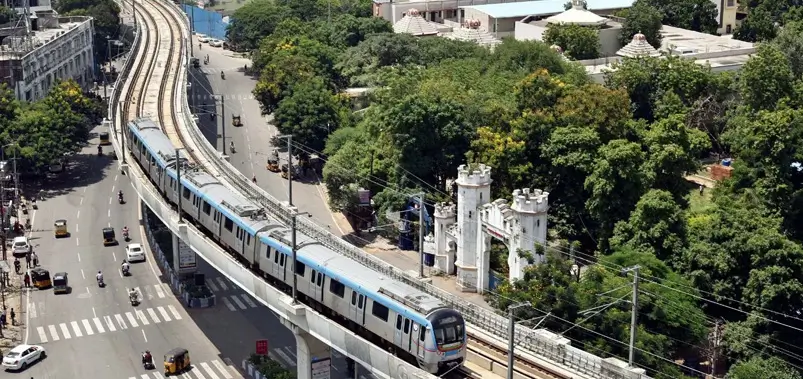
The answer depends on the situation.
For long distance travel during periods of heavy traffic, the metro is usually faster. Travel times remain predictable regardless of road conditions, making itinerary planning easier.
From a budget perspective, the metro almost always wins. Even multiple metro journeys typically cost less than a single taxi ride across the city.
However, Uber and other taxi services offer advantages when carrying luggage, traveling late at night, visiting locations far from metro stations, or moving between multiple destinations without walking.
Comfort preferences also matter. Some travelers simply prefer private transportation, particularly after long flights or intensive sightseeing days.
Many experienced visitors use a hybrid strategy. The metro handles most daytime sightseeing, while taxis are reserved for airport transfers, hotel pickups, or specific situations where convenience outweighs cost considerations.
This combination often provides the best balance of efficiency, comfort, and affordability.
A well-planned metro itinerary can cover several major attractions in a single day.
Begin the morning at Qutub Minar, arriving shortly after opening hours. Explore the monument before crowds become significant.
From there, travel toward central Delhi and visit Connaught Place for breakfast or coffee. Spend some time exploring the area before continuing toward Old Delhi.
The afternoon can focus on Jama Masjid, Chandni Chowk, and the Red Fort. These attractions are close enough to one another that extensive additional transportation is unnecessary.
Food lovers may choose to include a food walk through Chandni Chowk before returning via metro to their hotel.
This itinerary demonstrates how effectively the metro connects very different parts of Delhi. Rather than spending large portions of the day in traffic, visitors can devote more time to actual sightseeing.

We promise you a holiday where everything is taken care of from the moment you land. Trusted drivers waiting for you, handpicked hotels that fit your style, personalized itineraries designed just for your family, and a dedicated team on call 24/7. All you need to do is relax, explore, and create unforgettable memories, while we take care of every detail behind the scenes.
Because it combines affordability, reliability, speed, safety, and extensive coverage. For many tourists, it becomes one of the most useful tools for exploring Delhi efficiently and confidently.
Yes. Families use the system regularly, and many visitors find it an affordable and practical way to move around the city. Avoiding peak rush hours can make journeys more comfortable with children.
For budget-conscious travelers and independent explorers, the metro is often more efficient. However, private drivers provide flexibility, comfort, and door-to-door service that some visitors prefer.
Red Fort, Jama Masjid, Chandni Chowk, Qutub Minar, Akshardham Temple, Connaught Place, and several museums are all conveniently accessible using metro services.
It is possible, but regular metro lines can become crowded. Travelers carrying substantial luggage often prefer the Airport Express or private transportation, particularly during peak hours.
Speed and predictability. Unlike road transportation, metro travel times are largely unaffected by traffic conditions. This allows visitors to plan sightseeing days with greater confidence.
Major stations generally remain busy and well monitored. However, as with any city, travelers should remain aware of surroundings and plan routes sensibly. Many visitors continue using the metro comfortably during evening hours.
For many travelers, absolutely. It provides a fast, reliable connection between the airport and central Delhi while avoiding traffic congestion. Visitors carrying moderate luggage often find it one of the most convenient transportation options available.
Most tourists spend relatively little on metro transportation. Depending on sightseeing plans, daily metro costs often remain between ₹50 and ₹300. Even extensive use of the system is usually far cheaper than relying entirely on taxis.
Yes. Most visitors find the system surprisingly straightforward. English signage is widely available, route maps are easy to follow, announcements are clear, and station staff are accustomed to assisting travelers. After one or two journeys, many tourists become comfortable navigating independently.