Delhi is often described as a city of layers. Beneath the modern skyline, busy roads, and growing neighborhoods lies a fascinating historical landscape shaped by centuries of rulers, empires, traders, travelers, and communities. Most visitors experience Delhi through the windows of a vehicle, moving quickly between major monuments such as the Red Fort, India Gate, Humayun's Tomb, and Qutub Minar. While these landmarks are undoubtedly impressive, they tell only part of the city's story.
The real character of Delhi reveals itself at street level. Hidden courtyards, forgotten gateways, ancient stepwells, colonial-era buildings, traditional markets, and centuries old neighborhoods are often overlooked by travelers following standard sightseeing itineraries. This is where walking tours in Delhi become invaluable. Exploring the city on foot allows visitors to slow down and notice details that would otherwise disappear in traffic or remain hidden behind walls.
For history lovers, Delhi offers one of the most rewarding urban walking experiences in Asia. Few cities contain so many layers of civilization within such a compact area. The city has served as the capital for numerous dynasties and empires, each leaving behind architectural treasures, cultural traditions, and stories that continue to shape modern Delhi.
Walking through Delhi is not simply a way of moving between attractions. It is a method of understanding how the city evolved. Every neighborhood reveals clues about different historical periods. A single route may pass Mughal monuments, colonial-era buildings, medieval mosques, traditional homes, and contemporary businesses operating side by side.
Whether you are passionate about architecture, photography, culture, urban history, or simply curious about India's capital, a carefully planned Delhi heritage walk can provide a deeper and more memorable experience than many conventional tours.
The following routes represent some of the best walking experiences available for travelers who want to explore Delhi's remarkable history one step at a time.

Many first time visitors underestimate how much history exists beyond Delhi's major monuments. A guidebook may focus on famous attractions, but the spaces between those landmarks often contain equally fascinating stories.
When traveling by car, visitors usually see only the destination. Walking reveals the journey itself.
A narrow alley may contain a centuries old residence. An ordinary looking doorway may lead to a hidden courtyard. Decorative balconies, carved stonework, fading inscriptions, and small shrines frequently go unnoticed when moving too quickly through the city.
Walking also provides context.
For example, standing inside Humayun's Tomb is impressive. However, walking through the surrounding neighborhood, observing nearby structures, and understanding how the area developed over time creates a much richer perspective. Historical sites become part of a broader narrative rather than isolated attractions.
The sensory experience matters as well.
Delhi's sounds, aromas, textures, and daily rhythms contribute significantly to understanding the city. The call to prayer from a historic mosque, the scent of spices drifting from a market, the sight of traditional craftsmen at work, and the conversations taking place in local neighborhoods all provide insights that cannot be fully appreciated from a vehicle.
Walking encourages curiosity.
Travelers often discover unexpected places simply by turning a corner or following an interesting street. Some of the most memorable experiences occur in locations that never appear on standard itineraries.
Another advantage is photography. Many of Delhi's most interesting photographic opportunities exist in small details rather than grand monuments. Walking provides time to observe these details and capture images that reflect the city's complexity.
Most importantly, walking creates a stronger emotional connection with the city. Instead of merely observing Delhi, visitors become temporary participants in its daily life.
This deeper engagement is one reason why heritage walks in Delhi continue to attract travelers seeking more meaningful experiences.
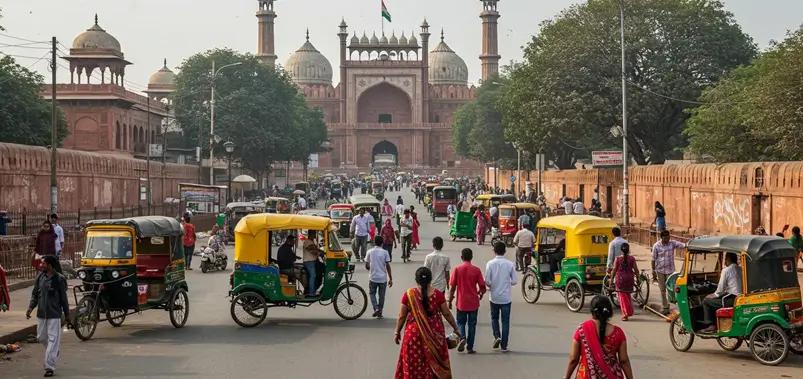
No historical walking route in Delhi is more famous than the streets of Old Delhi.
Established in the seventeenth century by Mughal Emperor Shah Jahan, this district remains one of the most vibrant and historically significant parts of the city. Walking through Old Delhi feels less like visiting a museum and more like stepping into a living historical environment where centuries of commerce, culture, and community life continue to unfold.
A typical Old Delhi walking tour often begins near Jama Masjid, one of India's largest and most important mosques. The monumental structure dominates the surrounding neighborhood and provides an ideal introduction to Mughal architecture.
From there, visitors enter the dense network of streets surrounding Chandni Chowk, one of Asia's most famous markets. Originally designed as a grand commercial avenue during the Mughal era, the area has evolved into a complex maze of shops, residences, warehouses, religious sites, and traditional businesses.
Walking through Chandni Chowk reveals a fascinating mixture of history and modern life. Merchants continue trading goods much as their predecessors did centuries ago. Spice markets, jewelry stores, textile shops, and food vendors operate in buildings that often possess remarkable historical significance.
One of the most rewarding aspects of this route is the diversity of cultural influences visible throughout the area. Hindu temples, Sikh gurudwaras, Jain religious sites, and Islamic monuments coexist within a relatively small geographic space, reflecting Delhi's long history as a multicultural city.
The famous Khari Baoli Spice Market is often included in heritage walks. The market's aromatic atmosphere and bustling activity provide a vivid reminder of Delhi's role as an important trading center.
Walking through Old Delhi requires patience and curiosity. The district is crowded, energetic, and occasionally overwhelming. Yet for history lovers, it offers an unmatched opportunity to experience the city's Mughal heritage in an authentic setting.
Few places in India provide such a direct connection between past and present.
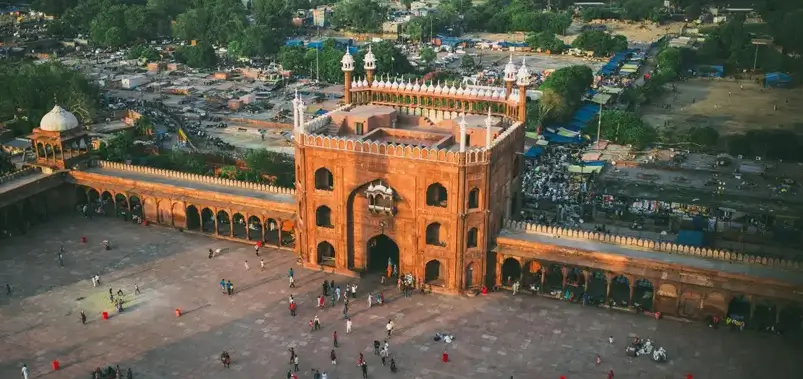
While many visitors focus exclusively on Chandni Chowk, the broader area known as Shahjahanabad contains countless architectural treasures hidden beyond the main tourist routes.
This walking route explores the lesser known corners of the Mughal capital and reveals aspects of urban history often overlooked by conventional tours.
The journey passes through residential neighborhoods where traditional homes still display features associated with historic Mughal architecture. Intricately carved balconies, decorative facades, and narrow passageways provide insight into how people lived during different periods of Delhi's history.
Many visitors are surprised by the number of historic structures concealed within ordinary looking streets. Small mosques, forgotten mansions, historic wells, and former merchant residences often appear unexpectedly between modern businesses and contemporary homes.
One particularly interesting aspect of this walk is the opportunity to observe how historical buildings continue functioning within modern communities. Unlike monuments preserved as isolated attractions, many structures remain integrated into everyday life.
Residents live, work, shop, and socialize in spaces shaped by centuries of history.
The route also highlights the urban planning principles that influenced the original design of Shahjahanabad. Understanding how markets, religious institutions, residential areas, and public spaces interacted helps explain why the district developed as it did.
For travelers interested in architecture and urban history, this walk provides valuable perspectives rarely found in guidebooks.
The experience demonstrates that Delhi's historical significance extends far beyond its most famous monuments.
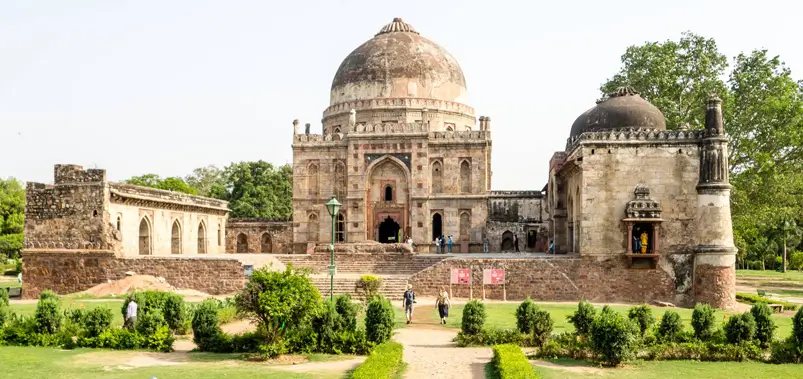
While Old Delhi reflects Mughal history, another fascinating walking route explores the city's colonial transformation.
The area commonly known as Lutyens' Delhi represents one of the most ambitious urban planning projects undertaken during British rule. Designed in the early twentieth century, this district became the administrative heart of the colonial capital and continues serving as the center of India's national government.
Walking through this area reveals a dramatically different vision of Delhi.
Wide boulevards replace narrow lanes. Grand government buildings dominate the landscape. Carefully planned vistas create visual connections between major structures and public spaces.
The route typically includes views of India Gate, one of Delhi's most recognizable landmarks. Originally constructed as a war memorial, the monument occupies a central position within the district's urban design.
The surrounding avenues showcase architectural influences that blend European planning principles with Indian design elements. Large green spaces, tree lined roads, and monumental buildings create an atmosphere distinct from other parts of the city.
Walking here allows visitors to appreciate the scale and ambition of the project. The district was designed not merely as a collection of buildings but as a symbolic statement of political authority and administrative power.
Understanding the historical context of Lutyens' Delhi helps visitors appreciate its significance within the broader story of the city.
The contrast between this area and Old Delhi illustrates how dramatically different rulers envisioned their capitals.
For history enthusiasts interested in colonial architecture and urban planning, this route offers a fascinating perspective on Delhi's evolution.
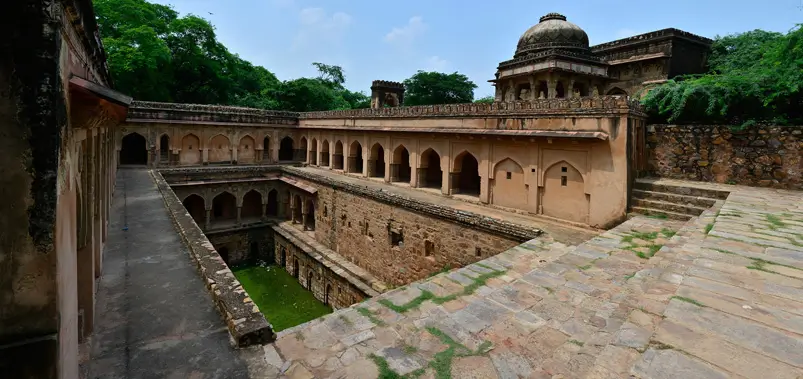
Among all the historical walking tours in Delhi, few locations offer as much historical depth as Mehrauli Archaeological Park. Surprisingly, it remains one of the least explored heritage areas by mainstream tourists, despite containing monuments that span more than a thousand years of Delhi's history.
Many travelers visit Qutub Minar, take photographs, and leave without realizing that an enormous archaeological landscape exists just beyond the monument complex. A walking tour through Mehrauli reveals how successive dynasties built, modified, abandoned, and rebuilt sections of Delhi over centuries.
The route takes visitors past tombs, mosques, stepwells, pavilions, gardens, and ruins dating from different historical periods. Unlike many restored monuments, these structures often remain surrounded by natural vegetation, creating an atmosphere that feels more like exploration than conventional sightseeing.
One of the most fascinating stops is Rajon Ki Baoli, a beautifully preserved stepwell that demonstrates the engineering skills of medieval India. Descending into the structure provides insight into how water was collected and stored long before modern infrastructure existed.
Further along the route, visitors encounter tombs belonging to nobles, scholars, and influential figures whose stories rarely appear in guidebooks. These monuments may not possess the fame of the Red Fort or Humayun's Tomb, but they provide valuable clues about everyday life during different periods of Delhi's development.
What makes Mehrauli particularly rewarding is the sense of discovery. The area does not feel heavily commercialized. Walking through the park often creates the impression of uncovering forgotten chapters of history hidden within a modern city.
For architecture enthusiasts, photographers, and serious history lovers, this route is often considered one of the most rewarding heritage walks in Delhi.
The experience demonstrates that some of the city's greatest treasures exist beyond its most famous attractions.

Most visitors recognize Humayun's Tomb as one of Delhi's most important monuments. Built during the sixteenth century, it is widely regarded as a precursor to the Taj Mahal and one of the finest examples of Mughal architecture in India.
Yet the surrounding area contains enough history to justify an entire walking tour.
A heritage walk beginning at Humayun's Tomb often extends into the historic neighborhood of Nizamuddin, creating a fascinating journey through architecture, spirituality, and urban history.
The tomb itself deserves careful exploration. Its symmetrical gardens, intricate stonework, and monumental design represent a significant milestone in Indian architecture. Walking through the complex allows visitors to appreciate details that are easily missed during rushed visits.
Beyond the main structure, the surrounding gardens contain additional tombs and monuments associated with members of the Mughal court. These lesser known sites help illustrate the broader historical context of the area.
The route eventually reaches Nizamuddin, one of Delhi's oldest continuously inhabited neighborhoods. Here, history feels alive rather than preserved behind barriers.
Narrow streets lead visitors toward the shrine of the revered Sufi saint Hazrat Nizamuddin Auliya, whose influence continues to attract devotees from across India and beyond.
The atmosphere changes dramatically as visitors move from formal Mughal gardens into the bustling neighborhood surrounding the shrine. Flower vendors, traditional musicians, local residents, and pilgrims create a vibrant environment rich in cultural and spiritual significance.
The walk offers a unique combination of architectural beauty and living tradition.
For travelers interested in understanding how history continues to shape contemporary life, few routes in Delhi provide a more meaningful experience.
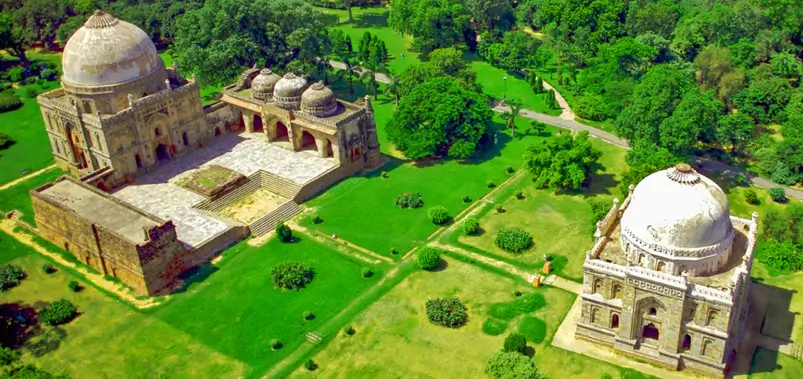
Many people know Lodhi Gardens as a popular green space where residents exercise, relax, and escape the city's traffic. However, history lovers quickly discover that the park is far more than a recreational area.
Scattered throughout the gardens are some of Delhi's most important medieval monuments.
The structures belong primarily to the Lodhi Dynasty, which ruled parts of northern India before the arrival of the Mughals. Their architecture represents a fascinating transitional period in Indian history.
Walking through Lodhi Gardens allows visitors to examine these monuments closely while enjoying one of Delhi's most attractive public spaces.
The tombs feature elegant domes, decorative stonework, and architectural styles that differ noticeably from later Mughal structures. Observing these differences helps illustrate how Delhi's architecture evolved over time.
The setting enhances the experience.
Unlike monuments located within crowded urban districts, the structures in Lodhi Gardens are surrounded by trees, lawns, and landscaped pathways. This peaceful environment encourages visitors to slow down and appreciate details.
Many photographers consider early morning one of the best times to explore the gardens. Soft light filters through the trees, creating beautiful conditions for architectural photography.
The park also demonstrates how historical preservation can coexist with contemporary urban life. Residents use the gardens daily while sharing the space with monuments that have stood for centuries.
For travelers seeking a more relaxed historical experience, Lodhi Gardens offers an ideal balance of heritage and tranquility.
It proves that some of Delhi's most significant historical sites can be appreciated without crowds or elaborate planning.
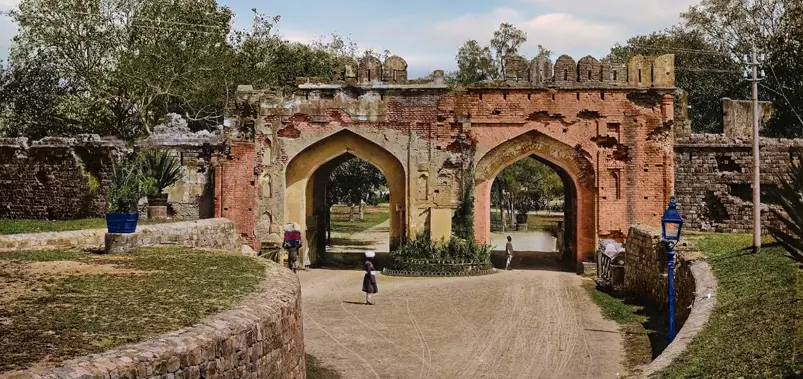
Delhi's history extends beyond the medieval and Mughal periods.
One of the most compelling walking routes explores the area around Kashmere Gate, which played a central role during the Indian Rebellion of 1857.
For travelers interested in military history, colonial history, and the struggle that reshaped relations between India and Britain, this route provides valuable insights.
Many physical reminders of the conflict remain visible today.
Historic buildings, churches, walls, and gateways bear witness to events that transformed Delhi and influenced the future of the subcontinent.
Walking through the area allows visitors to visualize how the city appeared during one of the most turbulent periods in its history.
The route often includes locations associated with key moments of the rebellion, helping travelers understand the strategic importance of the district.
What makes this walk particularly interesting is the way historical narratives become tangible. Instead of reading about events in a book, visitors stand in locations where they actually occurred.
The surrounding architecture provides additional context.
Colonial-era structures reveal how British influence shaped parts of Delhi while also illustrating the tensions that eventually contributed to conflict.
For those interested in modern Indian history, Kashmere Gate offers one of the city's most educational walking experiences.
The area demonstrates how political events leave lasting marks on urban landscapes.
One of the greatest advantages of exploring Delhi on foot is the opportunity to discover places rarely included in standard itineraries.
Beyond the famous routes, numerous hidden heritage walks reveal lesser known aspects of the city's history.
Some explore old residential neighborhoods where traditional architecture survives despite rapid urban development.
Others focus on forgotten stepwells, abandoned mosques, historic markets, or colonial-era districts overlooked by most visitors.
These walks often appeal to repeat travelers who have already seen Delhi's major attractions and want a deeper understanding of the city.
A hidden heritage route may include only a few major monuments, yet still provide a richer historical experience than more famous sites.
The reason is simple.
History exists not only in monumental buildings but also in ordinary spaces where people lived, worked, traded, and worshipped.
Walking through these areas reveals stories that remain invisible to travelers focused solely on famous landmarks.
Many experienced visitors eventually conclude that Delhi's hidden heritage is just as fascinating as its celebrated monuments.
The city rewards curiosity.
Those willing to explore beyond the obvious often discover some of its most memorable experiences.
Timing can significantly influence the quality of a walking tour.
Delhi experiences distinct seasons, and weather conditions affect comfort levels throughout the year.
The most pleasant months for walking tours in Delhi generally occur during the cooler season, when temperatures are more moderate and outdoor exploration becomes significantly more comfortable.
Early mornings are particularly enjoyable regardless of season.
The city feels calmer, traffic levels are lower, and many monuments appear especially beautiful in soft morning light.
Late afternoons also work well for walking tours. Temperatures become more manageable, and the changing light creates excellent photography opportunities.
Midday walks can be challenging during warmer periods, especially in areas with limited shade.
Carrying water, wearing comfortable footwear, and protecting yourself from the sun are important regardless of the route chosen.
Travelers who plan walking tours thoughtfully often find them among the most rewarding activities of their entire trip.
A little preparation can make a substantial difference in comfort and enjoyment.
Both guided and self-guided walking tours offer advantages.
A professional guide provides historical context, local stories, architectural insights, and access to information that may not be available in guidebooks. Good guides transform ordinary streets into fascinating historical narratives.
Guided tours also help visitors navigate complex neighborhoods, particularly in areas such as Old Delhi where orientation can be challenging.
Self-guided walks offer greater flexibility.
Travelers can move at their own pace, spend extra time in locations that interest them, and modify routes according to personal preferences.
Technology has made self-guided exploration easier than ever. Maps, audio resources, and historical information are widely available.
Many visitors ultimately combine both approaches.
They participate in guided walks to gain foundational knowledge and then return independently to explore areas that captured their interest.
Both methods can be highly rewarding when approached with curiosity and preparation.
The greatest strength of a walking tour is not the monuments it includes but the perspective it provides.
Walking reveals how different historical periods coexist within modern Delhi.
It allows travelers to see how residents interact with heritage sites, how traditional businesses continue operating in historic neighborhoods, and how architecture from different eras shapes everyday life.
A monument visited by car may feel isolated from its surroundings.
The same monument approached on foot becomes part of a broader historical landscape.
Walking encourages observation.
Details become visible. Stories emerge. Connections between different parts of the city become easier to understand.
For history lovers, this deeper engagement often transforms the travel experience.
Delhi stops being a collection of attractions and becomes a living historical narrative.
That transformation is what makes walking tours so valuable.
They do not merely show visitors the city.
They help them understand it.

We promise you a holiday where everything is taken care of from the moment you land. Trusted drivers waiting for you, handpicked hotels that fit your style, personalized itineraries designed just for your family, and a dedicated team on call 24/7. All you need to do is relax, explore, and create unforgettable memories, while we take care of every detail behind the scenes.
Yes. Many routes are suitable for families, though route selection should consider walking distances and weather conditions.
Mehrauli Archaeological Park is often considered one of Delhi's most underrated heritage destinations.
Absolutely. Walking tours provide excellent opportunities for architectural, street, and cultural photography.
Old Delhi, Humayun's Tomb, and Mehrauli provide some of the richest Mughal historical experiences.
Comfortable clothing, walking shoes, and weather-appropriate accessories are recommended.
Not necessarily, but a knowledgeable guide can greatly enhance understanding of historical sites.
Yes. In fact, many parts of Old Delhi are best explored on foot.
Most walking tours last between two and four hours depending on the route and level of detail.
The Old Delhi Heritage Walk is often considered the best introduction to Delhi's history and culture.
Yes. Most popular walking routes are safe, especially during daylight hours and when basic precautions are followed.