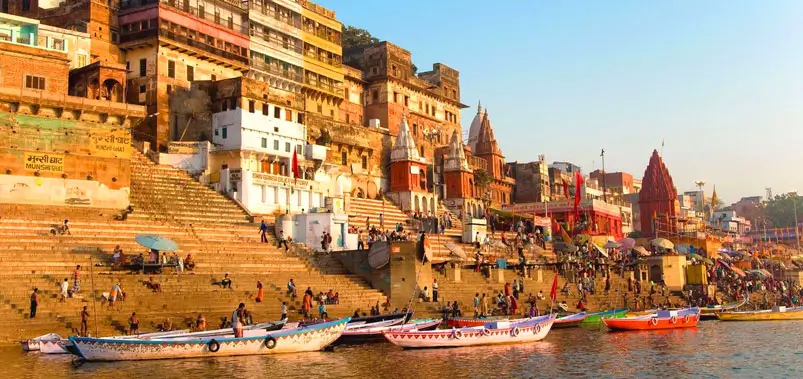
Varanasi is not a destination that fits neatly into the usual sightseeing formula. The city is intensely spiritual, visually extraordinary, historically layered, and at times deliberately overwhelming. For travelers arriving from the United States, the quality of a visit often depends less on how many landmarks are fitted into an itinerary and more on when to visit Varanasi, what time of day to be on the river, where to stand during the evening ceremony, and how much private transportation and local assistance have been arranged in advance.
The best time to visit Varanasi for most international travelers is from October through March. Temperatures are generally more comfortable for walking along the riverfront, entering the old city, taking early morning boat rides, visiting Sarnath, and spending extended periods outdoors. India’s official tourism portal likewise identifies October through March as the most pleasant period for visiting the city.
Yet weather is only part of the decision. Varanasi operates according to its own rhythm. Sunrise on the Ganges can be as memorable as any monument in North India, while the Ganga Aarti in Varanasi brings thousands of people toward the river at dusk. Travelers who understand that rhythm before arriving experience a very different city from those who simply reach the river at the advertised ceremony time.
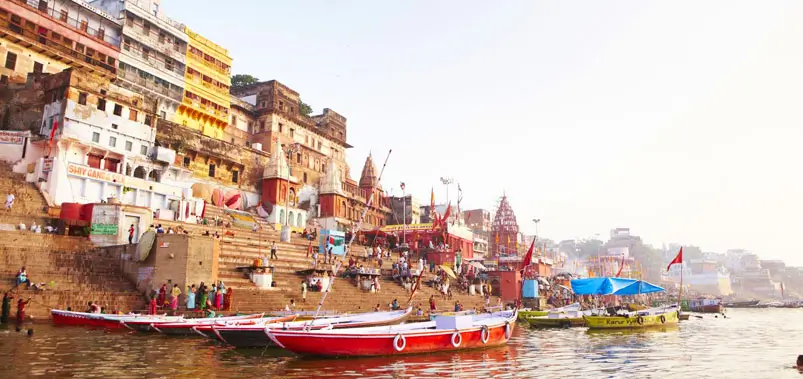
October through March is the strongest overall period for a luxury Varanasi tour, particularly for American travelers combining the city with Delhi, Agra, Jaipur, or a longer private journey through North India. Daytime sightseeing becomes substantially more comfortable than during the hottest months, and early mornings beside the river have the atmospheric quality for which Varanasi is famous.
October and November are especially appealing because the intense summer heat has eased and the city begins entering one of its most active cultural periods. The riverfront becomes easier to appreciate on foot, while sunrise cruises can be taken without the physical discomfort associated with peak summer temperatures. This period can also coincide with major religious celebrations, when Varanasi becomes exceptionally dramatic but considerably busier.
December and January bring cooler conditions. Visitors from colder parts of the United States may find the daytime temperatures very agreeable, although mornings on the river can feel surprisingly cold. A private boat at sunrise is still one of the finest things to do in Varanasi, but a jacket or layered clothing is sensible. Winter fog can occasionally reduce visibility, particularly early in the morning. That atmospheric haze can make the ghats look remarkable, although it can also affect road and air travel schedules in North India.
February and March generally offer an excellent balance between comfortable temperatures and relatively clear sightseeing conditions. Travelers interested in photography often appreciate this period because an early boat ride, breakfast, temple visit, and afternoon excursion can be arranged without fighting the most extreme heat.
April begins the transition toward hotter conditions. May and June can be demanding, particularly for travelers accustomed to climate controlled environments. Sightseeing during the middle of the day can become exhausting, so a well-designed private itinerary should shift activity toward early mornings and evenings. A luxury hotel with a strong air-conditioning system, private chauffeured vehicle, cold bottled water, and a flexible schedule become far more important during this period.
July through September bring the monsoon. Rain does not make Varanasi inaccessible, but it changes the character of the trip. River levels can rise considerably, walking routes may become wet or inconvenient, and boating operations can be restricted when authorities consider river conditions unsafe. Travelers considering a Varanasi Ganga Aarti tour during the monsoon should therefore avoid building an itinerary that depends entirely on a boat based view of the ceremony.
For a premium itinerary, two nights should generally be considered the practical minimum. Three nights provide a more relaxed pace. A rushed one night stop can technically include an evening Aarti and sunrise boat ride, but Varanasi rewards travelers who have enough time to move slowly through the riverfront, old lanes, temples, Sarnath, and quieter parts of the city.
.webp)
The Varanasi Ganga Aarti timing should never be treated like the fixed departure time of a train. The principal evening ceremony at Dashashwamedh Ghat is linked to sunset, which means the starting time shifts according to season. Travelers will commonly encounter evening starting times around 6:00 PM in the colder part of the year and closer to 7:00 PM during the warmer months. Current local schedules often place the ceremony within approximately the 6:30–7:05 PM range across much of the year, while some winter schedules can begin earlier. The ceremony itself usually lasts about 45 minutes.
This is precisely why a private local guide matters. The correct question is not simply, “What time does Ganga Aarti start?” It is, “What is tonight’s confirmed starting time, and when should I leave my hotel considering traffic, security, walking distance, and crowds?”
For international visitors, arriving at the ghat only five or ten minutes before the ceremony is a poor strategy. Even if the ritual has not started, desirable viewing positions may already be occupied. On an ordinary evening, arriving approximately 45 to 60 minutes beforehand is much more sensible. During major festivals, weekends, holiday periods, or especially busy dates, considerably more time may be required.
Dashashwamedh Ghat hosts the best known evening Ganga Aarti in Varanasi. Priests perform synchronized rituals facing the Ganges using incense, flowers, conch shells, bells, and large multi tiered lamps. The ceremony builds gradually rather than functioning as a single spectacle. Watching the entire sequence provides far more context than arriving midway simply to photograph the largest lamps.
There are two primary ways for a visitor to watch: from the ghat itself or from a boat positioned on the river.
Watching from the steps gives a closer sense of the crowd, chanting, bells, incense, and devotional atmosphere. It can feel immersive, but it also means dealing with congestion. Premium travelers, older guests, families, and visitors uncomfortable with dense crowds should arrange their position carefully rather than assuming comfortable seating will automatically be available.
A private boat for Ganga Aarti in Varanasi provides a different perspective. From the river, the illuminated ceremony can be viewed against the architecture and steps of the ghat. It also creates physical separation from the densest land based crowd. However, boats cluster around the ceremony area, and the quality of the experience depends heavily on the vessel, boatman, positioning, river level, and timing.
Basic shared boats may be inexpensive, while a private boat can cost substantially more depending on duration, boat type, demand, festival dates, and whether additional cruising time is included. Travelers should not select a boat solely because it is the cheapest option. For a high end journey, a pre-arranged private boat with a reliable operator and guide is usually preferable.
Boat rates in Varanasi are not universally fixed across every operator and season. Simple private arrangements can run into several thousand Indian rupees, while premium or longer private cruises can cost more. Festival periods may command significantly higher rates. Rather than treating an online quotation as guaranteed, international travelers should have their hotel, guide, or tour operator reconfirm the boat type, duration, boarding location, and final price.
A morning river experience should also be included. The Varanasi sunrise boat ride reveals an entirely different side of the city. At dawn, pilgrims descend the steps, residents begin daily rituals, temples emerge gradually in the changing light, and the riverfront feels less theatrical than it does during the evening ceremony.
Assi Ghat is particularly associated with a structured early morning cultural and spiritual program. Morning schedules change with sunrise and season, so guests should reconfirm the exact time locally. In practical terms, this often means waking well before sunrise and reaching the river while most of the city is still dark.
For travelers who value photography, culture, and atmosphere, attending both the evening ceremony and an early morning river experience is worthwhile. They are not repetitions of the same event. They reveal two completely different moods of Varanasi.
Luxury in Varanasi should not mean insulating yourself completely from the city. It should mean removing avoidable friction so that the parts of Varanasi worth experiencing can be appreciated properly.
The old city contains narrow lanes where large vehicles cannot enter. Even travelers staying in excellent hotels will sometimes need to walk. A knowledgeable private guide becomes particularly valuable here because navigating Varanasi independently using only a phone map can turn a meaningful walk into a frustrating exercise in orientation.
For a first visit, a strong schedule begins before sunrise. Leave the hotel while the streets are relatively quiet and reach the river in time for a private sunrise boat ride in Varanasi. Depending on river conditions and the selected route, the boat can pass a long sequence of historic ghats as the city wakes. The view from the water provides a geographical introduction that makes the rest of the riverfront easier to comprehend later.
Breakfast should follow rather than precede the sunrise excursion. Returning to a high quality hotel for breakfast and a short rest creates a far more comfortable rhythm than attempting continuous sightseeing from dawn until evening.
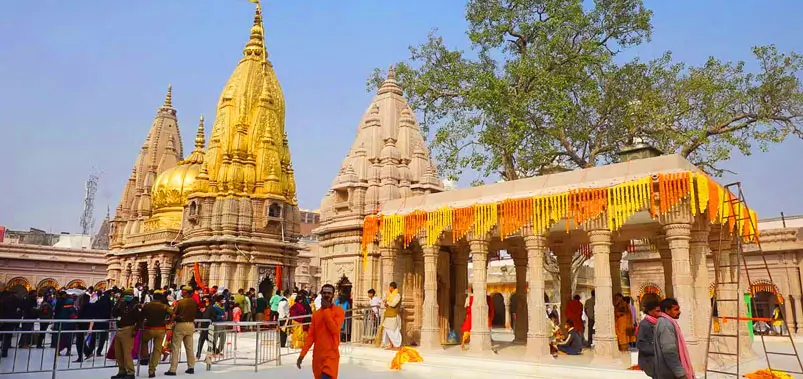
Late morning can be used for important temples and old city areas. Kashi Vishwanath Temple is among the most significant religious sites in the city, but entry procedures, security restrictions, crowds, and permitted belongings need to be taken seriously. Foreign visitors should receive current instructions from their guide before leaving the hotel rather than carrying unnecessary items into a high security religious zone.
Sarnath deserves a separate block of time rather than being squeezed between city attractions. Located outside central Varanasi, it is one of Buddhism's most important pilgrimage sites, associated with the Buddha's first sermon after enlightenment. Its stupas, archaeological remains, monasteries, and calmer environment provide a striking contrast to the sensory density of the old city.
After Sarnath or a midday rest, travelers can return toward the river for the evening Aarti. This is where private logistics become critical. Roads around the old city can become heavily congested, and the final approach may involve walking. A good guide calculates backward from the ceremony rather than promising that a car can simply drive to the front of the ghat.
American travelers accustomed to assigned seating and tightly controlled event entry should also adjust expectations. Ganga Aarti at Dashashwamedh Ghat is first and foremost a living religious ceremony, not a performance staged exclusively for tourists. Crowds, chanting, devotional activity, vendors, boats, pilgrims, and local families are all part of the setting.
Respectful clothing is appropriate. Shoulders and knees should generally be covered when entering religious spaces, and footwear may need to be removed at temples. Expensive jewelry is unnecessary, and carrying a compact bag is easier than managing large travel equipment in crowded lanes.
Photography is possible in many outdoor areas, but travelers should use judgment. Varanasi includes cremation ghats where funeral rites take place continuously. These are not tourist performances. Intrusive photography of grieving families or cremations should be avoided. A private guide can explain the significance of these sites without turning deeply personal rituals into a photo opportunity.
The city also rewards travelers who are willing to sit quietly. Not every hour requires another monument. An excellent private Varanasi itinerary may include time on a hotel terrace overlooking the river, a carefully selected boat cruise, a walk through quieter ghats, or simply a pause to watch the changing light over the Ganges.
Travelers combining Varanasi with the Golden Triangle Tour can generally connect through Delhi by air, with rail also available for those who prefer train travel. For luxury travelers with limited time, flying is usually the more efficient choice, although winter fog and operational disruptions should be considered when arranging tight international connections.
Varanasi works particularly well after Delhi, Agra, and Jaipur because the contrast is dramatic. The Golden Triangle emphasizes imperial architecture, Mughal history, Rajput palaces, forts, private heritage experiences, and major monuments. Varanasi adds a spiritual and human dimension that cannot be replicated by another palace stay.
A professionally arranged Golden Triangle with Varanasi private tour should allow sufficient buffer between flights, hotel check-ins, temple visits, and river activities. Trying to compress every major attraction into a checklist can undermine the very reason for coming to Varanasi.
For travelers seeking a premium experience, the strongest formula is straightforward: travel during the cooler months when possible, reserve a high quality hotel, use a private air-conditioned vehicle for accessible portions of the city, arrange a knowledgeable local guide, confirm the daily Aarti schedule shortly before attending, reserve a private boat when river conditions permit, and protect enough unscheduled time to absorb the city.
Varanasi does not need artificial embellishment. The sight of the river before sunrise, centuries old buildings rising above the ghats, bells sounding from temples, boats moving through morning haze, and thousands gathering beside the Ganges at dusk provide more than enough substance. Good travel arrangements simply place the visitor in the right location at the right time.
We promise you a holiday where everything is taken care of from the moment you land. Trusted drivers waiting for you, handpicked hotels that fit your style, personalized itineraries designed just for your family, and a dedicated team on call 24/7. All you need to do is relax, explore, and create unforgettable memories, while we take care of every detail behind the scenes.
Yes, provided expectations and logistics are managed correctly. Varanasi is crowded, ancient, intense, and very different from a conventional luxury destination. A premium hotel, private vehicle, experienced guide, carefully timed river activities, and flexible itinerary allow American travelers to experience the city's authenticity without unnecessary logistical stress.
Yes. A Golden Triangle Tour with Varanasi is an excellent combination for travelers wanting both India's major architectural landmarks and one of its most significant spiritual cities. Air connections through Delhi generally make the extension convenient for private itineraries.
Two nights are a practical minimum for most first-time visitors. Three nights provide a more comfortable schedule for the sunrise river experience, evening Aarti, temples, Sarnath, old-city walks, and adequate rest between activities.
Yes. A sunrise boat ride on the Ganges in Varanasi is one of the city's most rewarding activities. Morning light, riverside rituals, historic ghats, and relatively calm conditions create an experience substantially different from the evening Aarti.
The principal evening ceremony at Dashashwamedh Ghat generally lasts around 45 minutes. The exact duration can vary, particularly during religious festivals and special ceremonies.
Both provide worthwhile but different perspectives. The ghat gives visitors a closer connection to the ceremony and crowd, while a private Ganga Aarti boat can provide a wider view from the river and some separation from the densest land-based gathering.
There is generally no admission ticket required simply to witness the ceremony from public areas of the ghat. Costs arise when travelers reserve boats, special seating arrangements, guides, transportation, or premium private services.
Arriving approximately 45 to 60 minutes before the ceremony is sensible on regular days. During weekends, religious festivals, and periods of exceptionally high visitor traffic, arriving considerably earlier can provide a better viewing position.
The Ganga Aarti timing in Varanasi changes according to sunset and season. Evening ceremonies at Dashashwamedh Ghat generally begin around dusk, with earlier starts in the cooler months and later starts during warmer months. Travelers should reconfirm the exact time on the day of attendance.
The best time to visit Varanasi for most international travelers is October through March. Cooler temperatures make walking, temple visits, river cruises, Sarnath excursions, and evening activities considerably more comfortable.