There is a moment that happens to almost every foreign tourist in Jaipur. You walk past a mithai shop — and there are dozens of them in the old city — and you stop because the display in the window is unlike anything you have seen before. Stacked silver trays of orange, yellow, white, and brown sweets in shapes and sizes that have no Western equivalent. The smell of ghee and sugar and cardamom and saffron drifting out into the street. A server in a white uniform cutting portions with practised efficiency while a queue of locals waits.
You go inside. Someone hands you something to try. It is intensely sweet — far sweeter than anything in your previous experience of dessert. You are not sure if you love it or if you need a glass of water. You buy something anyway because it looks beautiful. You eat half of it at your hotel and wonder if you ordered the right thing.
This guide exists to help you navigate that moment better. It will tell you which Jaipur sweets are genuinely worth trying as a foreign visitor, which ones are an acquired taste that first timers often find overwhelming, where the best shops are, and how to approach mithai in a way that is both enjoyable and honest about what you are eating.
Before getting into specific sweets, it helps to understand what you are dealing with.
Mithai is the Hindi word for sweets, and the category covers an enormous range of confections that share very little in common with Western dessert traditions. Most mithai is based on one or more of the following foundations: reduced milk (khoya or mawa), gram flour (besan), semolina (sooji), sugar syrup, ghee, and various combinations of nuts, dried fruits, and aromatic spices including cardamom, saffron, and rose water.
The sweetness level in Indian mithai is significantly higher than what most foreign palates are calibrated for. This is not a flaw in the sweets — it is part of their cultural logic. Mithai is festival food, celebration food, offering food. It is not meant to be eaten in large quantities the way a slice of cake might be. The standard serving at a mithai shop is a small piece, often no more than thirty to fifty grams. Eating mithai the way you might eat a chocolate bar will overwhelm you. Eating a small piece with chai, the way locals do, makes complete sense.
Sweetness also varies significantly between different types of mithai. Some are intensely, almost shockingly sweet. Others have enough salt, fat, or bitterness from nuts or cardamom to balance the sugar. Understanding which category each sweet falls into before you try it is genuinely useful.
Taste the Authentic Flavors of Jaipur
Turn your Jaipur visit into a delightful culinary journey. Discover famous local sweets, traditional Rajasthani delicacies, vibrant markets, and iconic attractions with a private car and professional driver, ensuring a comfortable and unforgettable sightseeing experience.
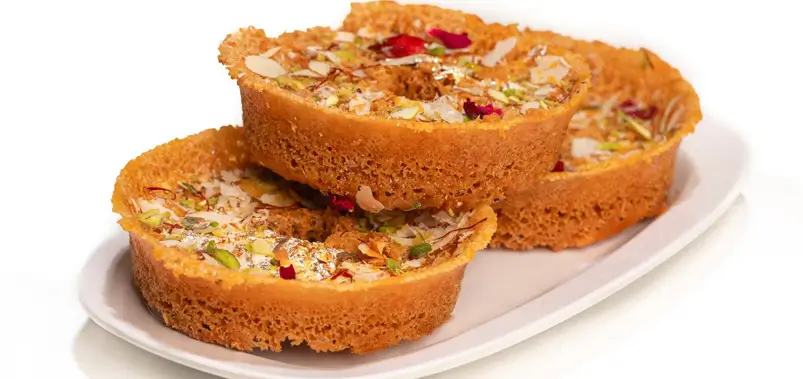
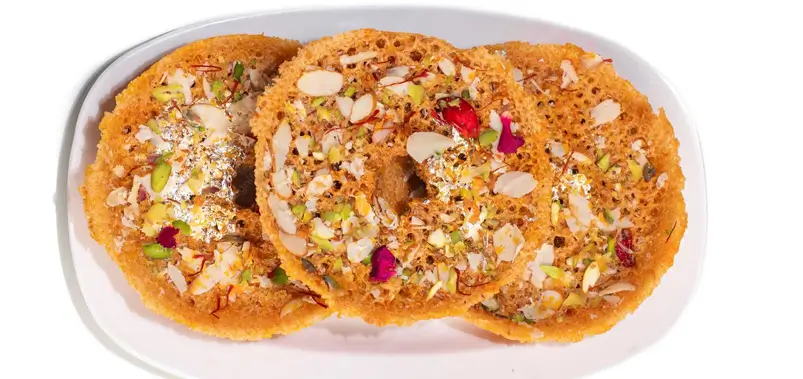
Ghewar is Jaipur's most iconic sweet and the one most closely associated with the city's festival culture. It appears in Jaipur's mithai shops primarily during Teej and Gangaur festivals in the monsoon and spring seasons respectively, though good shops stock it year round.
The base structure of ghewar is remarkable. A thin batter of flour, ghee, and water is poured into a circular mould sitting in hot ghee, creating a disc of deeply fried, honey combed, crispy lattice about the size of a plate. The resulting disc is then soaked in sugar syrup and topped with either rabdi — thickened, sweetened cream — or malai — fresh cream — and garnished with pistachios, almonds, and silver leaf.
The taste experience of a good ghewar is genuinely unlike anything else. The base has a faint bitterness from the ghee frying that cuts through the sugar syrup. The textural contrast between the crispy disc and the cold, rich cream on top is extraordinary. The saffron and cardamom in the rabdi add depth. Ghewar is one of those sweets where the whole is significantly greater than the sum of its parts.
Sweetness level: High, but balanced by the cream and the ghee base. More accessible to foreign palates than many other mithai.
Best versions in Jaipur: Look for shops that make ghewar fresh — a freshly made ghewar with just prepared rabdi on top is a completely different experience from one that has been sitting for hours. Laxmi Misthan Bhandar in the old city is one of the most consistently recommended shops for ghewar.
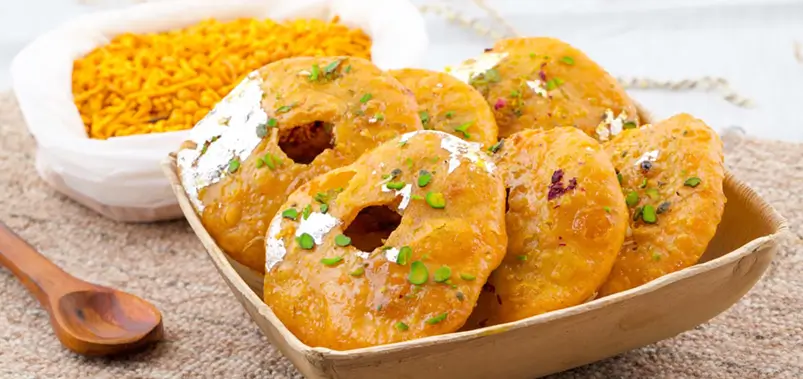
Mawa Kachori is Jaipur's most distinctive savoury sweet hybrid and arguably the one sweet that most clearly represents the city's culinary identity to the rest of India.
The base is a kachori — a deep fried pastry shell made from refined flour — which in its savoury form is filled with spiced lentils or onions. In the Jaipur mawa version, the shell is filled instead with a mixture of khoya (reduced milk solids), sugar, dry fruits, and spices. The filled kachori is deep fried until golden, then doused in sugar syrup, and served warm.
The result is a paradox that works perfectly. The pastry has a faint saltiness and the slight bitterness of good frying. The filling is rich, dense, and warmly spiced with cardamom. The sugar syrup adds sweetness but the overall effect is more complex than most mithai because the savoury pastry shell provides a counterpoint throughout.
Mawa kachori is best eaten warm, ideally within minutes of being made. It does not travel well or keep particularly well — the pastry softens in the syrup over time and loses its textural contrast.
Sweetness level: Moderate to high. The savoury pastry element makes it significantly more accessible to foreign palates than pure milk based sweets.
Where to find the best: Rawat Misthan Bhandar near Sindhi Camp bus stand is probably the most famous producer of mawa kachori in Jaipur. The queues outside on busy mornings tell you everything you need to know about the local verdict on their quality.
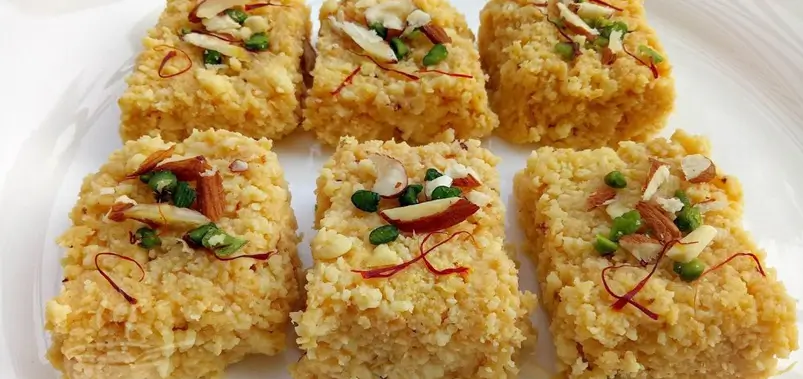
Kalakand is a milk based sweet with a grainy, slightly crumbly texture and a clean, milky flavour that makes it one of the most accessible mithai for foreign visitors encountering Indian sweets for the first time.
It is made by simmering full fat milk with an acidic agent — traditionally lemon juice or vinegar — which causes the proteins to separate into small, firm granules. This granular milk mixture is then cooked with sugar until it thickens and sets. The result is pressed into a tray, cut into squares, and typically garnished with pistachios.
The flavour of good kalakand is essentially the flavour of very pure, slightly sweet milk, concentrated and solidified. It has a slight tang from the acidulation process and a warmth from cardamom. The texture is somewhere between firm paneer and a crumbly fudge — it should hold its shape but dissolve fairly quickly in the mouth.
Sweetness level: Moderate. One of the least overwhelmingly sweet major mithai. Strongly recommended as a starting point for first time mithai explorers.
What to look for: Good kalakand should be white to very pale cream in colour. A grey or yellow tinge suggests old milk or poor quality. It should feel slightly moist in the hand, not dry or powdery.
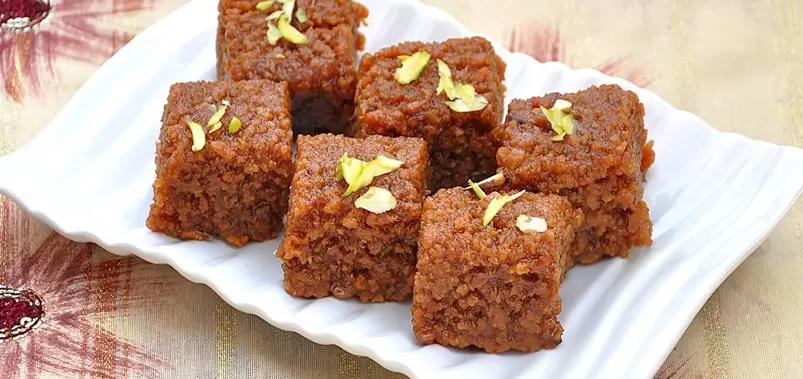
Sohan Halwa is one of the oldest and most traditional sweets associated with Jaipur and the broader Rajasthan region. It is a hard, brittle confection made from wheat starch or cornstarch, sugar, ghee, milk, and nuts — cashews, pistachios, and almonds pressed into the surface before it sets.
The making of sohan halwa requires continuous stirring over heat for an extended period as the mixture reduces and caramelises. The final colour is a deep golden amber, and the finished sweet has a texture somewhere between hard toffee and brittle — it snaps cleanly when broken and dissolves slowly on the tongue, releasing a deep, almost burnt caramel sweetness with notes of ghee and cardamom.
Sohan halwa is a strong, confident flavour. The caramelisation gives it a depth that lighter milk based sweets lack, and the nuts add texture and a faint bitterness that balances the sugar. It keeps exceptionally well compared to most mithai — properly made sohan halwa lasts weeks at room temperature, which made it historically significant as a travel food and gift item.
Sweetness level: Very high, but with enough caramel depth and bitterness from nuts to prevent it feeling one dimensional.
Best for: Taking home as a gift or souvenir. It packs well, keeps well, and represents Jaipur's sweet tradition genuinely.
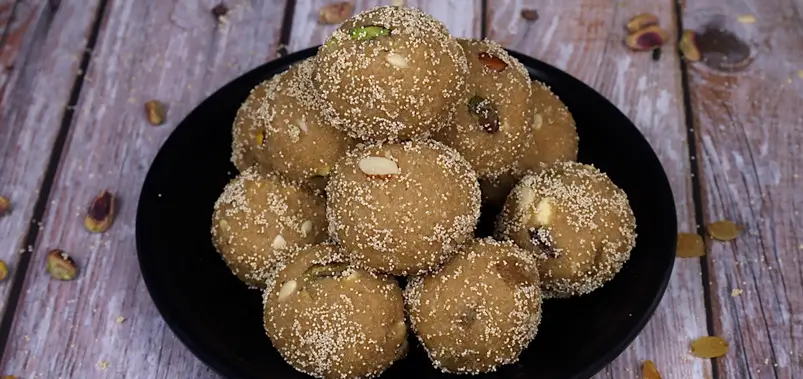
Churma Laddoo is the sweet that emerges from Rajasthan's most iconic savoury preparation. When baati — the hard wheat dumplings of dal baati churma — are coarsely ground and combined with ghee and sugar, the result is churma. Rolled into balls with the addition of dry fruits and sometimes jaggery instead of refined sugar, they become churma laddoo.
The flavour is wholesome and deeply satisfying in a way that most other mithai are not. There is the nuttiness of whole wheat, the richness of generous ghee, the warmth of cardamom, and a sweetness that feels more natural and less intense than syrup soaked varieties. Churma laddoo tastes like real food as much as it tastes like a sweet — which is exactly its cultural origin.
Sweetness level: Moderate. The whole wheat base and ghee significantly temper the sugar. One of the most balanced mithai available in Jaipur.
Where to find it: Most traditional Rajasthani thali restaurants serve churma laddoo as part of the meal. It is also available at established mithai shops throughout the old city.
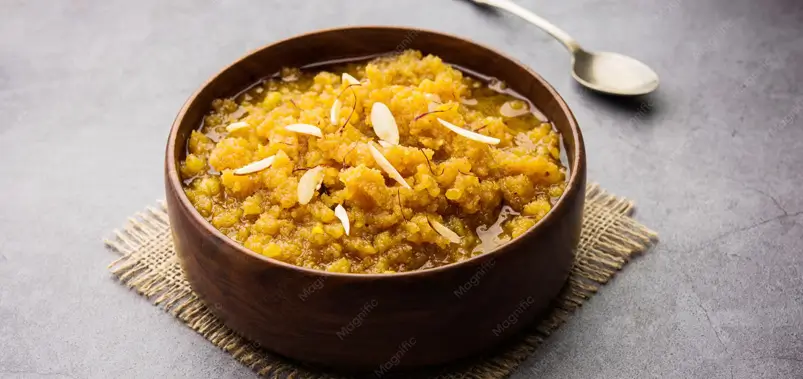
Moong Dal Halwa is one of the most labour intensive sweets in the Rajasthani tradition and is considered a mark of serious hospitality — it is the sweet served at weddings and important celebrations rather than as an everyday purchase.
Split yellow moong lentils are soaked, ground to a paste, and then cooked in an enormous quantity of ghee over a low flame for an extended period — sometimes two hours or more — with continuous stirring. The lentil paste slowly turns from pale yellow to deep golden, developing a complex, almost nutty flavour from the slow cooking. Sugar, milk, and cardamom are added toward the end, and the finished halwa has a texture that is smooth, dense, and deeply rich.
The ghee content in genuine moong dal halwa is substantial — this is a festive food made for celebration, not a daily snack — and the flavour reflects that generosity. It is warming, deeply satisfying, and has an almost savoury depth beneath the sweetness that makes it genuinely complex.
Sweetness level: High, but balanced by the nuttiness of the lentil and the richness of ghee. The complexity makes it more rewarding than its sweetness level alone would suggest.
When to find it: Moong dal halwa is more commonly available in winter months, when the warming, ghee rich preparation is culturally appropriate. In summer it is less common. Wedding season — roughly November through February — is when the best versions appear.
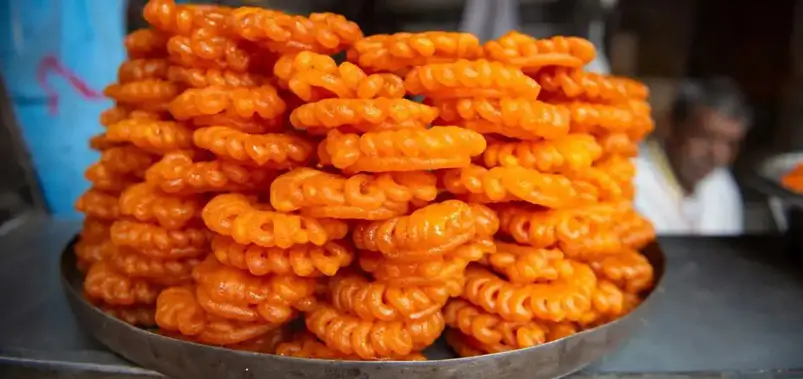
Imarti is a cousin of the more widely known jalebi but made from a different base — urad dal (black lentil) batter rather than plain flour — and piped into a flower or coil pattern before deep frying and soaking in sugar syrup. The result has a slightly different texture from jalebi — firmer, with a faint earthiness from the lentil that the plain flour version lacks.
In Jaipur and across Rajasthan, imarti is eaten for breakfast with a bowl of rabdi alongside, which is one of those food combinations that sounds improbable and tastes extraordinary. The crispy, syrup soaked imarti against the cold, thick cream with its saffron and cardamom creates a complete flavour experience in a way that neither component achieves alone.
Sweetness level: Very high. Imarti is deeply soaked in sugar syrup and is not for the faint hearted in terms of sweetness. However, eaten with rabdi as intended, the combination is more balanced.
What to know: Imarti is best fresh and hot. A imarti that has been sitting for more than an hour loses the crispiness that makes it interesting and becomes uniformly soggy. If you see them being made freshly, that is the moment to buy.
Honesty requires acknowledging that some Jaipur sweets are genuinely challenging for unaccustomed foreign palates.
Pure khoya based barfi in its simplest form — a dense block of reduced milk and sugar with no significant flavouring counterpoint — can taste one dimensional and overwhelmingly sweet to first time visitors. It is not a bad sweet, but it rewards a palate that has context for it.
Motichoor laddoo, the fine grained orange spheres that are ubiquitous in Indian mithai shops, are beloved across India but represent a very particular sweetness profile — entirely syrup based with a very soft, almost dissolving texture — that some foreign visitors find too uniform and too sweet without sufficient complexity.
Balushahi is a thick, flaky, deep fried dough disc soaked so thoroughly in sugar syrup that it becomes entirely saturated. The technique is impressive and the result is interesting in small quantities, but the pure sweetness hit without significant flavour counterpoint makes it one of the more challenging introductions to mithai.
This is not a recommendation to avoid these sweets — they are genuine and beloved parts of Jaipur's food culture. It is simply honest guidance about where to start if your goal is to enjoy the experience rather than be overwhelmed by it.
Explore Jaipur Beyond Its Famous Monuments
Experience the vibrant culture of Jaipur through its bustling bazaars, authentic street food, traditional sweet shops, and royal heritage. Travel comfortably in a private chauffeur-driven car while discovering the city's hidden gems and unforgettable local flavors.
Laxmi Misthan Bhandar (LMB)
Located in Johari Bazaar in the heart of the old city, LMB is one of the most famous and most established mithai shops in Jaipur. It has been operating since 1954 and serves both retail mithai and a full restaurant menu of Rajasthani food. The ghewar here is among the most consistently praised in the city. The shop is well lit, has English speaking staff, and is accustomed to serving foreign tourists — making it a natural first stop for visitors approaching Jaipur's sweet culture for the first time.
Rawat Misthan Bhandar
Located near Sindhi Camp, slightly outside the old city proper, Rawat is the undisputed home of Jaipur's best mawa kachori in the opinion of most local food enthusiasts. It is less tourist facing than LMB and the experience is more chaotic and local — queues, fast service, plastic chairs — but the mawa kachori here is the definitive version. Going to Jaipur without eating a warm mawa kachori at Rawat is a genuine culinary oversight.
Natraj Misthan Bhandar
A well regarded shop in the old city area with a strong reputation for traditional Rajasthani sweets including sohan halwa and churma laddoo. Less internationally famous than LMB but consistently praised by local food writers and long term residents of Jaipur as a more authentic day to day mithai destination.
Buy small quantities first. Most mithai shops sell by weight, and you can buy as little as 100 to 200 grams to try something before committing to a larger purchase. Do not let enthusiasm or the seller's suggestions lead you into buying 500 grams of something you have never tasted.
Eat it fresh. Most Jaipur mithai is best within hours of being made. The textural qualities — crispiness of fried elements, softness of cream toppings — deteriorate quickly. Buying something from the morning's fresh batch and eating it immediately is a different experience from buying yesterday's leftovers.
Keep gifting sweets in mind. If you are buying mithai to take home as gifts, choose sweets with longer shelf lives — sohan halwa, dry laddoos, and sealed packaged items from established shops travel well. Cream topped items, freshly fried things, and anything with high moisture content do not survive long journeys.
Packaging for travel. Good mithai shops in Jaipur offer proper packaging for travel, including boxes with dividers and sometimes vacuum sealed options for longer journeys. Ask specifically about what is suitable for the duration of your travel.
Price is not a reliable quality indicator at the lower end of the market. Tourist facing shops in prime locations sometimes charge more for inferior product. A neighbourhood mithai shop slightly off the main tourist streets often produces better quality at lower prices simply because their customers are local and will not return if the quality drops.
We promise you a holiday where everything is taken care of from the moment you land. Trusted drivers waiting for you, handpicked hotels that fit your style, personalized itineraries designed just for your family, and a dedicated team on call 24/7. All you need to do is relax, explore, and create unforgettable memories, while we take care of every detail behind the scenes.
The thin, edible silver sheets — called varak — applied to the surface of many Indian sweets are genuine silver beaten to extraordinary thinness. They are flavourless and completely edible. They serve primarily a decorative function and signal quality and festivity. Genuine silver varak is safe to consume. Some cheaper producers use aluminium foil as a substitute — this is less desirable but also generally harmless in the small quantities involved.
Halwa is a soft, cooked sweet preparation — it is served warm or at room temperature and has a soft, somewhat porridge-like or fudge-like consistency depending on the type. Barfi is a firm, set sweet that is cut into pieces and holds its shape at room temperature. Both can be made from similar base ingredients but the preparation method and final texture are completely different.
Often yes. Shops in prime tourist locations sometimes prioritise presentation and charge a premium. Neighbourhood mithai shops slightly off the tourist circuit are often fresher and better value because their entire customer base is local and demanding. Rawat Misthan Bhandar, slightly outside the old city, is a good example of a shop that serves primarily local customers and produces exceptional quality as a result.
Yes, with some planning. Dry sweets — sohan halwa, dry laddoos, sealed packaged items — travel well in checked luggage for international flights if properly packed. Cream-based, fresh-fried, or high-moisture items should be eaten in Jaipur rather than attempted as travel souvenirs. Always declare food items when returning to your home country and check your country's import regulations for dairy and grain-based food products.
Masala chai is the traditional accompaniment and works beautifully with almost all mithai. The tannins and spice in chai cut through sweetness in the same way coffee cuts through the richness of chocolate in Western food traditions. Cold water is also appropriate. Avoid drinking mithai with cold sweet drinks, which amplifies the sugar rather than balancing it.
Established street vendors with regular spots and high turnover are generally fine. Avoid buying cream-topped items from vendors without refrigeration, particularly in summer. Dry sweets like laddoos and hard halwa are safer from street vendors than anything with dairy toppings.
Yes. Many mithai shops in the old city have open kitchens visible from the street or from the shop floor. Ghewar being made — the dramatic pour of batter into hot ghee — is particularly worth watching if you happen to time it right. Early morning is when most fresh production happens.
Prices vary by sweet and shop. Basic mithai like barfi and laddoo typically costs Rs. 300 to Rs. 600 per kilogram at non-tourist shops. Premium sweets with saffron, dry fruits, or cream toppings cost Rs. 600 to Rs. 1,500 per kilogram. Individual pieces at most shops cost Rs. 15 to Rs. 100 depending on size and type.
Festival seasons bring the widest variety. Ghewar peaks during Teej and Gangaur. Moong dal halwa is most available in winter during wedding season. The weeks around Diwali produce an extraordinary variety and quality of mithai across all shops.
Some shops in Jaipur produce mithai using sugar substitutes for diabetic customers. Ask specifically — the shop staff will know what is available. These are not widely displayed but exist in most established shops.
Yes. Kalakand, churma laddoo, and moong dal halwa are the most accessible starting points for visitors who find Indian sweets generally overwhelming. These have enough fat, grain, or flavour complexity to balance the sweetness.
Yes, at established shops with high turnover. The key is buying from busy shops where product moves quickly and is therefore fresh. Avoid buying mithai from shops with slow turnover, dusty displays, or sweets sitting uncovered in direct sun. At good shops, the hygiene standards are reliable.