Jaipur is a city that has always had music running underneath it. Not the kind played for tourists in hotel lobbies — though that exists too — but a deeper, older music. The kind that was performed in the courts of maharajas for private audiences of connoisseurs who sat in silence for hours listening to a single raga develop through its stages. The kind that is still being taught in small rooms in the old city by masters who learned from masters who learned from masters, in an unbroken chain of transmission that stretches back centuries.
For a foreign tourist in Jaipur, finding this music requires some effort. It does not announce itself. It is not on the standard tourist itinerary between Amber Fort and Hawa Mahal. But it is there, and for visitors who care about music — any music, not just Indian classical specifically — encountering it live in its home city is one of the most genuinely moving experiences Jaipur has to offer.
This guide tells you where to find live classical music in Jaipur, what to expect when you get there, how to listen in a way that is respectful and rewarding, and how to connect with the musicians themselves.
Before talking about venues and performances, it is worth spending a few minutes on what Indian classical music actually is, because foreign tourists who arrive without any context often find their first exposure confusing rather than moving — and that confusion is entirely unnecessary.
Indian classical music is built around the concept of the raga. A raga is not a melody in the Western sense. It is better understood as a scale with a personality — a specific set of notes with specific rules about how they are approached, emphasised, and ornamented, combined with associations to particular times of day, seasons, moods, and emotional states. A morning raga sounds and feels fundamentally different from an evening raga, not because the musician decides to play it differently, but because the notes themselves carry those associations in the tradition.
A performance of a raga typically moves through several stages. The alap is the slow, meditative opening section — no rhythm, no percussion, just the soloist exploring the notes of the raga one by one, establishing its character and emotional world. This section can last twenty minutes or an hour or more in a serious concert. Many first time listeners find the alap difficult because nothing seems to be happening by Western musical standards. In fact, everything is happening — the musician is constructing an entire emotional world note by note.
The jod introduces a gentle pulse without the formal rhythmic cycle. The jhala increases in speed and intensity. Then the percussion instrument joins — tabla for Hindustani music, mridangam for Carnatic — and the formal composition section begins, with improvisation woven throughout.
Jaipur sits in the Hindustani classical tradition, which is the North Indian tradition that developed under Mughal influence and differs from the Carnatic tradition of South India. The instruments most associated with Hindustani music that you will encounter in Jaipur include the sitar, sarod, sarangi, bansuri (bamboo flute), tabla, pakhawaj, and the human voice in the various vocal forms of khayal, dhrupad, thumri, and dadra.
You do not need to understand all of this before attending a performance. But knowing that the slow opening is intentional and profound — not a warm up — changes how you receive it.
To understand why Jaipur is musically significant, you need to know about the gharana system. A gharana is a musical lineage — a school of thought and technique passed from teacher to student across generations within a family or discipleship tradition. Each gharana has its own aesthetic priorities, its own way of treating ornament and rhythm, its own repertoire of compositions. Musicians are identified not just by their instrument but by their gharana.
Jaipur has produced or hosted several important gharanas. The Jaipur Atrauli Gharana of Hindustani vocal music is one of the most respected in the entire tradition. Founded in the late nineteenth century by Ustad Alladiya Khan, the gharana is known for its use of rare ragas, its complex rhythmic play, and its demanding technique. The tradition continues today through a relatively small number of trained disciples and their students.
The Jaipur Gharana of tabla is similarly significant. The tabla playing style associated with Jaipur is characterised by its clarity, its precision of stroke production, and its particular approach to complex rhythmic cycles. Tabla players trained in the Jaipur tradition are recognisable to informed listeners by these qualities.
The royal court of Jaipur historically offered some of the most generous patronage of classical music in Rajasthan. Musicians came from across North India, settled, established families, and created a musical culture that embedded itself deeply into the city. That culture is quieter now than it was under royal patronage, but it has not disappeared.
Finding live classical music in Jaipur requires knowing where to look. Here is an honest guide to the options available to foreign tourists.
Jawahar Kala Kendra
Jawahar Kala Kendra, commonly called JKK, is the most important cultural venue in Jaipur and the most reliable place for foreign tourists to find genuine classical music performances. Built in 1993 to a design by architect Charles Correa, it is a striking building inspired by the nine square grid of Jaipur's original city plan.
JKK hosts a regular programme of classical music concerts, dance performances, theatre, and visual art exhibitions throughout the year. The quality of musicians who perform here ranges from established masters to promising younger artists. Ticket prices are extremely reasonable by any international standard — most performances cost Rs. 100 to Rs. 500 for general seating. The venue has a proper concert hall with good acoustics and serious audiences.
Checking JKK's programme before your visit and timing a performance into your Jaipur itinerary is the single most reliable way to hear genuine classical music during your stay. The venue website and social media channels announce performances several weeks in advance.
Rambagh Palace Evening Performances
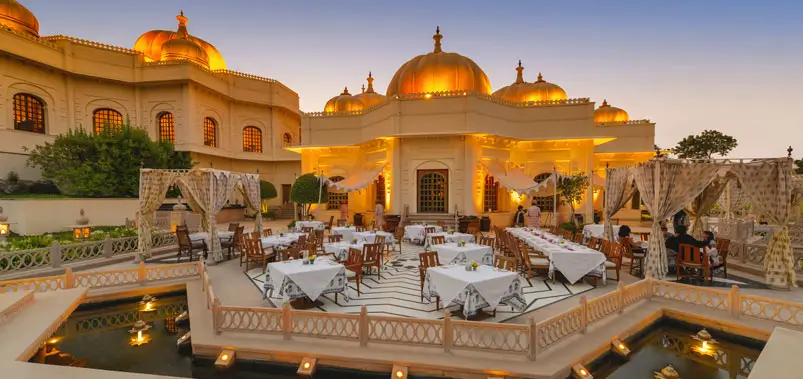
Several of Jaipur's heritage hotels, most notably the Rambagh Palace, host classical music and folk music performances in their gardens or dining spaces during the evening. The quality of these performances varies. Some feature genuinely accomplished musicians playing abbreviated sets for hotel guests over dinner. Others are more tourist oriented productions with folk music rather than classical.
The trade off is accessibility and comfort versus authenticity and depth. A forty five minute sarod recital in a palace garden after dinner is a pleasant experience. It is not the same as sitting for three hours in a proper concert hall listening to a full raga development. For visitors who have no other access to live music, hotel performances serve a purpose. For visitors who want a genuine musical encounter, JKK is the better choice.
Albert Hall Museum Cultural Events
The Albert Hall Museum in Ram Niwas Garden occasionally hosts outdoor classical music performances, particularly during festival periods and cultural weeks organised by the Rajasthan government. These events are often free or very low cost and attract mixed audiences of locals and tourists. The outdoor setting in the museum gardens on a clear Jaipur evening, with the illuminated museum building as a backdrop, makes these performances particularly atmospheric.
The scheduling of these events is less predictable than JKK's programme, and information about them does not always reach standard tourist channels. Asking at your hotel or checking with the local tourism office about upcoming cultural events is the best way to find out what is happening during your stay.
The Sawai Gandharva Bhimsen Festival Jaipur Edition
Several classical music festivals touch Jaipur annually or draw musicians from Jaipur to participate. The most significant is the Sawai Gandharva Bhimsen Festival in Pune, but Jaipur hosts its own classical music events, including events organised around significant dates in the Hindu calendar and the Rajasthan government's annual cultural calendar.
The Jaipur Literature Festival, held every January, occasionally includes classical music performances alongside its literary programming. These are typically high quality, well produced events featuring significant artists, and they are well documented in advance.
.webp)
For foreign visitors who want to go beyond attending a concert and actually meet and talk with classical musicians, Jaipur offers genuine possibilities that most tourists never discover simply because they do not know to look.
The music teaching community in Jaipur is concentrated in certain areas of the city, particularly the old city neighbourhoods around Ramganj and the areas near the major temples where musicians have historically lived. Many established musicians take students, and the presence of a serious learner in a household means that music is being practised daily.
Music schools and academies in Jaipur include the government run institutions as well as privately run gurukuls where the traditional teacher student relationship is maintained. Foreign visitors who express genuine interest — not tourist curiosity but actual musical interest — are occasionally welcomed to observe teaching sessions. This requires an introduction through a local cultural contact rather than a cold approach.
The mornings of festival days are particularly good times to encounter musicians in semi public settings. On major festivals, classical musicians often perform at temples during early morning prayer hours. These performances are not advertised to tourists and are not organised for them, but they are not private either. A respectful visitor who arrives at the right temple at the right time on a significant morning can encounter music of extraordinary quality in a completely authentic context.
Music instrument shops in the old city — particularly those around the musician communities near Ramganj Bazaar — are natural gathering points for musicians and can serve as introduction points. A shopkeeper who sells sitars and tablas knows the local music community and can sometimes facilitate introductions for visitors who present themselves genuinely.
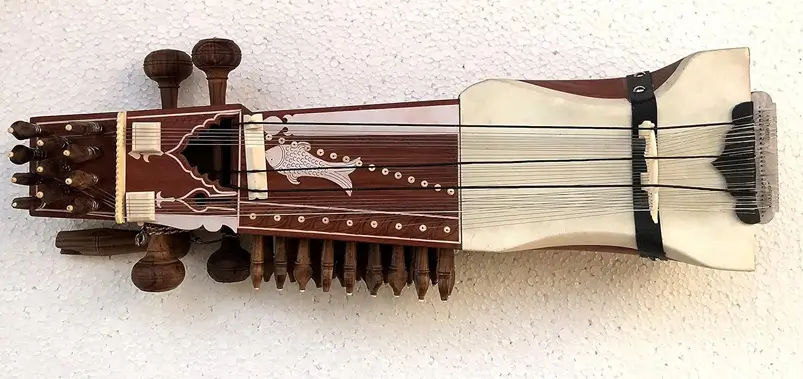
Part of understanding classical music in Jaipur is knowing the instruments. Here is a brief introduction to what you are likely to see and hear.
Sitar is the most internationally recognised instrument of Hindustani music, with its long neck, gourd resonator, and distinctive sympathetic strings that give it that shimmering quality. The Jaipur associated sitar tradition places particular emphasis on melodic development and ornament.
Sarod is a fretless instrument with a metal fingerboard, producing a darker, more nuanced sound than the sitar. Playing the sarod requires pressing the strings against a bare metal surface with the fingertips rather than fretting against wood, which creates a different kind of expressive possibility and a different kind of physical demand.
Sarangi is one of the most expressive and most technically demanding instruments in the Hindustani tradition. It is played with a bow, has a short neck, and is capable of imitating the human voice more closely than almost any other instrument. The sarangi traditionally served as an accompaniment instrument for vocalists, though it has a substantial solo repertoire. Finding a young musician dedicated to the sarangi today is increasingly rare, as it is one of the instruments most at risk of being lost to the next generation.
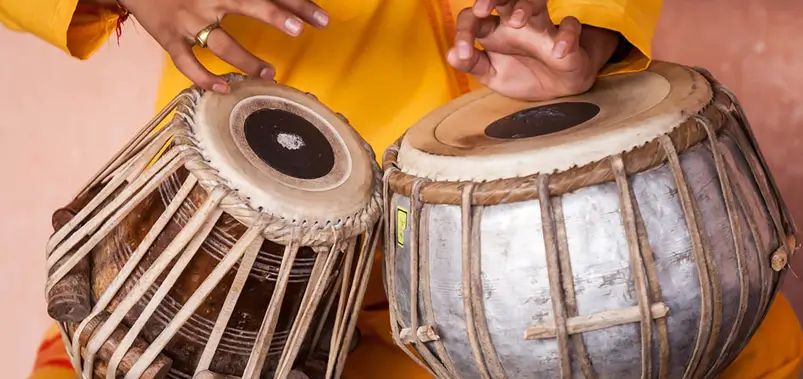
Tabla is the pair of hand drums — a smaller right hand drum called the dayan and a larger left hand drum called the bayan — that provide rhythmic accompaniment in most Hindustani performances. The Jaipur tabla style, as mentioned, is known for its clarity and precision. A great tabla player is not simply keeping time — they are engaged in a continuous musical conversation with the melodic soloist.
Bansuri is the bamboo flute of North India. It is deceptively simple looking and extraordinarily difficult to play at the classical level. The bansuri has no keys — all notes are produced by partial fingering and breath control alone. A master bansuri player can produce the full microtonal vocabulary of Hindustani music on what appears to be a plain piece of bamboo.
Pakhawaj is the barrel drum used in dhrupad, the older and more austere vocal form that predates khayal. It has a deeper, more resonant sound than tabla and is associated with a more meditative and ancient musical world.
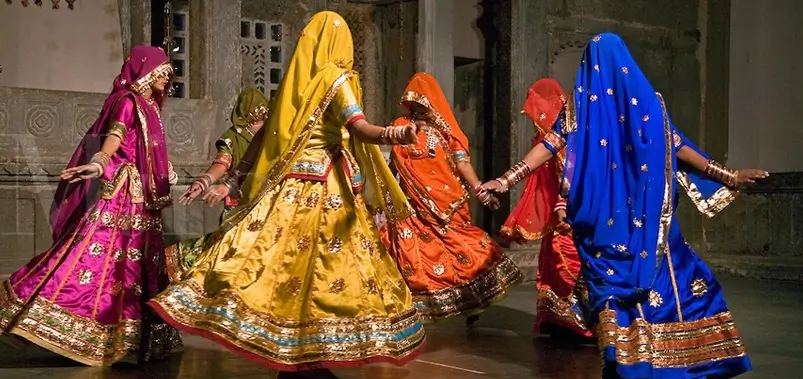
Jaipur sits at the meeting point of classical and folk traditions, and foreign tourists often encounter both without fully understanding how they differ. They are not the same thing, and treating them as interchangeable does a disservice to both.
Rajasthani folk music encompasses an enormous variety of regional traditions — the devotional music of the Manganiyar and Langa communities of western Rajasthan, the Mewar folk songs associated with women's festivals, the bhajan tradition of devotional singing at temples, the Kalbeliya dance music with its urgent percussion and wind instruments. These are living traditions with their own histories and their own masters.
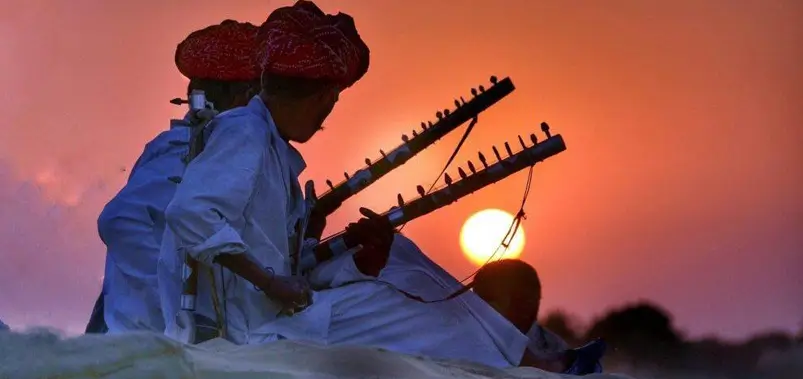
The Manganiyar musicians, in particular, have become internationally famous through their appearances at world music festivals and in documentary films. Their music uses instruments including the kamaicha (a bowed instrument with a round resonator), the khartal (wooden clappers), and the dholak drum, and combines Islamic and Hindu devotional traditions in ways that reflect the syncretic culture of Rajasthan's desert communities.
Encountering Manganiyar musicians in Jaipur is possible — several performing groups are based here or visit regularly — but their home territory is further west in the desert districts of Barmer and Jaisalmer. A performance by these musicians in Jaipur is genuine but somewhat removed from its natural context.
What Jaipur's old city does offer abundantly on festival evenings and wedding seasons is the bhajan tradition — devotional songs sung in groups at temples or in domestic courtyards, often accompanied by harmonium, tabla, and hand cymbals. These are not staged performances but community religious events, and encountering one on a quiet evening in the old city, drifting out of an open doorway, is one of those experiences that travel writers try and usually fail to adequately describe.
Arrive on time. Indian classical music concerts sometimes start later than announced, but arriving on time positions you for the full experience, including the alap opening which is the section most first time listeners miss by arriving after the programme has begun.
Sit still and listen quietly. Indian classical music audiences signal appreciation differently from Western concert audiences. Appreciative listeners may nod, sway slightly, or make small sounds of appreciation when something particularly beautiful happens. But the general atmosphere is one of concentrated listening. Talking, looking at your phone, or showing obvious restlessness is noticed and considered disrespectful.
Do not expect short sets. A serious classical music performance in the Hindustani tradition takes time. A single raga performance might last forty five minutes to two hours. This is not padding — this is the nature of the form. If you can only stay for part of a performance, arrive early rather than late, so that you hear the alap and jod sections.
Ask questions after, not during. Musicians are generally happy to speak with interested audience members after a performance. Asking which raga was performed, where the musician studied, and how long they have been playing are all questions that tend to open genuine conversations.
Dress respectfully. Classical music concerts in India are not formal events requiring Western style dressy clothing, but modest, neat dress is appropriate. The audience at JKK and similar venues will include serious local music listeners and that context shapes how you want to present yourself.
We promise you a holiday where everything is taken care of from the moment you land. Trusted drivers waiting for you, handpicked hotels that fit your style, personalized itineraries designed just for your family, and a dedicated team on call 24/7. All you need to do is relax, explore, and create unforgettable memories, while we take care of every detail behind the scenes.
Profoundly. The music was not separate from the painting, the architecture, the jewellery, and the textile traditions of historic Jaipur — it was part of the same court culture, supported by the same patronage, developed by people who lived in the same city and knew each other's work. Hearing a raga performed that was part of the court repertoire of the Jaipur maharajas, while sitting in a venue built from the same pink sandstone as the City Palace, closes a historical loop that no amount of museum-reading can achieve.
Dhrupad is the older of the two major Hindustani vocal forms, characterised by a more austere and meditative aesthetic, use of the pakhawaj drum rather than tabla, and a highly disciplined approach to ornamentation. Khayal is more flexible and expressive, with greater scope for improvisation and a wider range of emotional affect. Most contemporary Hindustani vocal performances are in the khayal form. Dhrupad performances are rarer and require more musical preparation from the listener to fully appreciate.
At formal venues, recording policies vary — check before the performance begins. In informal or semi-public settings, always ask the musician before recording. Many musicians are comfortable with personal recordings for non-commercial purposes; others prefer their performances not be recorded. Respect whichever preference is expressed.
Yes. The areas around Ramganj Bazaar and the old city have instrument makers and repairers, particularly for tabla, sarangi, and wind instruments. These workshops are small and not tourist-facing, but are genuinely interesting to visit and often accessible to curious visitors.
Yes. Jaipur has a community of serious instrumental teachers. Initial contact is best made through introductions — the JKK cultural office, established music schools, or local cultural contacts can facilitate meetings. Foreign musicians who approach respectfully and demonstrate genuine musical knowledge are generally received well.
Yes, a significant difference. Classical music in the Hindustani tradition is a formal art form with a complex theoretical framework, a centuries-old repertoire, and a specific performance practice. Rajasthani folk music is a distinct and equally valuable tradition with its own rules, instruments, and communities. Both are genuine. Neither should be confused with the other.
The winter season from October through February is the most active period for classical music in Jaipur. The cooler weather is conducive to outdoor performances, and the concentration of cultural festivals — including the Jaipur Literature Festival in January — brings significant musical programming to the city.
Yes. Several music schools and individual musicians offer introduction sessions for visitors. These typically cover the basics of the raga system, demonstrate the instruments, and allow for hands-on experimentation. They are not a substitute for serious study but provide genuine context for attending performances. Ask at your hotel or the JKK reception for current options.
It is one of the most respected lineages of Hindustani vocal music, founded by Ustad Alladiya Khan in the late nineteenth century. It is known for its use of rare ragas, rhythmic complexity, and demanding technique. Musicians trained in this tradition are considered among the finest Hindustani vocalists.
At JKK and similar government or institutional venues, tickets typically cost Rs. 100 to Rs. 500 for most performances. Special events with nationally prominent artists may cost more. Hotel performances are usually included in dining packages or charged at Rs. 1,000 to Rs. 2,000 per person.
Jawahar Kala Kendra is the most consistent and most easily accessible venue for foreign tourists. Its programme is available in advance, its ticket prices are accessible, and the quality of musicians who perform there is generally high.
No. A genuine openness to listening is all that is required. Understanding the raga system helps, but it is not necessary for the music to move you. Many first-time listeners describe their initial encounter with Hindustani classical music as something that affected them before they intellectually understood it.