Most visitors to Jaipur spend two or three days in the city itself, tick off Amer Fort, Hawa Mahal, and the Walled City, and then move on to the next stop on their Golden Triangle itinerary. What they do not realise is that within a two hour drive of Jaipur lies some of the most extraordinary, least crowded, and most genuinely rewarding travel in all of Rajasthan.
A geometric stepwell older than the Taj Mahal and largely unknown to mainstream tourists. A ruined fort that an entire civilisation abandoned overnight, surrounded by legends that have made it one of the most discussed haunted sites in Asia. India's only temple to Lord Brahma, on the banks of a sacred lake where pilgrims have bathed since antiquity. Craft villages where artisans work in the same traditions their families have followed for three hundred years.
All of it is within reach of Jaipur in a single day, with a private car and an early start.
This guide covers the twelve best day trips from Jaipur for foreign visitors, organised by distance, with honest information on timings, entry fees, what to expect, and how to combine destinations efficiently.
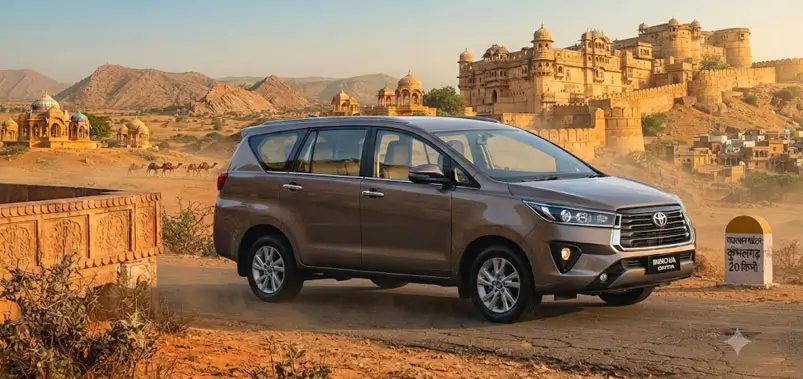
A private car and driver is essential for almost all of these destinations. Public transport options exist for some of the closer places but are slow, infrequent, and complicated to navigate without local knowledge. A private car gives you control over timing, allows you to stop en route for photography or tea, and means you are not dependent on bus schedules in areas where buses may run only twice a day.
For any of the destinations in this guide, or for a custom day trip itinerary built around your interests and available time, our team is happy to plan the arrangements directly. Get in touch and we will sort out the logistics.
Start early. The single most common mistake on day trips from Jaipur is leaving too late. For destinations more than an hour away, departing by 7:00 AM gives you the full day. For Pushkar, Ranthambore, or Bhangarh, a 6:30 AM departure is advisable.
Carry water and snacks. Several of the destinations in this guide, particularly Bhangarh Fort and Abhaneri, have very limited food options near the site. Pack adequate water for the day, particularly between April and October.
Check seasonal closures. Ranthambore National Park closes from 1 July to 30 September. Safari timings and zone availability vary throughout the year. Always confirm before booking.
These destinations are close enough to Jaipur to be visited in half a day and combined with other activities in the city before or after.
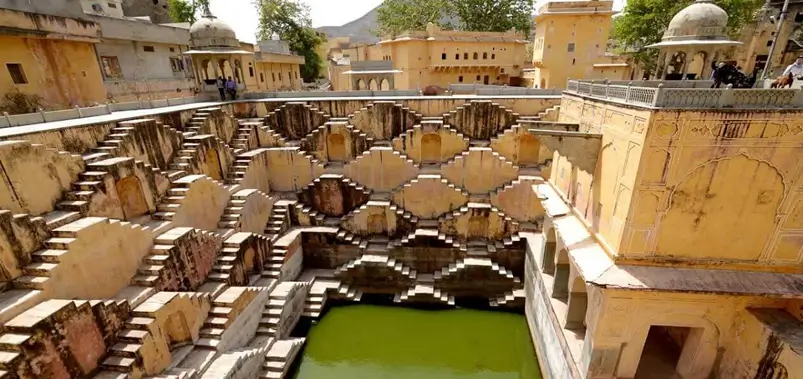
Distance from Jaipur: 11 kilometres Drive time: 25 to 30 minutes Entry fee: Free Timings: Open all day, best visited at sunrise or in the morning
Panna Meena Ka Kund is one of the most visually spectacular monuments near Jaipur and one of the most undervisited. It is a 16th century stepwell located just minutes from the Amer Fort entrance, and the majority of tourists who visit Amer Fort never even know it exists.
The stepwell is a symmetrical descending structure of stone steps arranged in a precise geometric pattern on all four sides, dropping to a narrow water chamber far below. In the morning light, the play of shadow across the steps creates photographic compositions that are almost impossibly perfect. It is the kind of place that photographers spend hours in and ordinary tourists walk through in fifteen minutes without quite understanding what they are seeing.
The stepwell served a practical purpose in the arid climate of Rajasthan, storing monsoon rainwater for use during the dry season. It also served as a social space where women of the area would gather daily to collect water. The carvings on the upper columns give some sense of the care that was invested in what was fundamentally a functional water storage structure.
Visit Panna Meena Ka Kund immediately before or after Amer Fort. The two sites together make a natural morning combination. Arrive at Panna Meena Ka Kund at 7:30 AM before any other visitors arrive, spend 30 to 45 minutes, and then walk or drive the short distance to Amer Fort in time for the 8:00 AM opening.
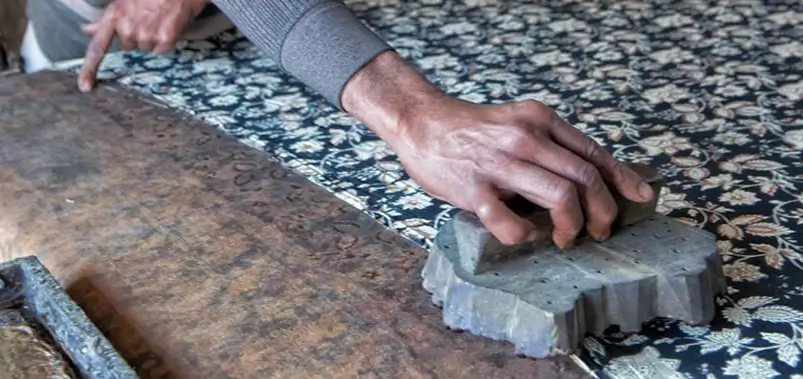
Distance from Jaipur: 15 kilometres Drive time: 30 to 40 minutes depending on traffic Entry fee: No entry fee for the village. Workshop visits vary Timings: Workshops typically open from 9:00 AM onwards
Sanganer is a town on the southern edge of Jaipur that has been the centre of hand block printing and handmade paper making in Rajasthan for several centuries. The craft was established here partly because of the clean water of the Saraswati River, which runs through the area and was historically used to fix natural dyes in the printing process.
Walking through Sanganer today, you will find dozens of family workshops where block printing is practised in the traditional way. The printer selects a carved wooden block, dips it in dye, and stamps it with steady pressure onto fabric stretched across a padded table. The patterns are built up block by block, colour by colour, with a precision that comes only from years of practice.
Sanganer is also one of the best places in Rajasthan to buy block printed textiles directly from the producing workshops at prices that are considerably lower than in the tourist shops of Jaipur's Walled City. Bedsheets, duvet covers, kurtas, scarves, and fabric by the metre are all available. The quality range is wide, so examining the printing quality carefully before purchasing is advisable. Look for clean edges, even dye penetration, and consistent registration (alignment) between multiple colour layers.
The handmade paper workshops in Sanganer are also worth visiting. The Kagzi community of Sanganer has been making handmade paper from cotton rags for generations, using a technique that produces paper of exceptional quality used for painting, calligraphy, and bookmaking. Salim Kagzi is one of the most respected names in this craft.
Combine Sanganer with Bagru (see below) for a full craft village day.
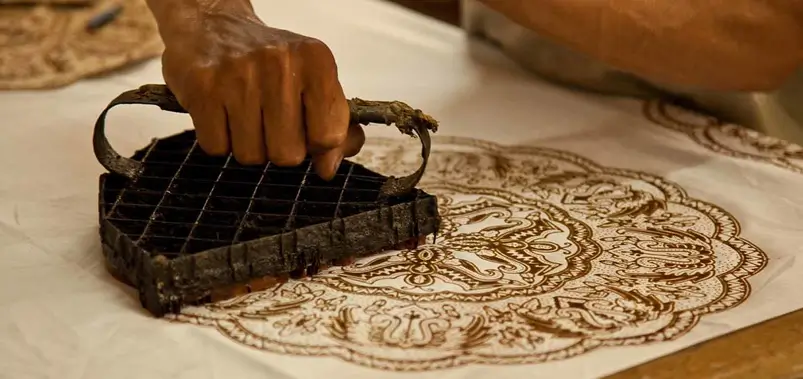
Distance from Jaipur: 32 kilometres Drive time: 45 minutes to 1 hour Entry fee: Free. Workshop visits by arrangement Timings: Workshops open from 9:00 AM
Bagru is a village that specialises in a specific and particularly traditional form of block printing using natural dyes derived from plants, minerals, and other organic sources. The colour palette is different from Sanganer: earthier, more muted, richer in the ochres, indigos, and brick reds that come from natural sources rather than chemical dyes.
The Chhipa community of Bagru has been practising natural dye block printing here for generations. The process is more time consuming than chemical dye printing and requires considerable skill in managing the resist printing techniques that allow complex multi colour designs to be achieved using only natural pigments.
Visiting a Bagru block printing workshop gives a more intimate and less commercialised experience than Sanganer. The village is smaller, receives fewer tourists, and the craftspeople are generally more willing to talk at length about their materials and methods. Some workshops offer hands on sessions where visitors can try block printing on fabric under supervision.
These destinations require a full day and are best approached with an early start.
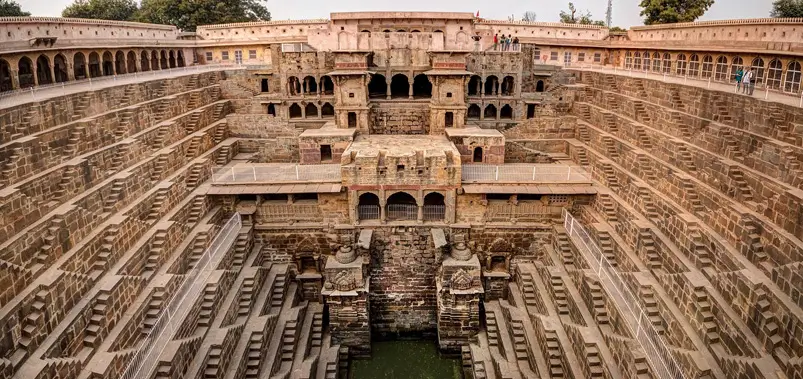
Distance from Jaipur: 95 kilometres Drive time: Approximately 2 hours via NH21 Entry fee: Free (as of 2025, no entry fee charged) Timings: Open daily from 8:00 AM to 6:00 PM
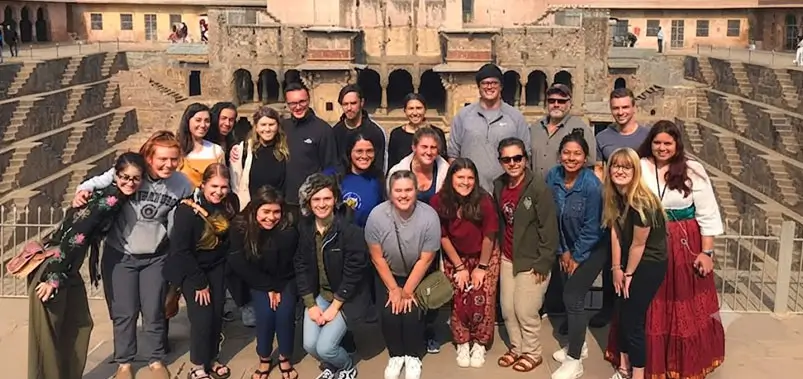
Chand Baori at Abhaneri is one of the most extraordinary structures in India and one that is almost entirely absent from mainstream tourist itineraries. It is a stepwell built in the 9th century by King Chanda of the Nikumbha dynasty, making it over 1,200 years old. It is also among the deepest and largest stepwells in the world, descending approximately 30 metres through 13 levels and containing roughly 3,500 steps arranged in a mathematically precise symmetrical pattern on three sides.
The visual effect is unlike anything else in Rajasthan. Standing at the top and looking down into the stepwell, the steps converge towards the water chamber far below in a pattern so perfect that it appears almost impossible to have been built by hand. The play of light and shadow across the descending geometry changes throughout the day, which is why photographers often arrive at opening time and stay for several hours.
The stepwell has appeared in international cinema, most famously as the prison pit in The Dark Knight Rises, which brought it to global attention. Despite this, the village of Abhaneri remains quiet and largely unchanged, and the stepwell itself receives far fewer visitors than monuments of comparable importance in Jaipur.
Immediately adjacent to the stepwell is the Harshat Mata Temple, a partially ruined temple from the same period whose carved stonework is beautiful and whose setting next to the ancient water structure is evocative.
Practical note: The village of Abhaneri has very few food options. Carry your own lunch or eat in Dausa town (approximately 25 kilometres before the village) on the way there or back. The route passes through Sikandra on NH21, which is also the Jaipur to Agra highway. If you are travelling between Jaipur and Agra as part of a Golden Triangle itinerary, Abhaneri makes an ideal and only slightly extended stopover en route.
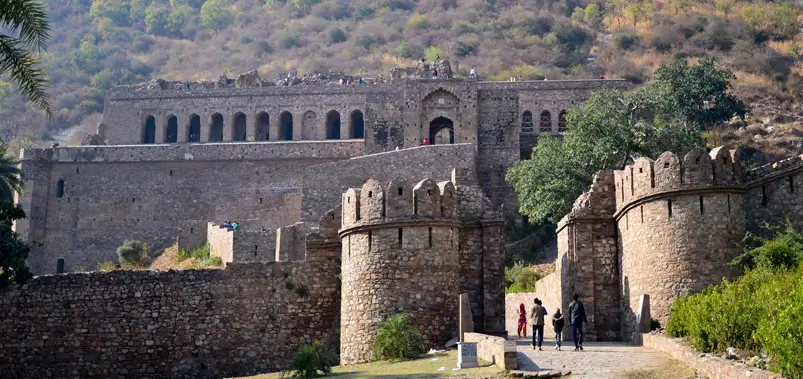
Distance from Jaipur: 85 kilometres Drive time: Approximately 2 hours via Dausa Entry fee: Rs 25 for Indian nationals, Rs 200 for foreign tourists Timings: Open daily from 6:00 AM to 6:00 PM. Entry strictly prohibited after sunset
Bhangarh Fort is one of the most visited archaeological sites in Rajasthan for reasons that have almost nothing to do with conventional heritage tourism. The fort has been officially designated by the Archaeological Survey of India as one of the most haunted places in India, and an ASI notice board at the entrance gate explicitly prohibits entry before sunrise and after sunset.
The historical facts are straightforward. The fort was built in 1613 by Madho Singh, the younger brother of the great Mughal general Man Singh of Amber. It was a prosperous town with a population estimated at over 9,000 by the early 18th century. Then, for reasons that historians have not been able to fully explain, the entire population abandoned it. The town was never reoccupied. The fort and its surrounding structures were left intact and have been ruins ever since.
The legends that have attached themselves to this abandonment are numerous and colourful. The most commonly told involves a sorcerer, a princess, and a curse. Whether or not you place any credence in the supernatural explanations, the physical reality of Bhangarh Fort is genuinely striking. The ruins extend over a considerable area and include a market street, multiple temples, a royal palace, and various other structures. Walking through them gives a vivid and slightly unsettling sense of a complete community frozen in time.
The fort sits on the edge of the Sariska Tiger Reserve in the Aravalli hills, and the landscape around it is beautiful. The drive from Jaipur passes through varied Rajasthani terrain.
Combine Bhangarh with Abhaneri on the same day. The two sites are approximately 25 kilometres apart and can be visited comfortably in a single day with an early start from Jaipur. Visit Abhaneri first in the morning, then drive to Bhangarh for the afternoon.
Important: Respect the entry restrictions. Do not attempt to enter before sunrise or after sunset. The prohibition is enforced.
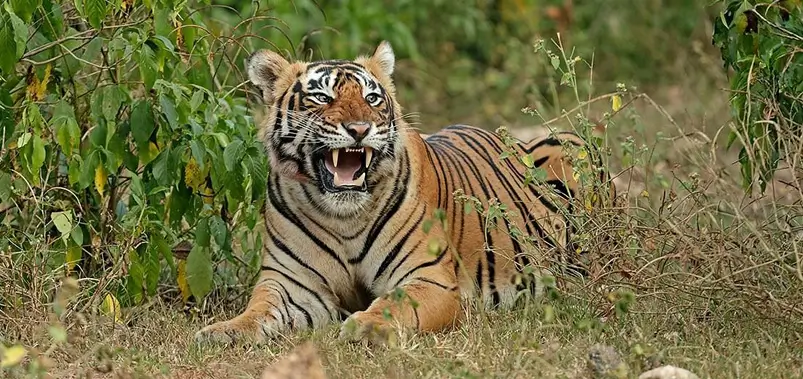
Distance from Jaipur: Sariska is approximately 107 kilometres. Alwar is 150 kilometres Drive time: 2 to 2.5 hours to Sariska, 3 hours to Alwar Safari timings: Morning safari 6:30 AM to 9:30 AM, Afternoon safari 3:00 PM to 6:00 PM (seasonal variation) Safari booking: Required in advance through the Rajasthan Forest Department
Sariska Tiger Reserve is a tiger sanctuary within the Aravalli hills that offers a genuine wildlife safari experience significantly less crowded and less expensive than Ranthambore. The reserve covers an area of approximately 866 square kilometres and is home to tigers, leopards, hyenas, sambar deer, nilgai, and a substantial bird population.
The reserve also contains several historically significant structures within its boundaries, including the Bhangarh Fort mentioned above and the Kankwari Fort, a 17th century structure on a hilltop within the park where the Mughal emperor Aurangzeb is said to have imprisoned his brother Dara Shikoh.
Safari vehicles enter the forest at designated times and follow routes determined by the forest department guides. Tiger sightings are not guaranteed, as is always the case with genuine wildlife experiences. The morning safari provides the best conditions for wildlife sightings as animals are more active in the cooler hours.
Alwar, 40 kilometres further from Sariska, is a former princely state capital with a significant fort, a palace museum, and a pleasant lake. It is less visited by foreign tourists than most Rajasthani cities and has an authenticity of atmosphere that better known destinations sometimes lack. If you extend your Sariska trip by 45 minutes to include Alwar, the combination makes for an exceptionally full and varied day.
These destinations are further from Jaipur and require a commitment to a full day or an overnight stop, but they offer experiences that are genuinely worth the additional travel time.
.webp)
Distance from Jaipur: 145 kilometres Drive time: Approximately 2.5 to 3 hours via NH48 through Ajmer Entry fee: No entry fee to visit Pushkar itself. Individual temple donations welcomed Best time to leave Jaipur: No later than 6:30 AM for a comfortable full day
Pushkar is one of India's oldest and most sacred towns, and for foreign visitors it is one of the most immediately engaging places in Rajasthan. The town wraps around a sacred lake whose ghats are lined with pilgrims bathing and performing rituals from dawn until dusk. And yet Pushkar is also one of Rajasthan's most cosmopolitan small towns, where rooftop cafes, yoga studios, and international restaurants exist in complete harmony alongside ancient temples and Sanskrit chanting.
The principal religious site in Pushkar is the Brahma Temple, one of the very few temples in the world dedicated to Lord Brahma, the Hindu creator deity. In Hindu theology, Brahma is one of the three principal deities but is rarely worshipped because of a curse in the Puranic tradition. This temple, therefore, holds a significance in the Hindu world that is difficult to overstate.
The Pushkar Lake itself is considered one of the five sacred lakes in Hinduism. The ghats around the lake are the social and spiritual heart of the town, and the atmosphere at sunrise and sunset, when the lamps are lit and the chanting intensifies, is one of those rare travel experiences that stays with you for years afterwards.
Pushkar is also entirely vegetarian. No meat and no alcohol are available anywhere in the town, which is a result of its sacred status. The food, as a consequence, tends to be exceptional.
Practical note: Pushkar is 15 kilometres from Ajmer, which is 135 kilometres from Jaipur. Many visitors combine both on a day trip. Ajmer's principal attraction is the Dargah Sharif, the Sufi shrine of the saint Khwaja Moinuddin Chishti, one of the most important Islamic pilgrimage sites in South Asia and a place where Hindus and Muslims pray side by side. A half day in Ajmer followed by a half day in Pushkar is entirely feasible as a day trip, though an overnight stay in Pushkar allows you to see the sunrise over the lake, which is exceptional.
.webp)
Distance from Jaipur: 180 kilometres Drive time: Approximately 3 to 3.5 hours Safari timings: Morning safari 6:30 AM to 9:30 AM, Afternoon safari 3:00 PM to 6:00 PM Safari booking: Advance booking essential, particularly between October and February
Ranthambore is one of India's most famous tiger reserves and one of the best places in the world to see wild Bengal tigers in their natural habitat. The park is extraordinary not only for its wildlife but for its landscape: a 13th century fort sits on a rocky promontory at the centre of the reserve, and tigers have been photographed resting in its crumbling temples, creating images of wildlife and heritage that exist nowhere else on earth.
The park is at its most rewarding between October and March when vegetation is relatively open and tigers are visible near the waterholes. Bookings fill quickly during peak season and advance reservation through the official Rajasthan Forest Department portal is strongly recommended.
As a day trip from Jaipur, Ranthambore is feasible but demanding. To make it worthwhile, you need to take the morning safari, which means leaving Jaipur at 4:30 to 5:00 AM. A more comfortable approach is an overnight stay at one of the several well regarded hotels near the park, returning to Jaipur the following day. Several of our Golden Triangle tour packages include a Ranthambore extension that can be added to your Jaipur stay.
The park is closed from 1 July to 30 September. Confirm current zone availability before booking, as different zones within the park operate on rotating closure schedules.
.webp)
Distance from Jaipur: 190 kilometres Drive time: Approximately 3 hours via Sikar Entry fee: Free to walk the village. Individual havelis charge small entry fees Best for: Art, architecture, photography, off-beat travel
Shekhawati is the name given to a semi arid region of northern Rajasthan that contains one of the most extraordinary concentrations of painted havelis (merchant mansions) in the world. Between the 18th and early 20th centuries, wealthy Marwari merchant families who had made their fortunes in trade across India returned to their home region and built elaborately painted mansions as expressions of their wealth and status.
The paintings that cover the exterior and interior walls of these havelis are astonishing in their variety and ambition. They depict scenes from Hindu mythology alongside images of trains, aeroplanes, telephones, and European ladies with parasols, all rendered in a folk tradition that absorbed the world it observed with complete openness and no hierarchy of subject matter.
Mandawa is the most accessible and best preserved of the Shekhawati towns and makes a good introduction to the region. The village has a fort hotel that is worth visiting even if you are not staying there, several exceptional havelis that are open to visitors, and a craft market that is less touristy than anything in Jaipur itself.
At 190 kilometres, Mandawa is at the outer edge of what is practical as a day trip from Jaipur. An overnight stay in one of the heritage hotels within the haveli itself is the more rewarding option and turns Shekhawati into one of the highlights of a Rajasthan itinerary rather than a rushed drive by.
Panna Meena Ka Kund and Amer Fort: Half day. Natural combination, 5 minutes apart.
Sanganer and Bagru: Half day craft village tour. Both on the same road south of Jaipur.
Abhaneri and Bhangarh: Full day. Leave Jaipur by 7:00 AM, visit Abhaneri in the morning, Bhangarh in the afternoon, return by evening. Route is logical and the two sites are 25 kilometres apart.
Ajmer and Pushkar: Full day. Leave Jaipur by 6:30 AM. Ajmer in the morning, cross the Nag Pahar hills to Pushkar for the afternoon and sunset.
Sariska and Alwar: Full day. Morning safari at Sariska, afternoon in Alwar.
Abhaneri as a Golden Triangle stopover: If you are travelling from Jaipur to Agra by road, Abhaneri is on the route via Dausa and adds only a small amount of time to the journey. Build it into the drive rather than as a separate day trip.
|
Destination |
Distance |
Drive Time |
Entry Fee (Foreign) |
Best Combined With |
|---|---|---|---|---|
|
Panna Meena Ka Kund |
11 km |
25 min |
Free |
Amer Fort |
|
Sanganer |
15 km |
35 min |
Free |
Bagru |
|
Bagru |
32 km |
45 min |
Free |
Sanganer |
|
Abhaneri (Chand Baori) |
95 km |
2 hrs |
Free |
Bhangarh |
|
Bhangarh Fort |
85 km |
2 hrs |
Rs 200 |
Abhaneri |
|
Sariska Tiger Reserve |
107 km |
2.5 hrs |
Safari fees apply |
Alwar |
|
Alwar |
150 km |
3 hrs |
Varies by site |
Sariska |
|
Ajmer |
135 km |
2.5 hrs |
Free (Dargah) |
Pushkar |
|
Pushkar |
145 km |
3 hrs |
Free |
Ajmer |
|
Ranthambore |
180 km |
3.5 hrs |
Safari fees apply |
Overnight recommended |
|
Mandawa/Shekhawati |
190 km |
3 hrs |
Varies |
Overnight recommended |
Book your private car in advance. Day trips from Jaipur by private car are the most comfortable and flexible option. Drivers familiar with specific routes can also suggest stops and provide context along the way. For any of the destinations in this guide, or for a combined multi stop itinerary, contact our team directly and we will arrange the transport and logistics.
Safari reservations must be made in advance. Ranthambore and Sariska safaris require advance booking through the Rajasthan Forest Department. During October to February, Ranthambore bookings sell out weeks ahead. Do not leave this until you arrive.
Road conditions vary. The NH48 towards Ajmer and Pushkar is an excellent six lane highway. The road towards Bhangarh and Abhaneri via Dausa is good on the main highway but becomes narrower approaching the village. The Shekhawati roads are generally good but rural.
Fuel and ATMs. Fill up in Jaipur before departing for more remote destinations. ATMs are available in Dausa, Alwar, Ajmer, and Pushkar, but may not be available near Bhangarh or Abhaneri.
Weather. Between May and June, temperatures in all these destinations can reach 42 to 46 degrees Celsius. If visiting during this period, plan outdoor activities for early morning only and keep midday for rest. October to March is comfortable for all day trip destinations.
We promise you a holiday where everything is taken care of from the moment you land. Trusted drivers waiting for you, handpicked hotels that fit your style, personalized itineraries designed just for your family, and a dedicated team on call 24/7. All you need to do is relax, explore, and create unforgettable memories, while we take care of every detail behind the scenes.
The easiest and most reliable way to arrange any day trip from Jaipur is to book a private car and driver through a trusted local operator. We arrange day trips from Jaipur to all destinations in this guide, with experienced drivers who know the routes and can provide context along the way. Get in touch with us directly with your preferred destination and date and we will handle the rest.
Sariska is smaller and less famous than Ranthambore but offers a genuine tiger safari experience with significantly smaller crowds and lower costs. Tiger sightings at Sariska have improved in recent years following the reintroduction of tigers to the reserve. For visitors who cannot get Ranthambore safari bookings or who prefer a quieter experience, Sariska is a very good alternative.
Yes, and this is one of the best ways to visit. Abhaneri is on the Jaipur to Agra route via NH21 and Dausa, and the detour adds only about 30 to 40 minutes to the journey. If you are travelling from Jaipur to Agra as part of a Golden Triangle tour, building in a Chand Baori stop costs very little time and adds one of the finest monuments in Rajasthan to your itinerary.
Shekhawati is a region north of Jaipur known for its extraordinary painted havelis, merchant mansions whose walls are covered in elaborate murals mixing Hindu mythology with images of colonial-era technology and daily life. Mandawa is the best starting point. At 190 kilometres, it is at the outer limit for a day trip and an overnight stay is recommended to do it properly.
Yes. Pushkar is one of the most accessible and foreigner-friendly small towns in Rajasthan. The town is entirely vegetarian and alcohol-free due to its sacred status. It is gentle in atmosphere, easy to navigate on foot, and the lake and temple area are genuinely beautiful. Solo female travellers consistently rate it among the most comfortable towns in Rajasthan.
Yes. Sanganer (15 kilometres) and Bagru (32 kilometres) are both south of Jaipur and can be combined into a half-day craft village excursion. This is an excellent option for visitors interested in block printing and traditional craft, and can be done as a morning trip before returning to Jaipur for the afternoon.
Carry adequate water for the full day, particularly for destinations like Bhangarh and Abhaneri where food and drink options near the site are very limited. Pack a hat and sunscreen. Carry cash as ATMs are not available near several of these destinations. Download offline maps before departing.
A private car is strongly recommended for all destinations in this guide. Public transport options exist for Ajmer and Pushkar but involve multiple changes and uncertain timings. For Abhaneri, Bhangarh, Sariska, and Mandawa, private transport is essentially the only practical option. Contact us to arrange a car and driver for any day trip.
October to March is the best period for all day trips from Jaipur. The weather is pleasant, the light is excellent for photography, and all sites are accessible. Ranthambore closes from 1 July to 30 September. Summer months (April to June) are very hot but all non-safari destinations remain accessible for those who can manage the heat.
It is possible but demanding. Ranthambore is 180 kilometres from Jaipur, approximately 3.5 hours. To take the morning safari (which offers the best conditions), you would need to leave Jaipur at 4:30 AM. An overnight stay near the park is more comfortable and allows you to take both a morning and afternoon safari.
Absolutely. Chand Baori is one of the most visually extraordinary monuments in India and receives far fewer visitors than its quality deserves. The 95-kilometre drive from Jaipur takes approximately 2 hours and the stepwell can be combined with Bhangarh Fort on the same day. Free entry makes it one of the best value visits in Rajasthan.
The Archaeological Survey of India has officially designated Bhangarh Fort as one of India's most haunted places and prohibits entry before sunrise and after sunset. The historical reason for the sudden abandonment of the city in the 18th century remains unexplained. Whether or not you believe in the supernatural, the ruins are genuinely atmospheric and the story is compelling.
Pushkar is approximately 145 kilometres from Jaipur, a drive of about 2.5 to 3 hours. It can be done as a day trip if you leave by 6:30 AM. Combining Pushkar with Ajmer (15 kilometres from Pushkar) in a single day is entirely feasible and highly recommended.
For first-time visitors, Abhaneri (Chand Baori Stepwell) combined with Bhangarh Fort is the strongest day trip option. It offers an extraordinary ancient monument, a dramatically ruined fort, beautiful Rajasthani countryside, and a drive that is straightforward with a private car. Leave Jaipur by 7:00 AM and return comfortably by early evening.