There is a period in India when an ordinary holiday can unexpectedly become part of something much larger. A street that looked normal in the afternoon may be filled with drums and a religious procession by evening. A neighbourhood square may hold a temporary shrine decorated with flowers and lights. Markets begin displaying traditional clothing, sweets, lamps and religious decorations. Families prepare their homes for ceremonies, temples become busier, and celebrations that have existed for generations become part of everyday public life.
Four festivals give this period a remarkable rhythm: Ganesh Chaturthi, Navratri, Dussehra and Diwali.
They are not four versions of the same celebration. Each carries a different religious story, emotional character and public atmosphere. Ganesh Chaturthi in India welcomes Lord Ganesha into homes and community shrines before an emotional farewell through immersion. Navratri in India dedicates nine nights to the Divine Feminine and can combine fasting and prayer with enormous Garba gatherings. Dussehra in India brings stories of good defeating evil into public spaces through theatrical performances, processions and the burning of giant effigies. Diwali in India brings lamps, prayers, family gatherings, decorated markets, sweets and religious traditions into millions of homes.
For an international visitor, the importance of travelling during this period is difficult to appreciate until it is seen in person. India's forts, palaces and monuments can be visited on thousands of other days. A major festival cannot simply be rescheduled around a traveller's itinerary.
Someone standing before the Taj Mahal is looking at history. Someone attending a family Diwali ceremony, walking beside a Ganesh procession, watching a Ramlila performance before Dussehra, or joining a Garba evening during Navratri is watching a tradition that is still being lived.
That distinction makes the Indian festive season particularly valuable for travellers who want cultural depth alongside sightseeing.
Golden Triangle Tours, owned by Nand Singh Rathore, works with international visitors travelling through Delhi, Agra, Jaipur and other parts of India. For travellers whose dates are flexible, aligning even part of an itinerary with a major festival can add an entirely different dimension to the journey. The important point is choosing the right festival, because the experience offered by Ganesh Chaturthi is very different from Navratri, Dussehra or Diwali.
This journey begins with one of India's most recognisable and loved deities: Lord Ganesha.
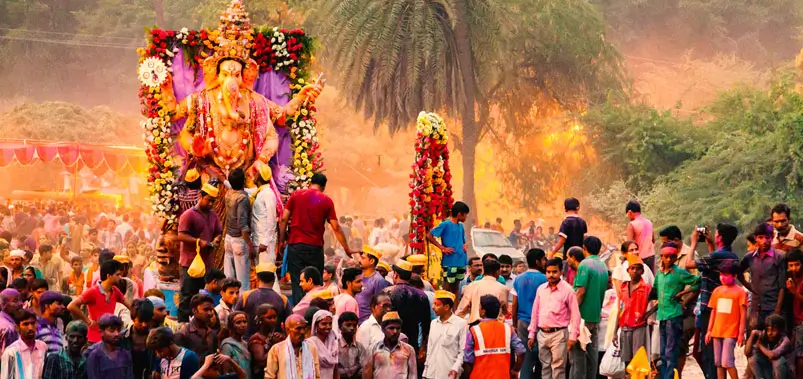
A first time visitor arriving in Mumbai around Ganesh Chaturthi may initially notice preparations rather than the festival itself. Workshops contain clay idols in dozens of sizes. Temporary community structures rise between buildings. Markets sell flowers, decorative items and sweets. Families carry carefully wrapped Ganesha idols towards their homes, while larger figures are transported to community pandals.
Once the festival begins, the scale becomes clearer.
Lord Ganesha is among the most recognisable Hindu deities because of his elephant head, but his importance extends much further than his appearance. He is associated with wisdom, intellect, prosperity, auspicious beginnings and the removal of obstacles. A prayer to Ganesha therefore commonly accompanies an important beginning, whether that beginning is a marriage, business venture, journey, ceremony, examination or new home.
Ganesh Chaturthi celebrates the birth of Lord Ganesha. Families and communities ceremonially invite him into their homes and temporary shrines, worship him for a chosen period, and later bid farewell through Ganesh Visarjan, when the idol is taken for immersion in water.
This movement from welcome to farewell gives the festival its emotional structure.
For a foreign visitor, that structure matters. Attending only the final immersion procession reveals the most spectacular public face of Ganesh Chaturthi, but not necessarily its full meaning. The festival begins quietly and ceremonially before reaching the enormous crowds, music and processions associated with its final days.
Public celebrations are especially famous in Maharashtra, with Mumbai Ganesh Chaturthi celebrations attracting immense attention. Pune also has deep historical associations with public Ganesh festivities. Celebrations take place across India, but travellers specifically seeking the grandest public version usually consider Maharashtra.
A visitor who wants to experience the festival properly should therefore think in terms of several different moments: bringing Ganesha home, installation and worship, visiting public pandals, evening ceremonies and finally the farewell procession.
One of the first questions many international visitors ask when they see an image of Lord Ganesha is also one of the most natural: why does this deity have an elephant's head?
Hindu traditions contain several accounts concerning Ganesha's origin, and details differ between texts and regional traditions. One of the best known narratives centres on Goddess Parvati and Lord Shiva.
According to the widely told version, Parvati created a boy and instructed him to guard her privacy while she bathed. The boy followed his mother's instruction faithfully. When Shiva returned and attempted to enter, the young guardian did not recognise him and refused to allow him through.
The disagreement escalated into a confrontation. Ganesha continued obeying Parvati's instruction, and Shiva eventually severed the boy's head.
When Parvati learned what had happened, her grief and anger were immense. Shiva recognised that the child had to be restored. An elephant's head was eventually brought and placed upon the boy's body, bringing him back to life.
Ganesha was then granted a special position among the gods. He would be invoked at the beginning of important undertakings and worshipped as a deity associated with removing obstacles.
This story is more than background mythology for a visitor. It explains why Ganesha appears so frequently in Indian life. Images of him are found not only inside major temples but in homes, offices, vehicles, hotels, shops and businesses. His presence is closely connected with the idea of an auspicious beginning.
The symbolism associated with his form has also inspired many interpretations. His large elephant head is frequently connected with wisdom, while the elephant itself carries associations with strength and intelligence. His large ears are often interpreted as a reminder to listen carefully. His vehicle, surprisingly, is traditionally a mouse or rat, creating one of Hindu iconography's most distinctive contrasts: the enormous elephant headed deity accompanied by a tiny creature.
Travellers do not need to become scholars of Hindu theology before attending the festival. Knowing the basic story, however, changes what they see. An idol being carried through Mumbai is no longer merely a colourful statue in a procession. It represents a deity that families and communities have ceremonially welcomed, worshipped and are preparing to farewell.
The public images of Ganesh Chaturthi often focus on the final immersion, but the festival begins with Ganesh Sthapana, the ceremonial installation of the Ganesha idol.
Families may bring a relatively small clay idol into their homes, while community organisations install much larger figures inside specially created pandals. The idol is placed on a prepared platform and decorated with flowers, fabrics, lights and other ceremonial elements.
A central ritual is Prana Pratishtha, through which the divine presence is ritually invoked in the image. Priests or knowledgeable family members may lead prayers and recitations. Offerings are presented, lamps are lit and Ganesha is treated as an honoured divine guest.
One of the most strongly associated foods is modak, a sweet traditionally regarded as a favourite of Lord Ganesha. Different regions and households prepare variations, but the familiar form contains a sweet filling commonly made with coconut and jaggery. Visitors travelling during Ganesh Chaturthi will frequently see modaks in sweet shops, hotels and festival menus.
Daily worship continues while Ganesha remains in the home or pandal. Families may perform prayers in the morning and evening, offer flowers and food, and conduct aarti, a devotional ritual involving light. Public pandals can become particularly active in the evening when people have finished work and families arrive for prayers and viewing.
There is no single universal length for keeping a Ganesha idol at home. Some families perform immersion relatively early, while others keep the deity for several days. The largest public celebrations often culminate on Anant Chaturdashi, when major immersion processions take place.
This is important practical information for foreign visitors. Searching online for "Ganesh Chaturthi date" and arriving only on the first day will provide a very different experience from being present during the final immersion.
The opening day is valuable for observing installation, prayer and family traditions. The middle days can be excellent for visiting famous pandals. The final immersion period delivers the extraordinary public spectacle associated with the festival.
A culturally curious traveller may therefore prefer to stay long enough to see more than one stage.
The most visually dramatic moment of Ganesh Chaturthi celebrations is Ganesh Visarjan.
After being worshipped for the chosen period, the idol is removed from its temporary shrine and carried towards a body of water for immersion. Small family idols may travel in relatively intimate groups. Large community idols can be accompanied by enormous processions involving drums, music, dancing and thousands of participants.
The atmosphere combines celebration and farewell.
People chant as the deity is carried forward. One of the best known chants heard during the festival expresses devotion to Ganesha and the hope that he will return again. Even without understanding every word, a foreign visitor can easily recognise the emotional intensity of the moment.
In Mumbai, the final immersion day can continue for many hours. Major idols move slowly because roads are crowded and procession routes can be extremely congested. The biggest public idols attract huge numbers of devotees and spectators.
Visitors should not assume that an immersion procession behaves like a scheduled theatre performance. A large procession may progress much more slowly than expected. Road closures and diversions can affect journeys across parts of the city, and the exact time at which a particular idol reaches the water can vary considerably.
For this reason, anyone attending Ganesh Visarjan in Mumbai should avoid placing a flight, important train connection or tightly scheduled sightseeing programme immediately after the experience.
Environmental concerns have also changed aspects of modern celebrations. Traditional clay idols dissolve more naturally, while plaster based idols and synthetic paints have raised concerns about water pollution. Greater attention is now given to eco-friendly Ganesha idols, artificial immersion tanks and environmentally responsible celebration practices.
For an international traveller, watching an immersion from an appropriate public viewing location can be memorable, but entering the densest section of a procession without local assistance is rarely necessary. The goal should be to see and appreciate the celebration, not to force a way into the most crowded area.
For the largest and most famous version of the festival, Mumbai is difficult to match.
The city hosts thousands of public and private installations. Among the most famous is Lalbaugcha Raja, whose popularity attracts enormous numbers of devotees. Waiting periods for close darshan can become very long during peak periods. A traveller with limited time should therefore decide whether seeing one famous idol at extremely close range is worth sacrificing several hours that could instead be spent seeing different neighbourhood celebrations.
Ganesh Galli, also associated with major festivities in the Lalbaug area, can be included when moving through the city's prominent Ganesh locations. Other neighbourhoods have their own respected pandals, and the festival often becomes more personal and accessible away from the most heavily publicised sites.
Pune offers another important experience. The city's public Ganesh tradition has strong historical associations, and its celebrated Ganpati institutions create an atmosphere different from Mumbai's enormous metropolitan scale.
Travellers already following a Golden Triangle India itinerary need to recognise the geography. Mumbai is not a small detour from Delhi, Agra or Jaipur. It normally requires a domestic flight and additional nights. Someone who considers Ganesh Chaturthi a major reason for visiting India should build Mumbai into the itinerary from the beginning rather than attempting to add it as a hurried day trip.
A premium itinerary could begin in Mumbai with several nights around Ganesh Chaturthi before flying to Delhi for a private Delhi Agra Jaipur tour. This allows the festival to remain a meaningful experience without compromising the Golden Triangle journey.
Timing can completely change the experience.
Early mornings are generally calmer around many temples and community shrines. Visitors interested in observing devotion without the heaviest crowds may appreciate this period. Morning light can also be favourable for photography where photography is permitted.
Evenings bring a different atmosphere. Decorative lighting becomes prominent, families arrive after work, devotional ceremonies take place and popular pandals become much busier. For many foreign visitors, evening provides the strongest combination of colour, ceremony and public activity.
Major aarti times are determined by individual temples, households and pandals rather than one national schedule. Visitors should check the specific venue instead of assuming every ceremony occurs at the same hour. In many locations, morning and evening are the principal devotional periods.
The final immersion requires even more flexibility. Processions can begin during the day and continue late into the night, while major idols may take many hours to reach immersion points.
A traveller who wants photographs, manageable crowds and a closer look at decorations may visit pandals earlier in the day and return to selected areas after dark for the atmosphere.
This combination is usually more rewarding than trying to see everything during the busiest evening hours.
There is no requirement for an international visitor to imitate Indian clothing, but respectful dress makes a noticeable difference when entering religious spaces.
Lightweight clothing that covers the shoulders and knees is a sensible default. Women may find a long dress, trousers with a modest top, kurta style clothing or another comfortable outfit suitable for temples and pandals. Men can wear lightweight trousers with a shirt or modest T-shirt.
Traditional Indian clothing is welcome but not compulsory.
Footwear deserves particular attention. Shoes often need to be removed before entering worship areas. Expensive or complicated footwear is therefore inconvenient when visiting several religious sites in one day. Socks may also have to be removed in some places.
Crowds create another practical issue. Long scarves, loose accessories and expensive jewellery are not ideal in packed processions. A small secure bag is preferable to a large backpack, and visitors should keep phones and wallets protected.
The weather can still be warm and humid during this period, particularly in Mumbai. Clothing should therefore be respectful without being unnecessarily heavy.
The objective is not to dress theatrically for photographs. It is to be comfortable while showing respect for a living religious occasion.
Yes, but participation should begin with observation and respect.
Visitors are commonly welcomed at public pandals. Depending on the setting, they may be able to receive prasad, watch aarti, join folded hand prayers and participate in community celebrations. Smaller private household ceremonies are different because they occur in personal spaces and should be entered only by invitation.
Photography requires judgement. A large public procession may contain hundreds of people taking photographs, but that does not mean every private ritual should automatically be photographed. Asking permission when close to worshippers is good practice.
A foreign visitor should also avoid standing between devotees and the deity merely to obtain a photograph.
If prasad is offered, receiving it respectfully is appropriate. At many religious places it is received with the right hand or both hands. Visitors who cannot eat a particular food can still respond politely rather than treating the offering casually.
During aarti, watch what people around you are doing before moving forward. There is no need to imitate rituals that you do not understand. Respectful observation is completely acceptable.
The most valuable festival encounters often occur when visitors stop trying to turn every moment into content and allow themselves to watch.
Ganesh Chaturthi is generally a celebratory and welcoming occasion, but the sheer scale of major events creates practical challenges.
The most obvious is crowd density.
A famous Mumbai pandal may attract a huge queue. Final day immersion areas can become extremely crowded. Families with small children, elderly travellers, people uncomfortable with dense crowds and visitors with mobility limitations should select viewing locations carefully.
Road traffic is another issue. Processions can cause diversions, and a journey that normally takes thirty minutes may take considerably longer. Travellers should not create an itinerary that depends on normal urban driving times during major processions.
Carrying minimal valuables is sensible. Keep a phone, passport copy, necessary cash and essential items secure. The original passport is generally better left safely stored at the hotel unless it is specifically required.
Hydration is important in humid conditions. At the same time, buying uncovered food or water from questionable sources simply because it is part of the street atmosphere is unnecessary. Bottled or safely filtered water and reputable food establishments remain the safer option for international visitors.
A private vehicle with an experienced local driver can be useful for moving between areas, but even a private car cannot bypass official road closures or extremely dense procession routes. In some circumstances, walking the final section is unavoidable.
This is where realistic itinerary management matters more than luxury promises.
A traveller interested only in seeing the atmosphere can experience a meaningful portion of the festival in one full day, but two to three nights in Mumbai is far more practical for someone travelling specifically for Ganesh Chaturthi.
One day can focus on neighbourhood pandals and religious context. Another can include prominent installations and evening celebrations. If the stay overlaps with a major immersion day, that should be treated as the principal activity rather than squeezed between conventional sightseeing.
Premium hotels in Mumbai can become expensive around high demand periods. Depending on property category, room type, location and demand, luxury accommodation can easily run from approximately USD 250 to USD 600 or more per night, with top suites substantially higher. Rates vary sharply, so festival travel should be booked early rather than relying on last minute availability.
A private air conditioned car with driver and local guiding can also be arranged, although festival related road restrictions mean some areas must still be approached on foot.
For travellers combining Mumbai with Delhi, Agra and Jaipur, the cleanest arrangement is usually to fly between Mumbai and Delhi rather than attempt an unnecessarily long road or rail connection purely for itinerary continuity.
The extra flight is justified when the festival itself is an important part of the holiday.
For the right traveller, absolutely.
Anyone interested in Indian religious festivals, public processions, photography, community celebrations and living traditions may find Ganesh Chaturthi one of the strongest reasons to adjust an India itinerary.
It is particularly suited to visitors who enjoy energetic environments. The festival can be noisy, crowded and unpredictable. That is part of its character.
Travellers seeking quiet spiritual contemplation may prefer smaller neighbourhood celebrations rather than Mumbai's most famous immersion processions. Families can enjoy the festival as well, but should avoid the densest crowds and use carefully selected viewing points.
Most importantly, Ganesh Chaturthi should not be treated as an attraction that can be "covered" in an hour.
Lord Ganesha arrives as an honoured guest. He remains among families and communities for days. He is worshipped, offered food and flowers, celebrated through prayer and music, and eventually carried away in a farewell filled with emotion.
Seeing that complete cycle gives a foreign visitor something far more meaningful than a photograph of a large idol.
And just as the farewell processions of Ganesha begin to fade, India's festive calendar moves towards another form of devotion—nine nights dedicated to the Divine Feminine.
Navratri changes the atmosphere again.
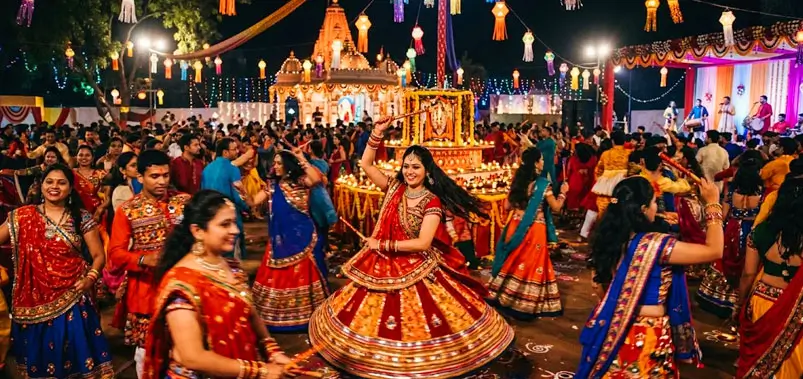
Where Ganesh Chaturthi revolves around welcoming and eventually bidding farewell to Lord Ganesha, Navratri unfolds over nine nights associated with Goddess Durga and different manifestations of the Divine Feminine. Prayer, fasting and religious observance remain central, but in places such as Gujarat the evenings transform into enormous gatherings where thousands of people dance in circles to the rhythm of Garba.
For a foreign visitor who wants to do more than stand behind a barrier and watch an Indian festival, Navratri in Gujarat offers something particularly unusual: the possibility of participation.
A visitor can dress appropriately, learn basic Garba movements and step onto the dance ground.
That combination of devotion, music, traditional clothing and participation makes Navratri one of India's most distinctive cultural experiences.
The story, however, begins long before the music starts.
Navratri has an unusual ability to feel deeply religious and intensely social at the same time. During daylight hours, many families observe fasting, visit temples, prepare special food and conduct prayers connected with Goddess Durga. After sunset, particularly in Gujarat, the atmosphere can change completely. Large grounds fill with people wearing traditional clothing, musicians take their positions, circles begin to form, and Garba can continue for hours.
For an international traveller, this contrast is one of the most interesting aspects of Navratri in India. Watching only a large Garba event gives an incomplete picture of the festival. Navratri is not simply an Indian dance celebration. Its religious foundation is devotion to Shakti, the Divine Feminine, and the festival is traditionally observed across nine nights and ten days.
The word Navratri itself refers to nine nights. Different forms and traditions exist across India, and the autumn celebration, commonly known as Sharad Navratri, is the version most travellers are likely to encounter during the great festival period leading towards Dussehra and Diwali.
The festival is closely associated with Goddess Durga and the victory of divine power over evil. One prominent tradition tells of the buffalo demon Mahishasura, whose power had made him extremely difficult for the gods to defeat. Goddess Durga ultimately fought and defeated him. The struggle is traditionally associated with nine nights, with victory celebrated on the tenth day.
The symbolism is easy for a first time visitor to appreciate even without extensive knowledge of Hindu philosophy. Navratri represents the triumph of divine strength over destructive forces, but the celebration is also connected with discipline, purification, devotion and feminine power.
Regional traditions make the festival particularly fascinating. Navratri in Gujarat is internationally associated with Garba and Dandiya. In West Bengal and several eastern regions, the same broad festive period is dominated by Durga Puja, with elaborate images and pandals. In parts of northern India, fasting and temple worship occur alongside Ramlila performances that lead towards Dussehra. In southern India, traditions may include displays of dolls and figurines known regionally by names such as Golu or Bommai Golu.
A traveller could therefore attend Navratri in two Indian cities and encounter celebrations that look remarkably different.
For someone visiting India specifically for Garba, however, Gujarat deserves serious consideration.
One reason Navratri cannot be reduced to a single night of dancing is that each of its nine days carries religious significance. A widely followed tradition associates the days with the Navadurga, nine manifestations of Goddess Durga.
The first day honours Shailaputri, regarded as the daughter of the mountains and associated with strength and purity. The second honours Brahmacharini, connected with devotion, austerity and spiritual discipline. The third is associated with Chandraghanta, whose form represents courage and readiness to confront negative forces.
The fourth day honours Kushmanda, traditionally associated with creative energy. The fifth is devoted to Skandamata, the mother of Skanda or Kartikeya, and carries strong maternal symbolism. The sixth honours Katyayani, a powerful warrior manifestation of the Goddess.
The seventh day is associated with Kalaratri, a fierce form representing the destruction of darkness and evil. The eighth honours Mahagauri, associated with purity and serenity. The ninth is dedicated to Siddhidatri, connected with spiritual accomplishment and divine blessings.
Different communities may follow variations in rituals, interpretation and sequence, and international visitors should resist the temptation to treat one regional practice as the only "correct" Navratri tradition. Hindu festivals often carry several layers of regional and family custom.
For devotees, these nine days may involve prayer, fasting, temple visits and special observances. Some people fast throughout the nine days, while others fast only on selected days. Certain foods are avoided and special fasting foods are prepared according to family traditions.
Visitors staying in good hotels may notice special Navratri menus. Restaurants serving religiously observant customers can offer meals prepared without ingredients normally avoided during fasting. The precise rules vary, but grains, meat, eggs, onion and garlic may be excluded under particular fasting traditions, while ingredients such as potatoes, dairy products, fruit and certain alternative flours are commonly used.
A foreign traveller does not need to fast to attend Navratri. Nor should a visitor imitate religious restrictions merely to make the experience appear more authentic. Knowing why people around you are eating differently, visiting temples and maintaining particular routines is more valuable than copying practices without context.
The spiritual side of Navratri becomes particularly visible in the morning and around temples. The social side becomes increasingly prominent after sunset.
That is when Gujarat changes character.
Garba and Dandiya are frequently mentioned together, but they should not automatically be treated as two names for exactly the same dance.
Garba traditionally involves rhythmic movement performed in circles. The circular formation has religious symbolism and historically developed around a lamp or representation connected with the Goddess. The circle can be understood as continuity and the cycle of life, while divine energy remains at the centre.
At a large modern event, the formation can become enormous. Hundreds or thousands of dancers may move in coordinated circles while live musicians or amplified music drives the pace. The steps can begin relatively simply and become faster and more complex as the evening develops.
Dandiya Raas uses decorated sticks held by dancers, who strike them rhythmically with a partner or within a coordinated formation. The energy is different, and the movements require awareness of the people around you.
Large contemporary Navratri events may incorporate traditional Garba, Dandiya and modern musical arrangements in the same evening.
For a foreign visitor, Garba is usually easier to attempt first. Basic steps can be learned before entering a large circle. Hotels, tour organisers, dance studios and event venues may offer introductory sessions during the season.
The worst approach is to enter the centre of an experienced fast moving group simply for a photograph. Garba circles depend on rhythm and direction. A person who suddenly stops or moves against the flow can inconvenience other dancers.
Watching for ten or fifteen minutes before joining is useful. Observe the direction of movement, identify a slower group and follow local participants.
Traditional clothing makes the evening more enjoyable but should be selected for movement rather than appearance alone.
Women commonly wear colourful chaniya choli outfits with embroidery, mirror work and jewellery. Men may wear traditional kediyu style garments with suitable trousers or other regional festive clothing. Foreign visitors are generally welcome to wear Indian festive attire respectfully.
Good quality traditional outfits can range widely in price. Simple options may be available for relatively modest amounts, while premium handcrafted or designer pieces can cost several hundred US dollars or more. Someone attending only one evening does not need an expensive designer ensemble. Comfort, breathable fabric and freedom of movement matter far more when dancing for several hours.
Footwear deserves equal attention. Heavy formal shoes or unstable heels are poor choices for an active Garba night.
For travellers specifically seeking the best Navratri experience in India, Ahmedabad and Vadodara are two obvious choices.
Ahmedabad offers the scale and convenience of a major city, extensive hotel choices and numerous Navratri events. Large commercial and community Garba programmes attract substantial crowds. The city also gives travellers opportunities to combine festival evenings with Gujarati food, heritage areas and nearby cultural attractions during the daytime.
Vadodara has an exceptional reputation for large scale Garba. Some of its major gatherings are known for enormous participant numbers and an atmosphere strongly associated with traditional group dancing. A traveller whose principal reason for visiting Gujarat is Garba may find Vadodara particularly rewarding.
There is no need to turn the choice into a competition. Ahmedabad may work better for travellers who want broader urban infrastructure and a larger selection of luxury hotels. Vadodara can appeal strongly to visitors who place the Garba experience at the centre of the trip.
A carefully paced itinerary could include both, but foreign visitors should remember that Navratri nights finish late. Moving city every morning after dancing until midnight or beyond quickly becomes exhausting.
The better approach is to establish a base for several nights.
Premium accommodation prices fluctuate considerably according to the hotel and demand. During high demand festival dates, travellers seeking internationally recognised luxury standards should allow roughly USD 180–500 or more per room per night, with top suites and premium properties exceeding that range.
Event access also varies. Community events may operate differently from major ticketed commercial Garba nights. Premium passes for popular venues can cost significantly more than ordinary entry, particularly for headline performers or premium access. Prices are event specific and should be checked before the journey rather than relying on an assumed universal Navratri ticket.
This distinction is important: Navratri does not have one official national ticket price.
Religious observances and public Garba events follow different schedules.
Temple visits and household prayers may occur during morning and evening devotional periods. Individual temples maintain their own schedules.
Garba is principally an evening and nighttime experience. Depending on local rules, venue schedules and the type of programme, attendees may begin arriving around 7:00 PM to 8:00 PM, with the atmosphere building later in the evening. Major events can continue towards midnight or later where regulations permit.
Foreign travellers should confirm the specific event's entry time because arriving too late at a major ticketed venue can create unnecessary difficulty with queues, security and transport.
An early dinner is usually sensible unless food is available at the venue. Heavy meals immediately before several hours of dancing are not ideal.
Visitors should also arrange return transport in advance. Thousands of people can leave large Garba grounds around similar times. App based taxis may face demand surges, road congestion and designated pickup zones. A private driver familiar with the event location can be valuable, although the vehicle may still need to wait outside restricted traffic areas.
For photographers, arriving before the grounds reach peak capacity provides time to understand the venue and capture details of clothing and preparations. Later hours produce the spectacular wide scenes of enormous circles and synchronised movement.
Photography policies vary. Professional cameras may be restricted at commercial events even when mobile phones are permitted. Travellers carrying specialist equipment should check the rules before arriving.
In most public and commercial settings, yes.
This is one reason Navratri can be such a rewarding festival for international visitors. You are not necessarily limited to observing from the edge.
A short introductory Garba lesson makes participation much easier. Basic patterns are repetitive enough for beginners to follow, but large groups can move quickly. Start with a slower circle rather than attempting to follow the most accomplished dancers.
There is also an important cultural difference between participation and performance. Wearing traditional clothing respectfully and learning the dance because you want to join the celebration is usually received warmly. Treating worshippers or local dancers as props for staged social media content can create a very different impression.
Alcohol should not be assumed to be part of a Navratri event. Gujarat has strict alcohol regulations, and the religious character of the festival should also be respected. Travellers accustomed to associating large music events with drinking should not approach Garba as if it were a nightclub.
The festival's energy comes from music, dance, community participation and devotion.
For many foreign travellers, that becomes one of the surprises of the evening: thousands of people can create an extraordinarily energetic atmosphere without the event resembling a Western club or music festival.
Delhi, Agra and Jaipur all experience the wider Navratri period, but a traveller whose priority is the iconic large scale Garba associated with Gujarat should consider adding Ahmedabad or Vadodara.
Delhi offers temple activity, fasting traditions and the beginning of the Ramlila period. Jaipur has its own religious celebrations, decorated temples and festive markets. These can be culturally rewarding, particularly for someone already travelling through the Golden Triangle.
However, it would be misleading to tell an international visitor that an evening in Delhi or Jaipur is automatically equivalent to Navratri in Gujarat.
If Garba is the primary objective, go where the tradition is strongest.
A private India itinerary can connect Gujarat with the Golden Triangle by domestic flight. A traveller could spend several nights in Ahmedabad or Vadodara before flying to Delhi or Jaipur and continuing through Delhi, Agra and Jaipur.
The schedule should leave adequate recovery time. Late Navratri evenings followed by a 5:00 AM airport departure may look efficient on paper but produce an unpleasant holiday.
Festival travel works best when the itinerary respects the rhythm of the festival.
Navratri reaches its tenth day culmination in Dussehra, also known as Vijayadashami.
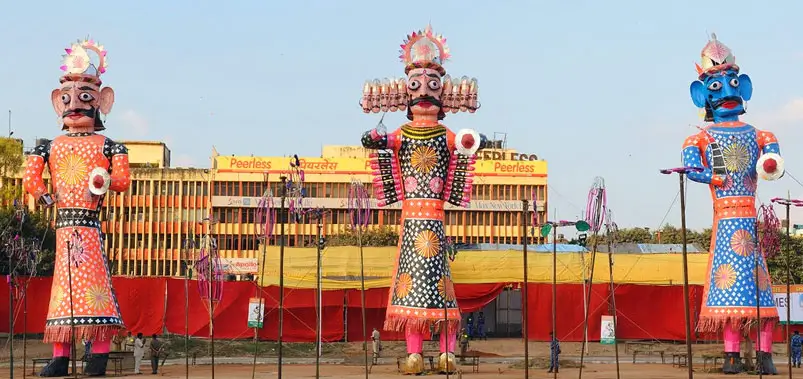
For foreign visitors travelling through northern India, the transition can be dramatic. During the preceding days, temporary stages host Ramlila, theatrical retellings of episodes from the Ramayana. Then, on Dussehra evening, enormous effigies of Ravana and often his associates Meghnad and Kumbhakarna stand over festival grounds.
Crowds gather as daylight fades.
The story reaches its decisive moment.
Flaming arrows or ceremonial ignition set the towering figures alight. Fireworks erupt from within the structures. Ravana burns as thousands of spectators watch.
To someone seeing it without context, Ravan Dahan can appear to be a spectacular fireworks event. To appreciate Dussehra, however, the traveller needs to know the story represented by the flames.
The Ramayana is one of India's great epics, and its influence extends deeply into religion, literature, performance, art and popular culture.
At the centre of the story is Lord Rama, prince of Ayodhya and an incarnation of Lord Vishnu. Rama is sent into exile for fourteen years. His wife Sita and brother Lakshmana accompany him.
During the exile, Sita is abducted by Ravana, the powerful king of Lanka.
Ravana is one of Indian mythology's most complex antagonists. He is traditionally depicted with ten heads and is remembered as immensely knowledgeable and powerful, yet his arrogance and actions ultimately lead to destruction.
Rama's effort to rescue Sita eventually brings him into alliance with Hanuman and an army that crosses towards Lanka. A great battle follows.
Rama defeats Ravana.
Dussehra celebrates that victory and has therefore become strongly associated with the idea that righteousness ultimately triumphs over evil.
The ten headed Ravana effigy gives the message a spectacular physical form. Different interpretations associate his heads with undesirable human qualities such as ego, anger, greed and attachment.
For a foreign visitor, seeing an effigy only as a giant villain misses the deeper point. The story is not merely about defeating an external monster. Its enduring appeal also lies in questions of duty, character, temptation, loyalty and the consequences of uncontrolled pride.
A visitor who attends only Ravan Dahan sees the final scene without the preceding chapters.
Ramlila is a dramatic performance tradition based on the life and story of Rama. Performances take place in numerous towns and cities during the period leading towards Dussehra.
Depending on the location, a Ramlila may be a modest neighbourhood production or a huge event with elaborate costumes, sets, lighting and substantial audiences.
For an English speaking visitor, the language can present a challenge. Performances are generally not designed as English language tourist shows. Reading a short summary of the Ramayana beforehand makes the experience much easier to follow.
Delhi is particularly useful for international visitors because large Ramlila events take place while the city remains a major stop on almost every Golden Triangle itinerary.
Even if a traveller does not understand every spoken line, costumes and familiar scenes make the broad narrative visible. Rama, Sita, Lakshmana, Hanuman and Ravana have distinctive appearances, and the audience's reactions provide another layer of experience.
An evening at Ramlila followed by Dussehra celebrations can give visitors far more cultural context than simply arriving at an effigy ground five minutes before ignition.
For clients of Golden Triangle Tours, Delhi is among the most convenient places to incorporate Dussehra without dramatically altering the route.
Large Ramlila and Dussehra programmes are traditionally organised around several parts of the city. The historic areas around the Red Fort and Old Delhi have strong associations with major Ramlila performances, while other neighbourhoods organise their own celebrations.
Exact venue arrangements, permissions and schedules can change, so visitors should verify the programme operating during their travel dates rather than relying on an old online listing.
Dussehra evening generally becomes busiest from late afternoon onwards. The exact Ravan Dahan timing varies according to organisers and religious considerations, but visitors commonly need to reach major grounds well before the effigies are burned.
Arriving early matters.
Roads around popular venues can become congested. Security checks and pedestrian crowds slow entry. A person who leaves the hotel at the supposed ignition time may spend the most important part of the evening sitting in traffic.
A sensible Dussehra day in Delhi could keep conventional sightseeing relatively light. Morning visits can cover selected monuments, followed by a break at the hotel in the afternoon. The evening can then be reserved entirely for Ramlila and Ravan Dahan.
That arrangement is far more comfortable than trying to visit half a dozen monuments and then rushing across Delhi for the festival.
One of the most important things for international travellers to know is that Dussehra does not look identical throughout India.
Mysuru Dussehra in Karnataka is famous for royal heritage, illumination and grand ceremonial events connected with the historic Mysore royal tradition. The city's palace becomes a major visual focus, and the celebrations have a character quite different from the Ravana effigy centred experience many visitors associate with northern India.
Kullu Dussehra in Himachal Pradesh offers another distinctive tradition. Local deities and communities participate in celebrations that differ significantly from the standard image of Dussehra as simply the burning of Ravana.
Varanasi and other parts of northern India also maintain important Ramayana related performance traditions.
This diversity is precisely why a serious India festival itinerary should not make statements such as "Dussehra is celebrated this way in India." There are shared themes, but regional practice matters.
For a first time visitor already taking a Golden Triangle tour, Delhi is logistically straightforward.
For a repeat traveller willing to construct a journey around the festival itself, Mysuru or Kullu can justify a dedicated trip.
The first expectation should be crowds.
Large Dussehra grounds can attract thousands of spectators. Families arrive early, temporary food stalls operate nearby, children carry festival toys and the atmosphere becomes progressively louder as the main event approaches.
The effigies themselves may be enormous.
Ravana is generally the tallest and most visually elaborate, often accompanied by Meghnad and Kumbhakarna. Fireworks or combustible elements can be built into the structures so that ignition produces a sequence of flames, explosions and sparks.
Foreign visitors should remain behind designated safety boundaries. Moving closer merely for a better photograph is not worth the risk.
People sensitive to loud noise should be prepared for sudden fireworks and explosive sounds. Families travelling with very young children should consider whether the largest, loudest event is suitable.
Tickets depend entirely on the event. Many community Dussehra programmes have free public areas, while certain organised venues may offer reserved or premium seating. There is no universal Dussehra admission price.
Where premium seating is available, paying for an organised viewing area can be worthwhile for international travellers who prioritise comfort, particularly older visitors and families. The value lies less in luxury and more in reducing uncertainty around where to stand and how long to wait.
Transport should be arranged with flexibility. A private driver can drop travellers as close as permitted and establish a clear post event meeting point. Mobile networks can become congested around extremely large gatherings, so relying solely on a last minute phone call to locate the vehicle is not ideal.
Dussehra public grounds are generally less restrictive than entering a temple, but modest comfortable clothing remains appropriate.
October evenings in northern India can still be warm, particularly in dense crowds, so heavy clothing is unnecessary unless local weather conditions require it. Comfortable closed or secure footwear is preferable because festival grounds can involve considerable walking.
Photography of public effigies and large outdoor celebrations is generally common. Close photography of individual worshippers, performers backstage or private rituals deserves more sensitivity.
Visitors should also remember that Ravana burning is not merely a visual spectacle created for tourists. For many people in the audience, it represents a religious and moral story learned from childhood.
Showing interest in that meaning produces a much richer encounter.
Dussehra is particularly suitable for travellers interested in mythology, public theatre and dramatic ceremonies.
Unlike Navratri in Gujarat, where a visitor may spend several consecutive evenings dancing, the most famous Dussehra moment is concentrated around the culmination of the festival. A traveller can therefore incorporate it into an existing Golden Triangle itinerary relatively easily if the dates align.
Delhi is especially convenient because the city is already the starting or ending point for many Golden Triangle tours in India.
Someone with more time could attend Ramlila on one or two evenings before seeing the main Dussehra celebration. This gives the burning of Ravana much greater narrative meaning.
And the story does not end when Ravana falls.
For travellers following the sequence from Ganesh Chaturthi through Navratri and Dussehra, the next major celebration creates an important narrative connection.
According to the widely followed North Indian tradition, after defeating Ravana, Lord Rama eventually returned to Ayodhya with Sita and Lakshmana. His return is closely associated with one of the most famous images in Indian culture: rows upon rows of lamps illuminating the darkness.
The festival season is now moving towards Diwali.
For many international travellers, this is the celebration they have heard about long before arriving in India.
Yet the real Diwali is much larger than a single night of lights.
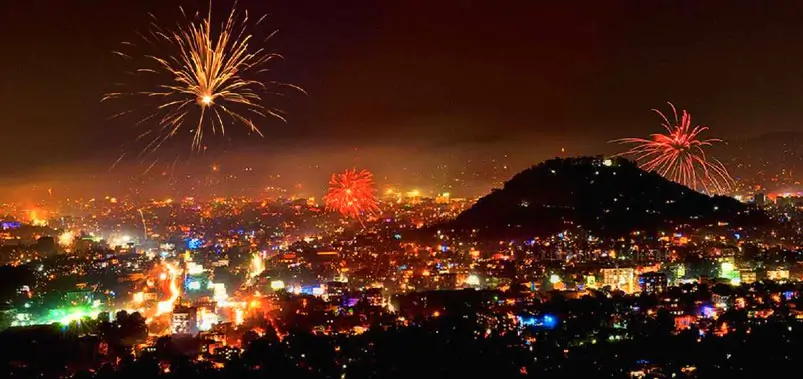
For many international travellers, Diwali in India is the festival they recognise first. Photographs of lamps, illuminated palaces, decorated markets and fireworks have made it one of the country's most visible celebrations internationally. Yet seeing Diwali only as a "festival of lights" misses much of what gives it meaning.
Diwali is not a single evening with decorations. It is a broader festive period involving religious ceremonies, family gatherings, shopping, food, gifts, temple visits, home decoration and regional traditions that can vary significantly across India. The main night is the most famous, but the surrounding days are equally important for understanding how the festival actually unfolds.
In much of northern India, Diwali is strongly associated with the return of Lord Rama, Sita and Lakshmana to Ayodhya after fourteen years of exile and the defeat of Ravana. According to the widely followed tradition, the people of Ayodhya welcomed them by lighting rows of lamps. That image of light overcoming darkness became one of the most enduring symbols associated with Diwali.
At the same time, Diwali is also deeply connected with Goddess Lakshmi, the deity associated with prosperity, fortune and abundance. Families clean and decorate their homes, light lamps, prepare religious offerings and perform Lakshmi Puja in the evening.
For a foreign traveller, these overlapping meanings make Diwali particularly rich. One evening can include temple visits, neighbourhood decorations, family prayers, sweets, illuminated markets and public celebrations, but the most meaningful experience usually comes from seeing how private and public traditions connect.
A traveller who reaches India only for the main night will still see something memorable. Someone who arrives several days earlier, however, sees the real build up: markets filling with lamps and decorations, households cleaning and renovating, jewellery and utensil shopping intensifying, sweet shops becoming crowded and hotels preparing special festive dinners.That build up is part of the festival.
The connection between Diwali and the Ramayana is especially strong in northern India.
After defeating Ravana in Lanka and rescuing Sita, Lord Rama eventually returned to Ayodhya with Sita and Lakshmana. His return marked the end of a long exile and was celebrated as the homecoming of a righteous king.
Tradition holds that the people of Ayodhya illuminated the city with lamps to welcome him.
For foreign travellers who have already attended Dussehra, this creates a natural narrative sequence. Dussehra marks Ravana's defeat. Diwali then represents Rama's return home.
This is one reason the festivals feel connected even though they are celebrated differently.
The visual symbolism is powerful. Darkness represents uncertainty, ignorance or evil; light represents knowledge, hope, righteousness and renewal. Rows of small clay lamps transform that symbolism into something physical and visible.
For many families, lighting diyas is therefore not decorative in the superficial sense. It is part of the festival's religious and cultural expression.
Visitors who understand that context see much more than attractive lights.
For many Hindu households, the spiritual centre of the main Diwali evening is Lakshmi Puja.
Homes are cleaned thoroughly in the days before Diwali. Entrances may be decorated with flowers and rangoli. Lamps are placed around the house, and a special area is prepared for worship.
Goddess Lakshmi is associated with prosperity and good fortune. Lord Ganesha is also commonly worshipped during Diwali, particularly in connection with auspicious beginnings and wisdom.
The timing of Lakshmi Puja is not a casual choice. Families may follow a religiously significant muhurat, calculated according to the Hindu calendar. Exact timings change from year to year and vary by location, so travellers should not assume that a timing found for one city applies universally.
In practical terms, the main ceremonial period usually takes place in the evening after sunset, but the specific worship window should always be checked for the relevant date and city.
For an international visitor, attending Lakshmi Puja inside a family home can be one of the most meaningful Diwali experiences, but it should happen by invitation rather than expectation. Hotels and cultural organisations sometimes arrange structured ceremonies that allow visitors to observe the traditions respectfully.
A guest should dress modestly, follow the host's guidance about footwear and photography, and avoid interrupting the ceremony for questions.
Questions can come afterwards.
The most respectful approach is often to watch first and ask later.
The Diwali period begins before the famous night of lamps.
One of the important preceding observances is Dhanteras, traditionally associated with wealth, health and auspicious purchases. Many families buy metal objects, utensils, jewellery, coins or other items considered fortunate.
For travellers, this has an immediate visible effect: markets become extremely busy.
Jewellery stores, utensil markets and shopping areas can remain crowded late into the evening. Streets are decorated and promotional displays appear throughout commercial districts.
A foreign visitor interested in local culture may enjoy walking through a major market on Dhanteras, but this is not the ideal day for someone seeking quiet shopping.
Crowding can be intense, parking difficult and traffic slow.
Visitors who intend to purchase jewellery should use reputable sellers and request proper invoices and certification where relevant. Festival excitement should not replace normal purchasing caution.
High end jewellery can range from several hundred dollars to many thousands depending on metal, stones, craftsmanship and brand. There is therefore no meaningful fixed "Dhanteras shopping price."
The significance lies in the act of buying something auspicious, not in reaching a particular spending level.
The day before or around the principal Diwali night may be observed as Naraka Chaturdashi, sometimes associated with the defeat of the demon Narakasura by Lord Krishna in particular traditions.
Regional customs vary greatly.
In some parts of India, people begin the day with ritual bathing and oil application. In others, the emphasis falls more heavily on decorations, sweets and family gatherings.
Foreign visitors should remember that Diwali is not celebrated identically across India.
The sequence familiar in Delhi may differ from customs followed in Gujarat, Maharashtra, Karnataka or Tamil Nadu. This does not make one version more authentic than another.
The diversity is part of the festival.
By late afternoon on the main Diwali day, the atmosphere begins to change noticeably.
Markets that were hectic during the previous days may become quieter as shopkeepers and employees return home. Families dress in festive clothing. Entrances are decorated with flowers and rangoli. Diyas and decorative lights become more visible as daylight fades.
Temples can become crowded.
Inside homes, Lakshmi Puja takes place. Sweets are exchanged and relatives visit one another.
Later in the evening, fireworks may become prominent depending on local regulations, enforcement and community practice.
For a visitor staying in a luxury hotel, the experience can sometimes appear polished and contained: festive decorations, special menus, perhaps a cultural programme and organised ceremony.
Outside the hotel, the atmosphere is less controlled.
Residential streets may be full of families moving between homes. Firecrackers can begin suddenly. Traffic patterns change. Some markets close earlier than on normal evenings, while others remain active.
The mistake is to expect one central public square where "Diwali happens."
Diwali is distributed across homes, temples, neighbourhoods and markets.
That is precisely what makes it different from a single stadium event or procession.
The beauty of Diwali lies in repeated small details.
A diya is a small traditional lamp, commonly made from clay and filled with oil or ghee. A cotton wick is lit, producing the warm flame that has become one of the festival's defining images.
Rows of diyas may line entrances, balconies, temple steps and courtyards.
Modern electric lights are also widespread, but traditional lamps still carry the festival's deeper symbolism.
Rangoli refers to decorative patterns created near entrances and in courtyards using coloured powders, flower petals or other materials. Designs range from simple geometric forms to elaborate floral or religious motifs.
Marigold flowers and garlands are also common.
For photographers, this combination of lamps, flowers, clothing and architecture makes Diwali exceptionally attractive. Yet private homes should never be photographed as if they were public exhibitions.
Ask permission when entering personal spaces.
Food is inseparable from Diwali.
Sweet shops become extremely busy in the days before the festival, and boxes of sweets are exchanged between families, friends, businesses and colleagues.
Common sweets vary by region and household. Visitors may encounter kaju katli, laddoo, barfi, gulab jamun and many other varieties.
Gift boxes may also contain dry fruits, chocolates, premium teas or luxury products.
For foreign travellers, sweets offer an easy way to participate in the social atmosphere, but basic food safety still matters. Buy from busy, reputable establishments with good storage and hygiene standards.
Premium Diwali sweet boxes at luxury hotels or specialist confectioners can range from roughly USD 20 to USD 150 or more, depending on presentation, ingredients and brand positioning.
The price is less important than quality and freshness.
The day after the main Diwali night is associated in many communities with Govardhan Puja.
The tradition is connected with Lord Krishna and the story of Govardhan Hill. According to the narrative, Krishna protected the people of his community from torrential rain by lifting Govardhan Hill and providing shelter beneath it.
Temples may prepare elaborate food offerings known as Annakut, literally suggesting a mountain of food. Large displays can contain dozens or even hundreds of prepared items.
For travellers interested in temple traditions, the morning after Diwali can therefore be culturally significant rather than simply a recovery day.
It is another reason not to schedule a 6:00 AM flight immediately after Diwali night.
Another important observance after Diwali is Bhai Dooj, which celebrates the bond between brothers and sisters.
Traditions vary, but sisters commonly perform a ceremonial blessing for their brothers and families exchange gifts and food.
For foreign visitors, Bhai Dooj is less publicly spectacular than the main Diwali evening, but it reinforces an important point: Diwali is not one isolated event.
It is a sequence of family and religious observances.
For international travellers already travelling through Delhi, Agra and Jaipur, Diwali in Jaipur can be particularly rewarding.
The city's major markets and commercial streets become heavily illuminated. Historic facades, jewellery districts and shopping areas can create a striking evening atmosphere.
Jaipur's architecture already provides a dramatic setting, and festival lighting adds another layer.
Areas around Johari Bazaar, Bapu Bazaar and the old city can become particularly busy. Visitors should expect traffic restrictions, pedestrian congestion and delays.
A private driver can be useful for reaching an appropriate drop-off point, but walking is often necessary inside the busiest sections.
Luxury travellers should consider staying at least two or three nights in Jaipur around Diwali rather than arriving on the festival day and leaving the next morning.
Premium heritage and palace hotels can rise substantially in price during festive demand. High end rooms can easily range from USD 350 to USD 1,000 or more per night, while top suites and palace categories may cost significantly more.
The higher rates are justified only if the property itself adds to the experience.
A beautiful heritage hotel with organised Diwali ceremonies, courtyard lighting and festive dining can become part of the celebration.
Diwali in Delhi feels broader and more metropolitan.
Large markets decorate heavily, temples become busy and residential neighbourhoods hold family celebrations.
Places associated with shopping can become extremely crowded in the preceding days. Chandni Chowk, Connaught Place and other commercial areas may be visually interesting, but traffic and pedestrian density require patience.
Delhi also offers a wide range of luxury hotels that organise festive dining and cultural programmes. For first time foreign visitors, this can provide a comfortable introduction to Diwali before venturing into busier public spaces.
At the same time, air quality is an important practical issue.
Northern Indian cities can experience poor air quality during the autumn period, and fireworks can worsen conditions temporarily. Travellers with respiratory sensitivities should check current air quality conditions and avoid unnecessary exposure to smoke.
This is not a minor consideration.
Anyone selling Diwali travel to international visitors should mention it honestly.
Agra does celebrate Diwali, but the city offers a different kind of experience compared with Jaipur or Delhi.
The Taj Mahal remains the primary reason most international travellers visit. Diwali can add local atmosphere through decorated markets, temples, homes and hotels.
Visitors should note that the Taj Mahal is not transformed into a giant Diwali event. It remains a protected monument with its own operating rules and schedule.
A luxury Golden Triangle itinerary can use Agra as the quieter middle point between stronger festival experiences in Delhi and Jaipur.
This can actually improve the trip.
Not every night needs to be the loudest or busiest.
Visitors willing to move beyond the Golden Triangle can consider Ayodhya or Varanasi for a more explicitly religious Diwali experience.
Ayodhya has profound Ramayana associations and has become a major focus of large scale lamp lighting celebrations.
Varanasi offers a different atmosphere through the ghats, temples and riverfront rituals.
These destinations require additional itinerary time and should not be added casually to an already tight Delhi–Agra–Jaipur journey.
A traveller with ten to fourteen days can integrate them much more comfortably than someone trying to see five cities in six nights.
Diwali fireworks are visually exciting but create genuine practical issues.
Regulations vary by state and city, and enforcement can change. Travellers should not assume that every firecracker being sold or used is automatically permitted.
Noise can be intense.
Smoke can also accumulate, particularly in northern cities with already difficult seasonal air quality conditions.
Visitors with asthma, respiratory disease or strong sensitivity to smoke should discuss appropriate precautions with a medical professional before travel.
Hotels with good indoor air filtration may offer added comfort.
Ear protection can be useful for young children.
The main point is not to create fear, but to provide realistic expectations.
Diwali can be extraordinary and still require sensible preparation.
Diwali is one of the easiest festivals for international visitors to dress festively.
Traditional Indian clothing is widely worn and generally welcomed.
Women may wear sarees, salwar suits, anarkalis, lehengas or elegant contemporary Indian outfits. Men may wear kurta pajama combinations, Nehru jackets or formal Indian attire.
Traditional clothing is not compulsory.
A well dressed modest Western outfit is perfectly acceptable.
For temple visits, shoulders and knees should remain covered. Shoes may need to be removed.
The best clothing is festive enough for the occasion but comfortable enough for walking through crowded markets and standing during ceremonies.
The answer depends on what the traveller wants from India.
For giant public energy and emotional processions, Ganesh Chaturthi is exceptionally strong.
For participation, music, traditional clothing and social interaction, Navratri can be the most interactive.
For mythology, theatre and dramatic public symbolism, Dussehra is particularly rewarding.
For lights, homes, temples, markets, family rituals and a broader festive atmosphere, Diwali is the most complete experience for many first time visitors.
Someone travelling only once and choosing one festival would often find Diwali the easiest to combine with a Golden Triangle Tour.
Someone specifically interested in dance should prioritise Navratri.
Someone interested in processions and photography may prefer Ganesh Chaturthi.
Someone fascinated by the Ramayana can connect Dussehra and Diwali into one cultural journey.
A standard Delhi–Agra–Jaipur route can be adjusted around festival dates, but the best itinerary depends on the event.
For Diwali or Dussehra, the Golden Triangle works naturally because Delhi and Jaipur already provide strong celebrations.
For Ganesh Chaturthi, Mumbai should usually be added by air.
For the most iconic Navratri experience, Ahmedabad or Vadodara should be added.
The principle is simple: do not force every festival into the same three city route.
A premium festival itinerary should follow the strength of the celebration.
For international travellers who value comfort, Golden Triangle Tours can combine private transport, carefully selected hotels, local guides and realistic festival timings rather than treating public events like fixed sightseeing appointments.
That difference matters most when roads close, ceremonies shift, crowds build and public transport becomes unpredictable.
A successful festival journey is not the one with the most attractions per day.
It is the one that leaves enough time to actually be present when India celebrates.
We promise you a holiday where everything is taken care of from the moment you land. Trusted drivers waiting for you, handpicked hotels that fit your style, personalized itineraries designed just for your family, and a dedicated team on call 24/7. All you need to do is relax, explore, and create unforgettable memories, while we take care of every detail behind the scenes.
It is possible only with a long itinerary because the festivals occur across different dates and the strongest celebrations are spread across different cities. For most international travellers, choosing one or two festivals and experiencing them properly creates a better journey than trying to chase every event across India.
Luxury hotels in major festival cities can sell out or become substantially more expensive. Booking several months ahead is sensible when the festival is central to the trip, especially for premium properties in Mumbai, Jaipur, Delhi, Ahmedabad or other high-demand destinations.
They can be, but venue selection matters. Older travellers should avoid the densest procession routes and standing-only areas where possible. Reserved seating, private transport and early arrival can make the experience far more comfortable.
No. Traditional clothing is optional, although many visitors enjoy wearing it. Modest, comfortable clothing is sufficient. Temple visits usually require shoulders and knees to be covered, and footwear may need to be removed.
Lakshmi Puja generally takes place in the evening after sunset, but the religiously significant timing changes by date and location. Travellers should check the specific local muhurat for the city they are visiting.
Delhi is convenient for Golden Triangle travellers because major Ramlila and Ravan Dahan programmes take place there. Mysuru and Kullu offer very different regional Dussehra traditions and are better suited to travellers building a trip specifically around the festival.
Yes, if the festival is an important part of the journey. Mumbai offers one of India's strongest Ganesh Chaturthi experiences, but it should be treated as a dedicated stop rather than a rushed diversion.
Yes, foreigners are generally welcome at public and commercial Garba events. Learning a few basic steps beforehand makes participation easier and more respectful.
Navratri is better for travellers who want music, dance and active participation, especially in Gujarat. Diwali is better for visitors seeking lights, family traditions, temples, festive markets and a broader national atmosphere.
Yes. Diwali can be one of the most memorable periods for international visitors because homes, temples, markets and hotels all participate in the festive atmosphere. The trade-off is heavier traffic, higher hotel demand, crowded shopping areas, fireworks and potentially poor air quality in some northern cities.