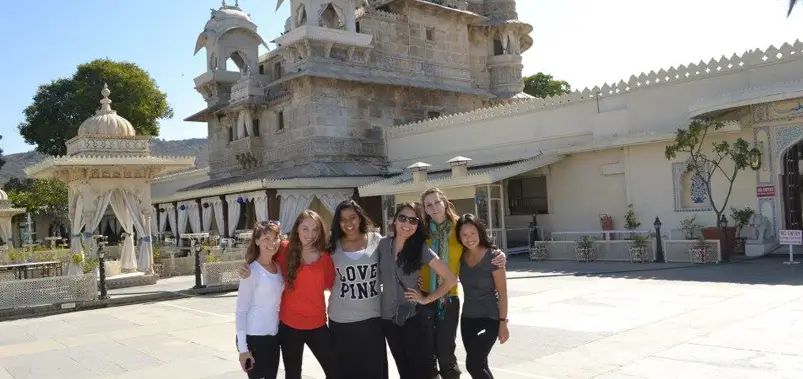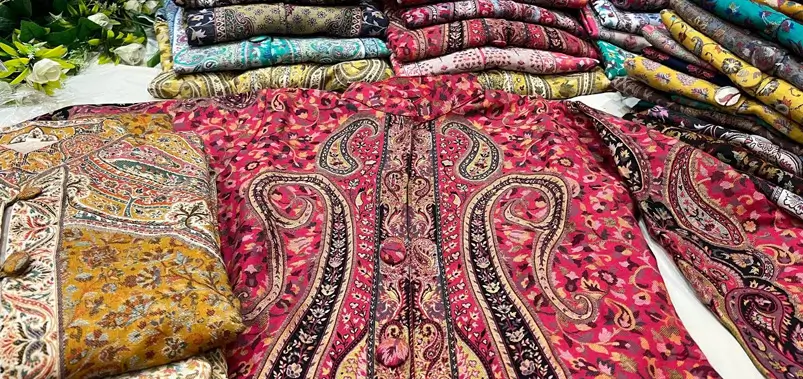
Shopping in India can be one of the most rewarding parts of a luxury journey, particularly for travelers interested in objects that carry genuine craftsmanship rather than generic souvenirs. Jaipur remains one of Asia's major centers for colored gemstones and handcrafted jewelry, North India has a long tradition of hand knotted carpets and rugs, and authentic Kashmir Pashmina represents a textile tradition that can produce remarkably fine, lightweight pieces designed to last for generations. At the same time, these categories are precisely where foreign travelers can make expensive mistakes if they buy on appearance, salesmanship, or a dramatic claim about “museum quality” without asking for documentation.
A premium shopping experience should never feel rushed. A traveler buying a $5,000 emerald necklace or a $12,000 hand knotted carpet needs more than a complimentary cup of tea and an assurance that the family has been in business for generations. They need a proper invoice, a clear description of materials, disclosure of gemstone treatments, return or shipping terms, measurable carpet specifications where relevant, and certification that matches the product being sold. Gold jewelry should be checked for Indian hallmark information, while expensive gemstones deserve an independent laboratory report when value depends heavily on whether the stone is natural, treated, or of a particular origin.
The same caution applies to authentic Pashmina shopping in India. A scarf labeled “pashmina” in a tourist market may be inexpensive because it is actually viscose, acrylic, ordinary wool, machine spun cashmere, or a blend. Genuine Kashmir Pashmina protected under India's geographical indication system follows defined specifications: the registered standards describe it as using 100 percent Pashm fibers of very fine diameter, hand spun yarn, and hand weaving by artisans in Jammu and Kashmir.
Luxury shopping is therefore less about knowing one “secret shop” and more about knowing what questions to ask before your credit card is charged.
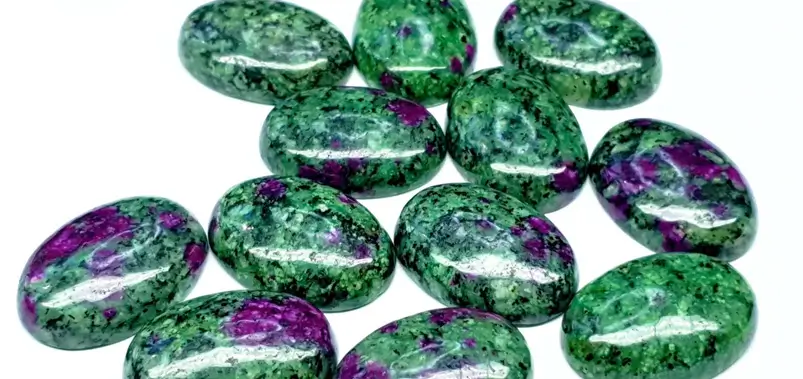
Jaipur has a centuries old relationship with gemstone cutting, polishing, jewelry making and precious stones, and serious buyers can encounter exceptional craftsmanship in the city. Emeralds, rubies, sapphires, diamonds, tourmalines, aquamarines, spinels and many other colored stones pass through Jaipur's workshops and trading houses. That does not mean every stone sold in Jaipur originated in Rajasthan or even in India. Gemstones are an international commodity, and stones cut in Jaipur may have originated in Africa, South America, Sri Lanka or other mining regions.
This is the first important distinction for an American buyer. “Made in Jaipur,” “cut in Jaipur,” and “mined in India” are not the same claim.
For expensive colored stones, treatment disclosure matters enormously. The Gemological Institute of America advises ruby buyers, for example, to ask about treatments in writing because heating is common and other treatments such as fracture filling or diffusion can materially affect a stone's nature and value. GIA also recommends an independent laboratory report when the buyer needs confirmation that a stone is natural and wants evidence regarding treatments. The same principle should guide purchases of other valuable colored gemstones.
If a Jaipur jeweler tells you that a ruby is “completely natural and untreated,” ask for the laboratory report that supports that statement. If an emerald is described as Colombian, ask whether the laboratory report gives an origin opinion. If a sapphire is described as Kashmir origin, the documentation becomes even more important because geographic origin claims can have enormous financial implications.
Do not assume that a laminated card produced by the store is equivalent to a report from an internationally recognized independent gemological laboratory.
The report number should match the actual stone.
Where practical, the laboratory report should accompany the gem rather than simply being shown briefly before purchase. The report should also be read carefully. “Natural ruby” does not automatically mean “untreated natural ruby.” Treatment information can be stated separately.
For diamond purchases, buyers should follow similar discipline. The report number, carat weight, dimensions and identifying characteristics should correspond with the stone being purchased. High value diamonds should not be purchased solely because a salesperson gives a verbal color and clarity grade.
Gold itself has another useful layer of consumer protection in India. The Bureau of Indian Standards states that Indian hallmarking provides an official indication of precious metal purity. Current hallmarked gold jewelry uses a BIS mark, fineness or carat indication, and a six character Hallmark Unique Identification number, commonly called the HUID. BIS also provides a feature in its official BIS Care application that allows consumers to verify the HUID.
That means a tourist purchasing a high value gold necklace in Jaipur should not be satisfied with the phrase “22 karat gold.” Ask to see the hallmark on the actual piece. Check the stated fineness. Ask for the HUID. Make sure the invoice describes the item accurately.
A proper jewelry invoice should ideally separate the gold value, gemstone value and making charge where the seller's system permits that level of detail. At minimum, it should clearly identify the purchased item, metal purity, gemstone description, total price and applicable taxes. For expensive stones, the associated lab report should be referenced or attached.
Pricing varies enormously because gemstone quality is not standardized by size alone. A one carat emerald can cost a few hundred dollars or many thousands of dollars depending on color, clarity, origin, treatment and overall quality. The same is true for rubies and sapphires. Any store claiming that all stones of the same weight should cost roughly the same amount is oversimplifying the market.
Luxury travelers should also resist the pressure technique built around scarcity. “This exact stone will be sold in the next hour” may occasionally be true, but it should not force a five figure purchase. If you need an independent opinion, take the time to get one.
For a purchase above several thousand dollars, walking away and returning the next day is entirely reasonable.
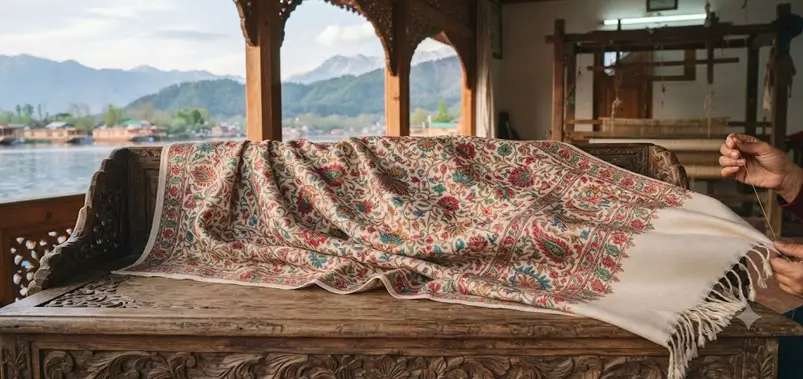
Few luxury products sold to tourists are misused as casually as the word Pashmina.
The term appears on scarves in markets across Delhi, Jaipur, Agra and other Indian cities, sometimes attached to products costing less than an ordinary wool sweater. Price alone is not a scientific authenticity test, but authentic hand spun and handwoven Kashmir Pashmina involves costly raw material and skilled labor, so an extremely low price should immediately encourage questions.
India's registered geographical indication specifications provide a far stronger reference than traditional tourist tests. Official GI information identifies Kashmir Pashmina as a protected handicraft from Jammu and Kashmir. The Craft Development Institute describes GI standard Kashmir Pashmina as being made from 100 percent Pashm fibers measuring up to 16 microns in fineness, obtained from the under fleece of the relevant mountain goat, then hand spun and handwoven by artisans in Jammu and Kashmir.
That is a meaningful technical definition.
The famous “ring test,” by contrast, should not be treated as proof. The idea that a genuine shawl must pass through a small finger ring is frequently repeated in tourist shops, but it is not an official scientific standard for proving Kashmir Pashmina authenticity. Extremely thin blended or machine made fabrics can also be soft and compressible.
A premium buyer should instead ask whether the shawl carries Kashmir Pashmina GI certification or other recognized quality documentation, what the fiber content is, whether the yarn was hand spun, whether the shawl was handwoven, and whether embroidery was executed by hand.
A simple plain Pashmina and a heavily embroidered masterpiece can occupy completely different price categories. Hand embroidery can require extensive artisan labor, especially when the piece carries dense fine needlework. Kani weaving, intricate traditional patterns and exceptional workmanship can also raise the value dramatically.
For budgeting purposes, a genuinely high quality handwoven Pashmina should not be expected at a bargain market price. Fine plain pieces can cost several hundred dollars, while exceptional hand embroidered or highly elaborate artisan work can move into the $1,000 to $5,000+ range, with extraordinary collector pieces potentially costing far more.
The traveler should not be embarrassed to ask why one shawl costs $300 and another costs $3,000.
A knowledgeable seller should be able to explain the raw material, weaving technique, embroidery, labor, certification and finishing rather than simply saying, “This is royal quality.”
Touch is still useful.
Fine Pashmina feels exceptionally soft, light and warm for its weight, but softness alone is not proof because modern blends and finishing processes can imitate softness extremely well.
Look closely at the weave.
Ask to examine both sides.
For an embroidered shawl, look at how the work appears on the reverse. Ask whether the embroidery is hand executed and what technique was used.
Most importantly, request an invoice that uses precise material language rather than vague luxury terminology.
If the product is a cashmere blend, the invoice should not describe it as 100 percent hand spun Kashmir Pashmina.
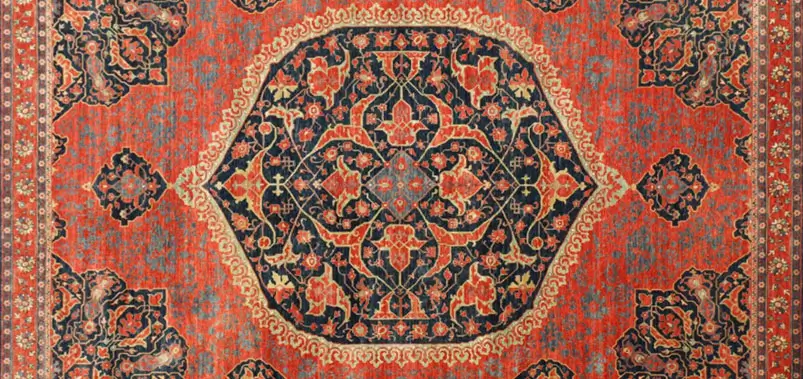
An Indian handmade carpet can be a far larger purchase than most tourists expect. High quality rugs may require months of artisan work and can cost several thousand dollars, while museum level or unusually large pieces can move far beyond ordinary home furnishing prices. India remains a major center for handmade carpets, and the Carpet Export Promotion Council, established under the Ministry of Textiles, represents a large network of handmade carpet exporters and identifies hand knotting, hand weaving and hand tufting as distinct production methods.
Those distinctions are fundamental.
A hand knotted carpet is not the same product as a hand tufted rug.
Hand knotting involves individually tying knots onto foundation warps. It is labor intensive and capable of producing extremely durable, detailed rugs. Hand tufting uses a tool to insert yarn through a backing and normally requires a secondary backing to hold the construction together. It can still produce an attractive high quality rug, but it does not require the same labor and should not automatically command hand knotted pricing.
Ask the seller to turn the carpet over.
On a hand knotted rug, the pattern should generally be visible on the reverse because the knots form the actual structure. The back provides useful clues about knot density, consistency, repairs and workmanship.
Do not judge quality solely by the salesperson's quoted number of knots.
A higher knot density can allow greater design detail, but material quality, knot type, wool or silk quality, design, dyeing, finishing and craftsmanship matter as well. An exceptional wool carpet with fewer knots can be more desirable than a poorly made rug with a superficially impressive density claim.
Ask what the carpet is made from.
Pure wool, wool and silk combinations and pure silk rugs occupy different price levels. “Silk carpet” should also prompt another question: what type of silk? Some products marketed casually as silk use alternative fibers or blends that produce shine without carrying the same value as fine natural silk.
For an expensive carpet, the invoice should state dimensions, fiber content, production method and price.
Measure the carpet yourself or ask the store to measure it in front of you.
If the rug is being shipped to the United States, the shipping paperwork should use the same dimensions and product description.
A serious carpet seller should also explain return terms and what happens if the piece arriving at your home differs from the one selected in India.
Photograph the exact carpet before it is packed.
Take close photographs of identifying details.
Keep the invoice and shipping receipt.
If the store says that a different “identical” carpet will be shipped from a warehouse, reconsider unless you are comfortable purchasing a different piece.
Handmade carpets are not perfectly identical by nature.
The exact rug you selected should be identifiable.
Different Indian cities have different strengths, and premium travelers should shop according to those strengths rather than buying everything from whichever store appears in the itinerary first.
Jaipur is particularly strong for gemstones and jewelry. The city has deep expertise in cutting, polishing, setting and trading colored stones. Travelers interested in fine jewelry can therefore justify allocating a dedicated appointment rather than squeezing a major purchase between Amber Fort and lunch.
Delhi offers greater diversity.
The capital contains high end jewelry houses, luxury boutiques, government linked handicraft channels, contemporary designers, carpet specialists and textile retailers. It is often the best place for travelers who want several categories while remaining in one city.
For genuine Kashmir Pashmina, Srinagar and established Kashmir based producers provide the strongest geographical connection to the craft. That does not mean authentic Pashmina cannot be purchased elsewhere, but the seller should still be able to provide credible provenance and certification.
Carpet traditions span several Indian regions. Bhadohi and Mirzapur in Uttar Pradesh are particularly significant production centers, while Kashmir also has a respected hand knotted carpet tradition. Delhi, Jaipur and other major tourist cities contain showrooms representing manufacturers from these regions. The question is therefore not simply whether the store is located in the same city where the carpet was woven, but whether the business can document origin, materials and manufacturing method.
The Carpet Export Promotion Council states that it represents more than two thousand members and supports the sourcing and export of India's handmade carpets. For a very serious international buyer, dealing with established exporters or suppliers with traceable trade credentials can offer more reassurance than purchasing from an unidentified tourist reseller.

Bargaining in India is highly dependent on the setting.
In open markets, flexible pricing is normal.
In luxury boutiques, branded jewelry houses and institutional stores, pricing may be fixed or only modestly negotiable.
A premium buyer should never assume that every listed price is inflated by 50 percent simply because the transaction is happening in India. At the same time, there is no harm in respectfully asking whether the quoted price is final.
For carpets, larger textile purchases and some jewelry, negotiation may be possible.
The stronger tactic is not aggressive bargaining. It is precise questioning.
Ask for the price including tax.
Ask whether shipping is included.
Ask whether insurance is included.
Ask what happens if the product is damaged during shipping.
Ask whether the price changes with wire transfer versus card payment.
Ask whether there is an additional foreign card processing cost.
Ask whether the quoted amount includes custom alterations.
A $5,000 carpet discounted to $4,000 but charged another $800 for shipping and insurance is not actually a $4,000 purchase.
Obtain the final all inclusive figure before paying.
One of the most common complaints about private tours in India involves unwanted shopping.
A traveler books a historical sightseeing day and suddenly finds the guide suggesting carpets, jewelry, marble workshops, textiles and handicraft emporiums after nearly every monument.
Some travelers genuinely want to shop and appreciate professional introductions. Others do not.
The difference should be decided by the traveler.
A premium private India tour should never require shopping as a condition of receiving good guiding or transportation. If you have no interest in jewelry, say so. If you specifically want a serious Jaipur gemstone appointment, tell the tour operator before arrival so an appropriate seller can be selected.
Travelers should also recognize that commissions exist within tourism retail in many parts of the world, including India.
That does not automatically mean the store is dishonest or the product is poor.
It does mean the buyer should evaluate the product independently rather than treating the guide's recommendation as certification of value.
For expensive purchases, compare more than one seller when practical.
Ask for independent documentation.
Do not let a long demonstration create an emotional obligation to buy.
Tea is hospitality, not a contract.
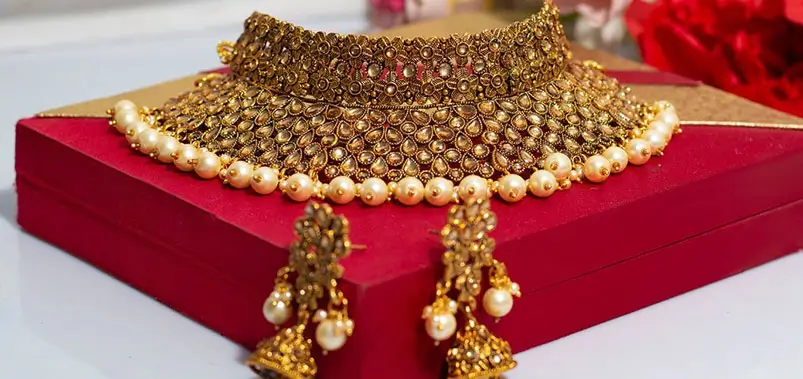
Documentation is the dividing line between casual souvenir shopping and responsible luxury buying.
For gold jewelry, check the BIS hallmark components and HUID where applicable. BIS states that hallmarking is intended to protect consumers by documenting precious metal fineness and that HUID information can be verified using BIS's official consumer tools.
For valuable colored gemstones, request an appropriate laboratory report and written treatment disclosure. The more extraordinary the claim, the stronger the evidence should be. A rare geographic origin claim without independent documentation should not command the same premium as a well documented stone.
For Pashmina, ask for GI or recognized authenticity documentation where applicable and a written fiber description.
For carpets, request a detailed invoice describing size, fiber, construction and origin.
For every expensive purchase, keep the card receipt or bank transfer record.
Ask for the seller's complete business address and contact information.
Ask about return terms in writing.
If an item will be shipped internationally, request a proper shipping document and tracking information.
Travelers returning to the United States should retain invoices and declare purchases in accordance with current U.S. customs requirements. Customs thresholds and duties can change, so high value buyers should verify current rules before returning rather than relying on a salesperson's statement that an item is “completely duty free.”
The retailer does not control U.S. Customs and Border Protection.
Several behaviors should immediately slow down a transaction.
A jeweler refuses to provide written treatment information for an expensive gemstone.
A seller claims an emerald is from a famous origin but cannot provide an independent report.
A gold item is represented as hallmarked but the seller avoids showing the actual hallmark or HUID.
A Pashmina seller uses only the ring test as evidence of authenticity.
A carpet shop refuses to put fiber content and production method on the invoice.
A store says the product costs $20,000 but must be paid entirely in cash immediately to receive a “government discount.”
A salesperson claims that customs paperwork is unnecessary because the store has a special relationship with American authorities.
A guide becomes angry because you do not want to buy.
A seller will not let you photograph the exact piece being shipped.
Any one of these does not automatically prove fraud, but there is no reason for a premium international buyer to accept unnecessary ambiguity.
There will be another jewel.
There will be another carpet.
There will be another shawl.
The ability to walk away is one of the strongest protections a traveler has.
The Golden Triangle Tour of Delhi, Agra and Jaipur is particularly well suited to luxury shopping because the route passes through several important craft and retail centers.
Delhi can be used for luxury boutiques, contemporary Indian designers, high end jewelry and carefully selected handicrafts.
Agra is strongly associated with marble inlay craftsmanship, while buyers should distinguish between genuine stone inlay work, lower cost decorative objects and aggressive tourist store claims.
Jaipur deserves the most dedicated shopping time for travelers interested in gems, jewelry, textiles, block printing and selected carpets.
Do not place serious shopping on the final afternoon before an international flight.
High value purchases often require resizing, certification, paperwork, shipping arrangements or a second visit.
A three night Jaipur stay makes much more sense for a jewelry buyer than a rushed one night stop.
Travelers booking through Golden Triangle Tours can ask for shopping to be built around their actual interests rather than receiving generic commercial stops. A guest interested in fine jewelry should receive a very different appointment from someone seeking a handwoven textile or a room size carpet.
The company should also keep the decision with the traveler.
The purpose of a private shopping appointment is access and convenience, not pressure.
For American luxury travelers, the strongest India purchases are rarely the items bought in five minutes because someone said the bus was leaving. They are the objects whose material, maker, technique and provenance can still be explained years later.
A fine emerald ring should come with enough documentation that its quality does not depend on a vacation memory.
A hand knotted carpet should arrive at home with the same dimensions, pattern and materials that were selected in India.
A genuine Pashmina should carry more credibility than a clever ring demonstration.
That is what turns shopping from a tourist transaction into collecting.
We promise you a holiday where everything is taken care of from the moment you land. Trusted drivers waiting for you, handpicked hotels that fit your style, personalized itineraries designed just for your family, and a dedicated team on call 24/7. All you need to do is relax, explore, and create unforgettable memories, while we take care of every detail behind the scenes.
Yes. Delhi and Jaipur are particularly strong for premium shopping, while Agra is associated with marble inlay and handicrafts. A private itinerary can include selected appointments for gemstones, jewelry, carpets or textiles while keeping all shopping completely optional.
It can be, provided the seller supplies proper invoices, international shipping documentation, insurance where applicable and tracking. Photograph the exact purchased item before packing and retain all documents for customs and any later claim.
It depends on the retailer. Market and carpet prices may have some flexibility, while established luxury boutiques may use fixed pricing. Ask politely for the best final price including taxes, shipping and insurance rather than assuming every store requires aggressive bargaining.
Prices vary tremendously according to size, fiber, knotting, craftsmanship and design. A quality room-size handmade rug can cost from several hundred dollars into several thousand dollars, while fine silk or collector-grade pieces can cost substantially more.
A hand-knotted carpet is built through individually tied knots and normally requires much greater labor. A hand-tufted rug uses yarn inserted through a backing. Both can be attractive, but they are different constructions and should not automatically carry the same price.
Prices vary according to fiber, weaving, embroidery and craftsmanship. Fine authentic pieces can cost several hundred dollars, while exceptional hand-embroidered or collector-quality shawls may cost $1,000 to $5,000+, with rare pieces priced considerably higher.
Look for credible Kashmir Pashmina GI or recognized quality documentation and ask whether the piece is made from fine Pashm fiber, hand-spun and handwoven in Jammu and Kashmir. Do not rely solely on the ring test.
For an expensive gemstone, an independent laboratory report is strongly recommended. The report can confirm whether the stone is natural and provide information regarding detected treatments; some reports may also give geographic-origin opinions.
Look for BIS hallmark information, including the BIS logo, purity or fineness mark and HUID on applicable hallmarked items. BIS states that consumers can verify HUID information through its official BIS Care tools.
Jaipur is one of India's most important centers for colored gemstones and fine jewelry. Serious buyers should use established jewelers, request written treatment information, and obtain an independent laboratory report for high-value stones.