Ayodhya changes noticeably as evening approaches. The heat begins to soften, activity shifts toward the riverfront, families move toward the ghats, temple bells become more noticeable, and the banks of the Saryu take on a completely different character from the busy temple district experienced earlier in the day. For travelers who have already visited the Ram Temple, the Saryu River Aarti in Ayodhya provides one of the most natural ways to finish the day.
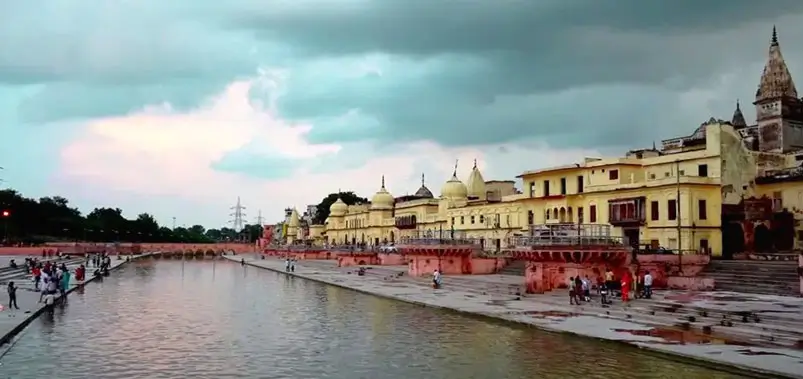
The ceremony is centered around the sacred riverfront, with Ram Ki Paidi serving as one of the best known areas associated with Ayodhya's evening activity. The Ayodhya district administration describes Ram Ki Paidi as a series of ghats along the Saryu and highlights the illuminated riverfront as one of the city's important visitor settings.
For an American traveler, it is useful to approach the ceremony with realistic expectations. The evening is not a ticketed theatrical production with assigned seats, a permanently fixed curtain time, and a controlled departure immediately afterward. It is a living religious ritual held within an active pilgrimage city. The Saryu Aarti timing is influenced by sunset and seasonal conditions, crowds vary substantially, vehicle access can become restricted, and the most comfortable viewing positions may fill before the formal ceremony begins.
Current local visitor guidance commonly places the evening ceremony at approximately 6:00 PM in the cooler part of the season and around 7:00 PM during warmer months, while another current local source describes the ceremony as normally taking place around sunset and commonly near 6:30 PM. These differences are exactly why travelers should verify the actual day's time locally instead of treating one online figure as permanent.
There is generally no standard admission charge to visit Ram Ki Paidi or stand in public riverfront areas. Visitors spend money primarily on transportation, guides, optional flower lamp offerings, donations, meals, and privately arranged services. Ram Ki Paidi itself is listed as having no general entry fee.
For travelers seeking a comfortable evening rather than a rushed religious stop, the strongest approach is simple: finish temple sightseeing early enough to rest, leave the hotel with a generous traffic buffer, reach the riverfront before sunset, carry minimal belongings, select the viewing position before the crowd thickens, and remain for a few minutes after the ceremony instead of fighting the first wave of departing visitors.
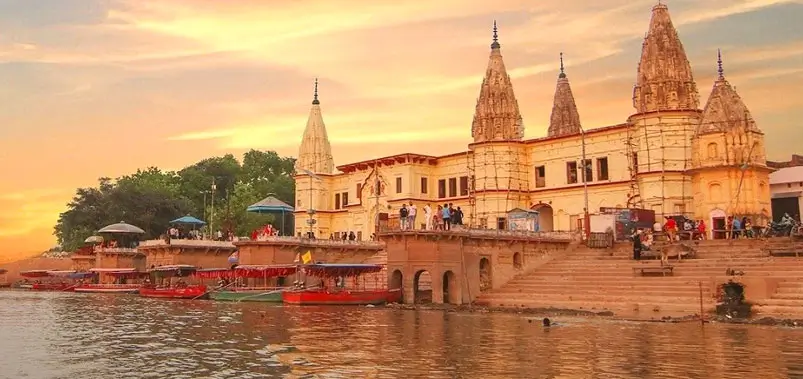
The Saryu River Aarti timing in Ayodhya should be treated as a seasonal schedule rather than a permanently fixed clock time. During the cooler months, when sunset comes earlier, visitors can encounter the evening ceremony around 6:00 PM. During warmer months, when daylight lasts longer, the ceremony can move toward approximately 7:00 PM. Current local guidance also commonly references a general sunset time ceremony around 6:30 PM.
A premium itinerary should therefore include a same day timing check.
Your hotel, private guide, chauffeur, or local travel coordinator should confirm the expected start before the afternoon schedule is finalized. This becomes particularly important when the day also contains Ram Mandir darshan, Hanuman Garhi, lunch, a hotel break, and other religious visits. Delays at one major site can easily affect the evening if the itinerary has no buffer.
For most ordinary dates, reaching the riverfront approximately 45 to 60 minutes before the confirmed Aarti time is a sensible target. Travelers who want stronger photography positions, who are accompanying older family members, or who are visiting during a busy weekend should consider arriving even earlier.
On a quieter weekday, the atmosphere before the ceremony can be one of the most enjoyable parts of the visit.
The riverfront gradually fills rather than changing instantly. Families arrive and settle along the steps. Worshippers approach the water. Small offerings become available near the ghats. Lights around the riverfront begin appearing as natural daylight fades. The movement of people, reflections on the water, religious activity, and changing sky create a setting that deserves to be experienced before the main lamps are raised.
A traveler arriving exactly when the ceremony starts misses much of that transition.
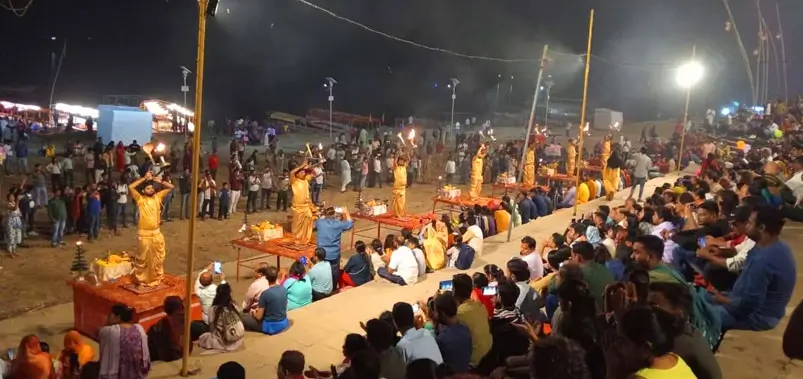
The formal Aarti itself commonly lasts approximately 30 to 45 minutes, though duration and scale may change according to religious occasions and local arrangements. Special festival evenings can be very different from an ordinary day, with substantially larger crowds and additional ceremonies.
The ritual centers on devotional offerings to the sacred Saryu River. Priests use lamps, incense, chants, bells, and coordinated movements while worshippers gather along the riverfront. The exact scale is not identical to the much larger ceremonies travelers may have seen in Varanasi or Haridwar, and that should not be treated as a weakness.
The Ayodhya Saryu Aarti belongs to Ayodhya's own religious environment.
The city is strongly connected with the traditions surrounding Lord Ram, and the Saryu forms an essential part of that sacred geography. Travelers who have spent the morning inside the principal temple district often find the river ceremony provides a much quieter emotional counterpoint to the security lines and concentrated crowds of the Ram Temple.
The ceremony also looks very different according to where you stand.
Close positions provide stronger views of the priests and lamps but can involve tighter crowds. A position slightly farther back may offer a broader view of the river, steps, lights, priests, and surrounding gathering. For many international travelers, the wider visual setting is actually more memorable.
Do not insist on the closest possible position merely because it appears superior.
Travelers with elderly parents should prioritize stable seating or comfortable standing space, safe access, and an easier exit. Families with younger children should avoid crowded edges near the water.
Photography enthusiasts may benefit from arriving nearly an hour early, especially when they want to position themselves before the strongest light fades. The period just before sunset can produce better images than the darkest part of the ceremony because both the sky and lamps remain visible.
The riverfront becomes more dramatic after sunset, but handheld phone photography also becomes more difficult. Use night mode when appropriate, avoid constant flash, and remember that an Aarti ceremony is not being performed exclusively as visual entertainment.
Visitors should allow themselves to watch part of it without a screen.
That simple decision often produces the strongest memory of the evening.
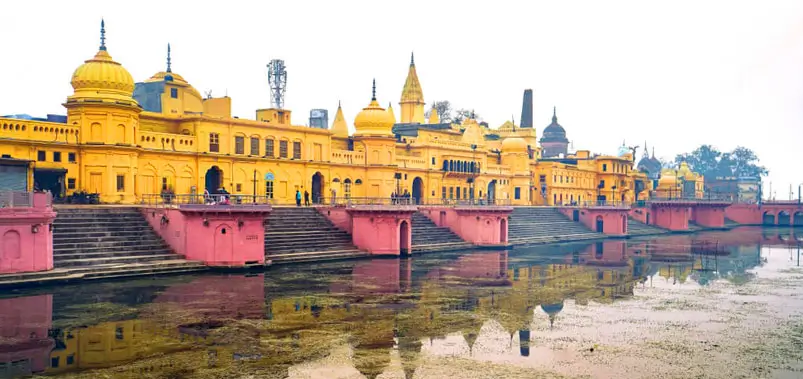
Ram Ki Paidi in Ayodhya is one of the city's most recognizable riverfront environments. Official district information describes it as a series of ghats along the Saryu River and specifically notes its appearance when illuminated at night. The area has become an important gathering place for pilgrims and visitors, and large scale improvements to the riverfront have added substantial spectator infrastructure in recent years.
For ordinary travelers, there is no need to search for an expensive “premium ticket” merely to stand beside the river.
General access to Ram Ki Paidi is free.
Private services can still cost money. A guide may charge a professional fee. A private driver remains on duty during the visit. Flower lamps and religious offerings are purchased separately. Certain special festival arrangements may operate under different crowd control procedures.
Those distinctions matter because visitors in major pilgrimage destinations are sometimes approached by individuals offering supposedly compulsory packages.
Ask before paying.
A simple flower and lamp offering may cost roughly INR 50 to INR 200, depending on size, decoration, flowers, and seller. Larger decorative offerings can cost more. Confirm the amount first instead of accepting an item and asking for the price afterward.
There is no requirement to purchase an offering to attend the ceremony.
Some travelers enjoy placing a small lamp on the river as a personal part of the evening. Others prefer only to observe. Both are entirely appropriate.
If you do place an offering, do so from a safe location.
The Saryu River should be treated with respect as an active river, not as a controlled hotel water feature. Water levels and currents change, steps can become wet, and crowd density can make the edge less predictable.
Do not move down slippery steps solely to obtain a photograph.
Do not allow children to approach the water alone.
Do not enter the river because another visitor appears comfortable doing so.
Visitors interested in ritual bathing should seek local advice regarding the safest designated area and current water conditions. The presence of large numbers of pilgrims in the water does not eliminate river risk.
Footwear should have reasonable grip.
Elegant dress shoes, high heels, and smooth leather soles are poor choices for an evening involving riverfront steps and walking.
For international visitors, normal modest travel clothing works well. There is no need to wear elaborate ceremonial clothing simply to attend the Aarti. Lightweight trousers, modest dresses, skirts of appropriate length, and shirts covering the shoulders are suitable. During winter evenings, bring an additional layer because the riverfront can feel considerably cooler after sunset than the daytime temple area.
Carry very little.
A phone, small wallet, essential medication, and a compact personal bag are enough for most visitors.
If the evening follows a Ram Temple visit, you may already be operating under strict baggage and electronics procedures earlier in the day. Returning to the hotel before the river visit can be worthwhile because it allows travelers to leave unnecessary belongings behind and begin the evening comfortably.
For photography, wide angle phone cameras are particularly useful at Ram Ki Paidi because the scale of the steps, water, gathering, and lights can be difficult to capture with a narrow field of view.
A professional camera with a moderate zoom can also work well, but large equipment may become cumbersome in crowds.
Tripods are rarely necessary for ordinary tourists and can obstruct other visitors.
When photographing priests or the overall ceremony, remain aware of people behind you. Holding a phone above your head for ten continuous minutes may give you a clear recording while ruining the ceremony for everyone directly behind you.
Private religious moments deserve even more sensitivity.
Do not photograph a grieving family, someone engaged in an intimate prayer, or a person bathing simply because the scene looks visually compelling.
Ayodhya has become a major tourism destination, but the riverfront remains a sacred environment used by people for personal worship.
Premium travel should increase cultural awareness, not reduce it.
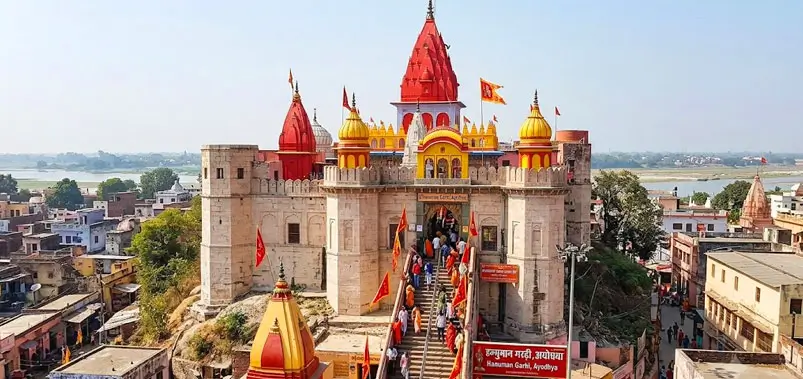
The Ram Temple and Saryu Aarti can easily be visited on the same day, but the day should be arranged around natural breaks rather than continuous sightseeing.
For a traveler staying two nights in Ayodhya, the strongest schedule begins early.
Reach the Ram Temple area near the beginning of the preferred morning access window. Depending on crowd levels, security procedures, walking distance, and queue conditions, the full temple visit can take several hours. Do not schedule another major religious site at a precise time immediately afterward.
Return for breakfast if you left extremely early, or continue to one selected nearby site before lunch.
Hanuman Garhi is among the most important additions, but it requires climbing numerous steps and can become crowded. Travelers accompanying senior parents should not automatically place it immediately after a physically demanding temple queue.
Kanak Bhawan and other central religious sites can also be included according to interest.
Around midday, stop.
This is particularly important during warmer weather.
A luxury traveler does not gain anything by remaining outdoors during the most tiring part of the day merely to say another three temples were visited.
Return to the hotel.
Have lunch.
Rest.
Change clothing if needed.
Rehydrate.
Then begin the second portion of the day around mid afternoon.
Depending on the current traffic environment and available time, travelers can visit parts of the older city, Lata Mangeshkar Chowk, selected religious sites, or proceed gradually toward Ram Ki Paidi and the Saryu riverfront.
Aim to reach the river approximately 45 to 60 minutes before the confirmed ceremony time.
This creates a far more enjoyable evening than arriving from another attraction at the last minute.
After the Aarti, do not schedule a train departure one hour later.
When the ceremony finishes, many visitors begin leaving together. Vehicle restrictions, pedestrian congestion, temporary traffic controls, and driver access can affect the return.
Your chauffeur should establish a specific pickup point before you enter the riverfront area.
Do not rely on saying, “Call me afterward.”
Mobile communication can become inconvenient in dense crowds, and drivers may be prevented from entering the road where they originally dropped you.
Take a photo of the vehicle if necessary.
Save the driver's number.
Ask the guide to remain with you until the pickup when traveling in an unfamiliar crowd.
For premium travelers, a privately chauffeured vehicle is preferable to searching for transport immediately after the ceremony. The vehicle can remain available while you are at the river and then return you directly to the hotel.
Costs depend on vehicle type and duration.
A locally arranged standard private vehicle for several hours may cost roughly INR 2,500 to INR 5,000, while larger premium vehicles, all day chauffeur service, specialized guiding, or luxury hotel transportation can move the amount toward INR 5,000 to INR 10,000 or more.
A high end vehicle with a professional driver can cost considerably above ordinary local taxi rates.
The value is not simply the car itself.
It is the certainty that transport remains available when thousands of people are leaving the same riverfront.
For older American travelers, families, and first time India visitors, that convenience is often worth the additional cost.
Travelers on a longer North India journey sometimes attend Saryu Aarti in Ayodhya, Ganga Aarti in Varanasi, and Ganga Aarti in Haridwar within the same trip.
The ceremonies should not be treated as duplicates.
Varanasi's best known evening Aarti at Dashashwamedh Ghat is large, choreographed, visually intense, and surrounded by one of India's most extraordinary historic riverfronts. Boats gather on the Ganges, dense crowds fill the steps, and the ceremony has become globally recognizable.
Haridwar's ceremony at Har Ki Pauri feels strongly connected to mass pilgrimage. The relationship between worshippers and the Ganges is immediate, and ritual bathing forms a highly visible part of daily riverfront life.
Ayodhya feels different.
The Saryu is connected with the religious identity of the city and the traditions surrounding Lord Ram. After the Ram Temple, the river provides continuity rather than a separate attraction.
Visitors should therefore resist comparing the three only by size.
The largest ceremony is not automatically the most meaningful.
Someone fascinated by spectacle may favor Varanasi.
Someone interested in a highly active pilgrimage setting may find Haridwar especially powerful.
Someone spending several days in Ayodhya may value the Saryu ceremony because it completes the city's religious geography.
A well designed sacred North India tour can include all three without making the itinerary repetitive, particularly when guides provide cultural context rather than simply delivering travelers to another riverfront.
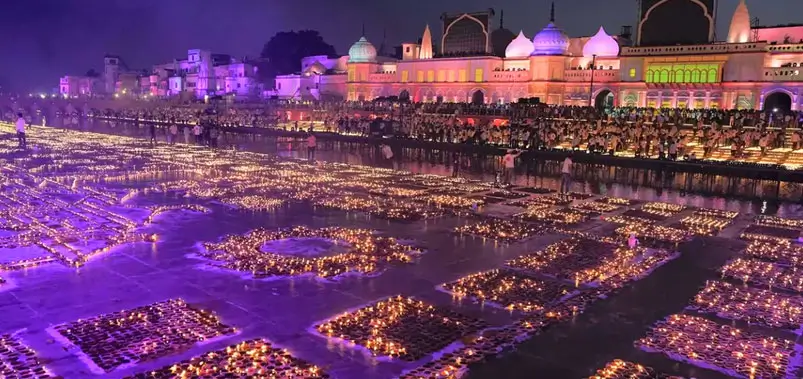
Ordinary evenings and major religious occasions in Ayodhya are not comparable.
On a normal weekday, arriving 45 to 60 minutes before the ceremony can provide a manageable experience.
On an important religious date, the city can receive enormous numbers of visitors.
Roads may be closed or redirected.
Private vehicles may have to stop much farther from the river.
Security checkpoints can increase.
Hotels may operate at very high occupancy.
The best viewing locations may fill hours earlier.
Travelers should not select a major festival date without recognizing that the priority shifts from comfort toward cultural intensity.
Large Deepotsav celebrations at Ram Ki Paidi have involved enormous lamp lighting displays and extraordinary spectator numbers. Recent infrastructure additions have included a large spectator gallery capable of accommodating approximately 20,000 visitors, reflecting the scale reached during major events.
A festival evening can be visually extraordinary.
It can also involve hours of waiting, extensive walking, strict barricading, restricted vehicle access, intense crowd density, and dramatically higher hotel demand.
For travelers seeking a calm premium experience, an ordinary evening is often better.
For travelers specifically interested in religious celebrations, a festival can justify the additional complexity, but accommodation, transportation, guides, and crowd strategy should be arranged well in advance.
Do not assume your luxury hotel can guarantee unrestricted access to a public event controlled by authorities.
No legitimate tour operator can promise that.
What a good operator can provide is realistic guidance, appropriate transportation, local assistance, an earlier departure, and an itinerary that does not collapse if security procedures change.
A same day Ayodhya trip can be completed, but it rarely produces the strongest experience.
One overnight stay is substantially better.
Two nights are ideal for most first time international travelers.
With two nights, arrival day can remain easy. Check into the hotel, recover from the transfer, take a short orientation outing if desired, and eat dinner without immediately rushing into temple queues.
The following morning can be dedicated to the Ram Temple and selected nearby sites.
Midday becomes a genuine break.
Late afternoon moves toward the Saryu.
The Saryu River sunset and evening Aarti then become the natural end to the main sightseeing day rather than another item squeezed before a late night departure.
The following morning can remain flexible for a final religious visit, breakfast, or onward transfer.
This pace becomes even more important for guests over 60, families with children, and travelers arriving after a long international journey.
Hotel location matters, but do not judge it only by straight line distance from the Ram Temple.
Traffic control routes can change how vehicles actually move through central Ayodhya.
Ask the hotel or tour operator how long the practical transfer normally takes during temple hours and before the evening river gathering.
Cleanliness, room size, air conditioning, reliable hot water, breakfast quality, responsive staff, and vehicle access should matter more than a decorative “luxury” label.
Ayodhya's accommodation market continues to develop, so American travelers should compare the actual standard with expectations set by luxury hotels in Delhi, Jaipur, or Udaipur.
Ayodhya works particularly well when it forms part of a wider Golden Triangle with Ayodhya and Varanasi tour.
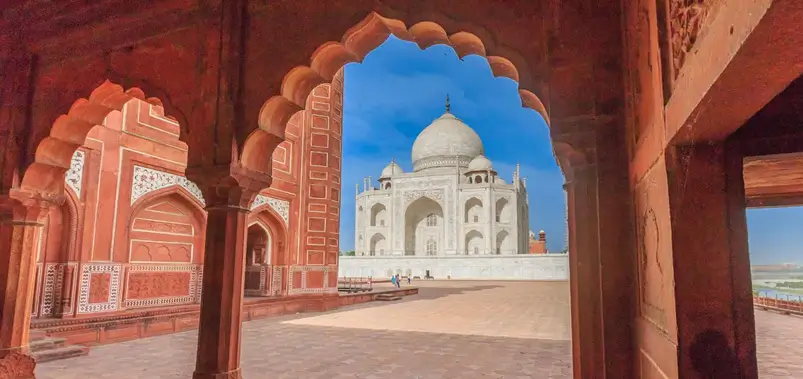
Delhi, Agra, and Jaipur provide North India's classic architectural circuit. The Taj Mahal, Mughal forts, Rajput palaces, historic markets, museums, and monumental architecture create a strong first introduction.
Ayodhya and Varanasi add living religious traditions.
That changes the character of the trip considerably.
In Ayodhya, the Ram Temple and Saryu River Aarti should occupy separate emotional spaces within the same day. One is highly controlled, security focused, and concentrated around temple worship. The other opens outward toward the river, sunset, public ghats, and evening gathering.
Varanasi then introduces another level of historical density along the Ganges.
For travelers coming from the United States, this combination works best when enough nights are allocated rather than compressing five cities into a rapid checklist.
Ayodhya deserves two nights.
Varanasi deserves at least two nights and often three.
The Golden Triangle itself works more comfortably when Delhi, Agra, and Jaipur receive enough time for major monuments without consecutive dawn to night sightseeing days.
Private transportation and carefully selected flights or trains can connect the itinerary efficiently.
Travelers working with Golden Triangle Tours can have Ayodhya and the Saryu riverfront incorporated into a private North India route with airport or railway assistance, chauffeur driven vehicles, English speaking guiding, hotel arrangements, and realistic time buffers between religious visits.
The purpose of the private service should not be to isolate guests from local life.
It should remove the unnecessary friction surrounding it.
At the Saryu, that means arriving before the crowd reaches its peak, knowing where to stand, carrying the right belongings, treating the river safely, having a driver waiting afterward, and not worrying about an immediate departure.
The ceremony itself does the rest.
As the daylight disappears, lamps begin reflecting across the water and the riverfront moves from ordinary evening activity into ritual. That transition is the part worth protecting in the schedule.
Do not arrive for only the final five minutes.
Give the river the entire sunset.
We promise you a holiday where everything is taken care of from the moment you land. Trusted drivers waiting for you, handpicked hotels that fit your style, personalized itineraries designed just for your family, and a dedicated team on call 24/7. All you need to do is relax, explore, and create unforgettable memories, while we take care of every detail behind the scenes.
Yes. Ayodhya can be incorporated into a private Golden Triangle Tour with Varanasi, giving travelers a combination of Delhi, Agra and Jaipur's historical monuments with the Ram Temple, Saryu River and major sacred traditions of North India.
No. Saryu Aarti in Ayodhya has its own religious setting and atmosphere. Varanasi's main evening ceremony is generally larger and more internationally recognized, while Ayodhya's river ritual is closely connected with the city's traditions surrounding Lord Ram.
Photography is generally part of the public riverfront experience, but visitors should remain respectful. Avoid blocking other spectators and do not intrusively photograph people engaged in private worship, bathing, or personal religious rituals.
Yes, but senior visitors should arrive early, use private transportation, choose a stable viewing position away from dense crowds, avoid slippery river steps, and confirm how much walking is required from the vehicle drop-off point.
Yes. The most comfortable schedule is Ram Mandir in the morning, a midday hotel break, and the Saryu riverfront before sunset. Avoid filling the afternoon with too many additional temples if the evening ceremony is important.
The ceremony commonly lasts approximately 30 to 45 minutes, although duration and scale can vary according to local religious arrangements and special occasions.
Arrive approximately 45 to 60 minutes before the confirmed ceremony time on an ordinary evening. Weekends, religious holidays, and major festival dates may require a substantially earlier arrival.
General public access to Ram Ki Paidi is free, and visitors do not normally need a conventional admission ticket simply to watch the evening ceremony from public areas.
Visitors generally head toward the Saryu riverfront around Ram Ki Paidi and nearby ghats, one of Ayodhya's principal public riverfront areas. The district administration identifies Ram Ki Paidi as a series of ghats along the Saryu.
The Saryu River Aarti timing changes with sunset and season. Current local guidance commonly places it around 6:00 PM during cooler months and approximately 7:00 PM during warmer months, with around 6:30 PM also frequently cited as a general evening reference. Confirm the exact time locally on the day of attendance.