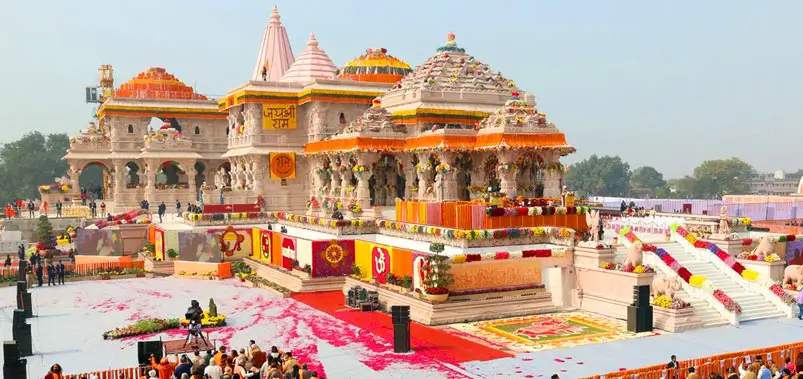
Ayodhya has become one of the most important pilgrimage destinations in North India, drawing families, spiritual travelers, international visitors, and guests who want to understand the cultural importance of the Shri Ram Janmabhoomi Temple rather than simply add another monument to an itinerary. For American travelers visiting India for the first time, the experience is different from entering a palace, museum, or archaeological site. The temple is an active place of worship, crowd levels can change dramatically from one day to another, security is strict, personal belongings are restricted, and the amount of time required for entry depends heavily on the hour, weekday, festival calendar, and local crowd management procedures.
The best time to visit Ayodhya Ram Mandir for most international travelers is during the cooler months, when walking through the temple district, visiting surrounding religious sites, spending time beside the Saryu River, and moving through central Ayodhya are physically much easier. Early morning is generally the strongest time of day for the primary temple visit because temperatures are lower and ordinary weekday crowds may be more manageable than later periods.
General entry for regular worship is normally free. Travelers should be cautious about anyone describing an unofficial payment as a compulsory temple admission fee. Special access arrangements, certain ritual passes, privately arranged assistance, transportation, guides, and other services are separate matters, but normal temple worship should not be confused with buying a conventional attraction ticket.
Visitors should also understand that Ayodhya Ram Mandir darshan timings can be adjusted. Daily worship rituals take place at different hours, and temple authorities may change entry procedures during major religious occasions, exceptional crowds, security situations, or other operational requirements. A premium private itinerary should therefore confirm the schedule shortly before the visit rather than relying entirely on a timetable saved months earlier.
For travelers coming from the United States, two nights in Ayodhya provide a far better experience than a rushed arrival and departure visit. One full day allows the Ram Temple to remain the central focus while leaving enough time for Hanuman Garhi, selected historic religious sites, the Saryu riverfront, and an evening ceremony without constantly checking the clock.
The most useful thing to know about Ram Mandir darshan timing is that public access takes place across several periods during the day rather than functioning like a museum that simply opens once in the morning and remains uninterrupted until evening. Temple rituals occur throughout the day, and entry can pause or become restricted around certain religious services.
Visitors commonly encounter regular worship access beginning around 7:00 AM, with morning entry continuing toward midday. A pause can occur around the midday offering period before public access resumes in the afternoon. Evening entry continues into the night, although the exact final entry time and daily closing arrangements should always be reconfirmed shortly before the visit.
For a first time international traveler, approximately 7:00 AM to 9:00 AM is generally the most attractive ordinary visiting window when crowd conditions permit. Early arrival offers several advantages. Temperatures are lower, the surrounding streets have not yet reached their full daytime intensity, visitors have the remainder of the day available if a queue takes longer than expected, and the temple visit does not compete with afternoon heat.
A traveler staying in Ayodhya should leave the hotel early enough to reach the controlled temple approach before the desired entry period. Do not interpret a 7:00 AM public opening as an invitation to leave a distant hotel at 6:55 AM. Vehicle restrictions around the temple area mean that part of the final approach may involve walking, regulated local transportation, security screening, and depositing prohibited belongings.
On an ordinary weekday, visitors may sometimes complete the main process within approximately one to two hours, including queueing and movement through the controlled temple route. During weekends and religiously important dates, that figure can rise dramatically. Visitors should never schedule an airport departure, train, or critical road transfer immediately after an estimated temple visit.
Queues at major Indian pilgrimage sites do not operate according to a guaranteed minute by minute appointment system for every ordinary visitor.
A line that moved efficiently yesterday may take longer today.
The correct luxury travel response is not trying to purchase an unofficial shortcut. It is allocating enough time that waiting does not damage the rest of the day.
Late morning can become considerably busier, particularly once day trip visitors and larger groups arrive. Heat also becomes more significant for much of the year. Guests traveling with parents or senior family members should be particularly careful about spending prolonged periods standing in warm weather.
Afternoon access can work for travelers arriving from another city that morning, but it is not my first choice for a carefully designed premium itinerary. The strongest arrangement is usually to sleep in Ayodhya the night before and visit the temple early the following morning.
Evening visits can have a powerful atmosphere, but crowd levels may increase again as local visitors arrive after daytime activities. Travelers who also want to attend the Saryu River evening Aarti need to coordinate both events carefully instead of assuming the temple and river ceremony can be visited back to back without transportation or walking time.
Special religious occasions require an entirely different strategy. Major celebrations associated with Lord Ram can attract extraordinary numbers of devotees. Regular priority arrangements may be changed or suspended as authorities shift toward mass crowd management.
A traveler whose primary goal is a peaceful first temple visit should generally avoid selecting the busiest festival date simply because the celebration sounds impressive.
A festival offers cultural intensity.
A normal weekday offers easier access.
They are two different experiences.
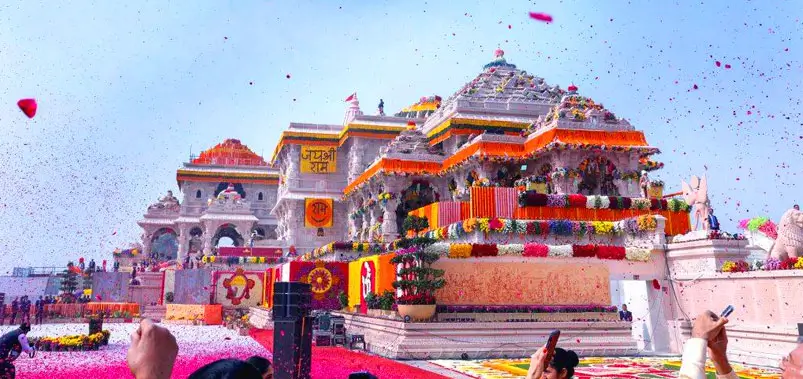
The best season to visit Ayodhya for most American travelers is the cooler part of the year. The city involves more walking than visitors sometimes expect, particularly around the temple district, riverfront, and older religious sites. Comfortable weather therefore has a direct effect on how much can be seen without fatigue.
Cooler months provide the most pleasant conditions for morning temple visits, neighborhood walks, Saryu River activities, and late afternoon sightseeing. Daytime weather is generally easier than during peak summer, while evenings may require a light jacket or additional layer.
Winter mornings in North India can occasionally bring fog. This is especially relevant for travelers arriving by road or air because fog can affect flight schedules and increase highway travel times. A sophisticated itinerary should therefore avoid dangerously tight connections between Ayodhya and an international departure from Delhi.
February and March can offer an excellent balance. Mornings remain relatively comfortable, daylight is good for sightseeing, and the harshest summer temperatures have not yet arrived.
As temperatures rise, the practical rhythm of the city changes.
April can already feel warm during the middle of the day. May and June can be extremely demanding for visitors unused to North Indian summer conditions. Walking through controlled approach routes, standing in queues, and visiting several temples consecutively can become exhausting.
A luxury Ayodhya itinerary during hot weather should begin very early.
Complete the primary temple visit first, return to the hotel for breakfast or rest, avoid unnecessary outdoor sightseeing during the strongest midday heat, and resume activity later in the afternoon.
A high quality air conditioned vehicle becomes essential, even though it cannot necessarily drive directly to every religious entrance.
Bottled water should remain available in the vehicle, but travelers need to follow current security instructions regarding what can actually be carried into the temple complex.
July through September generally bring monsoon conditions. Rain can lower temperatures but creates different complications. Streets may become wet, walking routes can be slippery, humidity rises, and outdoor schedules become less predictable.
The Saryu River can also respond to seasonal rainfall, and visitors should obey all local safety instructions near the water.
For a premium first visit, October through March provides the most consistently appealing travel window, but specific festival dates within that period can still generate exceptional crowds.
This is why weather and crowd level should be considered together.
The most comfortable temperature of the year can coincide with one of the busiest religious dates.
Travelers primarily interested in architecture, culture, and a peaceful temple visit should choose a normal weekday in the cooler season wherever possible.
.webp)
Security procedures at the Ayodhya Ram Temple should be taken seriously.
This is not the place to arrive with a daypack full of travel accessories, professional camera equipment, a laptop, several power banks, food, shopping bags, and unnecessary electronics.
Carry as little as possible.
Mobile phones and many personal belongings are restricted within the principal temple access process, and visitors should expect to use designated storage arrangements for prohibited items.
The simplest strategy is to leave unnecessary belongings at the hotel or inside the secure private vehicle.
Carry valid government issued identification, particularly when using any booked access arrangement that requires identity verification.
Foreign travelers should normally have appropriate passport identification available during travel, although carrying the physical passport through every crowded sightseeing environment should be discussed with the guide according to current access requirements and safe storage possibilities.
A photocopy or digital copy should never automatically be assumed to replace an original document when an official process specifically requires original identification.
Your tour operator should confirm what is required for the actual booked access.
Photography restrictions should also be respected without argument.
Visitors accustomed to documenting every moment on a phone may find it unusual to enter an important site without a camera. The restriction is part of the temple's security and devotional environment.
The positive side is that visitors actually watch what is happening rather than spending the entire worship experience trying to create photographs.
Large bags should remain behind.
Drones are completely inappropriate around sensitive religious and security zones and should never be treated as an ordinary sightseeing accessory.
Food offerings, flowers, personal religious items, and other materials may also be regulated within controlled areas. Do not buy something from an outside seller simply because the seller says it is permitted inside.
Ask your guide or security staff.
Clothing should be modest.
There is no need for international travelers to purchase ceremonial Indian clothing specifically for the visit. Clean, respectful clothing covering shoulders and knees is appropriate. Comfortable trousers, long skirts, modest dresses, shirts, and lightweight layers work well.
Avoid clothing designed primarily for beaches, gyms, or nightlife.
Footwear needs particular attention.
Religious sites frequently require visitors to remove shoes before entering sacred areas. Wear shoes that are comfortable for walking but easy to remove and replace.
During hotter months, remember that outdoor paving can become extremely warm.
Senior travelers should use the restroom before entering long controlled queues whenever possible. Once inside a regulated line, exiting and rejoining can be difficult.
Travelers with diabetes or other conditions requiring food or medication should discuss requirements with their guide before entering so that necessary medical items are handled properly within current security procedures.
A premium itinerary should allocate approximately two to three hours for the complete Ram Temple outing even when the actual worship period inside is much shorter.
That time includes reaching the pedestrian or controlled access area, managing prohibited belongings, completing security, joining the appropriate queue, moving toward the temple, worship, exiting, recovering stored belongings, and meeting the driver or guide afterward.
On quieter dates, the entire process may be faster.
On exceptionally busy days, it can take much longer.
Do not become frustrated because the amount of time spent directly before the deity is relatively short. Major pilgrimage temples are designed to move enormous numbers of worshippers through sacred spaces, and visitors may be asked to continue moving rather than remain stationary.
An international traveler should arrive expecting a devotional procession rather than a private museum viewing.
Anyone promising an unlimited private audience should be treated with extreme caution.
A reputable private Ayodhya tour operator can improve transportation, guiding, scheduling, accommodation, luggage handling, and general comfort. It cannot legitimately override temple security or promise unrestricted access that temple authorities do not offer.
That distinction protects travelers from unrealistic expectations.
Ayodhya attracts large numbers of families traveling with parents and grandparents, making accessibility one of the most important practical considerations.
Travelers bringing older family members should tell their operator in advance rather than mentioning mobility limitations after arriving at the temple approach.
Wheelchair and assistance arrangements may be available, but procedures can change according to crowd levels and security conditions.
A private guide can help determine the appropriate access route, but the guest should still expect periods when the chauffeur driven vehicle cannot remain immediately beside the entrance.
Do not schedule several demanding religious sites consecutively.
A stronger itinerary for senior travelers might include the Ram Temple early in the morning, return to the hotel for breakfast and rest, one additional temple later, lunch, another rest period, and the riverfront near sunset.
That sounds slower than a conventional sightseeing package because it is supposed to be slower.
Premium travel with older guests is about maintaining energy and dignity, not collecting the highest possible number of attractions.
Families with young children should also prepare for queues, security, crowd noise, and walking. Keep children physically close in dense areas and avoid bringing unnecessary strollers unless current access arrangements have been confirmed.
Carry children's necessities in the private vehicle and take only permitted items into the controlled temple zone.
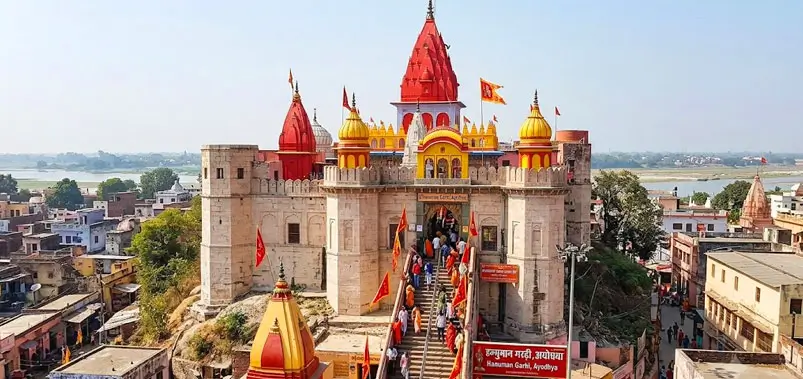
The Ram Janmabhoomi Temple is the centerpiece of Ayodhya, but it should not become the only place a visitor sees.
Hanuman Garhi is among the city's most important additional religious sites. The temple is associated with Lord Hanuman and attracts substantial numbers of devotees. Reaching the shrine involves climbing a significant flight of steps, making advance consideration essential for senior visitors.
Do not arrive with an older parent after several hours of standing at the Ram Temple and assume another steep temple visit will be effortless.
Separate the two with rest when necessary.
Dasharath Mahal is another commonly visited site in central Ayodhya and is traditionally associated with the royal household of King Dasharatha. The surrounding old city environment adds context to the religious landscape around the primary temple.
Travelers will also encounter several smaller temples, religious buildings, and historic sites connected with the Ramayana tradition.
A guide is particularly useful because Ayodhya is not a destination where every important place can be understood simply by reading an English signboard.
The guide should explain the significance of each location without turning the day into a continuous sermon or overwhelming international visitors with unfamiliar terminology.
For a first visit, select several meaningful sites rather than trying to enter every temple in the city.
The quality of the day falls rapidly when visitors become physically exhausted.
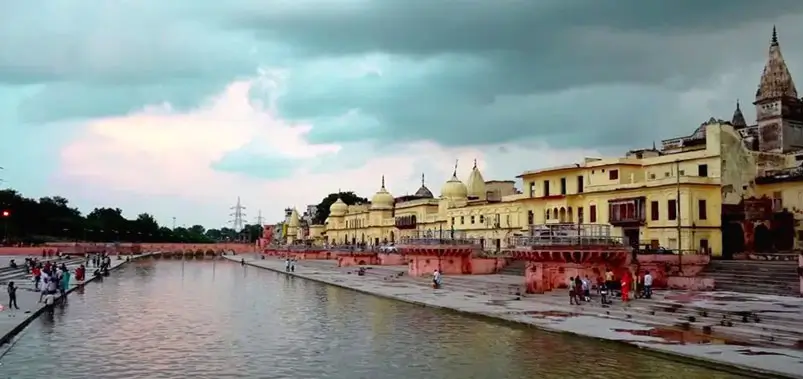
The Saryu River in Ayodhya deserves a separate period rather than being treated as a five minute roadside stop.
Late afternoon works particularly well because temperatures begin to ease and the riverfront becomes increasingly active before the evening ritual.
The evening Aarti takes place around sunset, with exact timing changing seasonally. Travelers should confirm the current time locally on the day of attendance.
Reach the riverfront before the ceremony rather than during it.
The best experience includes watching the light change, seeing families and devotees gather, understanding the geography of the ghats, and then remaining for the ceremony.
Visitors who have already seen Ganga Aarti in Varanasi or Haridwar should not expect an identical event.
Ayodhya's riverfront has its own atmosphere.
A traveler combining several sacred North Indian cities may find the differences between them particularly interesting. Varanasi feels ancient, intense, and deeply connected to the continuous life of the Ganges. Haridwar has a powerful pilgrimage character centered around Har Ki Pauri. Ayodhya carries its own devotional identity centered strongly around Lord Ram and the Saryu.
Do not treat these ceremonies as interchangeable photo opportunities.
Travelers should remain cautious near the river.
Wet steps can be slippery, current conditions vary, and crowded ghats require attention. Families should keep children close.
A private driver should be given a specific pickup point because road restrictions and crowds may prevent vehicles from waiting directly beside the riverfront.
Ayodhya is considerably easier to incorporate into a premium North India journey than it once was because the city now has improved air, rail, and road connectivity.
For American travelers beginning in Delhi, flying can be the most efficient method when a suitable direct service matches the itinerary. The airport serving Ayodhya allows the city to be added without requiring an exceptionally long road transfer from Delhi.
Flight schedules change, so the itinerary should be constructed around current operating days and times rather than assumptions.
Private airport transfers should be arranged before arrival.
Rail is also a useful option, particularly for travelers interested in experiencing Indian train travel while using an appropriate premium class.
Driving from Delhi is possible but represents a long travel day. For most luxury travelers with limited time, air or well selected rail travel makes more sense unless Ayodhya is part of a longer overland itinerary.
Varanasi and Ayodhya form a particularly natural combination.
A private Ayodhya and Varanasi tour can connect two of North India's most significant religious destinations while offering very different experiences.
Private road transportation between the cities provides flexibility and eliminates repeated airport procedures. The driving time should be treated generously because traffic and road conditions can change.
Travelers can then continue from Varanasi by air toward Delhi or another major destination.
One night is possible but restrictive.
Two nights are much better.
Three nights can make sense for deeply religious travelers, senior families, or guests who want a slower schedule.
A two night stay allows travelers to arrive without immediately running toward the temple, sleep properly, begin the principal visit early the following morning, see several additional sites, attend the river ceremony in the evening, and depart after breakfast the next day.
That rhythm is particularly valuable after an international flight or several demanding sightseeing days elsewhere in India.
Choose the hotel carefully.
Ayodhya's luxury accommodation market differs from Delhi, Jaipur, or Udaipur. Travelers should judge properties by room quality, cleanliness, service consistency, breakfast, vehicle access, and actual driving time to the temple rather than expecting a palace resort environment.
A hotel that appears physically close on a map may still be affected by traffic control zones.
Ask how guests actually reach the temple from the property.
Ayodhya can add an entirely different dimension to a private Golden Triangle Tour.
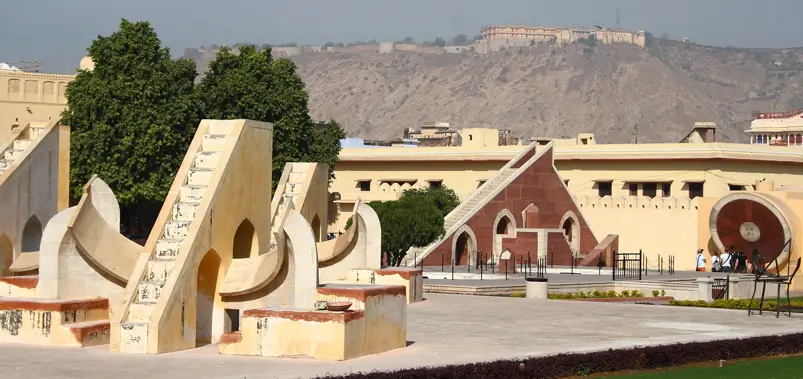
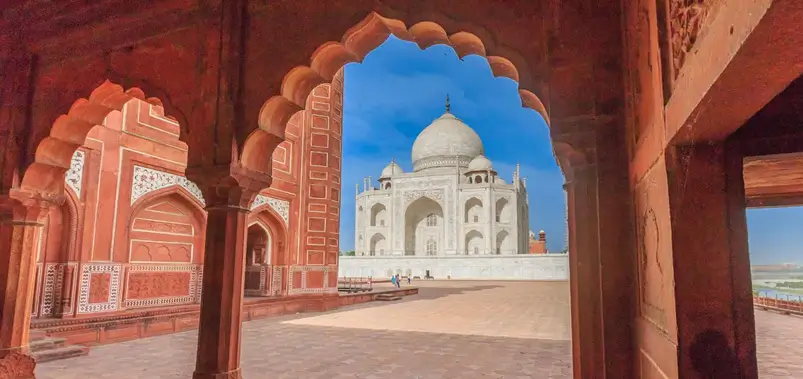
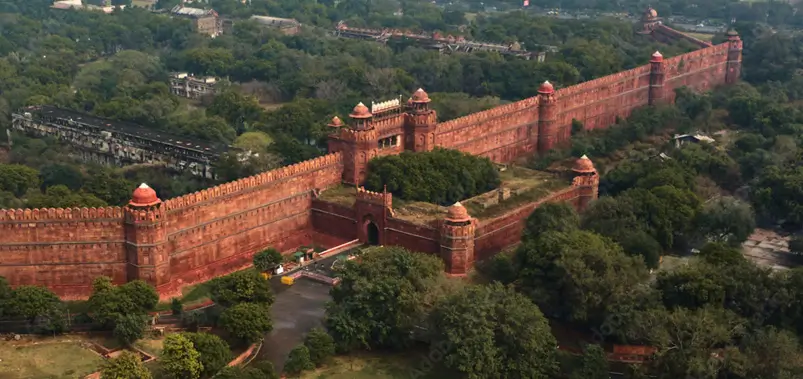
Delhi introduces Mughal, colonial, and contemporary India. Agra provides the Taj Mahal and major Mughal architecture. Jaipur represents Rajput forts, palaces, astronomy, crafts, and Rajasthan's royal traditions.
Ayodhya shifts the emphasis toward living faith.
For travelers interested in religion, mythology, culture, and contemporary India, that change can make a longer trip considerably richer.
A Golden Triangle Tour with Ayodhya and Varanasi is especially strong for travelers with approximately two weeks available. Delhi, Agra, and Jaipur provide the classic historical route, while Ayodhya and Varanasi bring major sacred destinations into the same journey.
The itinerary should not be compressed merely to fit five destination names into a brochure.
International travel is expensive. If someone has flown from New York, Chicago, Los Angeles, Dallas, or another U.S. city to India, giving Ayodhya only a few rushed hours does not create meaningful value.
Use private transfers where they improve comfort.
Choose flight or rail sectors intelligently.
Stay two nights.
Visit the temple early.
Return to the hotel when needed.
Attend the Saryu evening ceremony without worrying about an immediate departure.
Guests arranging a luxury private North India tour with Golden Triangle Tours can incorporate Ayodhya according to the wider route, with private ground transportation, English speaking guiding, airport or railway assistance, and hotel selection handled as part of one itinerary.
The most valuable service is coordination.
A chauffeur cannot bypass temple security, and a guide cannot guarantee that a major religious crowd will disappear. What professional arrangements can do is ensure that the traveler reaches the correct area at the right time, carries the correct items, knows where belongings must be left, understands what is happening, and has reliable transportation waiting afterward.
For first time American visitors, those details transform what could be a confusing pilgrimage city visit into a much more comfortable day.
Ayodhya should still feel like Ayodhya.
Luxury should remove unnecessary friction without separating the traveler from the reason for being there.
We promise you a holiday where everything is taken care of from the moment you land. Trusted drivers waiting for you, handpicked hotels that fit your style, personalized itineraries designed just for your family, and a dedicated team on call 24/7. All you need to do is relax, explore, and create unforgettable memories, while we take care of every detail behind the scenes.
Yes. A Golden Triangle Tour with Ayodhya combines Delhi, Agra, and Jaipur with one of India's most important living pilgrimage destinations. Travelers with additional time can include Varanasi as well for a broader cultural and spiritual journey through North India.
Yes. Ayodhya and Varanasi work exceptionally well together in a private North India itinerary. Private road transportation can connect the cities, while air and rail options can be used for the longer sectors before or after the visit.
Two nights are ideal for most first-time visitors. This provides sufficient time for the Ram Temple, selected nearby religious sites, the Saryu riverfront, evening Aarti, and proper rest.
Yes, but the itinerary should be slower. Arrange a private vehicle, confirm current wheelchair or assistance facilities, visit the main temple early, allow rest periods, and avoid combining several physically demanding religious sites without breaks.
Wear clean, modest clothing with shoulders and knees appropriately covered. Comfortable clothes and easy-to-remove footwear are preferable because religious visits involve walking and shoe-removal requirements.
Mobile phones and various personal belongings are restricted within the principal temple access process. Visitors should carry as little as possible and follow current storage and security instructions.
On an ordinary day, travelers should allocate at least two to three hours for the complete visit, including approach, security, queues, worship, exit, and retrieving belongings. Major weekends and religious dates can take considerably longer.
Regular public worship is generally free. Special Aarti passes or other specific access arrangements can have separate booking procedures. Travelers should avoid unofficial sellers claiming that a standard paid admission ticket is compulsory.
Regular public worship generally begins in the morning around 7:00 AM and continues through several daily access periods, with pauses possible around temple rituals. Evening access can continue into the night. Exact daily timings should be reconfirmed before visiting because schedules can change.
The best time to visit Ayodhya Ram Mandir is generally during the cooler months, particularly when the visit falls on a normal weekday rather than a major religious festival. Early morning usually offers the best combination of comfortable weather and potentially more manageable crowds.