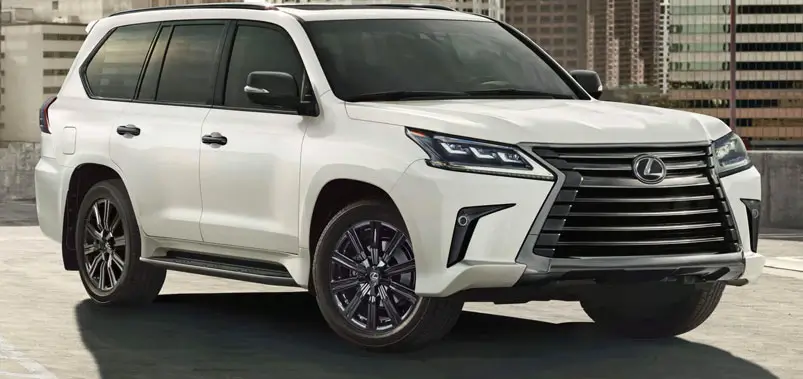
Transportation can quietly determine whether a Golden Triangle journey feels polished or exhausting. Delhi, Agra, and Jaipur are close enough to form one of India's most practical multi city routes, yet they are far enough apart that travelers spend a meaningful amount of time moving between them. For visitors arriving from the United States, the decision is usually framed as first class train vs private car in India, but the real comparison is more nuanced. India's premium daytime trains often use Executive Chair Car or AC Chair Car rather than a traditional enclosed First Class cabin, while a private road journey can range from a standard sedan to a spacious premium SUV, luxury MPV, or chauffeur driven Mercedes class vehicle.
Both forms of transportation can work exceptionally well.
The train can be fast, efficient, comfortable, and interesting for travelers who want to experience Indian rail without sacrificing air conditioning or reserved seating. A premium private car provides something rail cannot: direct hotel to hotel movement, complete schedule flexibility, continuous luggage control, private space, unscheduled stops, and the ability to continue sightseeing between cities rather than treating transportation as a separate event.
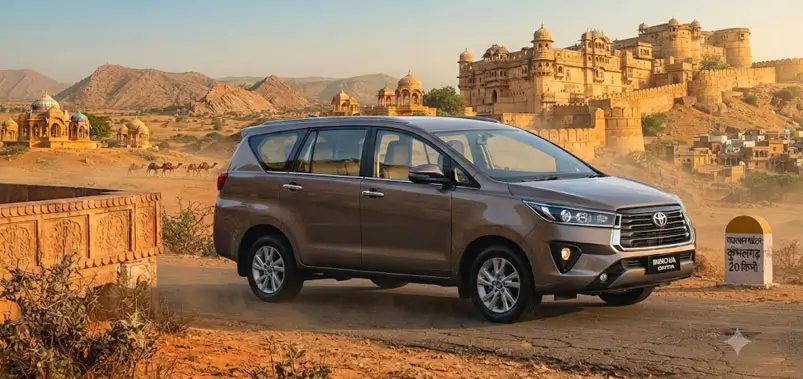
For most affluent American travelers following the complete Delhi–Agra–Jaipur Golden Triangle route, a high quality private vehicle remains the most seamless option. The strongest reason is not prestige. It is logistics. Delhi to Agra is an excellent road sector, Agra to Jaipur naturally continues the circuit, and the same chauffeur can remain with the travelers across multiple days. Luggage stays in one vehicle, hotel departures happen from the lobby, and there is no need to reach a railway station, locate the correct platform, board with suitcases, disembark in another busy station, and then find another vehicle.
Train travel becomes more attractive when one particular sector offers a strong fast service that meaningfully reduces road time, when travelers genuinely want an Indian rail experience, or when the trip is not operating as one continuous chauffeur driven circuit.
The smartest answer is therefore not that trains are better or that private cars are better.
It is knowing which option performs better on each sector.
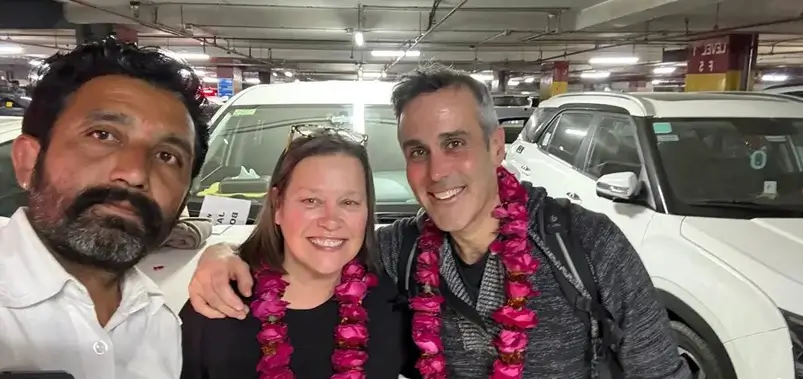
The Delhi to Agra route is the sector where premium rail makes the strongest case. Agra is connected with Delhi by fast daytime trains, and premium seating can provide a considerably shorter railway journey than the total road driving time. Travelers looking at fast services may encounter Executive Chair Car and AC Chair Car options depending on the train. These are reserved, air conditioned seated classes rather than sleeping compartments, and Executive Chair Car generally provides a wider, more premium seating layout than standard chair car accommodation.
For two American travelers staying close to the appropriate Delhi departure station and carrying limited luggage, this can be extremely efficient. A private driver can collect them from the hotel, deliver them to the station well before departure, and another representative can meet them at Agra Cantt after arrival. The rail journey itself may feel surprisingly easy once everyone is seated.
The complication is everything around the railway ride.
A train advertised as taking less than two hours does not create a two hour hotel to hotel transfer. A traveler staying in South Delhi or near the airport may need 30 to 60 minutes or longer to reach the departure station depending on traffic. International visitors should normally arrive well before departure rather than trying to walk onto the platform at the last minute. Luggage has to move from the hotel vehicle through the station and onto the train. On arrival at Agra Cantt, the bags come off again before the guests meet the local driver and continue to the hotel.
The total experience can therefore become three to four hours door to door even when the rail segment itself is significantly shorter.
A private car from Delhi to Agra usually requires roughly three to four hours depending on the Delhi starting point, traffic, stops, and current road conditions. The difference is that the traveler leaves directly from the hotel and arrives directly at the Agra hotel.
No station.
No platform.
No luggage transfer.
No fixed departure.
For premium travelers, this matters.
A couple staying at a luxury Delhi hotel can finish breakfast, check out at a comfortable hour, place their luggage in the private vehicle, and begin the road journey without additional logistics. Cold bottled water can remain inside the car, jackets and personal items stay accessible, and the chauffeur can stop at a clean highway facility if needed.
This flexibility becomes especially useful when the travelers intend to stay overnight in Agra rather than rush back to Delhi. There is very little operational reason to take a train simply to save part of the driving time if the same private vehicle will be needed for Agra sightseeing and the onward journey to Jaipur.
The car also allows travelers to leave Delhi earlier or later than a train schedule permits.
A photographer seeking sunset in Agra may prefer a specific road departure.
A family recovering from jet lag may not want to wake at 5:00 AM simply because the fastest train leaves early.
A senior couple may value a relaxed breakfast over saving 45 minutes.
A luxury itinerary should use transportation to serve the traveler rather than making the traveler serve the transportation timetable.
Cost is where rail easily wins.
Premium train fares between Delhi and Agra can often remain below approximately $15 to $40 per person, depending on the service, class, dynamic pricing, booking date, and applicable charges. Travelers should always check live Indian Railways or authorized booking information for the actual date because fares and availability can change. A private premium transfer can cost several times more.
A good sedan might cost approximately $100 to $175 for a premium private Delhi–Agra transfer once chauffeur service, fuel, tolls, parking, and operating margins are included. A larger SUV or premium MPV may fall around $150 to $300+, while Mercedes class or comparable luxury transportation can cost substantially more.
For a couple already spending several thousand dollars on a private India journey, that price difference is often acceptable in exchange for door to door convenience.
For a family of four or a small group, the private car becomes even more competitive because the vehicle price is shared while train tickets multiply by passenger.
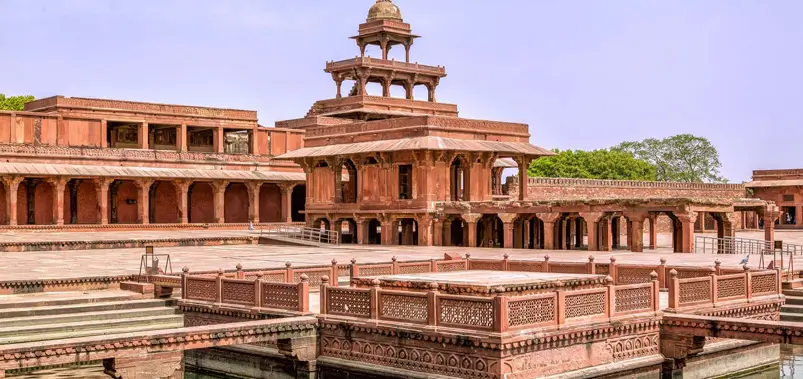
The comparison changes significantly on the Agra to Jaipur route.
This sector is one of the reasons a private chauffeur works so well on a Golden Triangle itinerary. Road travel generally requires approximately four to five hours, depending on traffic, stops, the route used, and where the travelers are staying in each city. More importantly, the road journey can contain worthwhile stops.
Travelers may choose to include Fatehpur Sikri, the former Mughal capital outside Agra, as part of the transfer day. Depending on the final itinerary, other cultural or historic stops may also be incorporated along the broader route.
That turns a transfer into sightseeing.
A train cannot provide that flexibility.
There are railway connections between Agra and Jaipur, but the premium class, departure time, frequency, and actual usefulness vary according to the selected train. Traditional First AC may exist on some long distance services, while other trains use different air conditioned classes. The problem for a luxury tourist is not whether a train physically travels between the cities. The problem is whether that particular train leaves at a time that works with hotel checkout, sightseeing, and arrival in Jaipur.
A five hour road journey leaving directly from the Agra hotel at 9:00 AM can often be more comfortable operationally than a shorter or similarly timed rail sector that requires an early hotel departure, station transfer, fixed boarding time, luggage handling, and another transfer after arrival in Jaipur.
This is one of the places where travelers should stop equating “train” with “faster.”
Rail journey time and travel day efficiency are not the same measurement.
For most premium private trips, Agra to Jaipur by private car is the stronger choice because the guests remain inside one continuous transportation system. The same chauffeur who collected them in Delhi may already know their luggage routine, preferred temperature, desired rest stops, and general pace.
That continuity matters more than travelers expect.
By the third or fourth day, a good private driver becomes an important operational part of the trip. The travelers no longer need to explain the destination every morning or locate a new supplier in each city. The vehicle is ready when they leave the hotel, and luggage management becomes almost invisible.
For older travelers, families, photographers carrying equipment, and anyone with more than one large suitcase, this simplicity becomes even more valuable.
A premium Agra–Jaipur road transfer might cost approximately $150 to $300+ for a quality private vehicle depending on category, while a genuine luxury brand vehicle can cost considerably more. The exact price is affected by whether the car and driver are being hired only for the transfer or are already operating as part of a multi day Rajasthan tour.
Multi day private vehicle pricing can be more efficient than buying separate premium transfers in every city because the operator is pricing one continuous journey.
The Jaipur to Delhi sector deserves more careful consideration because road time can be substantial. A private car can commonly require approximately five to six hours, with traffic near Delhi capable of extending the journey further. A train may therefore offer a meaningful time advantage when a suitable premium service matches the travel date.
Modern premium trains serving the Delhi–Jaipur corridor can offer air conditioned reserved seating, including higher category accommodation on selected services. For a traveler who has already completed sightseeing in Jaipur and simply wants to return to Delhi, rail can be efficient.
The calculation changes completely if an international flight is involved.
Travelers should avoid connecting a Jaipur train directly to a long haul international departure with an aggressive margin. Railway delays can occur, and Delhi itself is enormous. Arriving at one of the main railway stations still leaves a road transfer to Indira Gandhi International Airport that can take significant time depending on traffic and station location.
For this reason, premium travelers finishing a Rajasthan trip often benefit from returning to Delhi one night before an important international flight.
That applies whether the transfer is by train or road.
If staying overnight in Delhi, a premium train can become very attractive because there is no pressure to race immediately to the airport. A representative meets the travelers at the station, transfers them to the hotel, and the international departure takes place the following day.
If the travelers have multiple large bags after a long India journey, the private car may still be preferable.
Shopping changes luggage volume.
A couple who arrived in Delhi with two suitcases may leave Jaipur with textiles, shopping bags, handicrafts, or another piece of luggage. Managing all of that through a station becomes noticeably less elegant than keeping it inside a private vehicle.
For a luxury Golden Triangle Tour, luggage reality should influence transportation decisions just as much as published travel time.
Foreign visitors often use the phrase first class train in India as though it describes one standard product.
It does not.
Traditional First AC, commonly shown as 1A, is primarily associated with sleeping accommodation on longer distance trains. It can include enclosed cabins or coupes with sleeping berths rather than airline style seats. This can be an excellent way to travel overnight on suitable routes, but it is not automatically the premium option found on every short daytime Golden Triangle sector.
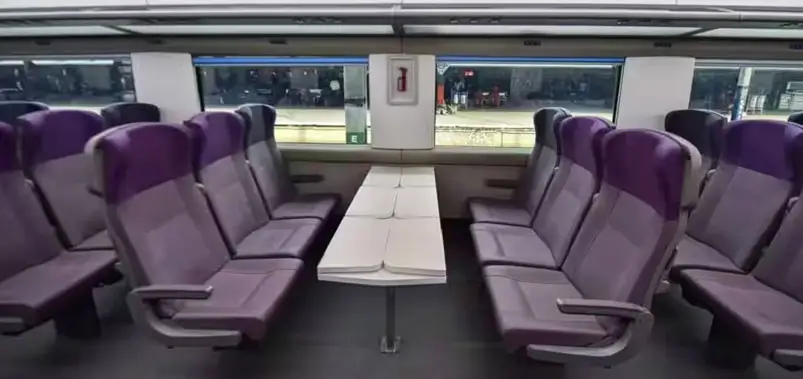
Fast daytime trains more commonly use Executive Chair Car, abbreviated EC, or AC Chair Car, abbreviated CC.
Executive Chair Car is generally the more premium seated category. It usually offers wider seating and a less dense arrangement than AC Chair Car.
For a short Delhi–Agra journey, this format makes much more sense than a sleeping compartment.
This distinction matters when an American traveler asks an agent to “book first class.” A knowledgeable tour operator should explain what the best premium class actually is on the specific train rather than simply searching for a class code containing the word First.
Train type also matters.
A premium modern daytime service can feel completely different from an older long distance train that happens to carry a First AC coach.
For short leisure sectors, the best train matters more than the nominal class name.
Travelers should ask the operator for the exact train number, departure station, departure time, arrival station, arrival time, class, seat status, and luggage plan.
Those details prevent confusion.
Rail is substantially cheaper in direct transportation cost.
A premium daytime rail ticket within the Golden Triangle may range broadly from approximately $10 to $50 per person, depending on route, train, premium class, booking date, dynamic fare, and applicable catering or reservation charges.
First AC on a longer distance train may be priced differently.
The Indian Railways fare system provides live fare enquiry by train number, date, source, destination, class, and quota, which is exactly why travelers should use the actual journey details rather than relying on one permanent online fare.
Private car pricing needs to be viewed differently because the traveler is paying for an entire vehicle, chauffeur, fuel, tolls, parking, driver expenses, operating time, and availability.
A comfortable multi day private Golden Triangle vehicle for two travelers can reasonably contribute approximately $120 to $250+ per day to a premium tour depending on vehicle category and supplier standard.
A larger luxury SUV, premium MPV, or high end van might run around $200 to $400+ per day.
Mercedes, BMW, Audi, luxury minivans, and specialist VIP transportation can move substantially above $400 to $700+ per day.
The cost can also rise when the vehicle originates from another city, requires empty repositioning, or remains with the travelers for many days.
For a seven day itinerary, an excellent premium private vehicle may therefore cost around $1,200 to $2,500+ as part of the total trip.
Ultra luxury transportation can cost considerably more.
That sounds expensive compared with three train tickets.
The private vehicle, however, is not merely transportation between cities.
It also handles airport pickup.
Hotel transfers.
Delhi sightseeing movements.
Agra sightseeing.
Jaipur sightseeing.
Restaurant transfers.
Luggage.
Highway stops.
Unexpected itinerary changes.
That is the correct comparison.
Luggage is one of the most underestimated parts of Indian train travel.
An Executive Chair Car seat may be comfortable, but the train does not provide the equivalent of airline style checked baggage handling.
Travelers bring luggage into the rail environment with them.
Large suitcases may be placed in available luggage areas or near seating depending on the coach configuration and space. A premium tour operator can arrange porter assistance at the station, but the traveler still moves through a public transport environment with personal baggage.
For one medium suitcase per traveler, this is usually manageable.
For two large checked bags, multiple carry ons, camera equipment, and several shopping bags, the experience becomes less attractive.
A private vehicle solves the issue almost completely.
Luggage goes into the trunk or rear luggage area at the hotel and normally remains there until the next hotel.
This is particularly useful on the Agra–Jaipur sector because travelers can stop at monuments without separately reorganizing every suitcase.
The vehicle should still be matched properly to luggage.
Two American travelers with four large suitcases should not book a small sedan simply because only two passengers are traveling.
A premium SUV or MPV is usually smarter.
For four adults, a larger van may be better than an SUV because passenger comfort and luggage both need space.
Luxury transportation should be selected by actual use rather than badge prestige.
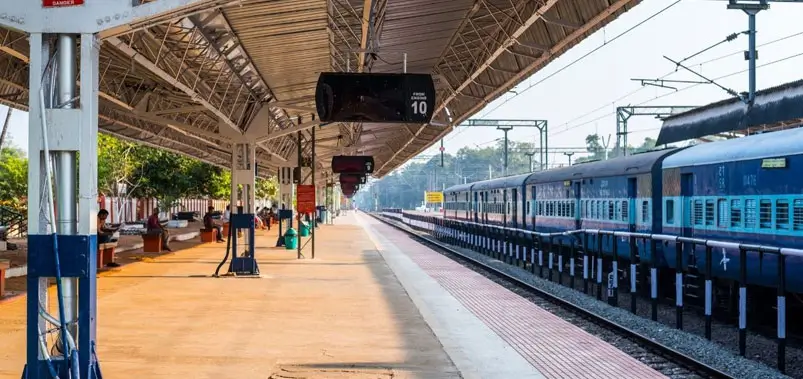
Indian railway stations can be an enjoyable cultural experience for travelers who like public transportation.
They are active, energetic, and unmistakably Indian.
For others, especially first time visitors immediately after a long international flight, a busy station can feel overwhelming.
Crowds move quickly.
Platforms can change.
Porters offer services.
Announcements may be difficult to follow.
Trains may stop for only a limited period.
A premium rail journey should therefore include station assistance.
The driver should not simply leave foreign guests outside the station with tickets and drive away.
A representative or porter arrangement can help travelers locate the platform, manage luggage, identify the coach, and board comfortably.
The same should happen on arrival.
This is especially useful at Delhi stations, which can be crowded and geographically confusing for first time visitors.
Rail travel becomes much more sophisticated when these ground details are handled professionally.
For senior travelers, the private car usually wins.
Train seats may be comfortable, but reaching them can involve station walking, stairs, ramps, crowded platforms, luggage handling, and boarding gaps.
Station elevator and escalator availability varies.
Platforms may occasionally require movement that becomes difficult for someone with knee or mobility issues.
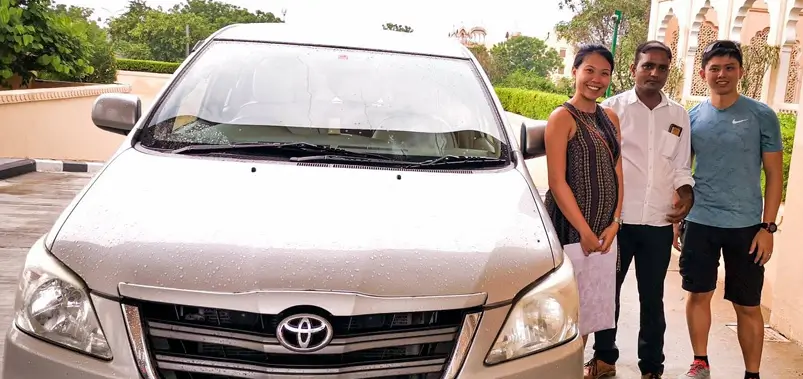
A private chauffeur picks the traveler up close to the hotel entrance and drops them as close as vehicle rules allow at the next property.
The difference becomes substantial over a multi day journey.
Families with children may also prefer the car because snacks, jackets, toys, and other personal items remain accessible.
Children can sleep without worrying about a railway arrival station.
Restroom stops can be controlled.
Parents do not need to move several suitcases and children simultaneously through a busy station.
The train becomes more attractive for older children and teenagers who may genuinely enjoy the novelty of Indian rail travel.
A family can also take the fast train from Delhi to Agra as an experience and then use private road transportation for the remainder of the Golden Triangle.
There is no requirement to select only one transportation style for the entire trip.
Business travelers and affluent professionals sometimes assume the train will provide a better working environment.
That depends heavily on personal preference.
Executive seating can provide a comfortable place to use a laptop, but the coach is still shared with other passengers. Phone conversations are not private. Large equipment needs to remain secure, and arrival interrupts the work period.
A private car offers greater privacy, particularly in a larger premium vehicle.
A traveler can make calls, discuss business, stop when necessary, and leave confidential documents in a controlled private environment while traveling.
Mobile data coverage is generally strong across major Golden Triangle road corridors, although no route should be treated as guaranteed continuous high speed connectivity.
Some premium vehicles can also be equipped with onboard Wi-Fi by arrangement.
For executives, the road journey can therefore become productive rather than wasted.
Driving in India looks very different from driving in the United States.
Traffic contains cars, trucks, buses, motorcycles, scooters, auto rickshaws, pedestrians, and occasionally animals, all interacting within a road culture that can feel intense to foreign visitors.
American travelers should not rent a car and attempt to drive the Golden Triangle themselves simply because they are comfortable driving long distances at home.
A professional chauffeur driven car in India is the appropriate premium model.
An experienced driver understands local traffic patterns, highway behavior, parking, hotel access, monument approaches, toll systems, and the practical details of long distance road movement.
The chauffeur should not be encouraged to drive excessively fast merely because a guest is late.
A well designed itinerary prevents that situation by allowing enough travel time.
Seat belts should be used whenever available.
Passengers should also avoid demanding overnight road movements merely to save a hotel night. Daylight travel and proper driver rest are far more sensible for a luxury itinerary.
A train can be the better option when the rail service is significantly faster than road travel, the station locations are convenient, the travelers have manageable luggage, and the departure time fits the itinerary naturally.
Delhi to Agra is the clearest example.
A premium train can be excellent for travelers who want a fast rail experience and do not require the same vehicle to continue directly to Jaipur.
Jaipur to Delhi can also make sense when the travelers are staying overnight in Delhi afterward and a suitable fast service aligns with the schedule.
Rail can additionally work for travelers who dislike long road journeys or are particularly interested in trains.
In these cases, use premium reserved seating and arrange station assistance.
A private vehicle is stronger when travelers want complete flexibility.
It is particularly useful for the Agra to Jaipur sector, where the road route can include sightseeing stops.
It is better for families.
It is better for senior travelers.
It is better for guests with substantial luggage.
It is better for photographers carrying equipment.
It is better for couples who dislike early fixed departures.
It is better when hotel to hotel simplicity matters more than saving a modest amount of travel time.
It is also the best solution for travelers wanting one continuous Golden Triangle operation.
A chauffeur driven vehicle can collect guests from Delhi airport and remain part of the trip through Agra and Jaipur before returning toward Delhi.
For many American travelers, that continuity is the real definition of luxury.
For a typical first time luxury traveler, the most seamless strategy is straightforward: use a premium private vehicle throughout Delhi, Agra, and Jaipur.
Select a spacious vehicle rather than the smallest model.
Keep the same chauffeur where operationally possible.
Use the road sectors as part of the travel day rather than treating them as wasted hours.
Stop for clean restrooms and good meals.
Include worthwhile historical sites on transfer days.
Return to Delhi one day before a critical international flight.
The alternative hybrid strategy can also work extremely well: take a premium fast train from Delhi to Agra, then use a private chauffeur driven vehicle from Agra through Jaipur and onward.
This gives travelers one high quality Indian train experience without forcing railway logistics onto every transfer.
Guests arranging the route through Golden Triangle Tours can have the transport chosen according to the actual itinerary rather than receiving one rigid rule. A couple traveling light may benefit from premium rail on the Delhi–Agra sector. A family of five may be far better in a private van from the moment they land. An older couple may prefer door to door road service throughout. A business traveler may use the fastest train one day and a luxury vehicle the next.
Transportation should disappear into the trip.
The traveler should remember the Taj Mahal, Amber Fort, the streets of Delhi, the hotels, food, and people.
They should not return home remembering how difficult it was to move their suitcases between platforms.
That is the standard a premium Golden Triangle journey should meet.
We promise you a holiday where everything is taken care of from the moment you land. Trusted drivers waiting for you, handpicked hotels that fit your style, personalized itineraries designed just for your family, and a dedicated team on call 24/7. All you need to do is relax, explore, and create unforgettable memories, while we take care of every detail behind the scenes.
Yes. A private Golden Triangle itinerary can combine premium train sectors, station assistance and chauffeur-driven road transportation according to the route, traveler age, luggage, hotel locations, available train schedules and preferred comfort level.
Usually yes. A chauffeur-driven private vehicle removes most station walking, luggage movement, stairs, platform navigation and fixed boarding times, making the route significantly easier for older guests and travelers with limited mobility.
Yes, millions of travelers use Indian Railways, and premium reserved services can be very comfortable. International visitors should use confirmed reservations, keep valuables secure, arrive early, and use station assistance when carrying luggage.
Premium daytime rail tickets on Golden Triangle sectors may broadly cost around $10 to $50 per person, depending on train, class, date and dynamic pricing. Live fares should always be checked before booking.
A strong premium private vehicle may contribute roughly $120 to $250+ per day, while larger luxury vehicles can cost $200 to $400+ per day. Mercedes-class and specialist VIP vehicles can cost substantially more.
Both can work. Premium rail can reduce time spent on the highway when a suitable service matches the itinerary, while a private car is easier for travelers with substantial luggage or those wanting direct hotel-to-hotel transportation.
The Agra to Jaipur drive normally requires around four to five hours, although sightseeing stops and traffic can make the travel day longer.
A private car from Delhi to Agra generally takes around three to four hours, depending on the hotel location, Delhi traffic, stops, and current road conditions.
On fast daytime trains, Executive Chair Car or AC Chair Car is often more relevant than traditional First AC. The exact premium class depends on the selected train and should be checked for the actual travel date.
It depends on the route. Premium train travel can be excellent between Delhi and Agra, while a private car generally provides better flexibility and door-to-door convenience across the complete Delhi–Agra–Jaipur circuit.