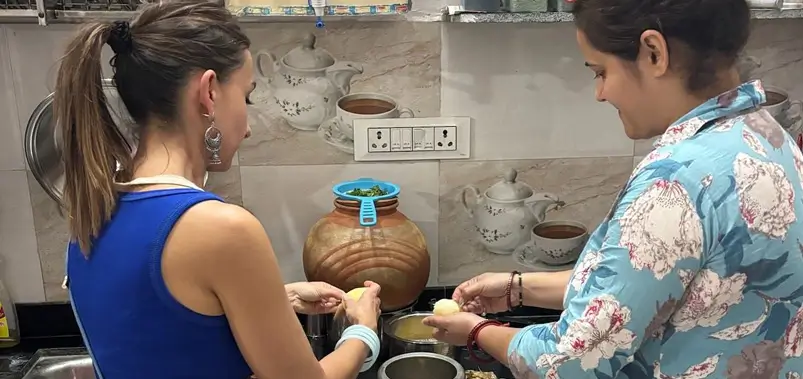
There is a particular kind of intimacy in standing in someone's kitchen, watching them roll dough the way their mother taught them, the way their mother was taught before that, and being handed a rolling pin and told, gently, that you are doing it wrong but in a charming way. Jaipur cooking classes offer exactly this, an entry point into Rajasthani culture that no restaurant meal, however excellent, can replicate.
For travellers who want to learn to cook Rajasthani food, Jaipur has developed a genuinely warm and well established culture of home hosted cooking experiences, where local families open their kitchens, and often their dining tables, to visitors. This guide covers what these experiences actually involve, the dishes you are likely to learn, what makes Rajasthani cuisine distinct from the Indian food many travellers think they already know, and how to choose the right experience for your trip.
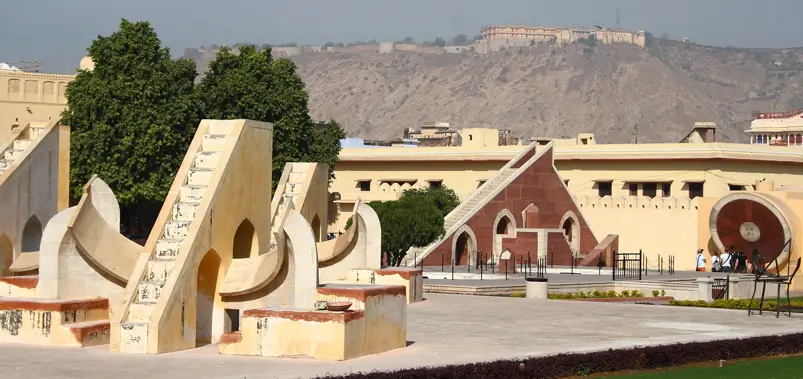
Jaipur's forts and palaces showcase the grandeur of Rajasthan's history, but a Jaipur food experience built around a home cooking class reveals something different: the texture of everyday life. While sightseeing shows you how Rajasthan's royalty lived, a cooking class shows you how Rajasthani families actually eat, what spices sit in the kitchen cupboard, how a meal comes together over an afternoon, and what hospitality looks like when it is not staged for tourists.
Most cooking class with local family Jaipur experiences begin with a market visit, walking through a neighbourhood spice bazaar or vegetable market with your host, learning to identify the ingredients that define Rajasthani cooking, fresh coriander, an array of dried chilies, lentils in every shade, and the specific spice blends that give the region's food its character. From there, the experience moves into the host's home, often a multi generational household, where the actual cooking takes place, frequently at an outdoor cooking station or in a family kitchen that has clearly seen decades of use.
What consistently stands out in traveller accounts of these experiences is not the recipes themselves, valuable as they are, but the family interaction: chatting with a host's mother-in-law while chopping vegetables, being offered chai and snacks before the main cooking even begins, and finally sitting down to eat together at the family's own dining table, sometimes joined by children, sometimes by extended family members who happen to be visiting that day.
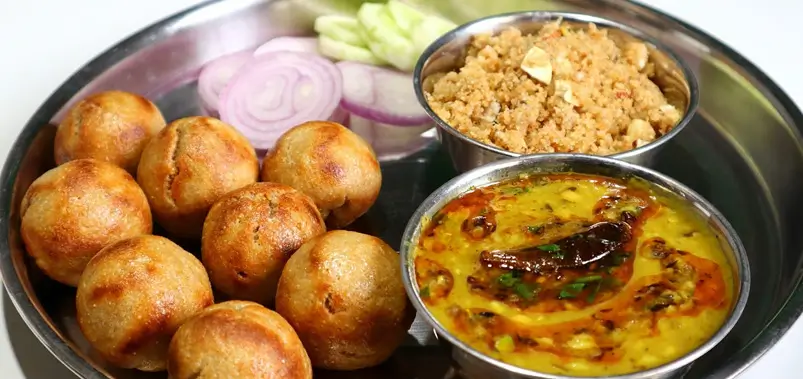
For many international visitors, traditional Rajasthani dishes come as something of a revelation, distinct in meaningful ways from the Indian food most are familiar with from restaurants abroad.
Rajasthan's desert climate has shaped its cuisine profoundly. With limited access to fresh vegetables and water historically, much of the region's traditional food relies on lentils, dried beans, and grains that thrive in arid conditions, millet and sorghum rather than wheat, for many traditional breads. The result is a cuisine that tends to be drier, more intensely spiced, and built around ingredients that store well, a practical adaptation that has become a defining culinary identity in its own right.
Dal Baati Churma is perhaps the most iconic Rajasthani dish, hard, baked wheat balls (baati) served with spiced lentils (dal) and a sweet, crumbled wheat dish (churma), traditionally cooked over hot coals or embers. Ker Sangri, a preparation of dried desert beans and berries cooked with yogurt and spices, is a genuinely unique dish that few visitors will have encountered before, drawing directly on ingredients that grow specifically in Rajasthan's arid landscape.
Gatte ki Sabzi, gram flour dumplings cooked in a spiced yogurt based curry, and Laal Maas, a fiery, slow cooked meat curry historically associated with royal Rajasthani kitchens, represent two more pillars of the region's cooking, one vegetarian and rooted in everyday household cooking, the other a richer, more festive dish with royal associations.
For vegetarian travellers in particular, Rajasthani home cooking offers enormous variety, dishes like baingan ka bharta (smoky roasted eggplant), sukha aloo (cumin spiced potatoes), and an array of lentil preparations that go far beyond the small selection typically found on international restaurant menus.
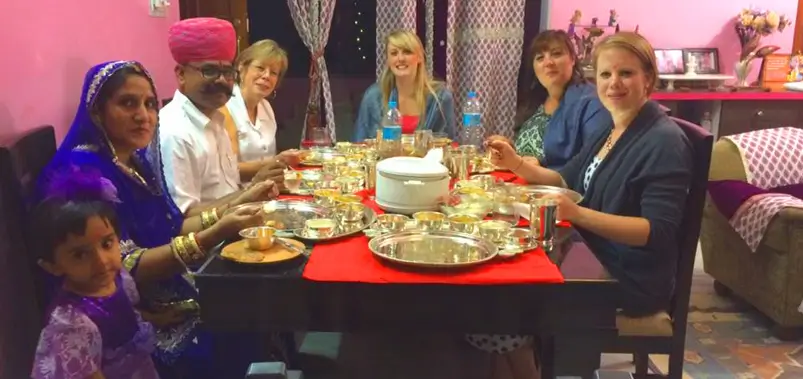
While details vary between hosts, most Rajasthani cooking class Jaipur experiences follow a similar arc, and understanding this structure helps set expectations for what to anticipate.
The experience usually begins with a market visit, often the host's own neighbourhood market, where they shop regularly. This is not a curated "tourist market" but a genuine local bazaar, sometimes a chaotic, sensory introduction to Indian shopping in its own right, baskets of chilies, mountains of lentils in every colour, vendors calling out prices, the smell of fresh spices being ground. Hosts typically use this stop to explain what ingredients they are choosing and why, sometimes purchasing items specifically for the day's cooking session.
Back at the host's home, the cooking session itself typically covers two to three dishes, often including a bread (roti, chapati, or a more elaborate baati), a lentil or vegetable dish, and sometimes a third item depending on the season or the host's specialty. Visitors are generally encouraged to participate actively, rolling dough, chopping vegetables, stirring pots, rather than simply observing, and hosts often adjust the menu based on dietary preferences or restrictions communicated in advance.
The experience concludes with a shared meal, eaten together with the host's family at their own dining table, sometimes on a rooftop with views over the city, sometimes in a courtyard, and always with the kind of conversation that turns a cooking lesson into something closer to being welcomed as a guest into someone's home.
Many of Jaipur's most highly regarded home cooking experiences are run by hosts who serve exclusively vegetarian food, reflecting the broader prevalence of vegetarianism in many Rajasthani households. For travellers who are vegetarian themselves, or simply curious about how central vegetarian cooking is to Rajasthani cuisine, this is far from a limitation, the variety and depth of vegetarian Rajasthani dishes is considerable, and many travellers describe vegetarian home cooked meals in Jaipur as among the best food of their entire India trip.
For travellers with specific dietary needs, gluten intolerance, dairy allergies, or other restrictions, many hosts are accustomed to adapting their menus, and communicating these needs in advance is generally welcomed rather than seen as an inconvenience. Hosts often take pride in being able to adjust traditional recipes while still delivering an authentic experience.
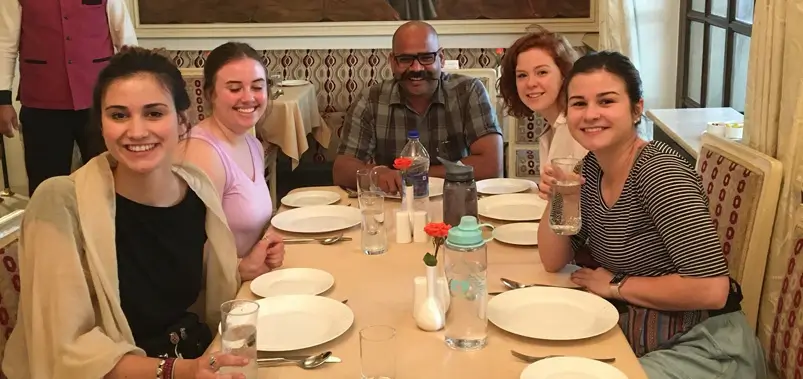
Beyond home based classes, a smaller number of experiences offer Jaipur cooking classes set within heritage properties, sometimes described as "royal" cooking classes, where guests learn dishes historically associated with Rajasthani royal kitchens, often in the grand surroundings of a heritage haveli or palace hotel.
These experiences tend to be more formal than home based classes, with professional chefs rather than family hosts, and often focus on richer, more elaborate dishes, including non-vegetarian specialties like Laal Maas, that were historically prepared for royal households rather than everyday family meals. For travellers interested in the more ceremonial side of Rajasthani cuisine, alongside the homely, family style experiences, this offers a useful contrast and a fuller picture of the region's culinary range.
With a wide range of Jaipur cooking classes available, a few factors are worth considering when choosing.
Group size matters for atmosphere. Smaller, family hosted classes, often capped at a handful of guests, tend to offer the most personal, conversational experience, while larger group classes can still be enjoyable but feel more like a structured activity than an intimate visit.
Location and duration vary too. Some experiences run for a few hours in the late morning or afternoon, including the market visit, while others are structured around a full evening, cooking and dining as the sun sets. Considering how this fits into the rest of your day in Jaipur, particularly if you have been out sightseeing since early morning, is worth factoring in.
Finally, reading recent reviews carefully often reveals the personality of specific hosts, some are particularly noted for their warmth and storytelling, others for their teaching style or the specific dishes they specialise in, and matching this to what you are hoping to get from the experience, recipes to take home, cultural connection, or simply a wonderful meal, helps in choosing well.
We promise you a holiday where everything is taken care of from the moment you land. Trusted drivers waiting for you, handpicked hotels that fit your style, personalized itineraries designed just for your family, and a dedicated team on call 24/7. All you need to do is relax, explore, and create unforgettable memories, while we take care of every detail behind the scenes.
Popular hosts, particularly those with strong reviews, can book up during peak season, so reserving a few days to a week in advance is generally recommended.
While not always required, a tip is generally appreciated for home-based experiences, particularly given the personal time and effort hosts invest in welcoming guests into their homes.
Laal Maas is a fiery, slow-cooked meat curry historically associated with Rajasthani royal kitchens, known for its intense red colour and use of dried red chilies.
Many home-based experiences are family-friendly, and hosts are often accustomed to adapting the experience for children, though it is worth checking with specific hosts in advance.
Yes. Smaller, home-based classes in particular often welcome solo travellers and can be a wonderful way to meet a local family and enjoy a shared meal in a warm, social setting.
Ker Sangri is a dish made from dried desert beans and berries that grow specifically in Rajasthan's arid landscape, cooked with yogurt and spices. It is a distinctly regional dish rarely found outside Rajasthan.
Yes. Almost all cooking class experiences in Jaipur conclude with a shared meal, where you eat the dishes you have just prepared together with your host and often their family.
It involves a few distinct components, baked wheat balls, spiced lentils, and a sweet wheat preparation, each requiring its own technique, but cooking classes break this down step by step, making it accessible even for beginners.
Home cooking classes are hosted by local families in their own kitchens, often with a personal, conversational atmosphere, while heritage hotel classes are typically led by professional chefs in a more formal setting, often focusing on royal Rajasthani recipes.
Yes. Many hosts are happy to adapt their menus for gluten intolerance, dairy allergies, or other dietary needs when informed in advance.
Most experiences, including the market visit, cooking session, and shared meal, run between three and five hours.
Rajasthani cuisine is generally well-spiced rather than uniformly extremely hot, though some dishes, particularly Laal Maas, are known for significant heat. Hosts can often adjust spice levels for guests.
Most do. A guided visit to a local spice or vegetable market is a standard part of the experience, helping visitors understand the ingredients before the cooking begins.
Yes, very much so. Many of the most popular home cooking experiences in Jaipur are run by hosts who cook exclusively vegetarian food, reflecting Rajasthani culinary traditions.
Common dishes include dal baati churma, gatte ki sabzi, ker sangri, baingan ka bharta, sukha aloo, and various rotis or other Indian breads, depending on the host and season.