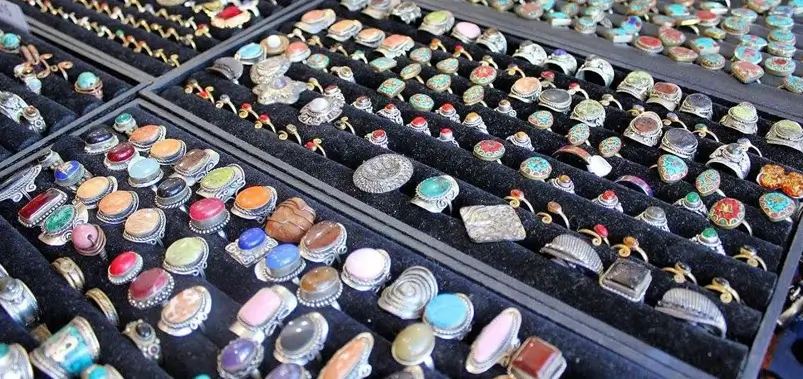
Jaipur has been the gemstone capital of the world for over five centuries. That is not a marketing claim. It is a historical fact backed by the infrastructure of an entire city the cutters, the polishers, the setters, the dealers, the exporters, the graders, and the generations of family knowledge that have made this one city the single most important hub for colored gemstones anywhere on the planet.
Roughly 80 percent of the world's colored gemstones pass through Jaipur at some point in their journey from mine to market. Emeralds from Colombia, rubies from Myanmar, sapphires from Sri Lanka, tanzanite from East Africa all of them arrive in Jaipur to be cut, polished, graded, set, and sold. The city's craftsmen are among the most skilled in the world, and the concentration of genuine expertise here is something that no other jewelry destination on earth can match.
For a foreign traveler, this creates an extraordinary opportunity and a genuine minefield. The same market that contains some of the finest gemstone jewellery shopping in Jaipur experiences available anywhere in the world also contains dealers who make a very comfortable living selling synthetic stones, treated gems, and outright glass to visitors who do not know the difference.
This guide is designed to put you firmly in the first category. It covers how the Jaipur gemstone market works, which areas to shop in, what to buy, how to verify quality, how to negotiate, and how to bring your purchases home without complications. Read it before you go, not after.
Discover Jaipur's World-Famous Gemstone & Jewellery Markets
Shop with confidence as you explore Jaipur's renowned gemstone and jewellery districts. Combine your shopping experience with visits to royal palaces, colorful bazaars, and historic landmarks while enjoying the convenience of a private chauffeur-driven car throughout your journey.
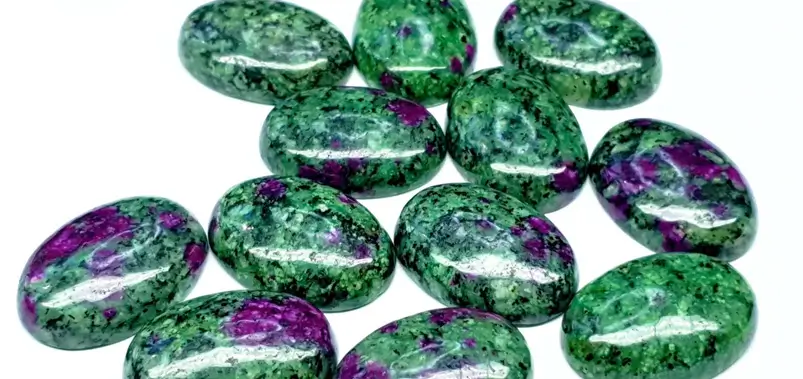
The history of Jaipur jewellery shopping begins with Maharaja Sawai Jai Singh II, who founded the city in 1727 and actively encouraged artisan communities including gemstone cutters and jewelers to settle within its walls. The maharajas of Jaipur were themselves passionate collectors and patrons of the gem trade, and the royal connection gave the city's gem industry a prestige and a customer base that accelerated its development enormously.
By the nineteenth century, Jaipur's gem cutters had developed a reputation across Europe and Asia. The Mughal emperors had already established the city as a center of kundan jewellery Jaipur and meenakari jewellery Jaipur production two of India's most technically demanding jewelry traditions and the concentration of skill that resulted from generations of craft transmission created an ecosystem that is essentially impossible to replicate from scratch.
Today, the Johari Bazaar area alone contains thousands of gem dealers, jewelers, cutters, and wholesalers operating across a relatively small geographic area. The density of expertise here means that a buyer who knows what they are doing can access extraordinary quality at prices that bear no resemblance to what the same stones would cost in London, New York, or Hong Kong.
Before you walk into any shop in Jaipur, it helps to understand the structure of the market you are entering.
The Wholesale Layer
The deepest and most price competitive layer of the Jaipur gemstone market is the wholesale trade, which happens largely out of sight of retail visitors. Wholesale dealers work from offices in and around Johari Bazaar, dealing in parcels of stones with other dealers, exporters, and manufacturers. Retail visitors do not typically have access to this layer, but understanding it exists explains why the prices in even the best retail shops in Jaipur are still dramatically lower than equivalent quality in Western markets the retail price is built on top of a wholesale price that is itself far below international levels.
The Retail Layer
The retail market is where most foreign travelers shop, and it ranges from genuinely excellent to genuinely terrible within the same street. High quality retail dealers in Jaipur maintain proper showrooms, employ trained staff, stock certified stones, and build their business on repeat customers and international referrals. They are not the cheapest option on the street, but they are the ones whose merchandise is what it claims to be.
Lower quality retail operations and there are many rely on tourist volume, high pressure sales tactics, and the reasonable assumption that most visitors do not have the knowledge to distinguish a natural ruby from a synthetic one, or a heat treated sapphire from an untreated one.
The Commission Network
A significant portion of Jaipur's retail gem and jewelry trade runs on a commission system in which auto rickshaw drivers, hotel staff, tour guides, and anyone else who has contact with tourists receives a payment for every visitor they deliver to a specific shop. The shops that pay the highest commissions are not always the ones with the best merchandise. In fact, the commission cost is often passed directly to the customer in the form of inflated prices.
This is the single most important structural fact about buying gemstones in Jaipur that a foreign visitor can know. If anyone your driver, a new acquaintance at your hotel, a friendly stranger at a tourist site suggests a specific gem shop with particular enthusiasm, assume a commission relationship until proven otherwise.
Emeralds
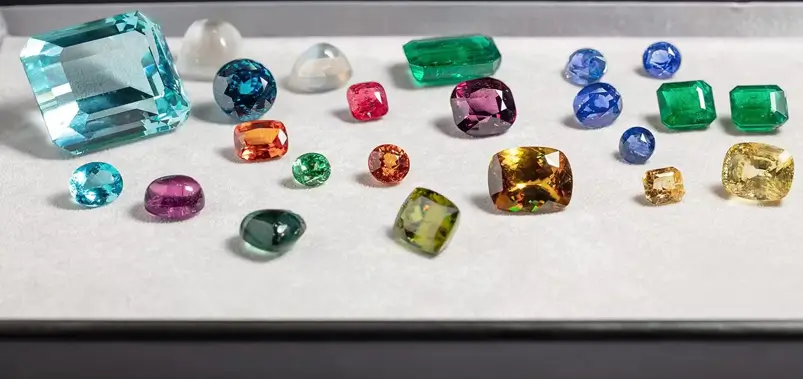
Jaipur is one of the world's great centers for emerald shopping Jaipur. Colombian emeralds the global benchmark for quality in this stone arrive in Jaipur in large quantities to be cut and set, and the city's emerald craftsmen are among the most skilled in the world at working with this particular stone.
Emeralds are graded on color (the most important factor, with a deep, slightly bluish green being ideal), clarity (most natural emeralds contain inclusions, which gemologists call a "jardin"), cut, and carat weight. Treatments are common in emeralds most natural emeralds are filled with cedar oil or resin to improve their apparent clarity, and a moderate level of treatment is accepted industry practice. What matters is disclosure: a reputable dealer will tell you the degree of treatment a stone has received.
Emerald shopping Jaipur at the quality end of the market means buying stones with a certificate from a recognized gemological laboratory the Gem Testing Laboratory of Jaipur (GTL) is the most respected local authority, and international certificates from GIA or Gübelin add further assurance for high value purchases.
Rubies and Sapphires
Ruby sapphire Jaipur shopping is another core strength of the market. Jaipur dealers source rubies primarily from Myanmar (Burma), Mozambique, and Thailand, and sapphires from Sri Lanka, Madagascar, and Kashmir with Kashmiri sapphires being among the most valuable and sought after colored stones in the world.
Heat treatment is standard practice for both rubies and sapphires and is fully accepted in the trade. What adds significant value and what requires proper certification is the absence of heat treatment, which is increasingly rare and commands a substantial premium, particularly in Kashmiri sapphires and Burmese rubies.
Kundan and Meenakari Jewellery
Kundan jewellery Jaipur is one of the most technically demanding jewelry traditions in the world. It involves setting uncut or flat cut gemstones into a framework of pure gold using a technique in which thin sheets of gold are worked around each stone to hold it in place without a conventional bezel or prong setting. The result is a style of jewelry that is simultaneously ancient and extraordinarily sophisticated.
Meenakari jewellery Jaipur involves the application of colored enamel to the reverse side of kundan pieces and to standalone gold jewelry. The craftsmanship required to produce fine meenakari is exceptional, and the tradition is maintained by a relatively small number of families in Jaipur who have preserved the techniques across generations.
Both traditions produce jewelry that is entirely unavailable at comparable quality or price anywhere outside Jaipur. For travelers interested in jewelry as a cultural artifact rather than simply as an accessory, kundan and meenakari represent some of the most significant purchases available in India.
Semi-Precious Stones
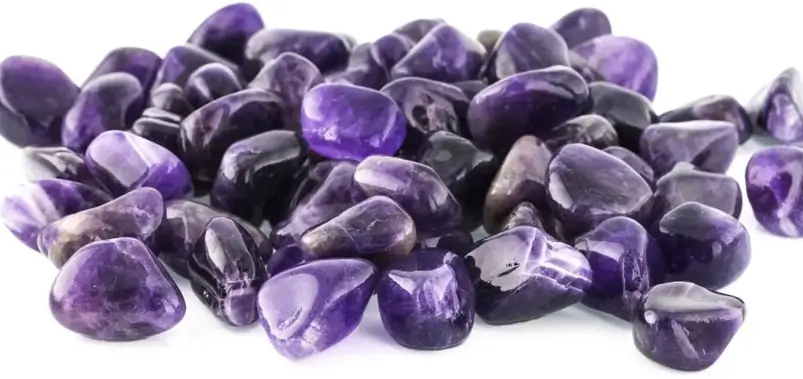
Beyond the precious stone category, Jaipur's authentic gemstones Jaipur market is one of the best places in the world to buy high quality semi precious stones. Amethyst, aquamarine, tourmaline, garnet, citrine, moonstone, and labradorite are all available in exceptional quality at prices that are a fraction of what you would pay in international retail markets.
Semi precious stone jewelry in silver is a particular strength of the Jaipur market the combination of Rajasthani silver craftsmanship with high quality colored stones produces pieces that are beautiful, accessible in price, and genuinely representative of the city's craft tradition.
Johari Bazaar
Johari Bazaar Jaipur is the heart of the city's jewelry and gemstone trade and the first destination for any serious buyer. The street runs through the old city and is lined on both sides with jewelry showrooms, gem dealers, and workshops. The concentration of shops here is extraordinary, and the competition between dealers keeps quality levels generally higher than in areas that cater more exclusively to tourists.
Shopping in Johari Bazaar requires patience and a willingness to walk the length of the street before committing to any purchase. Prices are negotiable, quality varies between shops, and the experience of the street itself the craftsmen working in open doorways, the display cases full of colored stones, the quiet intensity of serious commerce is worth experiencing regardless of whether you buy anything.
Haldiyon Ka Rasta
Running off Johari Bazaar, Haldiyon Ka Rasta is the street of the lac bangle makers and is also home to a number of excellent silver jewelry workshops. This is where you find the more artisanal end of Jaipur's jewelry market smaller workshops producing pieces that reflect genuine craft skill rather than high volume production. Prices here are often more negotiable than in the larger showrooms of Johari Bazaar.
The Gem Testing Laboratory of Jaipur
The Gem Testing Laboratory of Jaipur (GTL) is located in the Johari Bazaar area and is the most respected gemological testing facility in India outside of international bodies. If you are purchasing a significant stone and the dealer cannot provide a certificate, or if you want to verify a certificate that has already been issued, the GTL can test your stone. The turnaround time is typically one to two days, and the cost is modest relative to the value of most significant gem purchases.
Making a purchase contingent on GTL certification is entirely standard practice among knowledgeable buyers in Jaipur, and any reputable dealer will support this approach without hesitation.
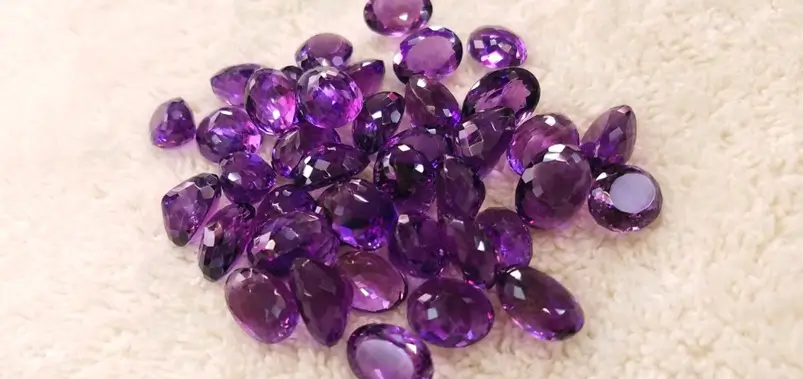
This section is the one that will save you money. The how to avoid fake gems Jaipur question is the most practically important one for any foreign buyer, and the answers are more accessible than most people expect.
Know the Common Substitutions
The most common deceptions in the Jaipur tourist gem market involve substituting synthetic or lower quality stones for natural ones. Synthetic emeralds are visually indistinguishable from natural ones to the naked eye and cost a fraction of the price. Glass stones colored to resemble rubies or sapphires are sold in tourist-oriented shops. Low quality garnets are sometimes passed off as rubies. Dyed quartz is sold as colored sapphires.
None of these substitutions can be reliably detected by a non-expert examining a stone in a showroom setting. This is precisely why certification from a recognized laboratory is not optional for significant purchases.
Watch for Pressure and Urgency
High quality Jaipur gemstone dealers do not need to create urgency around their merchandise. If a seller is telling you that a particular price is available only today, that this stone is the last one of its kind, or that another buyer is waiting these are sales tactics, not facts. Genuine fine stones sell themselves when presented to a knowledgeable buyer. Tactics that bypass your judgment and rush your decision are compensating for a product that cannot sell on its own merits.
Ask for Documentation Before Negotiating Price
Always ask about certification before you begin negotiating. A reputable dealer will have certification available for significant stones or will offer to obtain it. A dealer who deflects this question, who offers verbal assurances in place of documentation, or who suggests that certification is unnecessary for a "good customer" is not one you should buy from regardless of how charming they are.
Request a Receipt With Stone Specifications
For any purchase above a nominal amount, request a detailed receipt that specifies the stone type, weight in carats, treatment status, and price paid. A reputable dealer provides this as standard practice. This documentation is also useful for customs declarations when you travel home and for insurance purposes after your return.
Precious stones Jaipur foreigners often overpay not because they were deceived about what they were buying, but because they did not negotiate. Negotiation is standard and expected in Jaipur's gem market, including at reputable establishments.
The general principle is to express genuine interest without expressing urgency, to ask questions that demonstrate knowledge, and to be willing to walk away. A seller who knows that a buyer will walk away has a strong incentive to price fairly. A seller who senses that a buyer is emotionally committed to a specific piece has very little.
Start by asking the price without indicating your budget. Listen to the first number as a data point, not a real price. Counter at roughly sixty to seventy percent of the asking price for jewelry and semi precious stones. For certified precious stones, the margin is typically tighter a counter at eighty percent is more realistic for a high quality natural stone with certification.
Be respectful and unhurried throughout. Negotiation in Jaipur's gem market is not adversarial. It is a professional exchange between a seller who knows the value of what they have and a buyer who is trying to establish it. The best outcomes come from genuine engagement rather than aggressive positioning.
Gemstone jewellery shopping in Jaipur generates purchases that need to get through customs, and preparation for this is worth doing before you buy.
Most countries allow travelers to bring in personal jewelry and gemstones without import duty up to a specified value threshold. This threshold varies significantly by country check your home country's customs regulations before you travel. In the United States, for example, the personal exemption for goods purchased abroad is currently 800 USD per person, above which duty applies.
Keep all receipts and certificates for your gem purchases in your carry-on luggage, not in checked baggage. If customs officials question the value of your purchases, your documentation is your proof. A receipt from a reputable Jaipur dealer with stone specifications and price paid is generally accepted by customs authorities as valid documentation.
For very high value purchases, consider obtaining an export certificate from the Gem and Jewellery Export Promotion Council (GJEPC) before leaving India. Your dealer can assist with this process, and reputable dealers who work regularly with international clients are familiar with the procedure.
Enjoy a Premium Jaipur Shopping & Sightseeing Experience
Explore Jaipur's vibrant shopping streets, artisan workshops, and traditional handicraft markets with the comfort of a private chauffeur-driven car. From exquisite gemstone jewellery to handcrafted souvenirs, enjoy a personalized journey while discovering the city's rich royal heritage.
For travelers who want expert guidance through Jaipur's best jewellery shops Jaipur, Golden Triangle Tours provides access to vetted, commission free dealers establishments whose reputation is built on merchandise quality rather than tourist volume.
Shopping with a Golden Triangle Tours guide means your guide has no financial relationship with any shop you visit. Their recommendations are based entirely on their knowledge of which dealers sell genuine merchandise at fair prices. They will explain what you are looking at, ask the right questions on your behalf, help you understand certification, and negotiate without the emotional involvement that affects most buyers.
For travelers interested in a deeper engagement with the craft watching a kundan jeweler work, visiting a gemstone cutting workshop, or meeting the families who have maintained meenakari traditions for generations these experiences can be arranged as part of a broader Golden Triangle itinerary. They are not available to walk-in visitors and represent a level of access that is entirely specific to established relationships in the city.
We promise you a holiday where everything is taken care of from the moment you land. Trusted drivers waiting for you, handpicked hotels that fit your style, personalized itineraries designed just for your family, and a dedicated team on call 24/7. All you need to do is relax, explore, and create unforgettable memories, while we take care of every detail behind the scenes.
If you have access to a qualified gemologist, bringing them is an excellent idea for significant purchases. Independent gemologists familiar with the Jaipur market can be engaged for a day fee and provide real-time assessment of stones before purchase. Your tour operator may be able to recommend a reputable independent gemologist if this level of assurance is important to you.
The gem market operates year-round, but the peak trade fair period - particularly around the Jaipur Jewellery Show (JJS), typically held in late December or early January - brings an extraordinary concentration of merchandise and dealers to the city. Shopping adjacent to this period gives retail buyers access to a wider range of stock than at other times of year. The regular tourist season from October to March is the most comfortable time to shop from a weather perspective.
Yes. Reputable dealers with established export operations ship internationally on a regular basis and are familiar with the documentation requirements for major destination countries. For high-value purchases, confirm the shipping method, insurance coverage, and customs documentation process before agreeing to shipment.
The GTL is India's most respected gemological testing facility, located in the Johari Bazaar area. To use it, bring your stone - either before purchase (with the dealer's knowledge) or after - and submit it for testing. The laboratory provides a written report specifying the stone's identity, weight, treatment status, and origin where determinable. The process takes one to two days and costs a modest fee relative to the value of most significant purchases.
Avoid purchasing any stone that the seller cannot document with a certificate or a detailed receipt. Be particularly cautious with stones marketed as exceptionally rare or historically significant without supporting documentation - these claims are almost never verifiable and are frequently used to justify inflated prices.
Yes, and this is one of the most underutilized options available to visitors. Reputable jewelers in Jaipur can create custom pieces from your own design or from a reference image, using stones selected from their inventory. Turnaround time for custom work is typically three to seven days, which fits comfortably within most Rajasthan itineraries. The cost of custom work in Jaipur is dramatically lower than equivalent custom jewelry in Western markets.
Kundan refers to the technique of setting uncut gemstones into pure gold using thin sheets of gold worked around each stone. Meenakari refers to the application of colored enamel, typically to the reverse side of kundan pieces or to standalone gold jewelry. Many of Jaipur's finest pieces combine both techniques - kundan on the front face and meenakari on the reverse - making them genuinely two-sided works of art.
For buyers with genuine gemological knowledge and existing relationships in the trade, wholesale purchasing in Jaipur can be extraordinarily good value. For first-time buyers without these advantages, wholesale purchasing carries significantly higher risk because the protections available at the retail level - certification requirements, receipt documentation, established shop accountability - are less consistently available in wholesale settings.
If you discover the issue while still in Jaipur, return to the shop with your receipt and request a refund or exchange. If you have already left India, you can file a complaint with the Consumer Forum or the Tourism Department of Rajasthan - reputable dealers registered with tourism authorities do respond to formal complaints. GTL or GIA certification of the stone gives you documentation to support your case.
Yes. GIA and other international gemological laboratories accept stones for certification post-purchase. However, obtaining certification before leaving Jaipur is significantly faster and less expensive, and it gives you the option to renegotiate or cancel a purchase if the certification reveals something unexpected about the stone.
Look for membership in the Gem and Jewellery Export Promotion Council (GJEPC), a physical showroom with a verifiable address and business history, willingness to provide documentation for all purchases, and reviews from international buyers on verified platforms. Reputable dealers also have no objection to GTL testing before purchase.
This depends on your personal preference and budget. For value and uniqueness, kundan jewelry and high-quality semi-precious stone pieces in silver represent the best combination of price, craftsmanship, and cultural significance. For investment-quality purchases, certified natural emeralds, rubies, and sapphires from reputable dealers represent significant value relative to international market prices.
No. Negotiation is standard and expected at virtually all levels of the market. The only exceptions are shops that explicitly operate on a fixed-price policy, which some larger export-oriented establishments do. Even then, discounts for significant purchases are often available on request.
Certification from a recognized gemological laboratory. For local purchases, the Gem Testing Laboratory of Jaipur (GTL) is the gold standard. For international assurance, GIA certification is universally recognized. No other single factor is more important for significant purchases.
Yes, provided you shop at reputable establishments, insist on certification for significant purchases, and avoid commission-driven referrals. The risks in Jaipur's gem market are real but entirely manageable with the right preparation and approach.