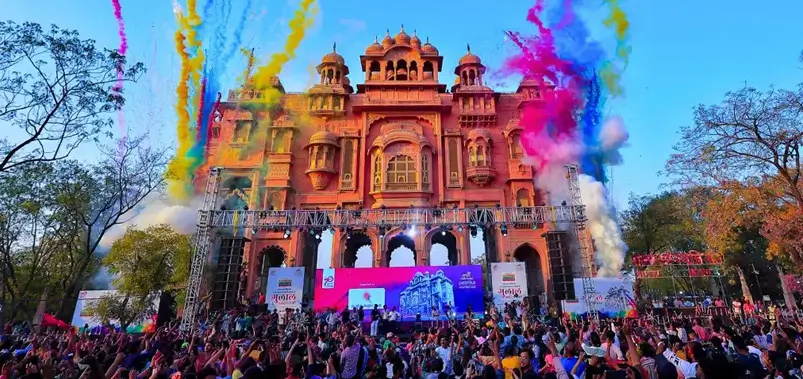
There is no festival in India quite like Holi, and there is no city in India quite like Jaipur when Holi arrives. For roughly forty eight hours every spring, the Pink City transforms into something that defies easy description. Streets that are normally navigated with careful attention become rivers of color. Strangers who would ordinarily pass each other in silence stop to press handfuls of gulal onto each other's faces with the uninhibited joy of people who have been waiting for this moment for an entire year. Music comes from everywhere and nowhere. The air itself turns pink and red and green and gold.
For a foreign traveler experiencing Holi in Jaipur for the first time, the scale and the sensory intensity of it can be genuinely overwhelming in the best possible way. But it can also be confusing, physically demanding, and occasionally uncomfortable if you arrive without realistic expectations and solid preparation.
This guide is written to give you both. It covers what the Holi celebration in Jaipur actually looks and feels like from the inside, where to be and when, how to protect yourself and your belongings, what the cultural context means and why it matters, and how to make sure your Holi experience in Jaipur is one of the great travel memories of your life rather than an expensive, chaotic, and vaguely regrettable afternoon.
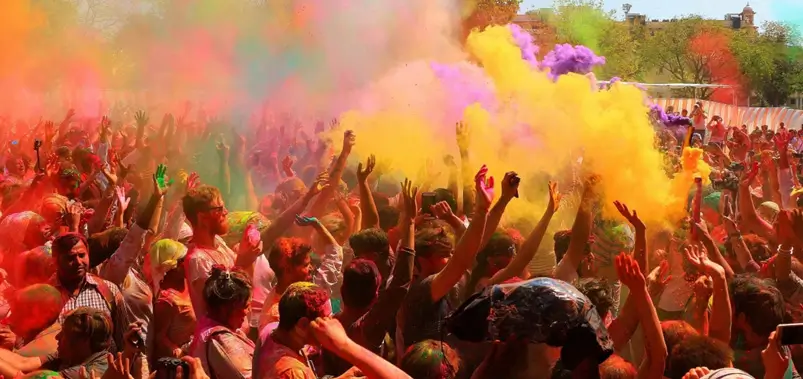
Holi is one of the oldest festivals in the Hindu calendar, with roots in mythology, agriculture, and the arrival of spring that go back thousands of years. The most widely told story behind it involves Prahlad, a young devotee of Vishnu, and his aunt Holika a figure of evil who is burned in effigy on the night before Holi in a ritual called Holika Dahan. The bonfire that marks Holika Dahan is a genuine community event in Jaipur, and witnessing it the evening before the main color festival is something that most visitors overlook and few forget.
The color festival itself called Dhulandi celebrates the triumph of good over evil, the end of winter, and the abundance of spring. But these mythological and seasonal meanings have, over centuries, accumulated a social dimension that is arguably more significant than either. Holi is one of the very few occasions in Indian culture when normal social hierarchies are deliberately suspended. Age, caste, gender, economic status on Holi morning, none of it applies in the same way it does on every other morning of the year. Strangers pull each other into celebrations. Neighbors who barely speak the rest of the year share bhang and sweets. The social permission granted by the festival is real, and it is one of the reasons playing Holi in Jaipur feels so different from anything else you will experience in India.
For a foreign visitor, understanding this context transforms the experience from a colorful spectacle into something genuinely meaningful. You are not watching a festival. You are participating in a social ritual that has been reshaping relationships and dissolving boundaries in this city for centuries.
Holi festival Rajasthan falls on the full moon day of the Hindu month of Phalgun, which typically corresponds to March in the Gregorian calendar. The exact date changes every year according to the lunar calendar.
Holika Dahan - the bonfire night takes place on the evening before the main color festival. In Jaipur, the largest and most significant Holika Dahan bonfires are lit in the old city neighborhoods, particularly around the Chandpole and Tripolia areas. Arriving at a bonfire site by 7:00 PM gives you time to find a good vantage point before the crowds become dense.
Dhulandi - the day of colors begins at sunrise the following morning and runs until early afternoon. By 1:00 or 2:00 PM, the intensity typically subsides significantly as families go home to bathe, change, and rest. The afternoon of Holi in Jaipur is quiet in a way that feels almost surreal after the morning's intensity.
Plan your Jaipur visit to include both Holika Dahan and Dhulandi if possible. The two together give you the full arc of the festival rather than just its most photogenic hour.
.webp)
The Old City Neighborhoods
The most authentic Holi celebration in Jaipur happens in the streets of the old city the lanes around Johari Bazaar, Kishanpole, and the neighborhoods surrounding the City Palace. This is where Jaipur's residents have been celebrating Holi for generations, and the energy here is unlike anything staged or organized for tourists.
Celebrating in the old city requires a specific kind of preparedness. The crowds are dense, the color application is enthusiastic to the point of being forceful, and the chaos is real. But so is the warmth. Families will pull you into their courtyard celebrations. Children will chase you down the street with water pistols. Old men will press so much gulal onto your face that you will not recognize yourself in a mirror for three days.
For travelers who want the most immersive possible Jaipur Holi experience, the old city is the answer. Go with a trusted local guide, keep your group together, dress appropriately, and leave expensive items at your hotel.
Read more - "Don't just watch Holi — live it as part of a perfectly timed journey. Our Golden Triangle Fairs & Festivals Tour weaves India's most electric celebrations into a seamless itinerary across Delhi, Agra, and Jaipur, so you never miss a moment that matters."
Jaipur's elephant festival Jaipur Holi is one of the most visually spectacular events associated with the festival season in Rajasthan. Held at Chaughan Stadium, typically on the evening of Holika Dahan or the morning of Holi itself, the festival features magnificently decorated elephants, caparisoned horses, folk dancers, musicians, and a procession that carries the visual grandeur of Rajasthan's royal tradition into a very public space.
It is worth noting that the elephant festival has generated ongoing discussion regarding animal welfare, and attitudes toward it have evolved among both Indian and international visitors. Some travelers choose to attend and observe the decorations and pageantry without participating in elephant rides or close contact activities. Others choose to skip the elephant component entirely and focus on the cultural performances. Making an informed decision about your level of participation is worth doing before you arrive.
For photographers, the elephant festival is extraordinary regardless of where you stand on the participation question. The combination of decorated animals, traditional costumes, and Rajasthani light in the late afternoon creates images that are genuinely difficult to achieve anywhere else.
Heritage Hotel and Haveli Celebrations
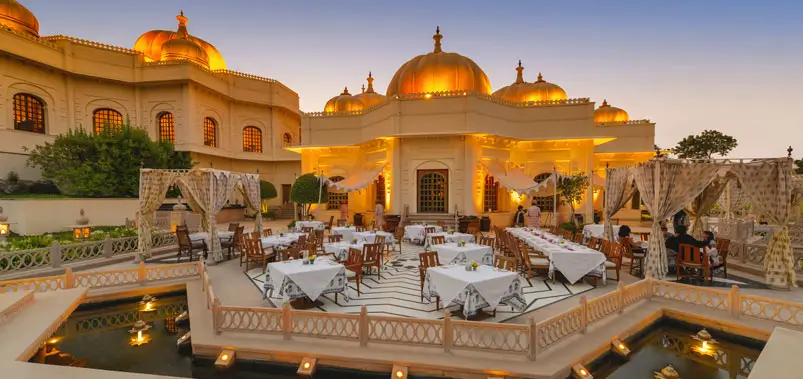
Many of Jaipur's heritage hotels and palace properties organize their own best place to celebrate Holi Jaipur events, which offer a more controlled and comfortable version of the festival. These typically include organized color play in a courtyard or garden, traditional Rajasthani music and dance performances, festive food and drink, and the opportunity to participate in the color tradition without the density and unpredictability of street celebrations.
For travelers who want the aesthetic and emotional experience of Holi without the physical intensity of the old city streets, heritage property celebrations are an excellent option. They are also significantly more comfortable for families with young children, older travelers, and those with mobility considerations.
The trade off is authenticity. A hotel courtyard Holi, however beautifully organized, is not the same as the street festival. Both are legitimate ways to experience the occasion the choice depends on what kind of traveler you are.
Private Family Celebrations
Through a trusted local guide or a well connected tour operator, it is sometimes possible to join a Jaipur family's private Holi celebration. These arrangements are not listed anywhere and cannot be booked through any platform they happen through genuine human relationships.
A private family Holi is the rarest and most meaningful version of the experience. You are not a tourist who has purchased access to a festival. You are a guest at someone's family celebration, eating their food, meeting their relatives, and participating in a tradition that this specific family has observed for generations. If this possibility is available to you through your travel arrangements, take it without hesitation.
Read More - "Holi in Jaipur is just the beginning. Extend the magic with our Golden Triangle Tour with Rajasthan — a handcrafted journey that takes you from the pink streets of Jaipur deep into the royal forts, desert dunes, and living culture of Rajasthan."
Clothing for playing Holi in Jaipur requires some advance planning. Here is the definitive approach.
Wear white or very light colored clothing. The colors show up most beautifully on white, and the visual effect of a crowd in white gradually transforming into a rainbow of color is one of the defining images of the festival. Choose clothing you are genuinely willing to sacrifice Holi colors do not wash out completely, and even the best organic gulal will leave a tint on fabric.
Choose natural fiber clothing cotton specifically. Synthetic fabrics trap color against your skin more aggressively, and the combination of color, water, and heat against synthetic fabric can cause skin irritation. Old cotton kurtas are the ideal Holi garment and can be purchased inexpensively in Jaipur's bazaars in the days before the festival.
Wear closed toe shoes or old sandals that you are comfortable getting completely colored and wet. Avoid leather footwear entirely it will not survive a Holi morning in the old city.
Cover your hair. A cotton bandana, an old dupatta, or a light hat significantly reduces the amount of color that works its way into your hair. Applying a generous amount of coconut oil to your hair before going out is the single most effective protective measure you can take it forms a barrier that makes color removal dramatically easier.
Leave jewelry at your hotel. Color seeps into every crevice of jewelry, and the combination of water and physical contact in a crowd creates conditions where jewelry is easily lost or damaged.
This is practical information that most Holi guides underemphasize and that experienced festival goers consider essential.
Apply coconut oil or a thick moisturizer to all exposed skin before going out. This is not optional it is the difference between skin that recovers in a day and skin that is stained for a week. Cover your face, neck, arms, and hands thoroughly.
Protect your eyes. Wear sunglasses ideally wraparound styles that limit color entry from the sides. Holi colors are generally safe for skin, but direct contact with eyes can cause irritation, and some of the lower quality synthetic colors used in less carefully managed celebrations can be genuinely harmful. If color does get in your eyes, rinse immediately with clean water.
Do not wear contact lenses during Holi. The combination of color powder, water, and physical activity in a crowd creates multiple pathways for color to get under or around contact lenses. Wear your glasses or go without vision correction for the morning.
Apply petroleum jelly to your eyebrows, the edges of your hairline, and the area around your nose. These are the places where color settles most stubbornly and is hardest to remove. A small barrier of petroleum jelly at these points makes post Holi cleanup significantly easier.
Carry a small bottle of clean water and a soft cloth. Being able to rinse your face periodically throughout the morning is more valuable than it sounds, particularly if you are photographing and want to occasionally see clearly through your viewfinder.
The combination of dense crowds, physical contact, and the general chaos of a Holi festival Rajasthan celebration creates ideal conditions for petty theft, even among the most well intentioned crowd. These precautions are not about distrust they are simply common sense.
Leave your passport, extra credit cards, and any jewelry you are not wearing at your hotel in a safe. Carry only the cash you expect to need for the morning and one card as backup.
Use a waterproof phone case or a ziplock bag to protect your phone. Water balloons and water guns are a significant part of street Holi celebrations, and a standard phone case will not adequately protect your device.
Use a small crossbody bag that sits against your body rather than a backpack that sits behind you. Keep the bag zipped at all times and periodically check that it is secure.
Carry a dedicated camera if photography is important to you a camera you are comfortable using in an environment where it will get dusty and occasionally wet, but not your most expensive equipment. The old city during Holi is not the right environment for a professional camera kit worth several thousand dollars.
Read More - "Holi is joyful and welcoming — but like any large festival crowd anywhere in the world, a little preparation goes a long way. Before you head into the celebrations, take five minutes to read our Jaipur tourist safety guide covering common scams, emergency helplines, and practical street smarts. You'll thank yourself later."
Holi's social liberality, while culturally meaningful and genuinely joyful for the vast majority of participants, can create uncomfortable situations for foreign women traveling alone or in small groups. The suspension of normal social boundaries that makes Holi so exhilarating can also mean that unwanted physical contact is more likely than on a normal day.
This is not a reason to avoid the festival. It is a reason to go with a plan.
Travel with at least one other person, ideally a trusted local guide or a local contact who understands the dynamics and can intervene if needed. Stay in areas where crowds are mixed and family oriented rather than sections of the celebration that are predominantly male. Know the route back to your hotel or a safe indoor space and be willing to use it if the environment feels uncomfortable.
Heritage property celebrations and organized events are significantly safer environments for solo female travelers than open street celebrations in the old city. If you are traveling alone, seriously consider starting with a heritage property celebration and transitioning to the streets only with local accompaniment.
Read More - "The difference between a good Holi experience and an unforgettable one often comes down to one thing — who's walking beside you. A knowledgeable local guide doesn't just show you where to go; they open doors, translate moments, and keep you out of the tourist traps. Here's exactly how to find a trusted local guide in Jaipur before your trip."
Trust your instincts completely. Holi is one of India's most joyful festivals, and the overwhelming majority of interactions you will have are genuinely warm and celebratory. But your comfort and safety are non-negotiable, and no festival experience is worth compromising either.
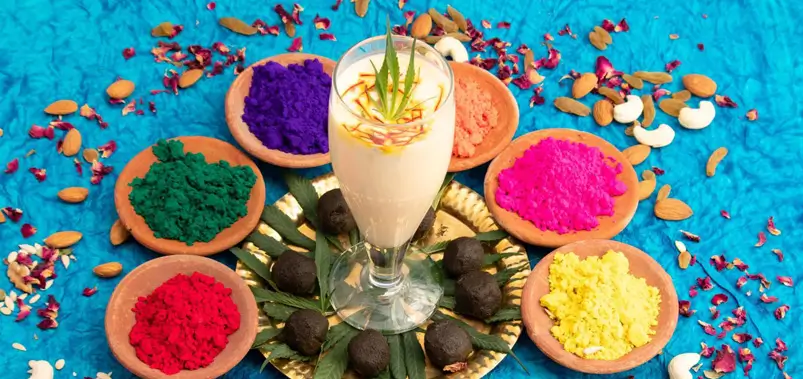
Bhang is a preparation made from the leaves and flowers of the cannabis plant, traditionally consumed during Holi in the form of a sweet drink called bhang lassi or mixed into sweets called bhang pakoras. In Rajasthan, bhang consumption during Holi has deep cultural and historical roots and is legal and widely available during the festival period.
As a foreign visitor, you should know several things about bhang before you encounter it.
It is significantly more potent than it looks and tastes. Bhang lassi is sweet, cold, and pleasant, and the effects are often not felt for forty five minutes to an hour after consumption. This delay leads many first time consumers to drink more than they intended before the effects of the first serving have become apparent. The resulting experience can be intensely disorienting and, for some people, deeply unpleasant.
If you choose to try bhang, do so in a controlled environment, consume a very small amount initially, wait a full hour before considering more, and make sure you are with people you trust in a setting where you can rest comfortably if needed.
If you choose not to try bhang, you will need to be politely but clearly firm about declining, as it will be offered to you multiple times by well meaning hosts and fellow celebrants. "Thank you, I do not drink" or "thank you, I have already had some" are both effective responses that allow you to decline without causing offence.
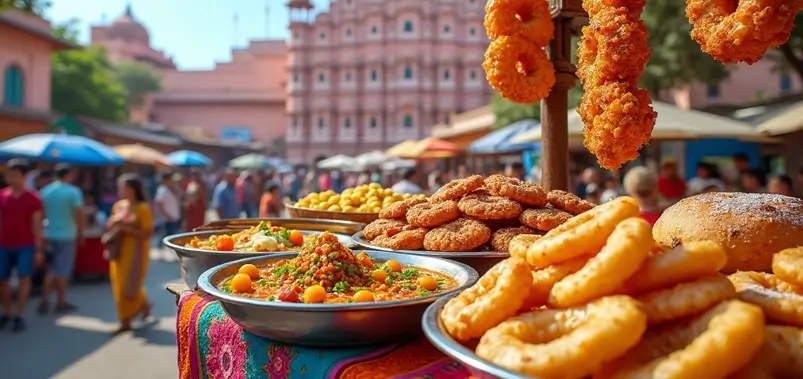
Holi has its own food culture in Jaipur, and it is worth exploring. The festival foods are specific to the occasion and are prepared by families with as much care and tradition as the color rituals themselves.
Gujiya is the definitive Holi sweet a half moon shaped pastry filled with a mixture of dried fruits, nuts, and khoya (reduced milk), deep fried until golden and sometimes dipped in sugar syrup. Every Jaipur household has its own version and every family believes theirs is the best. They are correct, because all of them are extraordinary.
Thandai is a spiced cold milk drink made with almonds, fennel seeds, rose petals, pepper, and cardamom rich, sweet, and genuinely cooling in the warming spring air. The version without bhang is called plain thandai, and it is delicious entirely on its own merits.
Dahi vada - soft lentil dumplings soaked in yogurt and topped with chutneys appears on virtually every Holi spread in Jaipur. So does malpua, a sweet pancake soaked in sugar syrup and often served with rabri.
Eat what is offered to you by host families. Holi food is made with pride and offered with genuine warmth, and accepting it graciously is one of the most culturally appropriate things a foreign visitor can do on this day.
Read More - "Holi isn't just a feast for the eyes — it's one for the stomach too. But the food story in Jaipur goes far beyond festival sweets. Dive into our complete food walk guide through Jaipur's Walled City and discover the street stalls, hidden eateries, and flavours that locals have been keeping to themselves for generations."
Getting Around
Traffic in Jaipur during Holi morning is dense and somewhat unpredictable. Many areas of the old city become effectively impassable for vehicles as the morning progresses. Plan to walk to your celebration venue if at all possible, and build extra time into any transportation plans.
Auto rickshaws are generally available throughout the morning but may charge inflated prices given the demand. Negotiate the fare before getting in.
Your hotel concierge or tour operator can advise on the best approach to your specific venue given road conditions on the day.
Where to Stay During Holi
Book your accommodation well in advance. Holi is one of Jaipur's most popular festival periods for both domestic and international travelers, and quality properties fill up weeks or months ahead. Heritage hotels and palace properties that organize their own Holi events are particularly sought after.
Staying within or very close to the old city gives you the option to walk to the main celebrations, which is the most practical and immersive approach. Properties slightly outside the old city that are well connected by auto rickshaw are a reasonable second choice.
Post-Holi Cleanup
Removing Holi color takes time and the right approach. Begin with a thorough rinse under warm water without soap this removes the majority of surface color. Follow with a coconut oil massage to the skin, which dissolves color that has set slightly, then wash normally with soap or body wash. Repeat if necessary.
Hair color is more stubborn. A coconut oil pre treatment applied the night before Holi, followed by a clarifying shampoo, handles most of it. Expect some residual tint in lighter hair colors for several days this is normal and fades with regular washing.
Read More - "If Holi leaves you hungry for more of Jaipur's festival spirit, you're in luck. Just weeks later, the city transforms again for Gangaur — one of Rajasthan's most visually stunning and emotionally rich celebrations, and it's one that most foreign visitors completely miss."
We promise you a holiday where everything is taken care of from the moment you land. Trusted drivers waiting for you, handpicked hotels that fit your style, personalized itineraries designed just for your family, and a dedicated team on call 24/7. All you need to do is relax, explore, and create unforgettable memories, while we take care of every detail behind the scenes.
No. The celebration varies considerably by neighborhood, family tradition, and social setting. The old city celebrations are the most intense and traditional. Heritage property events are more organized and comfortable. Village celebrations on the outskirts of Jaipur tend to be smaller and more intimate. Each version has its own character, and experiencing more than one gives you a much fuller picture of what the festival actually means in different contexts.
At minimum, two to three months in advance for quality heritage properties. Popular hotels that organize their own Holi events sometimes fill up four to six months ahead. If Holi is the centerpiece of your Jaipur visit, treat accommodation booking as your first logistical priority.
Yes. Simple white cotton kurtas are widely available in Jaipur's bazaars, including Johari Bazaar and Bapu Bazaar, at very reasonable prices. Buying locally is recommended since you will likely want to leave the clothing behind after the festival rather than packing color-stained clothes in your luggage.
Begin with a warm water rinse, then apply coconut oil to skin and hair to dissolve color. Follow with normal soap or shampoo. Repeat as needed. Colors from organic gulal typically clear within one to two washes. Synthetic colors may take longer. Applying coconut oil before going out is the single most effective preventive measure.
Bhang is legally sold and consumed in Rajasthan, including by foreign visitors, during Holi. However, laws regarding cannabis products vary significantly between countries, and the effect of bhang can be much stronger than expected for first-time consumers. If you choose to consume it, do so cautiously, in a safe environment, and with trusted companions nearby.
Contact heritage hotels directly well in advance of your travel dates, or ask your tour operator to include a heritage property Holi event in your itinerary. Many properties open their Holi celebrations to non-residents for a fee, and booking in advance is essential.
Holika Dahan is the bonfire ritual held on the evening before the main color festival. It commemorates the burning of the demoness Holika and marks the beginning of Holi. Attending a Holika Dahan bonfire in Jaipur's old city is a powerful and moving experience - the heat of the fire, the chanting, and the community energy around it are entirely different from the color festival the following morning and equally worth experiencing.
There are no formal age restrictions. Families celebrate with children of all ages, and Holi is genuinely child-friendly in most settings. For very young children - under five - a heritage property celebration is more appropriate than open street celebrations due to the density of crowds and the intensity of color application.
Move toward a more open or less dense area, locate your guide or companion, and be willing to step indoors or return to your hotel. Your comfort is the priority. Holi's joyful energy is real, but so is the right to disengage if the environment stops feeling comfortable.
Yes, but protect your equipment carefully. Use a waterproof case or bag for your phone and camera, and be prepared for the fact that your equipment will get dusty and possibly wet. Always ask permission before photographing individuals at close range - Holi's social openness does not eliminate the courtesy of asking.
The elephant festival has undergone changes in recent years due to animal welfare concerns. Its format and whether certain activities are included varies year to year. Confirm the current format with your tour operator or the Rajasthan Tourism board before your visit to understand what the event currently involves.
The main color celebration begins at sunrise and typically winds down by early afternoon - roughly between 1:00 and 3:00 PM. The intensity peaks in the mid-morning hours between 9:00 AM and noon.
Traditional Holi uses organic gulal made from flower petals and natural pigments. These are gentle on skin and environmentally safe. However, some street-level celebrations use synthetic colors that can be harsher on sensitive skin. Organized heritage property events almost always use organic colors. If skin sensitivity is a concern, ask your event organizer to confirm the type of colors being used.
Yes, but with additional preparation. Solo female travelers in particular should consider joining an organized celebration at a heritage property or connecting with a trusted local guide who can accompany them. Solo male travelers have more flexibility but should still travel with awareness and avoid areas that feel unsafe.
Holi dates change every year according to the lunar calendar. Check the confirmed date for your travel year well in advance, as accommodation and tours book out quickly around this period.
Yes, for the vast majority of visitors, Holi in Jaipur is a safe and deeply positive experience. Taking standard precautions - traveling with companions, protecting your belongings, being aware of your surroundings, and choosing your celebration venue thoughtfully - significantly reduces any risk.