There is something about seeing Jaipur from the open sided seat of a tuk-tuk that no air conditioned car can quite replicate. The smells of the spice markets drift in as you pass, the colours of the bazaars feel close enough to touch, and the city's rhythm, the chaos, the chai stalls, the sudden bursts of music, becomes part of the experience rather than something viewed through glass.
A tuk-tuk tour Jaipur is one of those experiences that sounds like a budget compromise on paper and turns out to be one of the highlights of the trip in practice. This guide covers what a tuk-tuk tour actually involves, the best routes for first time visitors, what it costs, and how to make the most of a day exploring the Pink City this way.
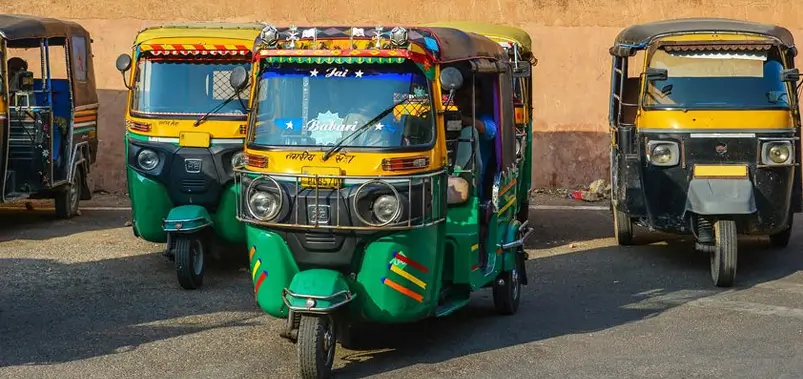
The tuk-tuk, known locally as an auto rickshaw, is a small three wheeled vehicle, open on the sides, that has been the backbone of short distance transport across Indian cities for decades. In Jaipur, they come in distinctive yellow, green, and black liveries, and seat up to three passengers comfortably.
For Jaipur sightseeing by auto rickshaw, the appeal goes well beyond cost. A tuk-tuk can squeeze through the narrow lanes of the old walled city that larger vehicles simply cannot enter, which means access to corners of Jaipur that a standard car based tour would have to skip entirely. Many drivers double as informal local guides, offering commentary, recommendations, and the occasional impromptu stop for a cup of chai or a quick photo at a viewpoint that was not on the original plan.
There is also a more intangible benefit. Riding in an open vehicle through the city puts you inside the experience rather than observing it from a distance, which is part of why so many travellers describe a Pink City tuk-tuk experience as one of the most memorable parts of their visit, more than the monuments themselves.
For visitors with limited time, a half-day tuk-tuk tour Jaipur typically focuses on the landmarks of the old walled city, and this is the most popular starting point for first time visitors.
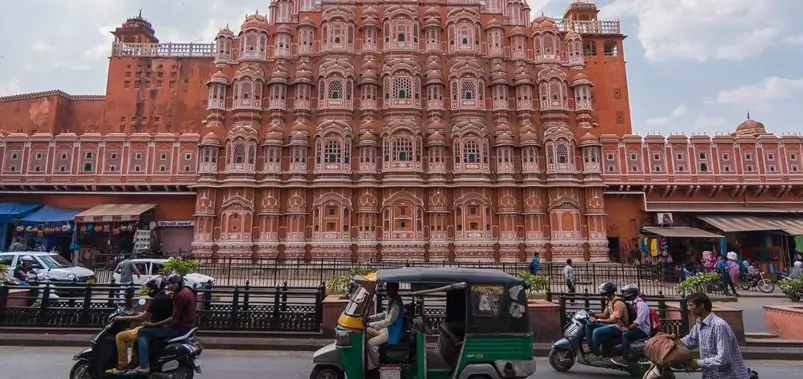
The route usually begins at Hawa Mahal, the famous "Palace of Winds," whose honeycomb facade of nearly a thousand small windows is best photographed from the street directly opposite, a vantage point a tuk-tuk can reach easily even when traffic is heavy.
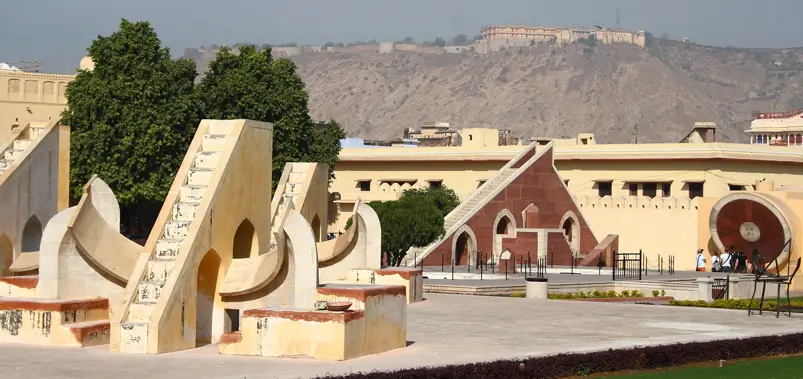
From there, the tour typically continues to City Palace, the still occupied royal residence that blends Rajput and Mughal architectural styles, followed by Jantar Mantar, the eighteenth century astronomical observatory whose oversized stone instruments look almost sculptural in the afternoon light.
A stop at Johari Bazaar or Bapu Bazaar rounds out the route, giving visitors a chance to browse jewellery, textiles, and handicrafts, with the tuk-tuk waiting nearby for the next leg of the journey.
This half-day loop generally takes around four to five hours and covers the core of what most first time visitors come to Jaipur to see.
For travellers with a full day, extending the tuk-tuk tour Jaipur to include Amber Fort transforms the experience considerably. Amber Fort sits on a hilltop roughly eleven kilometres from the city centre, and the drive there by tuk-tuk, through changing scenery as the city gives way to hills and Maota Lake comes into view, is part of the appeal.
A full-day route typically begins early, with Amber Fort first on the agenda to avoid both the heat and the crowds. After exploring the fort's courtyards, palaces, and intricate mirror work interiors, the tuk-tuk continues back into the city for the same core sights as the half-day route: Hawa Mahal, City Palace, Jantar Mantar, and the bazaars.
Some full-day itineraries also include a stop at Birla Temple, a striking white marble temple set within landscaped gardens, which offers a quieter, more contemplative contrast to the energy of the bazaars.
A full day tuk-tuk tour Jaipur generally runs between six and eight hours, depending on how much time is spent at each stop, and is comfortable even in Jaipur's heat thanks to the open design and constant airflow while moving.
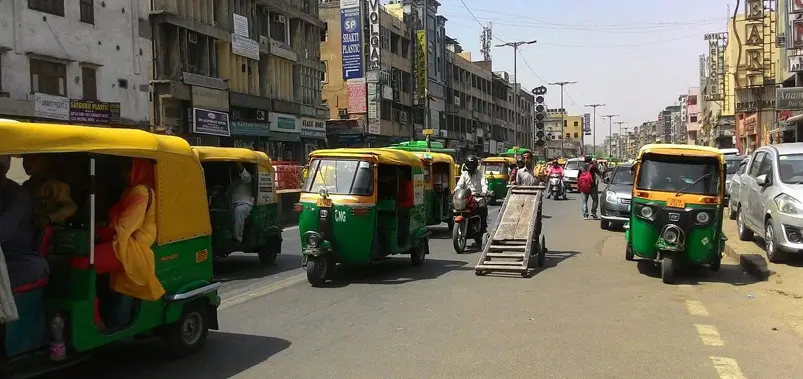
What sets a tuk-tuk apart from a conventional sightseeing tour is less about the destinations and more about everything that happens between them. Drivers frequently know shortcuts through residential lanes that reveal everyday Jaipur, laundry hanging between buildings, neighbourhood temples, street food vendors setting up for the evening, that a standard tourist route would never pass through.
Many travellers also use a tuk-tuk specifically for an evening tour, when the old city's buildings are illuminated and the bazaars take on a completely different character after dark. An evening tuk-tuk tour of the illuminated Hawa Mahal and the surrounding old city streets is a popular addition for visitors who have already covered the major sights during the day.
For shopping focused visitors, hiring a tuk-tuk for a round trip to a specific market, rather than booking a fixed sightseeing route, is also common. This works particularly well for visits to the gem and jewellery district around Johari Bazaar, or to Bapu Bazaar for textiles and handicrafts, where having a waiting vehicle makes carrying purchases far more convenient.
For private tuk-tuk tour Jaipur experiences, costs vary depending on duration and whether a guide is included. A short city loop covering the main old city landmarks tends to be very affordable, while a full-day tour including Amber Fort costs more, reflecting the longer distance and additional time.
If hiring a tuk-tuk informally rather than through a pre-booked tour, agreeing on the price and the full route before starting is essential. Most drivers are open to negotiation, particularly for half-day or full-day hires, but the conversation should happen before you get in, not partway through the day.
Pre-booked tours, often advertised as including hotel pickup and drop off, an English speaking driver, and all fuel and parking charges, remove this negotiation entirely and are a good option for visitors who would rather not deal with haggling on their first day in the city.
Comfort wise, tuk-tuks are open sided, which is part of the charm but also means dust, sun, and noise are part of the experience. Sunglasses, a scarf for dust, and sunscreen are worth carrying, particularly for a full-day tour.

We promise you a holiday where everything is taken care of from the moment you land. Trusted drivers waiting for you, handpicked hotels that fit your style, personalized itineraries designed just for your family, and a dedicated team on call 24/7. All you need to do is relax, explore, and create unforgettable memories, while we take care of every detail behind the scenes.
Yes. A tuk-tuk can be used for transport between different parts of an itinerary, including transfers to a cooking class, homestay, or other cultural experiences, in addition to standard sightseeing.
Comfortable clothing, sunglasses, sunscreen, and a scarf for dust are recommended, given the open-sided nature of the vehicle and exposure to sun and street dust.
Pre-booked tuk-tuk tours typically include hotel pickup and drop-off as part of the package. Informally hired tuk-tuks can also be arranged to start and end at your hotel.
Yes. Hiring a tuk-tuk for a round trip to a specific market, such as Johari Bazaar for jewellery or Bapu Bazaar for textiles, is a convenient and common option, especially when carrying purchases.
Tuk-tuks are open-sided, which provides natural airflow while moving and helps with the heat, though sun exposure means sunglasses and sunscreen are recommended, especially for full-day tours.
A standard tuk-tuk in Jaipur comfortably seats up to three passengers.
Yes. An evening tour, when landmarks like Hawa Mahal are illuminated and the bazaars take on a different atmosphere after dark, is a popular addition for visitors who have already explored the city during the day.
Many drivers, particularly those working with established tour operators, speak conversational English and are able to provide commentary and recommendations along the route.
Yes. Amber Fort, located about eleven kilometres from central Jaipur, is a common stop on full-day tuk-tuk tours, with the drive itself offering scenic views as the city transitions into hilly terrain.
For experiencing the old city's narrow lanes, markets, and everyday street life up close, many travellers find a tuk-tuk more immersive than a car. For longer distances or extreme weather, a car may offer more comfort.
Yes, if hiring informally. Agreeing on the price and full route before starting the tour is important. Pre-booked tours typically have fixed pricing that already includes fuel, parking, and driver charges.
Hawa Mahal, City Palace, Jantar Mantar, Amber Fort, and the bazaars of Johari and Bapu Bazaar are the most commonly included stops on a tuk-tuk sightseeing route.
A half-day tour covering the main old-city sights typically takes four to five hours, while a full-day tour including Amber Fort usually takes six to eight hours.
Yes. Tuk-tuk tours are a common and generally safe way for tourists to explore Jaipur, particularly when arranged through a reputable operator with an experienced driver.
A tuk-tuk tour is a sightseeing experience using a traditional three-wheeled auto rickshaw, allowing visitors to explore Jaipur's landmarks, bazaars, and narrow old-city lanes in an open, immersive way that larger vehicles cannot access.