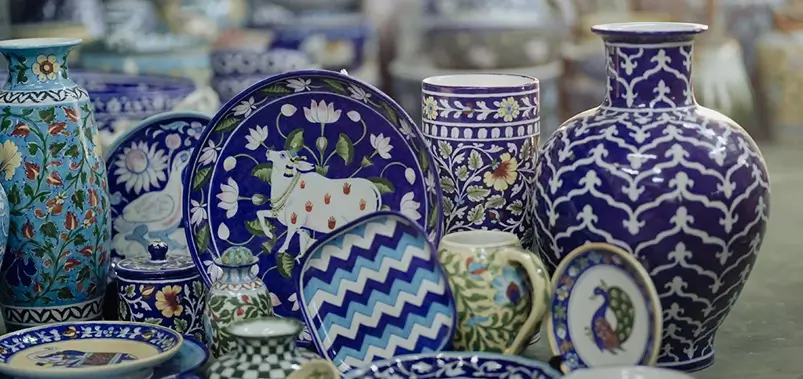
Of all the crafts associated with Jaipur, blue pottery is perhaps the most visually distinctive, a luminous turquoise blue, often patterned with birds, flowers, or geometric motifs, that has become inseparable from the Pink City's identity, even though, somewhat surprisingly, it is not actually pottery in the traditional sense at all.
Blue pottery Jaipur is made without clay. Instead, artisans work with a unique dough made from quartz powder, ground glass, Multani Mitti (Fuller's earth), gum, and water, a Persian technique that travelled to India centuries ago and found its true home in Jaipur and the nearby town of Sanganer. Today, this craft carries official Geographical Indication (GI) recognition, and is kept alive by artisan families who have practiced it for generations.
This guide covers the history of blue pottery artisans, where to watch the process firsthand, how hands-on workshops work for visitors, and where to shop for authentic pieces, whether you are looking for a small souvenir or a statement piece for your home.
The story of blue pottery history Jaipur begins far from Rajasthan. The technique originated in Persia and Central Asia, travelling to India via the Mughal courts, where Persian artisans introduced it sometime around the fourteenth to sixteenth centuries. The Mughals initially used the technique architecturally, in decorative tiles for buildings, before it gradually evolved into the standalone pottery tradition recognised today.
It was Maharaja Sawai Ram Singh II of Jaipur, in the nineteenth century, who is credited with formally introducing and promoting blue pottery as a craft in Jaipur specifically, sending local artisans to learn the technique and establishing it as part of the city's artistic identity. Over time, the craft combined Persian decorative motifs and Chinese influenced glazing techniques into something distinctly Rajasthani, with its now iconic deep cobalt and turquoise blues, often set against white backgrounds, depicting birds, animals, florals, and geometric patterns.
What makes this craft particularly remarkable is its survival. During the industrial era, machine made ceramics very nearly displaced blue pottery artisans entirely, with younger generations migrating away from the craft and many workshops closing. It was the persistence of a small number of artisan families, combined with a more recent global revival of interest in handmade, sustainable craft, that has kept the tradition alive into the present day.
Jaipur's artistic heritage extends far beyond blue pottery. Another centuries-old craft still practiced by artisan families today is hand block printing, where intricate patterns are stamped onto textiles using hand-carved wooden blocks. Visitors interested in traditional craftsmanship often combine blue pottery workshops with a visit to local printing communities to gain a deeper understanding of Rajasthan's living artistic traditions.
Read More: Hand Block Printing in Jaipur – Visit a Traditional Chippa Community Workshop
Understanding the process adds enormous appreciation to anything you might buy, and it is also one of the most interesting parts of visiting a workshop in person.
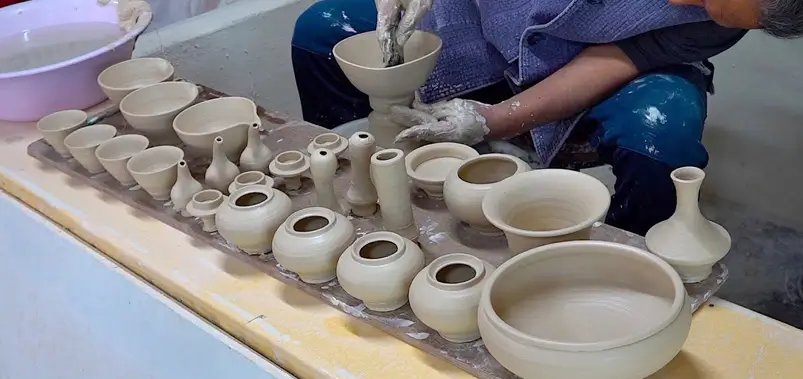
The dough used for blue pottery Jaipur pieces is prepared from quartz stone powder, powdered glass, Multani Mitti, borax, and gum, mixed with water in careful proportions, roughly equal parts gum, salt, and clay substitute material. This mixture is left to rest overnight, then kneaded to a uniform consistency and left again for two to three days before it is workable, a process that, on its own, takes nearly a week before a single piece is even shaped.
Once ready, the dough is moulded or shaped, often on a potter's wheel for rounded forms like vases and bowls, or pressed into moulds for tiles and flatter pieces. After shaping and drying, pieces are hand painted with mineral oxide pigments, the famous cobalt blue coming from a specific oxide that only reveals its full colour after firing. Some designs incorporate additional colours, yellows, browns, and greens, alongside the signature blue, and certain pieces are further decorated with small inlaid pieces of mirror or coloured glass for a shimmering effect.
The final and most transformative step is firing. Pieces are fired at relatively low temperatures compared to traditional ceramics, and it is this firing process that brings the painted oxides to life, turning what was a dull coloured painted surface into the bright, glossy blue the craft is famous for.
Like blue pottery, Jaipur's gemstone industry relies heavily on skilled craftsmanship passed down through generations. Understanding how artisans cut, polish, and design precious stones can help visitors appreciate why Jaipur has earned an international reputation as India's gemstone capital. For travellers planning a shopping-focused visit, learning how to identify authentic jewellery is equally important.
Read More: Gemstone Jewellery Shopping in Jaipur – A Complete Foreigner's Guide
.webp)
While blue pottery shops and studios exist throughout Jaipur, the town of Sanganer, located just outside the city, is where the majority of production actually happens. Today, Sanganer is home to over two hundred artisan families who continue this work, making it the genuine centre of the craft rather than simply a tourist-facing recreation of it.
Many guided experiences for visitors begin with a drive to Sanganer, where small factories and workshops welcome visitors to observe the entire process, from dough preparation through painting and firing. Seeing this in its actual production setting, rather than a staged demonstration purely for tourists, gives a much more authentic sense of how blue pottery artisans actually work day to day.
Visiting Sanganer's workshops is best arranged in advance, either through a tour operator or by requesting permission directly, since these are working production spaces rather than formal visitor attractions in the conventional sense.
Many travellers who enjoy visiting Sanganer's artisan workshops are surprised to discover how many lesser-known villages surround Jaipur. These rural communities offer opportunities to experience traditional crafts, local culture, historic temples, and everyday Rajasthani life away from the city's busiest tourist attractions.
Read More: Off-Beat Villages Near Jaipur for a Day Trip
For travellers who want to go beyond watching, several studios in and around Jaipur offer hands on Jaipur blue pottery workshop experiences, where visitors are guided through painting and decorating their own piece under the supervision of an experienced artisan.
A typical guided experience includes hotel pickup, a drive to a workshop (often in Sanganer), a demonstration of the full production process, and then a hands on session where visitors paint a plate, tile, or small bowl themselves, using the traditional oxide pigments and techniques. Tea and snacks are commonly included, and the finished piece, once fired, can often be collected later or shipped, since firing takes time and cannot usually be completed during a single visit.
For visitors with a deeper interest, some studios in Jaipur itself, rather than Sanganer, offer one on one sessions with award winning individual artisans, multi generational masters of the craft who guide visitors personally through both the history and the technique. These sessions tend to be smaller in scale but offer a more intimate, conversational experience, often including direct insight into the artisan's own family history within the craft.
For those with serious interest in learning the craft in depth rather than simply trying it once, longer workshops, sometimes spanning two weeks to two months, are available at established studios for students and aspiring artisans, though these are a different commitment entirely from a single afternoon experience.
Participating in a blue pottery workshop offers a rare opportunity to connect with local artisans, but visitors seeking a deeper cultural experience may also enjoy sharing a meal with a Rajasthani family. These intimate experiences provide valuable insight into local traditions, home cooking, and daily life beyond the usual tourist itinerary.
Once you understand the process, shopping for buy blue pottery Jaipur pieces becomes a much more informed experience, and there is a wide range of places to do so, from large established stores to smaller contemporary studios.
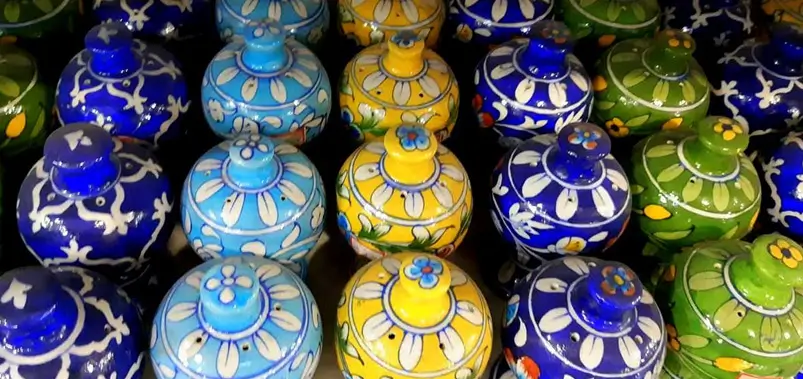
Established blue pottery art centres, often recognisable by their own striking blue and turquoise exteriors, typically operate as combined workshop and shop spaces, with multi storey showrooms displaying an enormous range of products, vases, tiles, dinner sets, jewellery, door knobs, trays, incense holders, and decorative pieces of every size.
A newer generation of studios has also emerged, often run by designers who combine traditional blue pottery techniques with more contemporary forms and applications, clothes hangers, soap dispensers, modern homeware, blending the centuries old craft with designs suited to modern interiors. These contemporary studios often source their pieces directly from Sanganer's artisan workshops while presenting them in a more design led retail context.
For visitors who want to combine shopping with supporting artisan communities directly, some organisations operate as artisan collectives or NGOs, where purchases more directly support the craftspeople producing the work, an option worth seeking out for those who want their purchase to have a more direct impact.
Blue pottery is one of Jaipur's most iconic handicrafts, but it is only one part of the city's rich shopping culture. From hand-printed textiles and gemstone jewellery to leather goods and handcrafted décor, Jaipur offers countless opportunities for visitors looking to take home authentic souvenirs that reflect Rajasthan's artistic heritage.
Read More: What to Buy in Jaipur – Traditional Crafts, Textiles and Souvenirs
Authentic blue pottery Jaipur has a few recognisable characteristics worth knowing before you buy. Genuine pieces have a certain weight and texture distinct from standard ceramics, owing to the quartz and glass composition rather than clay. Hand painted designs will show small natural variations, no two pieces are perfectly identical, which is part of the charm rather than a flaw.
The glaze should have a glossy, slightly translucent quality, particularly visible in the blue and turquoise areas, a result of the specific firing process. Pieces decorated with inlaid mirror or coloured glass should show this clearly as a deliberate design element rather than something that looks accidentally embedded.
Given the relatively delicate nature of the material, it is worth asking about packing for transport, particularly for larger pieces like vases or plates, since blue pottery, while more durable than its delicate appearance might suggest, still requires careful handling for travel.
Understanding quality, authenticity, and craftsmanship is essential whether you're purchasing blue pottery or precious gemstones. Visitors interested in Jaipur's famous jewellery markets often benefit from learning how to evaluate certifications, pricing, and trusted sellers before making a significant purchase.
Read More: Where to Buy Authentic Emeralds in Jaipur Without Getting Cheated
We promise you a holiday where everything is taken care of from the moment you land. Trusted drivers waiting for you, handpicked hotels that fit your style, personalized itineraries designed just for your family, and a dedicated team on call 24/7. All you need to do is relax, explore, and create unforgettable memories, while we take care of every detail behind the scenes.
The cobalt and turquoise blues are the craft's defining visual signature, achieved through specific mineral oxide pigments that only reveal their full colour after the firing process, and are closely associated with Jaipur's artistic identity.
Yes. Some established studios offer longer courses, ranging from two weeks to two months, for those seriously interested in learning the craft in depth, though this is a different commitment from a single workshop experience.
A typical visitor workshop, including travel to a studio, demonstration, and hands-on painting session, usually takes around four hours, often including tea and snacks.
Many established stores and studios offer shipping for larger purchases, particularly for pieces that need careful packing, though it is best to confirm shipping options and costs directly with the seller.
Sanganer offers a more authentic view of large-scale production in artisan workshops, while city-based studios often provide more accessible, visitor-friendly demonstrations and one-on-one sessions with individual artisans.
Authentic pieces typically show small natural variations in hand-painted designs, a distinctive weight and texture from the quartz-glass material, and a glossy, slightly translucent glaze, particularly in the blue tones.
Yes. Jaipur's blue pottery holds official GI recognition, acknowledging its specific regional origin and traditional production methods.
A wide range, including vases, bowls, plates, dinner sets, tiles, jewellery, door knobs, trays, incense holders, and increasingly, contemporary homeware items like clothes hangers and soap dispensers.
While made from a different material than traditional ceramics, blue pottery is reasonably durable for decorative use, though it should be packed carefully for travel due to its delicate glazed surface.
Common motifs include birds, animals, floral patterns, and geometric designs, traditionally rendered in cobalt blue and turquoise, sometimes combined with yellow, brown, or green accents.
The full process, including resting the dough, shaping, painting, and firing, can take close to a week from start to finish, though hands-on workshops for visitors typically focus on the painting and decoration stage.
Yes. Several studios offer hands-on workshops where visitors learn to paint and decorate their own piece under the guidance of an artisan, often including a demonstration of the full production process.
Sanganer, a town just outside Jaipur, is the main centre of production, home to over two hundred artisan families. Several studios in Jaipur city also offer demonstrations of the process.
Blue pottery originated in Persia and Central Asia, travelling to India through the Mughal courts before becoming closely associated with Jaipur from the nineteenth century onward.
Blue pottery is made from a dough composed of quartz stone powder, ground glass, Multani Mitti (Fuller's earth), borax, and gum, rather than traditional clay.