There is a moment, partway through a local family home dinner Jaipur experience, that tends to stay with travellers long after the rest of the trip has blurred into photographs and itineraries. It is usually small, a grandmother insisting on a second helping, a child showing you a school drawing, a question about your own family back home asked with genuine curiosity rather than polite small talk. This is the moment the experience stops being a "tour" and becomes simply dinner, at someone's home, with people who happen to live on the other side of the world from you.
For travellers who want to go beyond restaurants, however excellent, and beyond guided monuments, however impressive, a dinner with Indian family Jaipur experience offers something genuinely different: an evening inside an actual home, sharing a meal that was cooked the way this particular family eats every day, not a version adapted for tourists.
This guide covers what these experiences actually involve, what to expect from the evening, the food you are likely to be served, and how to choose and prepare for one well.
At its core, a home hosted meal Jaipur experience is straightforward: a local family welcomes a small group of travellers, often just one or two people, sometimes a small group, into their home for an evening, and shares a home cooked meal with them. What makes it more than simply "dinner at someone's house," however, is the structure and intention behind it.
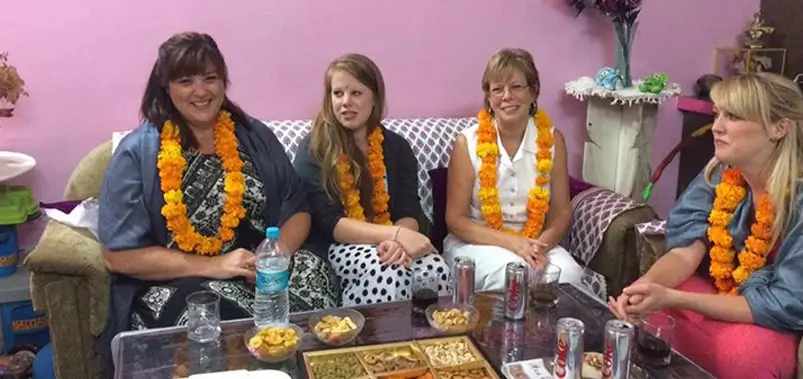
Most experiences begin with private transport from your hotel, typically in the early evening, to the family's home. On arrival, hosts often welcome guests in a traditional manner, sometimes with a drink or snack, before guests are invited into the home itself. Many Jaipur households include multiple generations living under one roof, and it is common for guests to meet not just the primary host but parents, children, and sometimes extended family who happen to be present that evening.
A significant part of the evening usually takes place in or near the kitchen, the rasoi, where the meal is being prepared. Guests are often invited to watch, ask questions, or even help with simple tasks, though there is rarely any pressure to participate actively if you would simply prefer to observe and chat.
The evening culminates in the meal itself, eaten together with the family, often seated on the floor or around a low table in the traditional manner, followed by continued conversation over chai or dessert.
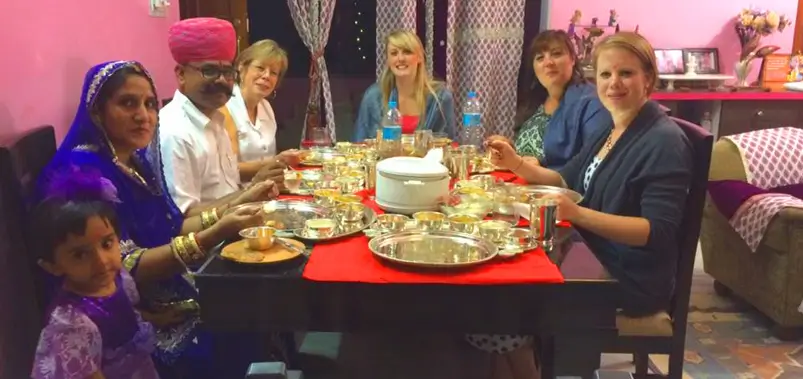
The food served during a traditional Rajasthani dinner experience is, by design, the kind of meal a family would actually eat on any given evening, not a restaurant style tasting menu, and not necessarily the most "famous" Rajasthani dishes, though these often do feature.
A typical spread includes a selection of vegetable curries, often featuring whatever produce is in season, alongside dal (lentils), prepared in one of the countless regional variations that exist across Rajasthani households. Freshly made bread, usually roti or chapati, made and cooked while you watch, is almost always part of the meal, and many guests describe the smell of fresh bread cooking as one of the most evocative parts of the entire evening.
Rice often accompanies the meal, along with yogurt based sides, pickles, and sometimes a sweet dish to finish. While many host families serve vegetarian meals, reflecting common dietary practices in many Rajasthani households, some hosts do include non-vegetarian options, and this is generally something that can be discussed and arranged in advance based on your preferences.
What distinguishes this food from restaurant Rajasthani cuisine is largely about technique and proportion, the spice levels reflect what the family actually eats, the dishes are sized for a real family meal rather than a tourist portion, and the overall flavour profile tends to feel less "adjusted" for international palates than much restaurant food.
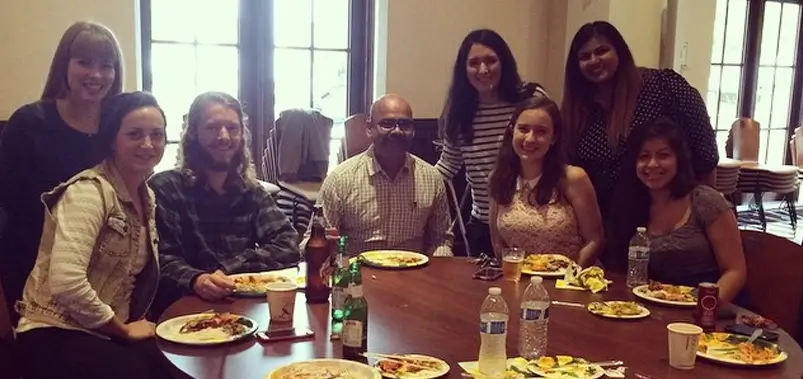
If the food is the centrepiece of a Jaipur dining experience with a local family, the conversation is often what guests remember most.
Host families are typically comfortable in English, at least at a conversational level, and the evening usually unfolds as a genuine two way exchange rather than a one sided cultural presentation. Guests often ask about daily life, family structure, festivals, and traditions, while hosts are frequently just as curious about life in the visitor's home country, what families eat, how celebrations differ, what daily routines look like.
This exchange tends to feel notably different from interactions with guides, drivers, or shopkeepers, not because those interactions aren't pleasant, but because this conversation happens in a home, without any commercial transaction hovering in the background beyond the booking itself. Many travellers describe feeling, by the end of the evening, less like a customer and more like a guest who happened to be invited for dinner, which is, in many ways, exactly the point.
Photography is often welcomed, though it is good etiquette to ask the family directly about their comfort with photos, particularly if you intend to share them on social media, a small conversation that most families are happy to have and that sets a respectful tone for the rest of the evening.
For travellers who want to make a full evening of it, a family dinner experience India booking can often be combined with other activities. Some experiences pair the home dinner with an evening city tour, visiting illuminated landmarks like Hawa Mahal or Amber Fort after dark, when the city's architecture takes on a completely different character.
Others combine the dinner with attendance at an evening aarti, the Hindu ritual of worship involving lamps, chanting, and music, performed at temples across the city, before or after the meal, creating a fuller cultural evening that moves between the spiritual and the domestic.
For travellers interested in both cooking and dining, some hosts also offer a combined cooking class and dinner format, where guests participate more actively in preparing the meal before sitting down to eat it, blending the educational aspect of a cooking class with the social warmth of a home dinner.
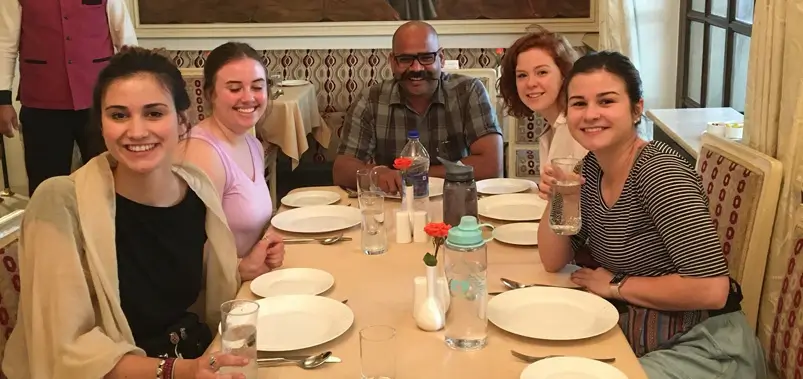
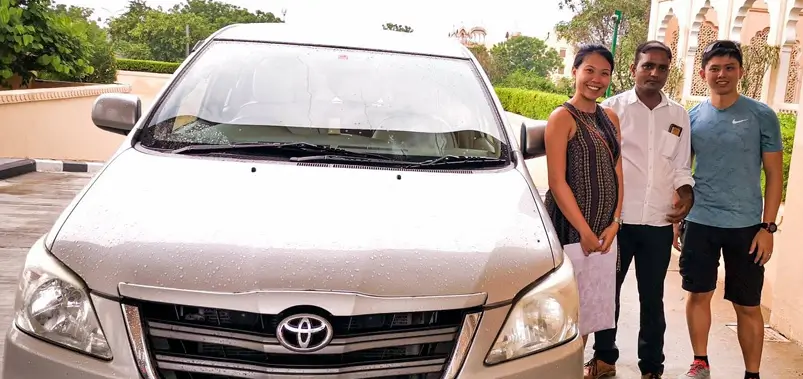
Authentic Indian home meal experiences are generally well structured for international visitors, with private transport included as standard, removing any concern about navigating to an unfamiliar residential address independently.
Sessions typically run around two to three hours, including transport time, giving enough time for the welcome, the meal preparation or cooking demonstration, the meal itself, and conversation afterward, without feeling rushed.
For travellers with dietary restrictions, allergies, or strong preferences, vegetarian, vegan, gluten free, communicating these in advance is standard practice and most hosts are accustomed to and happy to accommodate such requests, often taking genuine pride in being able to adapt their cooking while still delivering an authentic meal.
A small gift is not required but is sometimes appreciated as a gesture, something simple from your home country, sweets, or small souvenirs are common choices, though this is entirely optional and certainly not expected.
Among the wide range of activities available in Jaipur, forts, bazaars, gemstone shopping, walking tours, a Rajasthani hospitality experience centred on a home dinner consistently ranks among the most emotionally resonant for many visitors, and it is worth understanding why.
Most travel experiences, however well curated, involve some degree of performance, a guide delivering information, a shop owner making a sale, a restaurant serving a meal designed for a broad audience. A home dinner removes most of this. The family is not performing hospitality for an audience, they are simply being hospitable, in the way they would be to any guest, because that is how hospitality functions in this context.
For many travellers, this small but significant difference, the absence of a transactional frame around the interaction, is what transforms a pleasant evening into something that feels genuinely meaningful, a brief but real glimpse into a life completely different from their own, shared generously, over a home cooked meal.
We promise you a holiday where everything is taken care of from the moment you land. Trusted drivers waiting for you, handpicked hotels that fit your style, personalized itineraries designed just for your family, and a dedicated team on call 24/7. All you need to do is relax, explore, and create unforgettable memories, while we take care of every detail behind the scenes.
Most home dinner experiences take place in the early evening, with pickup typically arranged between five and seven in the evening.
Yes, when booked through an established and reviewed operator. Private transport and hosted experiences are widely offered and generally well-regarded for safety and reliability.
The food reflects what a family actually eats day to day, served in a home setting, alongside genuine conversation, rather than a menu designed for a broad restaurant audience.
Yes, and many host families have children of their own, which can make the experience particularly enjoyable for travelling families.
Yes. Some experiences combine a home dinner with an evening city tour of illuminated landmarks, or attendance at a temple aarti ceremony.
A small gift is not required but is sometimes appreciated as a thoughtful gesture, such as something from your home country or local sweets.
Yes. Solo travellers are often warmly welcomed and may find the conversational, intimate nature of the experience particularly enjoyable.
This varies by host. Some experiences are structured more like cooking classes where guests actively participate, while others focus on the dining experience with an optional cooking demonstration.
A typical meal includes a selection of vegetable curries, dal, freshly made bread such as roti or chapati, rice, yogurt-based sides, pickles, and often a sweet dish.
Photography is generally welcomed, though it is courteous to ask the host family directly, particularly if you plan to share photos publicly afterward.
Yes, most host families are comfortable communicating in English, at least conversationally, allowing for genuine two-way conversation throughout the evening.
Yes. Most bookings include private transport from your hotel to the host's home and back, typically in an air-conditioned vehicle.
Most experiences run two to three hours, including transport to and from the host's home.
Many host families serve vegetarian meals, though some offer non-vegetarian options. Dietary preferences can generally be communicated and accommodated in advance.
It is a hosted evening where a local family welcomes visitors into their home and shares a home-cooked Rajasthani meal, often including a cooking demonstration and conversation about daily life and culture.