
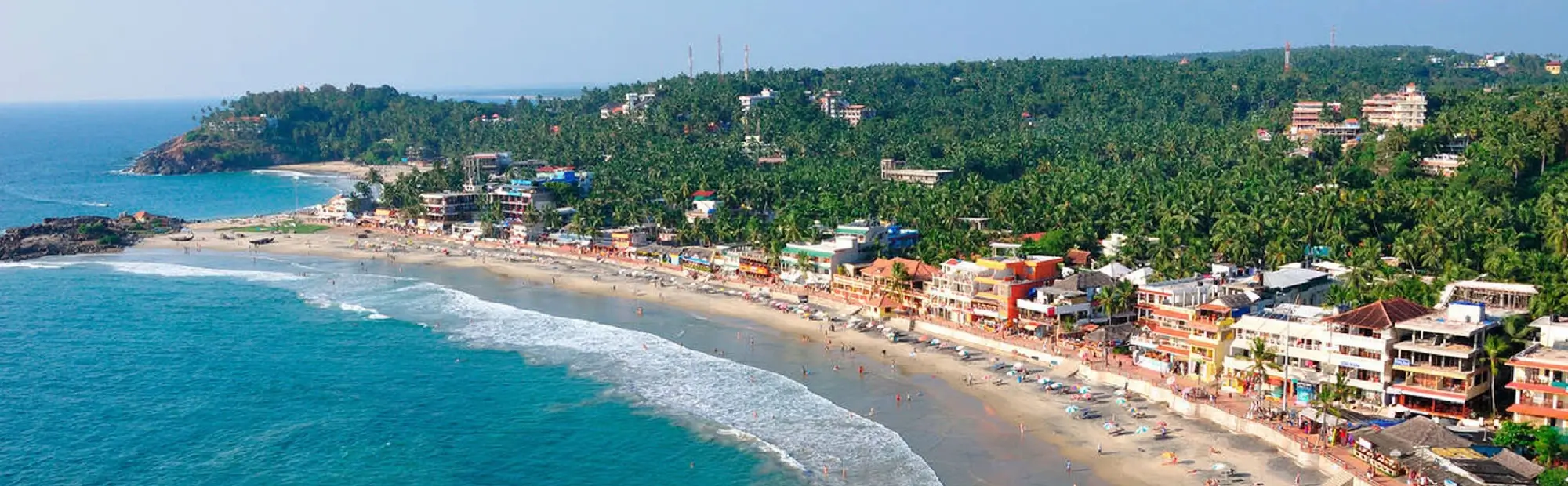
Varkala is one of Kerala’s most distinctive coastal destinations, known not only for its beaches but for its dramatic red laterite cliffs rising above the Arabian Sea. Located approximately 45 kilometers from Thiruvananthapuram (Trivandrum), Varkala combines seaside relaxation, spiritual heritage, yoga culture, and café-lined promenades into a uniquely balanced travel experience.
Unlike Goa’s party atmosphere or Alleppey’s backwater calm, Varkala offers something quieter and more contemplative. The defining feature of Varkala is its elevated cliff pathway overlooking the ocean. From this cliff, visitors descend to the sandy shoreline below while enjoying panoramic views of waves crashing against rocky formations.
For international travellers, Varkala often feels intimate and manageable. It is smaller than Goa, less commercial than Kovalam, and more spiritually layered than many other beach destinations in India. The town attracts yoga practitioners, long-term travellers, and those seeking coastal relaxation without excessive nightlife.
Varkala works well as a slow-paced ending to a Kerala itinerary after Munnar and Alleppey, offering a combination of sea air and spiritual depth.

Papanasam Beach, Varkala Cliff, Janardanaswamy Temple, Yoga Retreats, Sivagiri Mutt

October – March
Comfortable temperatures and dry weather.

2–3 Days
Allows beach relaxation and cultural exploration.

English, Malayalam
English widely spoken in tourism areas.
The most recognizable feature of Varkala is its elevated cliff promenade, which runs parallel to the coastline. The pathway is lined with cafés, yoga centers, small boutiques, and guesthouses.
Unlike flat beach towns, Varkala’s cliff creates a layered visual experience. Visitors walk above the sea, watching waves crash below, before descending stairways that lead to the sandy shoreline.
Sunset views from the cliff are particularly memorable. The Arabian Sea glows orange and pink while cafés fill with relaxed travellers enjoying dinner and conversation.
The cliff environment is pedestrian-friendly, making it easy to explore without heavy traffic.
At the base of the cliff lies Papanasam Beach, whose name translates to “destroyer of sins.” The beach holds religious significance, as local belief suggests that bathing here cleanses sins.
Unlike purely recreational beaches, Papanasam carries spiritual importance. Pilgrims visit to perform rituals, particularly near the temple areas.
At the same time, the beach remains suitable for swimming during calm seasons. Lifeguards are often present, though ocean currents can vary.
The combination of spiritual significance and seaside relaxation makes Varkala different from typical beach destinations.
The ancient Janardanaswamy Temple, dedicated to Lord Vishnu, stands near the beach and adds historical depth to Varkala.
The temple architecture reflects traditional Kerala style with wooden carvings and sloping tiled roofs.
Varkala has long been a pilgrimage center, and the spiritual element continues to shape the town’s atmosphere.
In addition, the nearby Sivagiri Mutt, founded by social reformer Sree Narayana Guru, attracts visitors interested in Kerala’s spiritual reform movements.
Varkala has become a quiet hub for yoga and wellness retreats. Numerous small centers offer daily classes, meditation sessions, and Ayurveda treatments.
Compared to Rishikesh, Varkala’s yoga environment feels less intense and more leisure-oriented. Many travellers combine beach time with morning yoga practice.
Ayurvedic massage centers line the cliff walkway, offering traditional Kerala wellness therapies.
The relaxed rhythm of Varkala supports introspection and physical relaxation.
Varkala’s cliff cafés create an international atmosphere. Restaurants serve Indian, Mediterranean, and continental cuisine.
The environment feels cosmopolitan but calm. Unlike Goa’s loud nightlife scene, Varkala evenings are more about quiet dinners and ocean views.
Many long-term travellers and digital nomads spend weeks here, drawn by the balance between connectivity and tranquility.
The red laterite cliffs that frame Varkala are geologically unique along Kerala’s coastline.
Below, golden sand meets turquoise waters during clear weather.
Palm trees line the upper cliff edge, adding to the tropical aesthetic.
While not as expansive as Goa’s beaches, Varkala’s dramatic elevation makes it visually distinctive.
Varkala experiences a tropical climate similar to other Kerala coastal regions.
Monsoon visits offer dramatic ocean views but may limit swimming opportunities.
Varkala offers boutique guesthouses, mid-range cliffside hotels, and small beach resorts.
Luxury options are limited compared to Goa but comfortable boutique properties are available.
Staying on the cliff provides easy access to restaurants and viewpoints.
The town is compact, allowing most areas to be explored on foot.
Varkala is approximately one hour by road from Thiruvananthapuram International Airport.
Because the destination is smaller, two to three days are typically sufficient.
It pairs well with Kovalam or backwater extensions in southern Kerala.
Varkala feels personal and less commercialized compared to larger beach states.
The presence of both pilgrims and international visitors creates a balanced cultural environment.
Travellers often describe Varkala as calming and restorative rather than energetic.
It appeals to those seeking gentle coastal escape rather than nightlife-driven tourism.
Varkala is accessible from southern Kerala transport hubs.

Thiruvananthapuram International Airport

Road connections from Kochi and Trivandrum

Varkala Sivagiri Railway Station
We promise you a holiday where everything is taken care of from the moment you land. Trusted drivers waiting for you, handpicked hotels that fit your style, personalized itineraries designed just for your family, and a dedicated team on call 24/7. All you need to do is relax, explore, and create unforgettable memories, while we take care of every detail behind the scenes.
Varkala is known for its cliffside beach and spiritual significance.
Two to three days are recommended.
Yes, it is generally safe and peaceful.
Yes, during calm sea conditions.
Yes, many yoga and wellness centers operate here.
October to March.
No, evenings are generally relaxed.
Yes, widely in tourism areas.
Yes, as part of a Kerala itinerary.
Moderately busy during peak season.
Mostly boutique and mid-range options.
No, it is a Kerala coastal destination.


