
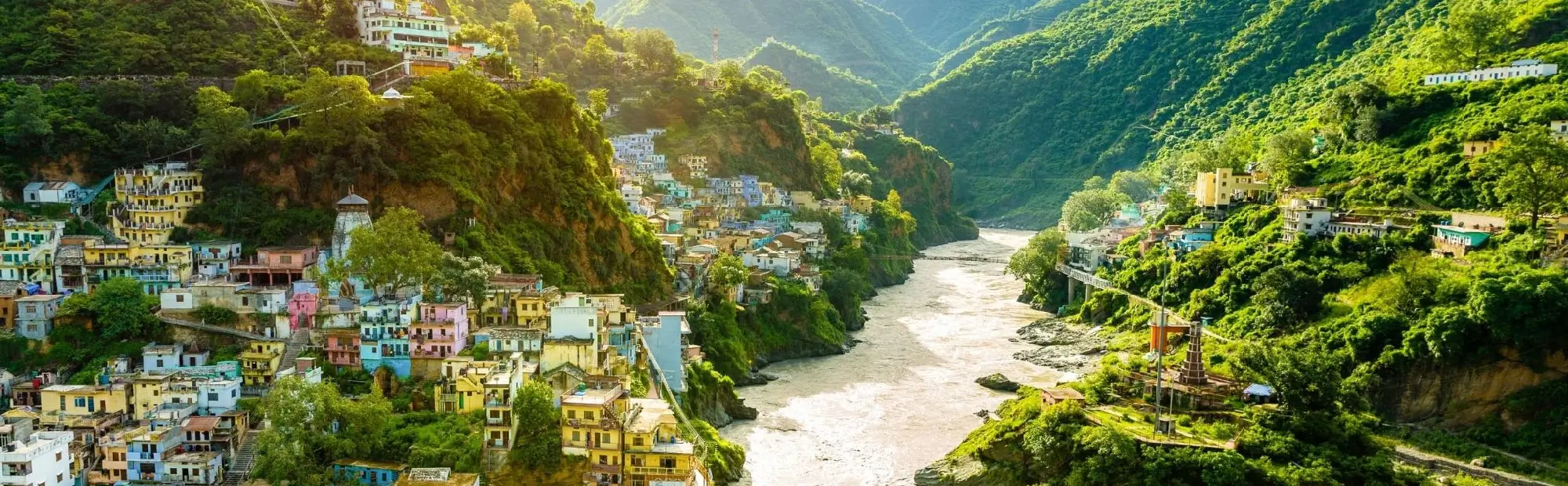
Rishikesh is a riverside town located in the foothills of the Himalayas in Uttarakhand. Known globally as the “Yoga Capital of the World,” Rishikesh combines spiritual heritage, meditation retreats, river adventure, and scenic Himalayan landscapes into one distinctive destination.
Unlike the intensity of Varanasi, Rishikesh feels open, airy, and mountain-framed. The sacred Ganges River flows swiftly through the town, bordered by ashrams, suspension bridges, cafés, and forested hills. For international travellers seeking a balanced spiritual experience with natural surroundings, Rishikesh offers accessibility and calm.
Historically, Rishikesh has long been a center for Hindu sages and yogic traditions. In the 20th century, it gained global recognition when Western musicians and seekers visited its ashrams. Today, it continues to attract travellers interested in yoga, meditation, Ayurveda, and spiritual philosophy.
Rishikesh works well as a spiritual and nature-focused extension after Delhi or Varanasi. It offers a gentler introduction to Indian spirituality in a setting that feels structured and safe for foreign visitors.

Lakshman Jhula, Ram Jhula, Parmarth Niketan Ashram, Ganga Aarti, River Rafting

September – April
Comfortable temperatures and clear skies.

2–3 Days
Allows time for yoga sessions and river exploration.

English, Hindi
English is widely spoken in ashrams and cafés.
The Ganges River defines life in Rishikesh. Unlike Varanasi, where the river flows slowly across wide ghats, here it moves swiftly through rocky terrain. The water is clearer, and the surrounding hills create a more natural and serene setting.
Evening Ganga Aarti ceremonies take place at Parmarth Niketan Ashram, offering a peaceful spiritual experience without the intense crowds of Varanasi. The ritual includes devotional singing, chanting, and small oil lamps floated on the river.
Walking along the riverbanks provides scenic views and access to cafés serving vegetarian and international cuisine. The town maintains a strict vegetarian culture, reflecting its spiritual identity.
Rishikesh’s international reputation is rooted in yoga. Numerous ashrams and yoga schools offer programs ranging from drop-in classes to month-long teacher training courses.
Travellers can participate in guided meditation, pranayama (breathing exercises), and philosophy sessions. Even short stays allow visitors to experience daily yoga practices in structured settings.
The annual International Yoga Festival attracts practitioners from around the world. Many visitors describe Rishikesh as a place of learning and reflection rather than sightseeing alone.
The iconic suspension bridges of Lakshman Jhula and Ram Jhula connect both sides of the river and provide elevated views across the Ganges and surrounding hills.
Crossing these pedestrian bridges is part of the Rishikesh experience. The area around them includes temples, local markets, and small rooftop cafés.
Beyond spirituality, Rishikesh is also a hub for outdoor adventure. White-water rafting on the Ganges is popular, particularly between September and June when water levels are suitable.
Short Himalayan treks, waterfall hikes, and nature walks provide additional outdoor exploration options. The combination of spirituality and adventure makes Rishikesh appealing to a broad range of travellers.
The surrounding landscape distinguishes Rishikesh from other spiritual cities. Forest-covered hills and cooler mountain air create a refreshing environment.
Morning mist often lingers over the river, while evenings bring cooler temperatures compared to Delhi’s plains. The proximity to the Himalayas adds scenic depth to the town’s spiritual atmosphere.
Rishikesh offers diverse accommodations — from simple ashram stays to boutique riverside hotels and luxury wellness retreats.
Many properties focus on wellness themes, offering vegetarian meals, yoga spaces, and quiet environments. Luxury retreats provide spa services and personalized programs.
Because Rishikesh is compact, most areas are accessible by walking or short auto-rickshaw rides.
Rishikesh experiences pleasant weather from September to April. Summers (May–June) can be warm but remain cooler than Delhi due to elevation.
Monsoon season (July–August) brings heavy rainfall and can affect rafting schedules.
Light layers are recommended for evenings during winter months.
Rishikesh is easily accessible from Delhi.

Nearest airport: Dehradun (Jolly Grant Airport)

Regular buses from Delhi and Haridwar

Nearest railway station: Haridwar

We promise you a holiday where everything is taken care of from the moment you land. Trusted drivers waiting for you, handpicked hotels that fit your style, personalized itineraries designed just for your family, and a dedicated team on call 24/7. All you need to do is relax, explore, and create unforgettable memories, while we take care of every detail behind the scenes.
Rishikesh is known as the Yoga Capital of the World.
Two to three days allow spiritual and outdoor activities.
Yes, it is considered safe and organized.
Yes, beginner-friendly classes are widely available.
September to April offers pleasant weather.
No, rafting is seasonal and depends on river conditions.
Yes, it is about 5–6 hours by road from Delhi.
Yes, many yoga schools cater to international students.
It can be busy during peak season but remains manageable.
Modest clothing is recommended, especially in ashrams.
No, but it is a popular spiritual extension.
No, the town follows a strict vegetarian and alcohol-free culture.


