
Mysore, officially known as Mysuru, is one of South India’s most elegant and culturally refined cities. Located in the state of Karnataka, Mysore is famous for its grand royal palace, vibrant Dasara festival, classical arts, and long-standing reputation as a center of tradition and learning.
Unlike the temple intensity of Madurai or the coastal charm of Kochi, Mysore presents a balanced blend of royal heritage and calm urban life. The city feels organized, spacious, and relatively relaxed compared to larger Indian metropolitan centers.
For international travellers, Mysore offers a structured and accessible introduction to South Indian royal history. The city’s architectural landmarks, tree-lined boulevards, and cultural institutions make it both visually appealing and easy to navigate.
Mysore is commonly visited as a two-day extension from Bengaluru (Bangalore) and often combined with nearby attractions such as Coorg or Ooty.

Mysore Palace, Chamundi Hills, St. Philomena’s Church, Devaraja Market, Brindavan Gardens

October – March
Comfortable climate for sightseeing.

1–2 Days
Two days allow palace and city exploration.

English, Kannada
English widely spoken in tourism sector.
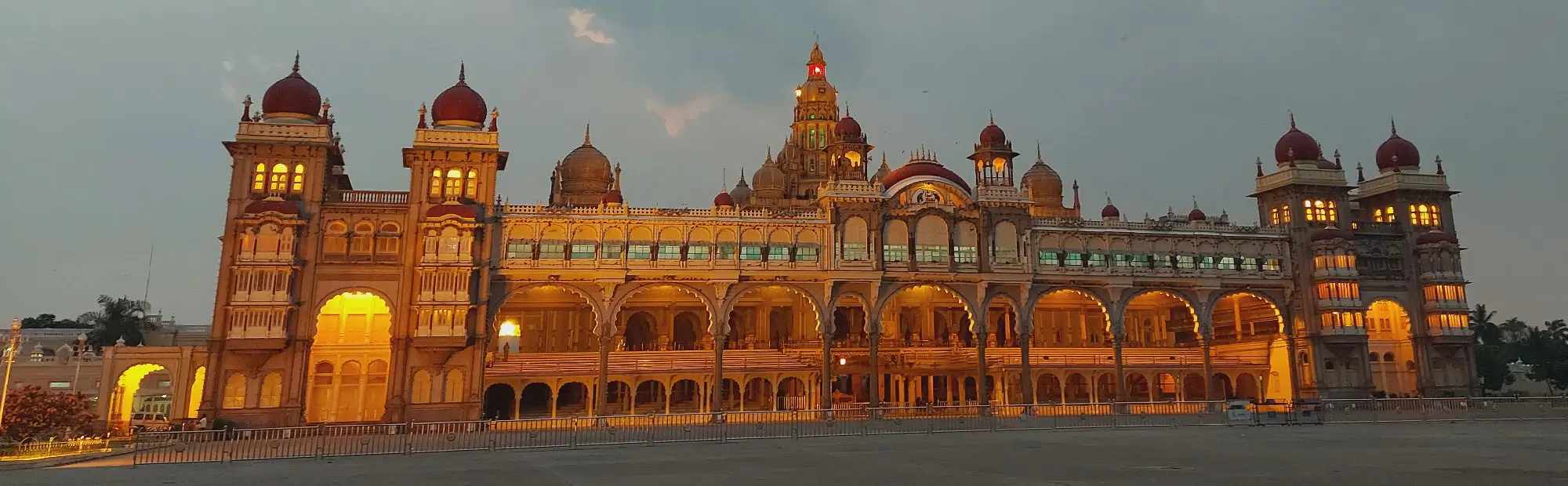
The defining landmark of Mysore is the magnificent Mysore Palace, one of the most visited monuments in India. Built in Indo-Saracenic style, the palace features domes, arches, stained glass windows, and intricately decorated interiors.
The palace served as the residence of the Wadiyar dynasty, who ruled Mysore for centuries. Unlike many forts in Rajasthan that appear rugged and defensive, Mysore Palace is ornamental and opulent.
Inside, visitors can explore ornate halls, royal portraits, ceremonial weapons, and golden thrones. The palace’s Durbar Hall, with its high ceilings and detailed pillars, reflects royal elegance.
In the evening, the palace is illuminated with thousands of lights on select days, creating a spectacular visual display.
Overlooking the city, Chamundi Hills offers scenic views and religious significance. At the summit stands the Chamundeshwari Temple, dedicated to Goddess Durga.
Visitors can drive or climb steps to reach the top. The hill provides a panoramic perspective of Mysore’s urban layout and surrounding countryside.
The large statue of Nandi (sacred bull) carved from a single rock is another highlight on the hill route.
St. Philomena’s Church reflects European Gothic architectural influence, showcasing Mysore’s multicultural past.
The church’s twin spires and stained-glass windows provide architectural contrast to Hindu temples and royal palaces.
Its peaceful interior offers a quiet pause within the city’s cultural circuit.
The Devaraja Market offers insight into daily life in Mysore. Vendors sell fresh fruits, flowers, incense, spices, and traditional products.
The scent of sandalwood and jasmine fills the air. Mysore is particularly famous for sandalwood products and incense sticks.
For travellers interested in observing local commerce rather than monument-focused sightseeing, the market provides authentic cultural interaction.
Located near the Krishnarajasagara Dam, Brindavan Gardens is known for its symmetrical layout and musical fountain shows in the evening.
The gardens provide a leisurely excursion outside the city center and are especially popular at sunset.
Mysore has long been associated with classical music, dance, and painting traditions. The city played a significant role in preserving Carnatic music and Bharatanatyam dance.
It is also known for the traditional Mysore painting style, characterized by intricate detailing and religious themes.
The annual Mysore Dasara festival is one of India’s grandest celebrations, featuring royal processions, decorated elephants, and cultural performances.
Unlike chaotic Indian cities, Mysore is relatively organized with wide roads and manageable traffic.
The city’s layout makes it easier for international travellers to explore independently or with guided support.
Its moderate size allows key attractions to be covered within one or two days.
Mysore’s culinary identity includes dishes such as Mysore Pak (a traditional sweet), dosa varieties, and South Indian vegetarian cuisine.
Restaurants serve both local Karnataka flavors and international options suitable for foreign visitors.
Mysore experiences moderate tropical weather.
The most comfortable period is October to March when temperatures are pleasant.
Summers (April–June) can be warm, though less intense than coastal Tamil Nadu.
Monsoon (July–September) brings rain and lush greenery.
Mysore offers a range of accommodation options including heritage hotels, boutique stays, and international-standard properties.
Luxury travellers may opt for palace-style hotels reflecting royal heritage.
Staying near the palace or central district ensures convenient access to major attractions.
Mysore is approximately 3–4 hours by road from Bengaluru.
The city can be comfortably included within a Karnataka itinerary or as part of a larger South India circuit.
Because the city is compact, most attractions are easily accessible by car or auto-rickshaw.
Mysore is well connected in South India.

Nearest airport: Bengaluru International Airport

Frequent buses from Bengaluru

Direct rail connections from Bengaluru and Chennai
We promise you a holiday where everything is taken care of from the moment you land. Trusted drivers waiting for you, handpicked hotels that fit your style, personalized itineraries designed just for your family, and a dedicated team on call 24/7. All you need to do is relax, explore, and create unforgettable memories, while we take care of every detail behind the scenes.
Mysore is known for its royal palace and cultural heritage.
One to two days are sufficient.
Yes, it is considered safe and organized.
A grand royal residence of the Wadiyar dynasty.
Yes, it offers easy sightseeing.
October to March.
Yes, especially in tourism areas.
A major annual cultural festival.
Yes, it is a common extension.
No, it is inland.
Yes, including heritage-style properties.
No, it is a South India destination.


