
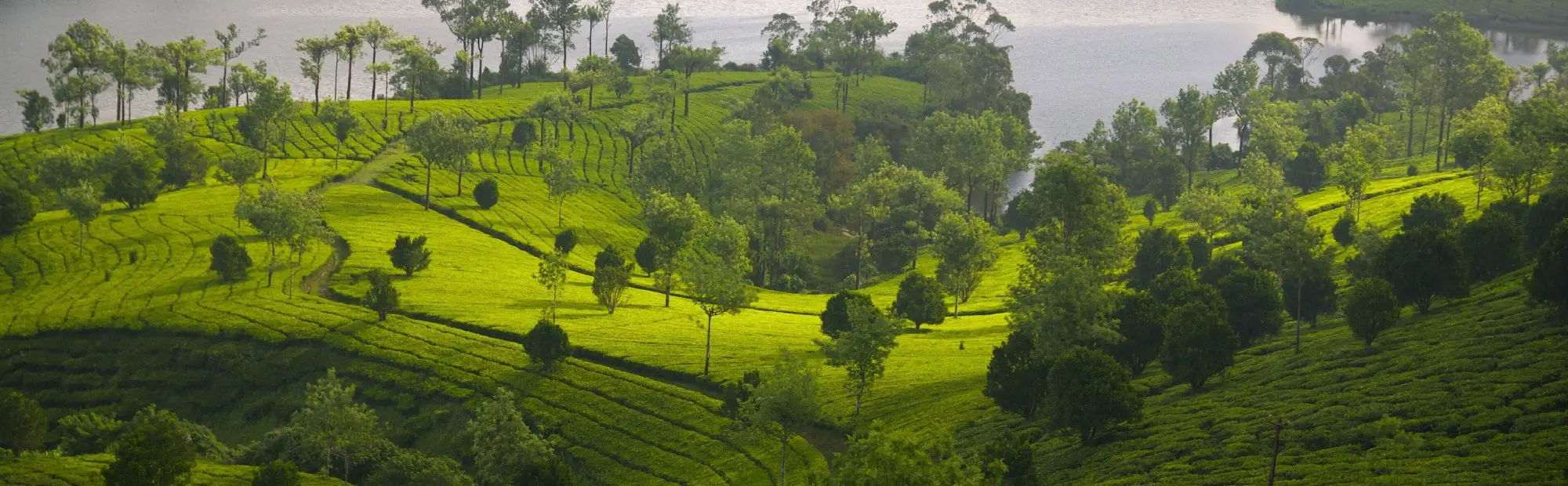
Munnar is one of South India’s most scenic hill destinations, located in the Western Ghats mountain range in the state of Kerala. Known for its endless tea plantations, mist-covered hills, winding mountain roads, and cool climate, Munnar offers a refreshing contrast to Kerala’s coastal regions like Kochi.
For international travellers, Munnar feels peaceful and cinematic. Rolling green tea estates stretch across hills in symmetrical patterns, while morning fog drifts through valleys creating soft, dreamlike landscapes. The region’s elevation — approximately 1,600 meters above sea level — ensures cooler temperatures compared to Kerala’s humid coastline.
Unlike the colonial architecture of Kochi or the desert landscapes of Rajasthan, Munnar’s identity is entirely defined by nature. The town developed during the British era as a tea-growing region, and today the plantations remain central to its character.
Munnar is often included after Kochi as part of a Kerala itinerary, offering a transition from coastal heritage to mountain tranquility.

Tea Plantations, Eravikulam National Park, Mattupetty Dam, Echo Point, Top Station

September – March
Pleasant weather and clear mountain views.

2 Days
Two days allow plantation visits and scenic drives.

English, Malayalam
English widely spoken in tourism sector.
The most defining feature of Munnar is its vast tea plantations. Carefully trimmed tea bushes blanket hillsides in vibrant green, forming wave-like patterns across the landscape.
Many plantations offer guided tours explaining the tea production process — from plucking leaves to drying, fermenting, and packaging. Visiting a tea factory provides insight into one of Kerala’s most significant agricultural industries.
Walking through the estates in early morning is particularly rewarding. Mist often lingers over the hills, and the scent of fresh tea leaves fills the air.
For photographers, Munnar’s plantations provide one of the most visually striking landscapes in South India.
Located near Munnar, Eravikulam National Park protects rare high-altitude grasslands and is home to the endangered Nilgiri Tahr, a mountain goat species native to the Western Ghats.
The park offers controlled entry with designated viewing areas. On clear days, visitors can enjoy sweeping views of rolling hills and valleys.
Eravikulam also hosts seasonal blooming of the Neelakurinji flower, which blossoms once every twelve years, transforming hillsides into shades of blue.
Unlike tiger-focused wildlife parks in Central India, Eravikulam emphasizes landscape and conservation rather than predator sightings.
Munnar’s charm extends beyond the town center. Scenic drives lead to viewpoints such as Top Station, located near the Tamil Nadu border. From here, panoramic views stretch across mountain valleys and tea-covered slopes.
Echo Point and Mattupetty Dam provide calm lakeside settings surrounded by hills. These areas are ideal for relaxed sightseeing and photography.
The winding mountain roads connecting Kochi and Munnar are themselves part of the experience, offering waterfalls and forest scenery along the route.
Munnar’s climate remains cooler than coastal Kerala throughout the year.
September to March: Most comfortable period with clear skies.
April to May: Slightly warmer but still pleasant.
June to August: Monsoon season with heavy rainfall and lush greenery.
Monsoon travel offers fewer crowds but may limit outdoor activities.
Evenings can feel cool, so light jackets are recommended.
Tea cultivation shapes daily life in Munnar. Many local communities are employed in plantations, and small villages are scattered across the hills.
Unlike urban destinations, Munnar maintains a quiet rhythm. Evenings are calm, with limited nightlife.
Visitors seeking relaxation often appreciate the absence of heavy commercial development.
Munnar offers a range of accommodations, from boutique plantation bungalows to luxury hillside resorts with valley views.
Many high-end properties feature private balconies overlooking tea estates, allowing guests to wake up to panoramic mountain scenery.
Mid-range hotels are also comfortable and well-managed.
Because the terrain is hilly, properties may be located at elevated positions requiring short uphill drives.
While Munnar is not an extreme adventure destination, it offers gentle outdoor experiences such as:
These activities are generally suitable for families and senior travellers.
Munnar provides a distinct contrast to Kerala’s backwaters and beaches. Instead of coconut palms and lagoons, travellers encounter eucalyptus trees, tea fields, and misty mountain air.
The shift from Kochi’s maritime history to Munnar’s agricultural landscape enriches a Kerala itinerary by adding geographic diversity.
The drive from Kochi to Munnar takes approximately 4–5 hours depending on traffic and road conditions.
Because of winding mountain roads, travellers prone to motion sickness may consider precautions.
Advance booking is recommended during peak season (December–February).
Munnar is accessible from Kerala’s main transport hubs.

Nearest airport: Cochin International Airport

Road connections from Kochi and other Kerala cities

Nearest railway station: Aluva (near Kochi)

We promise you a holiday where everything is taken care of from the moment you land. Trusted drivers waiting for you, handpicked hotels that fit your style, personalized itineraries designed just for your family, and a dedicated team on call 24/7. All you need to do is relax, explore, and create unforgettable memories, while we take care of every detail behind the scenes.
Munnar is known for tea plantations and mountain scenery.
Two days are generally sufficient.
Yes, due to higher elevation.
September to March.
Yes, it offers relaxed sightseeing.
Yes, guided tours are common.
No, snowfall is extremely rare.
Yes, particularly in hotels and tour services.
It is scenic but rainy.
Yes, it pairs well with Alleppey.
Eravikulam National Park offers limited wildlife viewing.
No, it is a South India extension.


