
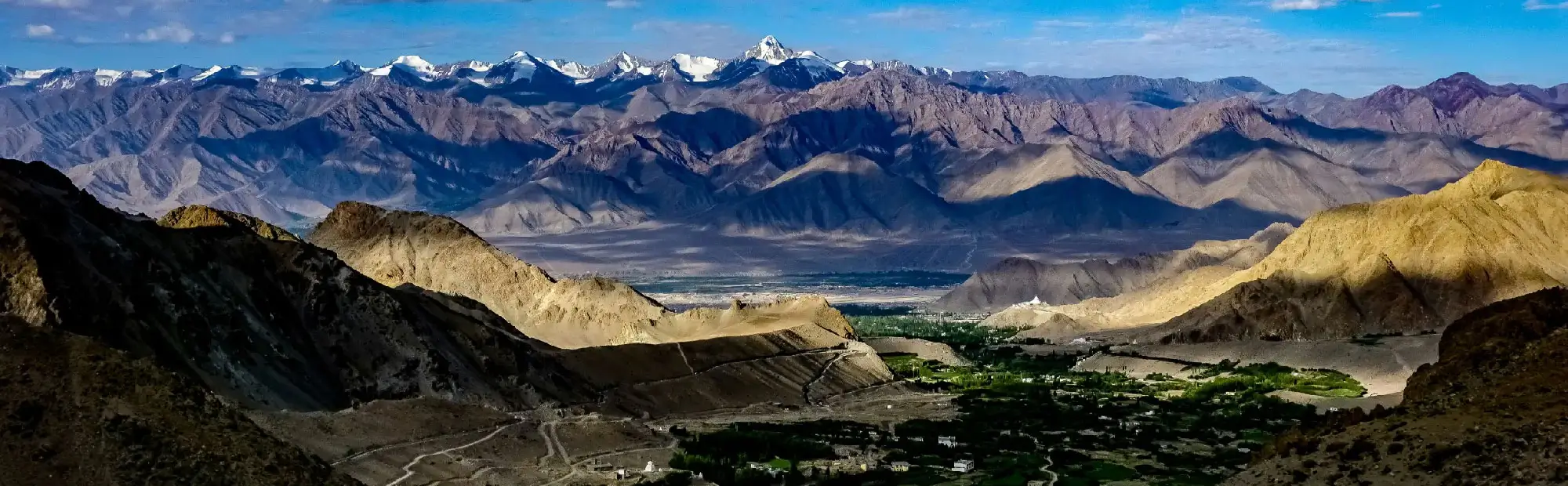
Leh Ladakh is one of the most dramatic and visually extraordinary regions in India. Located in the northernmost part of the country, this high-altitude desert landscape sits between the Karakoram and Himalayan mountain ranges. Stark mountains, turquoise lakes, ancient monasteries, and vast open skies define its character.
Unlike Shimla or Manali, which offer gentle Himalayan introductions, Leh Ladakh presents a raw and expansive mountain environment. The terrain is rugged, the altitude is high, and the scenery feels almost otherworldly.
For international travellers, Ladakh often becomes one of the most memorable parts of an India journey. It offers adventure, culture, photography opportunities, and spiritual depth in a setting that feels remote yet increasingly accessible.
Leh serves as the main town and entry point into the Ladakh region. From here, travellers explore surrounding valleys, high passes, and lakes.

Pangong Lake, Nubra Valley, Thiksey Monastery, Hemis Monastery, Magnetic Hill

May – September
Road access and stable weather conditions.

4–6 Days
Allows proper acclimatization and exploration.

English, Hindi, Ladakhi
English widely spoken in tourist areas.
Leh sits at an altitude of approximately 3,500 meters (11,500 feet). The surrounding region is often described as a “cold desert” because rainfall is minimal, yet snow-fed rivers flow through valleys.
The landscape is defined by barren mountains in shades of brown, gold, and grey. Snow-capped peaks contrast against deep blue skies. The vastness of the terrain creates a sense of isolation and grandeur.
Unlike lush Himalayan destinations, Ladakh’s beauty lies in its stark simplicity and dramatic scale.
Because of the altitude, acclimatization is essential. Visitors are advised to rest on arrival day and avoid heavy activity for the first 24 hours.
Pangong Lake is one of Ladakh’s most photographed locations. Situated at approximately 4,250 meters (13,900 feet), the lake stretches across the India–China border.
The lake’s water changes shades from deep blue to turquoise depending on light conditions. Surrounded by mountains, Pangong offers a surreal visual experience.
Overnight camps are available near the lake, though temperatures can drop significantly at night.
The Nubra Valley lies north of Leh and is accessible via the Khardung La pass, one of the highest motorable roads in the world.
Nubra features sand dunes, double-humped Bactrian camels, and small villages set against dramatic mountain backdrops. The combination of desert landscape and snow peaks creates a unique visual contrast.
Visitors often spend one or two nights in Nubra to explore villages and monasteries.
Ladakh has strong Tibetan Buddhist influence. Monasteries such as Thiksey, Hemis, and Diskit are cultural highlights.
Perched on hilltops, these monasteries feature whitewashed walls, golden statues, and prayer halls filled with murals and scriptures.
Morning prayer sessions provide insight into Buddhist ritual and philosophy.
Unlike crowded temple complexes in other parts of India, Ladakh’s monasteries feel peaceful and open.
Leh Ladakh is famous for its road journeys. High mountain passes such as Khardung La and Chang La offer panoramic views and a sense of achievement.
Motorbike tours are particularly popular among adventure travellers.
While trekking is available, many routes require moderate to advanced fitness due to altitude.
Ladakhi culture blends Tibetan and Himalayan traditions. The architecture features flat-roofed houses and prayer flags fluttering across rooftops.
Local cuisine includes momos, thukpa, and barley-based dishes. Small cafés in Leh town serve both traditional and international meals.
Despite its remote setting, Leh has developed sufficient infrastructure to cater to international tourists comfortably.
Ladakh’s tourism season is limited by weather:
Winter temperatures can drop far below freezing.
Leh offers boutique hotels, guesthouses, and luxury camps in surrounding valleys.
Many properties are designed in traditional Ladakhi style with modern amenities.
Because of altitude, hydration and gradual movement are essential during the stay.
Altitude sickness is a real consideration. Symptoms may include headache, dizziness, or fatigue.
Travellers should:
Medical facilities are available in Leh town.
Ladakh is accessible seasonally.

Kushok Bakula Rimpochee Airport (Leh)

Seasonal road routes from Manali and Srinagar

Nearest major railhead: Jammu (followed by road journey)
We promise you a holiday where everything is taken care of from the moment you land. Trusted drivers waiting for you, handpicked hotels that fit your style, personalized itineraries designed just for your family, and a dedicated team on call 24/7. All you need to do is relax, explore, and create unforgettable memories, while we take care of every detail behind the scenes.
Yes, with proper acclimatization and planning.
Four to six days are recommended.
It can occur; acclimatization is important.
May to September.
No, access depends on road conditions.
Yes, it offers unique desert-mountain scenery.
Yes, with respectful behavior.
Yes, though altitude precautions apply.
Yes, especially in Leh town.
Yes, premium camps and boutique hotels are available.
Yes, certain areas require permits for foreign nationals.
Yes, via seasonal road routes.


