
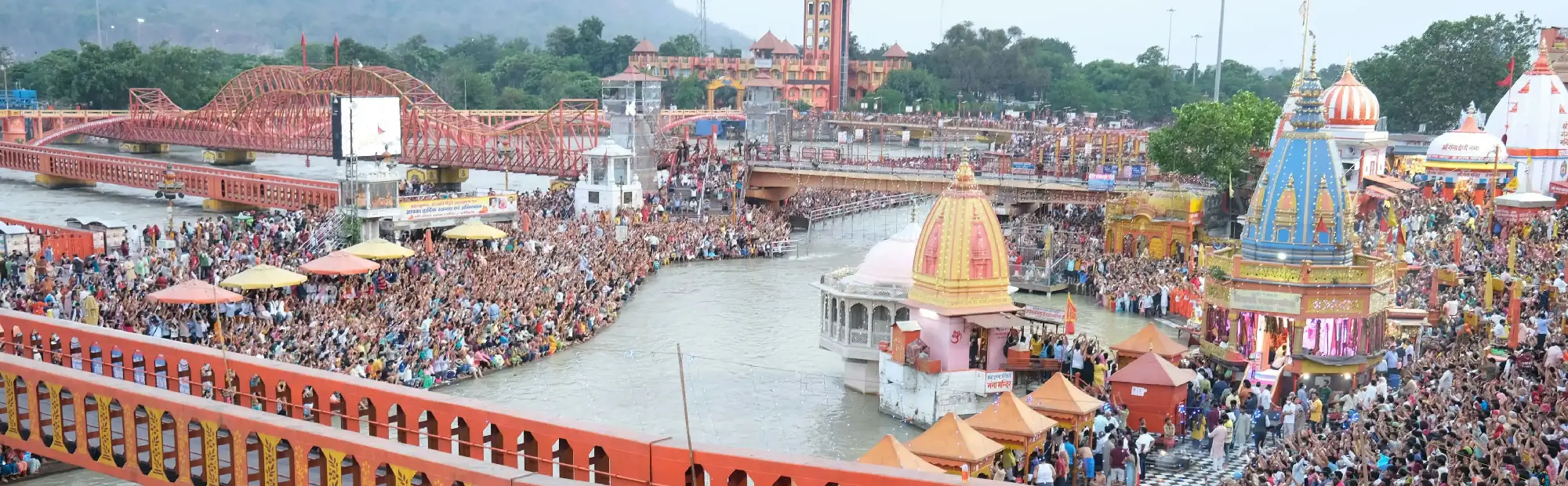
Haridwar is one of the seven holiest cities in Hindu tradition and serves as a sacred gateway to the Ganges River as it descends from the Himalayas into the plains of North India. Located in the state of Uttarakhand, Haridwar is deeply rooted in ritual, pilgrimage, and centuries-old spiritual practice.
Unlike Rishikesh, which combines yoga culture with scenic relaxation, Haridwar is more intensely devotional. The city’s identity revolves around temple rituals, mass pilgrimages, and religious festivals that attract millions of devotees annually.
For international travellers, Haridwar provides a direct encounter with living Hindu tradition. The city’s riverbanks are active from sunrise to sunset, with pilgrims performing prayers, lighting oil lamps, and participating in sacred bathing ceremonies.
Haridwar is often combined with Rishikesh due to its proximity. Together, the two destinations provide complementary spiritual perspectives — one contemplative and yoga-centered, the other ceremonial and ritual-focused.

Har Ki Pauri, Ganga Aarti, Mansa Devi Temple, Chandi Devi Temple, Kumbh Mela Grounds

October – March
Pleasant weather for temple visits and evening ceremonies.

1–2 Days
One overnight stay allows meaningful exploration.

English, Hindi
English-speaking guides are available.
The most sacred site in Haridwar is Har Ki Pauri, a prominent ghat along the Ganges where pilgrims gather to bathe in the holy river. The site is believed to carry divine footprints of Lord Vishnu, making it a central point of worship.
Each evening, the Ganga Aarti ceremony takes place here. Priests perform synchronized rituals with fire lamps while devotional hymns echo across the riverbank. The ceremony is less staged than in some tourist centers and feels deeply devotional.
Watching the aarti from the steps or across the river provides a powerful insight into collective faith and tradition.
Haridwar is surrounded by temples situated on nearby hills. Mansa Devi Temple and Chandi Devi Temple can be reached by cable car or short hikes. These hilltop temples offer panoramic views over the city and the river below.
The town itself contains numerous smaller shrines and ashrams, reflecting its status as a pilgrimage center.
Haridwar is one of the four cities that host the Kumbh Mela, one of the largest religious gatherings in the world. Held every twelve years (with smaller variations in between), the festival attracts millions of pilgrims who come to bathe in the Ganges.
Even outside festival years, Haridwar maintains a strong spiritual pulse. Pilgrims from across India visit throughout the year, especially during auspicious lunar dates.
For international travellers, witnessing such mass devotion can be intense yet culturally illuminating.
Daily life in Haridwar revolves around ritual purity and religious observance. Pilgrims purchase small offerings of flowers and oil lamps to float on the river at dusk.
Unlike Varanasi, cremation ceremonies are not as central here. The emphasis is more on purification and blessing rather than life-cycle rituals.
Understanding cultural etiquette is important. Modest clothing is recommended, and respectful behavior near the ghats is expected.
Though only about 30 minutes apart by road, Haridwar and Rishikesh feel distinct. Rishikesh attracts yoga practitioners and spiritual seekers from abroad, while Haridwar is primarily pilgrimage-driven and more traditionally religious.
Travellers who visit both destinations gain a broader understanding of Hindu spirituality — one expressed through meditation and philosophy, the other through collective ritual.
Haridwar offers mid-range hotels, guesthouses, and pilgrimage lodges. While luxury options are limited compared to major cities, comfortable accommodations are available.
Because the town center can be crowded during peak seasons, staying slightly outside the main ghat area may provide a quieter experience.
The best time to visit is October to March when temperatures are comfortable.
Summers (April–June) can be hot, and monsoon months bring heavy rainfall.
Major festival dates attract large crowds; planning ahead is essential during those periods.
Haridwar is well connected in North India.

Nearest airport: Dehradun

Regular buses from Delhi and Rishikesh

Direct rail connections from Delhi

We promise you a holiday where everything is taken care of from the moment you land. Trusted drivers waiting for you, handpicked hotels that fit your style, personalized itineraries designed just for your family, and a dedicated team on call 24/7. All you need to do is relax, explore, and create unforgettable memories, while we take care of every detail behind the scenes.
It is one of Hinduism’s holiest cities and a gateway to the Ganges.
One to two days are sufficient.
The main sacred ghat in Haridwar.
Yes, it is the city’s most significant ritual.
Yes, with normal travel precautions.
A massive religious festival held every twelve years.
It can be busy during festivals and peak seasons.
Modest clothing is recommended.
No, it follows strict religious guidelines.
Yes, they are located close to each other.
Yes, though less common than in major cities.
No, but it is a common spiritual extension.


