Delhi - Agra - Fatehpur Sikri - Abhaneri - Jaipur - Delhi
India's Golden Triangle becomes even more compelling when experienced through the forts, palaces and royal residences that shaped the history of Delhi, Agra and Jaipur. This 6-day private journey goes beyond the familiar highlights to explore the architectural language of Mughal emperors and Rajput rulers, revealing how military strength, royal ambition, artistry and science came together across northern India.
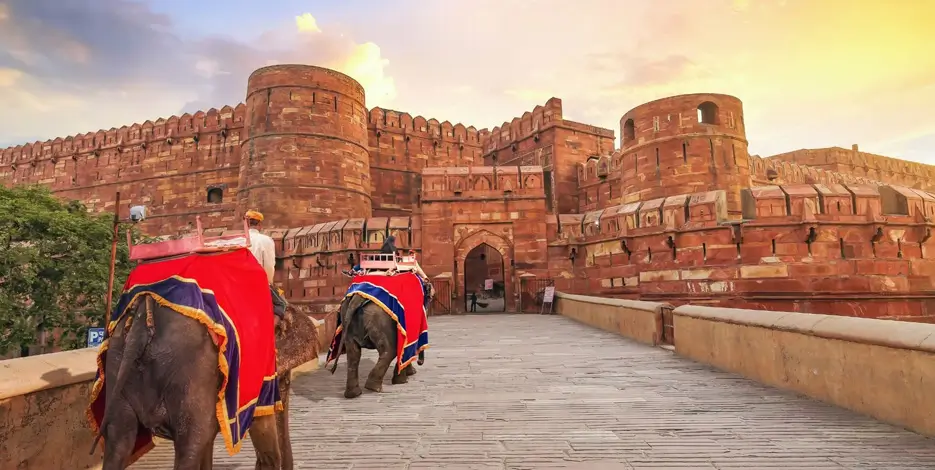
The journey begins in Delhi, where the monumental Red Fort introduces the grandeur of the Mughal court, while Jama Masjid, Humayun's Tomb and Qutub Minar reveal different layers of the capital's architectural history. Moving south to Agra, the focus shifts from imperial power to refined Mughal craftsmanship. Agra Fort offers a fascinating counterpoint to the Taj Mahal, with its massive defensive walls, royal chambers and riverside views demonstrating that Mughal architecture was as much about power and residence as it was about beauty.
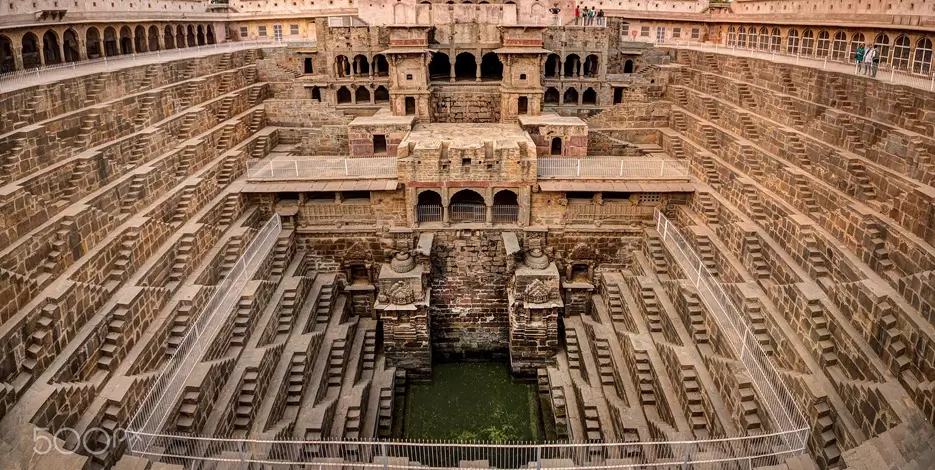
From Agra, the route continues towards Jaipur through two extraordinary heritage sites. Fatehpur Sikri, Akbar's remarkably preserved former capital, provides an insight into Mughal urban planning, courtly life and architectural experimentation. Further along the route, Chand Baori at Abhaneri introduces a completely different form of historic ingenuity: a monumental stepwell whose extraordinary geometric design reflects the importance of water architecture in Rajasthan.
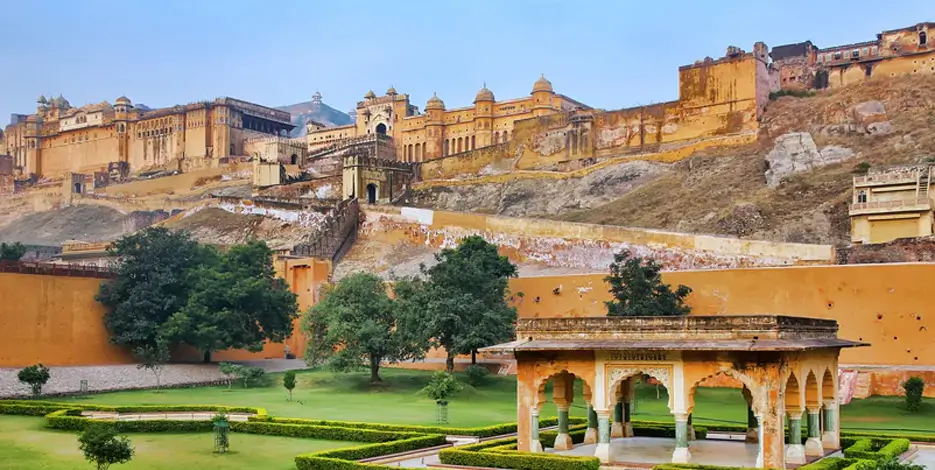
Jaipur brings the journey into the world of Rajput royalty. Perched above Maota Lake, Amber Fort combines imposing defensive architecture with richly decorated halls, courtyards and royal residences. In the city, the City Palace continues the story of Jaipur's ruling dynasty, while Hawa Mahal and Jal Mahal reveal the distinctive visual character of the Pink City. Jantar Mantar adds another dimension, showing how architecture and astronomical science became part of Jaipur's royal identity.
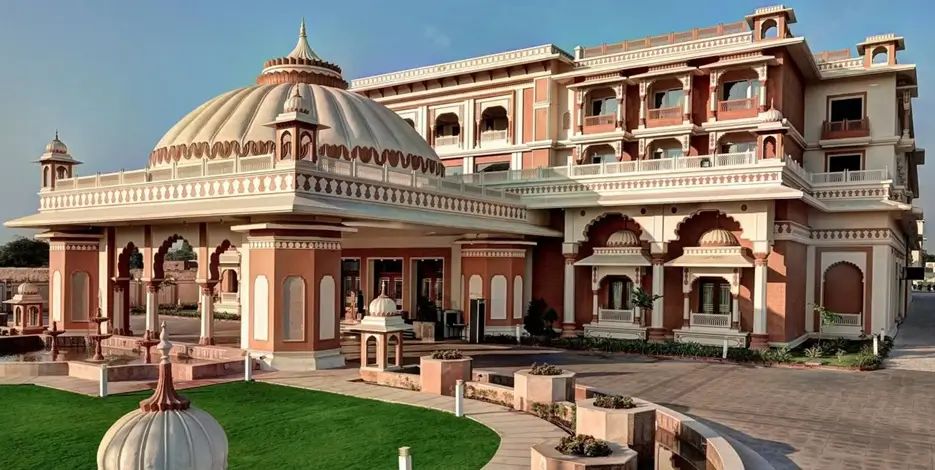
The experience is particularly rewarding for travellers fascinated by the relationship between heritage and luxury. India's historic palaces have inspired a remarkable tradition of hospitality, where former royal residences and grand heritage properties offer travellers the opportunity to experience Rajasthan's regal character in a more intimate way. Couples planning a particularly romantic version of the Golden Triangle can find inspiration in our Golden Triangle luxury honeymoon guide, which explores palace stays, private dining and other ways to transform a heritage journey into a more personal experience.
For travellers who want to discover even more of Rajasthan's living palace heritage, the historic Neemrana Fort Palace offers another perspective on how India's architectural legacy has been preserved and transformed into a distinctive heritage experience. Our Neemrana Fort Palace guide explores its history, day visits, dining and practical details for travellers considering it as an extension to a Golden Triangle itinerary.
Throughout the 6-day journey, private transportation and local guides allow you to explore these monuments at a comfortable pace while understanding the stories behind their walls. Rather than treating forts and palaces as isolated sightseeing stops, this itinerary connects them into a broader story of India's imperial and royal past—from Mughal capitals and fortified residences to Rajput palaces, scientific observatories and historic heritage properties.
Upon arrival at Delhi International Airport, you are greeted and transferred to your hotel in a private vehicle. The drive through India’s capital reveals a blend of colonial avenues, Mughal remnants and modern developments that define the city’s character. After check-in, you may take time to relax and adjust to your surroundings.
The evening is left open for rest or a short stroll around the hotel area. Delhi’s atmosphere offers an immediate introduction to India’s diversity, where centuries of history coexist with contemporary life. Your dedicated driver remains available for assistance, ensuring a smooth start to the journey.
This first day is intentionally light, allowing you to recover comfortably before beginning full sightseeing. Overnight stay in Delhi.
The morning begins in Old Delhi, once the seat of Mughal power. At the Red Fort, you observe the impressive red sandstone walls that once protected emperors and their courts. The architecture reflects both military strength and decorative refinement, providing insight into 17th-century imperial life.
Nearby, Jama Masjid stands as one of the largest mosques in India, its courtyard offering panoramic views of the old city. A walk or rickshaw ride through Chandni Chowk introduces you to bustling markets and narrow lanes that have thrived for centuries. The sensory richness of the area makes the experience particularly memorable.
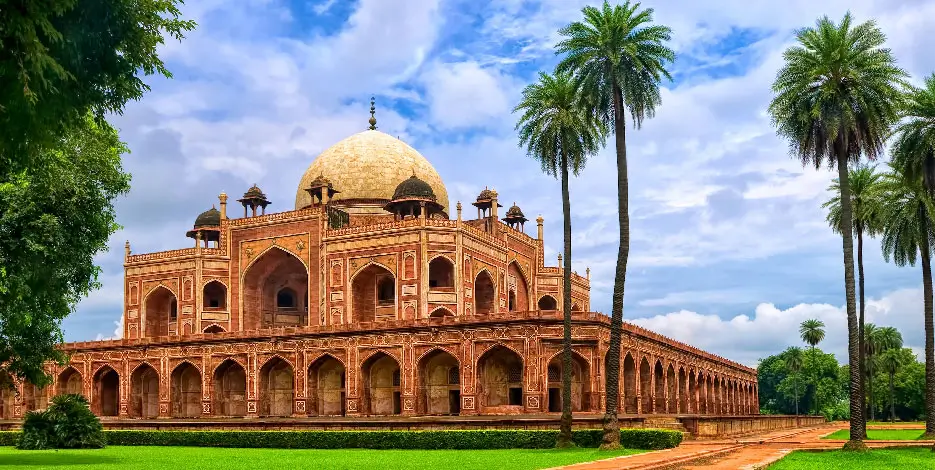
In New Delhi, you visit Qutub Minar, an extraordinary minaret dating back to the 12th century, and Humayun’s Tomb, an architectural precursor to the Taj Mahal. As you pass India Gate and Rashtrapati Bhavan, the contrast between Mughal and colonial influences becomes clear. Overnight stay in Delhi.
After breakfast, you depart for Agra, home to some of India’s most celebrated monuments. Upon arrival, you check into your hotel before beginning your exploration of the city’s Mughal heritage. Agra’s historical importance becomes evident as you approach its massive fortifications and riverside complexes.
Agra Fort, constructed in red sandstone, served as the principal residence of Mughal emperors for generations. Within its walls lie audience halls, royal chambers and balconies offering distant views of the Taj Mahal. The fort’s design demonstrates both defensive strategy and luxurious living.
In the evening, you may visit Mehtab Bagh across the Yamuna River, where the Taj Mahal can be viewed at sunset. The tranquil garden setting provides a serene preview of the following morning’s highlight. Overnight stay in Agra.
Before sunrise, you visit the Taj Mahal, when the early light enhances the monument’s marble glow. The intricate inlay work and perfect symmetry create an unforgettable impression. This timeless structure remains one of the most admired architectural achievements in the world.
After breakfast, your journey continues toward Jaipur with significant stops along the way. Fatehpur Sikri, the former Mughal capital built by Emperor Akbar, stands as a remarkably preserved example of 16th-century urban planning. Its palaces and courtyards reveal the ambitions of an emperor who sought religious harmony and architectural innovation.
In Abhaneri village, Chand Baori showcases extraordinary geometric design through its deep stepwell structure. The engineering precision and symmetry reflect ancient water management practices. By evening, you arrive in Jaipur and check into your hotel. Overnight stay in Jaipur.
Jaipur, the Pink City of Rajasthan, introduces you to Rajput royal heritage. Your day begins at Amber Fort, perched on a hill overlooking Maota Lake. The fort’s mirrored halls, courtyards and intricate carvings display both artistic finesse and strategic planning.
Returning to the city, you pause at Hawa Mahal, whose honeycomb façade was designed to allow royal women to observe street life discreetly. A photo stop at Jal Mahal, located within Man Sagar Lake, provides a striking view of this water palace set against the Aravalli hills.
Later, you explore City Palace and Jantar Mantar, where astronomy and architecture merge in fascinating ways. The combination of royal residence and scientific observatory highlights Jaipur’s intellectual and cultural legacy. Evening time may be spent browsing local markets known for textiles and handicrafts. Overnight stay in Jaipur.
After breakfast, you depart Jaipur and return to Delhi by road. The comfortable drive allows you to reflect on the architectural masterpieces and royal stories encountered during the tour.
Upon arrival in Delhi, you are transferred to the international airport for your onward flight. The Golden Triangle Tour with Forts & Palaces concludes with vivid memories of imperial courts, fortified cities and timeless monuments.
This itinerary emphasizes forts, palaces and architectural heritage.
Yes, sunrise visit to the Taj Mahal is included.
Intercity drives range between 3 to 5 hours.
Yes, licensed local guides are arranged in each destination.
Yes, premium and luxury upgrades are available.
Yes, it provides a comprehensive introduction to North India.
Yes, vegetarian options are widely available.
October to March offers pleasant weather conditions.
Yes, adjustments can be made according to preferences.
Yes, a dedicated vehicle is provided for the entire tour.
We promise you a holiday where everything is taken care of from the moment you land. Trusted drivers waiting for you, handpicked hotels that fit your style, personalized itineraries designed just for your family, and a dedicated team on call 24/7. All you need to do is relax, explore, and create unforgettable memories, while we take care of every detail behind the scenes.